Battle: Dar es Salaam vs Nairobi

Battle: Dar es Salaam vs Nairobi

Naona wewe ni fala kama waziri wenu wa afya amabaye anajivunia bongoslum kushika nafasai ya nane kwa MRI machines in Africa. Yani kwenu Africa ndio yardstick. 🤣 🤣 🤣 Enyewe sasa naelewa mbona bado hamjui importance ya MRI machines.


View: https://x.com/MwananchiNews/status/1937097857598632342

Naona unazidi kudhihirisha ufala wako.
Huyo kiongozi anaelezea hatua iliyopigwa katika sekta afya,hii inaonesha sekta ya afya imetokea wapi na inaelekea wapi,wapi pamepigwa hatua na wapi parekebishwe.
Mathalan nikutolee mfano, Tanzania huduma za kibingwa zilikua zinapatikana hospitali kubwa za Mkoa na za kanda tu,sasa hivi wameboresha hadi hospitali za wilaya zinatakiwa kutoa huduma za ubingwa hadi wa upasuaji takriban aina zote.
Tanzania sio kama Kenya,huwa tunafanya mambo kihatua.
Unalazimisha eti TZ iwe na mifumo kama nchi nyingine we kweli msenge maji.

Unajua matumizi ya hizo mashine!??
Bado nasubiri jibu langu.
 
Nakubaliana na wewe kwa asilimia zote. Ile jambo moja makini ni kuhusu handling. Lift on na lift off ... Kama zitatumika reli za standard tofauti au kama zitatumika reli then Bus au reli ya aina nyingine. Hapo kunakuwa na additional cost na pia risks ya ku secure mzigo kwa kufanya proper lashings.
Mgr tuache kwanza ila bado hata hivyo vicha vinatosha kwa sasa
Kwa MGR yetu unaona kabisa hakuna double handling walaaa mambo ya lashings and unleashings.. kikubwa tu hapo ni assurance ya locomotive za kutosha na wagon za kutosha bhaas.
Ebu tuchukue mfano huu wa kusafirisha tonne 6000 kutoka dar - mwanza kwa kutumia vichwa vya tz na Kenya
Fuel vs Electricity Cost & Time Comparison Report


Scenario: Hauling 6,000 Tonnes over 1,200 km (Max 1.5% Gradient)


Scenario Summary​


ParameterValue
Distance1,200 km
Train Load6,000 tonnes
Terrain GradientMax 1.5% (avg ~1%)
Kenya Locomotives4 × DF8B (diesel)
Tanzania Locomotives2 × EC6800 (electric)

🇰🇪 Kenya SGR – DIESEL Cost & Time (4 × DF8B)​

Assumptions:
  • Fuel burn per DF8B loco: 4 litres/km
  • Total burn (4 locos): 16 litres/km
  • Diesel price: $1.36/litre
  • Average speed: 80 km/h
Calculations:
  • Fuel usage: 16 litres/km × 1,200 km = 19,200 litres
  • Fuel cost: 19,200 × $1.36 = $26,112
  • Transit time: 1,200 km ÷ 80 km/h = 15 hours

🇹🇿 Tanzania SGR – ELECTRIC Cost & Time (2 × EC6800)​

Assumptions:
  • Energy consumption: 30 kWh/km for 6,000 tonnes
  • Electricity cost: $0.14/kWh
  • Average speed: 120 km/h
Calculations:
  • Energy used: 30 kWh/km × 1,200 km = 36,000 kWh
  • Electricity cost: 36,000 × $0.14 = $5,040
  • Transit time: 1,200 km ÷ 120 km/h = 10 hours

Comparison Summary Table​

MetricKenya (Diesel)Tanzania (Electric)
Route Distance1,200 km1,200 km
Train Load6,000 tonnes6,000 tonnes
Locomotives Used4 × DF8B2 × EC6800
Fuel/Energy Used19,200 litres36,000 kWh
Fuel/Energy Cost$26,112$5,040
Cost per tonne-km$0.00363$0.00070
Transit Time15 hours10 hours

Maoni
  • Tanzania's electric SGR costs ~5x less per tonne-km and saves 5 hours per trip compared to Kenya's diesel SGR.
  • Electric traction provides lower marginal cost, faster speeds
NB: bei ya diesel Inaweza badilika ila tumechukulia bei iliyopo sasa hivi Kenya ya ksh 175 na kwa bei za umeme Tanzania tumechukua bei za majumban 366 tsh ila trc wanatumia bei ya wanunuzi wa kubwa yaan 212=0.080 tungetumia kiasi Cha usd 2912 sawa na 7.6mil kufikisha mwanza.
6000tonne ni sawa na behewa 80 au TEU 160 basi tutoze Kila TEU 450 Mpaka mwanza tu
 
Unaropoka kiasi hujielewi.
Nilikuuliza unajua matumizi ya hizo mashine!?
Unalazimisha sisi tuwe kama Lesotho kwani uendeshaji wetu wa sekta ya afya unaendana!?
Mbona unazidi kuonesha ufala we kijana!?
Tanzania ina mifumo yake ya kuendesha sekta ya afya usifananishe na Kenya au Lesotho.
Umesema hospitali zinapangwa kwa level si ndio!?
Hata TZ hospitali zinapangwa kwa level kulingana na eneo la tawala na idadi ya raia pia.
Usilete ubishani wa kijinga.

Nimekuuliza swali,unajua matumizi ya hizo mashine!?
Pitia thread I had already posted before, MRI machine is crucial in analyzing critical internal body organs, that's why county referral hospitals in Kenya can conduct complex surgeries such as brain or spine surgery because they have the required infrastructure in place.
 
Naona unazidi kudhihirisha ufala wako.
Huyo kiongozi anaelezea hatua iliyopigwa katika sekta afya,hii inaonesha sekta ya afya imetokea wapi na inaelekea wapi,wapi pamepigwa hatua na wapi parekebishwe.
Mathalan nikutolee mfano, Tanzania huduma za kibingwa zilikua zinapatikana hospitali kubwa za Mkoa na za kanda tu,sasa hivi wameboresha hadi hospitali za wilaya zinatakiwa kutoa huduma za ubingwa hadi wa upasuaji takriban aina zote.
Tanzania sio kama Kenya,huwa tunafanya mambo kihatua.
Unalazimisha eti TZ iwe na mifumo kama nchi nyingine we kweli msenge maji.

Unajua matumizi ya hizo mashine!??
Bado nasubiri jibu langu.
400 Billion GDP mu mepiga hatua na 14 MRI machines pekee. 🤣 🤣 🤣
 
Pitia thread I had already posted before, MRI machine is crucial in analyzing critical internal body organs, that's why county referral hospitals in Kenya can conduct complex surgeries such as brain or spine surgery because they have the required infrastructure in place.
Kwenu ninyi county refferal kwetu sisi ni hospitali za kanda.
Sasa sijui unabisha nini!?
Aya kama unajua kwa mwezi hospitali inaweza ikawa Ina ratio ngapi ya wagonjwa wa aina hiyo kulingana na uhitaji wa hiyo huduma?
 

Hapo nilikula Gahwa toka mwaka jana 2024 August


IMG_0162.jpeg


Nikapewa na kikombe cha kudumu 😎

IMG_2005.jpeg
 
Kuna wagons ambazo huwa zinaweza kutumiwa kwenye reli tofauti tunaweza zitumia hizo

Multigauge train wagons are specially designed railway wagons that can operate on tracks with different rail gauges. This makes them extremely useful for transporting goods or passengers across regions or countries with varying railway standards (e.g., standard gauge, meter gauge, broad gauge).

How Multigauge Wagons Work

There are several approaches to making wagons multigauge-compatible:

1. Variable Gauge Axles (VGA)

  • Axles that can adjust the distance between wheels (wheelsets) while passing through a gauge-changing station.
  • Common in Europe (e.g., Spain/France border – Iberian to Standard gauge).
  • Systems: Talgo-RD, CAF BRAVA, SUW 2000, etc.

2. Bogie Exchange

  • The entire bogie (wheel assembly) is removed and replaced with one of a different gauge.
  • Used where VGA systems are not available.
  • Time-consuming, requires a transfer station.

3. Dual-Gauge Track Compatibility

  • Wagons are designed to run on dual- or triple-gauge tracks, where multiple rail sizes are laid in parallel.
  • Used in regions like India, Australia, or South America.

4. Adjustable Gauge Wheelsets (Automatic Systems)

  • Some high-tech systems allow wheels to unlock, shift, and relock automatically at gauge changers.
  • Requires specialized gauge-changer infrastructure.
( Hii ingetufaa hata kuunganisha bandari ya Tanga kwa kutumia mabehewa hayo kuja kwenye reli ya sgr muhimu kumantain kiwango Cha mzigo tu)

Where Are They Used?

  • Europe (Spain, France, Russia): Between Standard (1,435 mm) and Broad (1,520 mm or 1,668 mm).
  • India/Nepal/Bangladesh: Broad gauge and meter gauge.
  • South America: Brazil, Argentina, Bolivia (multiple gauges co-exist).

Advantages

  • Avoids the need to transfer cargo or passengers between trains.
  • Saves time at borders or gauge breakpoints.
  • Increases logistical efficiency.

Challenges

  • Expensive to manufacture and maintain.
  • Requires specialized infrastructure.
  • Heavier wagons due to additional mechanical parts.
  • Not widely standardized yet.

A multigauge freight wagon could help link:
  • Tanzania’s SGR (Standard Gauge - 1,435 mm) with
  • Older TAZARA (Cape Gauge - 1,067 mm) or
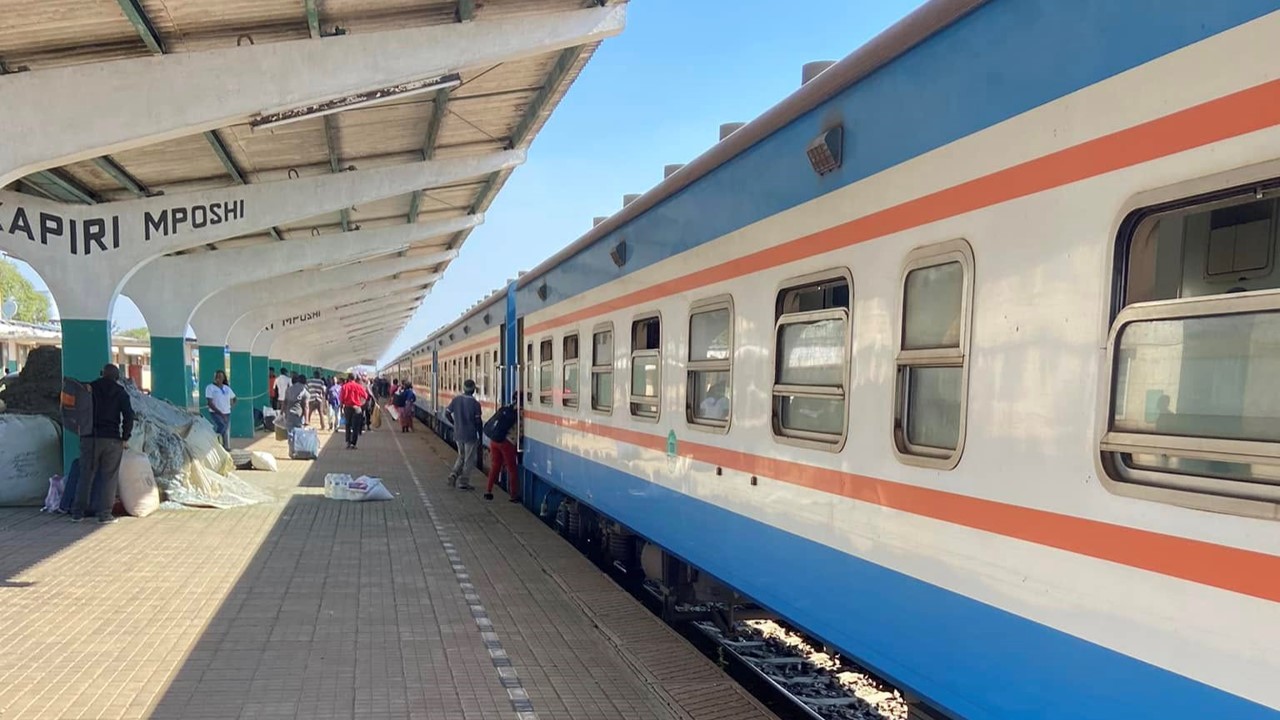
This would allow seamless cargo movement from Dar es Salaam port to inland countries like Zambia, Uganda via mwanza or the DRC without full offloading
Kwa budget ya $1.5 bln Mchina TAZARA hajengi SGR bali ana-rehabilitate CAPE GAUGE na kufanya provision ya rolling stock. Akiweza sana labda ataiweka umeme.


China invests USD 1.4 billion in Tanzania-Zambia railway
April 1, 2025
Tanzania-Zambia-railway.jpg

Tanzania-Zambia railway

China Civil Engineering Construction Corporation (CCECC) will invest USD 1.4 billion for the revitalisation of the Tanzania-Zambia Railway Authority (Tazara), the CEO of the authority Bruno Ching’andu announced at the Zambia International Mining and Energy Conference (ZIMEC 2025) held in Kitwe.

The Chinese company will support the railway infrastructure and operations of Tazara under a 30-year concession arrangement which is currently under negotiation procedure. This investment will “make significant step toward transforming TAZARA into a more efficient and reliable transport corridor. This partnership is expected to address the railway’s declining performance and restore its operational efficiency, the CEO Tazara said.

Under the terms of the proposed agreement, CCECC will invest USD 1 billion for full rehabilitation of Tazara’s railway track infrastructure, enhancing safety, efficiency, and capacity while USD 400 million will be used for the procurement of 32 brand-new locomotives and 762 new wagons, significantly increasing freight and passenger transport capacity. In addition, CCECC will be responsible for periodic major overhauls, alongside continuous maintenance, which will be conducted throughout the concession period to ensure long-term continuity and sustainability.

Under the 30-year concession period, 3 years will be dedicated to the construction and rehabilitation work, while the remaining 27 years involves full operational management to ensure long-term sustainability.

The decision to grant a concession follows an in-depth evaluation of Tazara’s challenges over the years, which necessitated urgent intervention. The public-private partnership (PPP) model was chosen after extensive due diligence to ensure alignment with authority’s long-term vision and the interests of its shareholders.

As the concessionaire, CCECC will focus on immediate rehabilitation of the tracks and supply of rolling stock to establish a strong foundation for success, will cover operational costs through concession fees payable to Tazara. The company will also carry out efficient maintenance and operation ot the railway system while ensuring uninterrupted service delivery and will handle back the fully rehabilitated assets at the end of the concession period.

 
Watu wa renders! Nairobi rapid bus Transit iliishia wapi vile? 👇 👇 :docnotL::docnotL:
Ila Teargass ni noma like seriously maneno mengi kwa BRT bus inaonekana hivi

1000125086.jpg


Ivi Dunia nzima kuna BRT buses zenye Chimney?

Uzi unachekesha sana

Hapo wanadai tumeorder BRT buses kwao, jamaa yaani kila mradi konki lazima watengeneze vilink feki kujifariji.
 
Back
Top Bottom