$42bn LNG project poised to transform Tanzania’s economy
THE BIZLENS REPORTER
4 WEEKS AGO
President Samia Suluhu Hassan has adopted a hands-on approach to the negotiations, as she has personally been guiding the process, intervening in critical moments, and providing strategic direction where bottlenecks emerge
Dar es Salaam. The Tanzanian government has registered significant progress in its negotiations with international energy companies to develop Tanzania’s first Liquefied Natural Gas (LNG) plant in Lindi Region, marking what could become one of the country’s most transformative industrial investments to date.
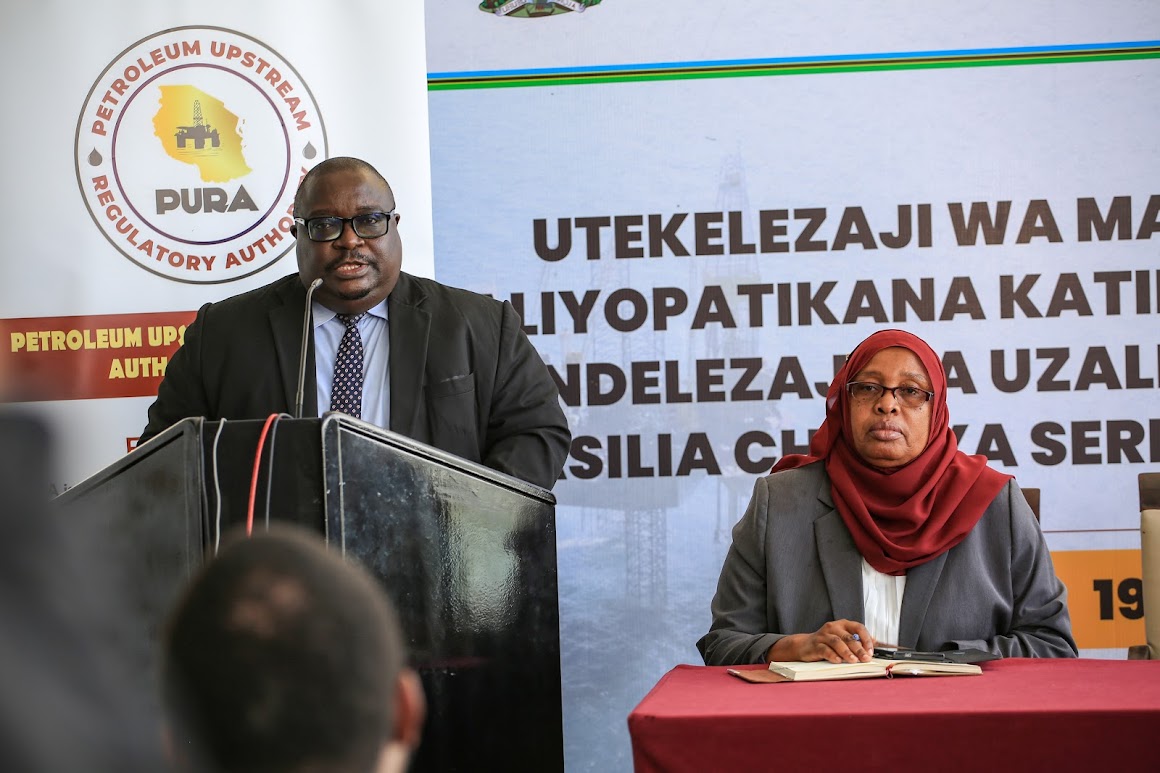
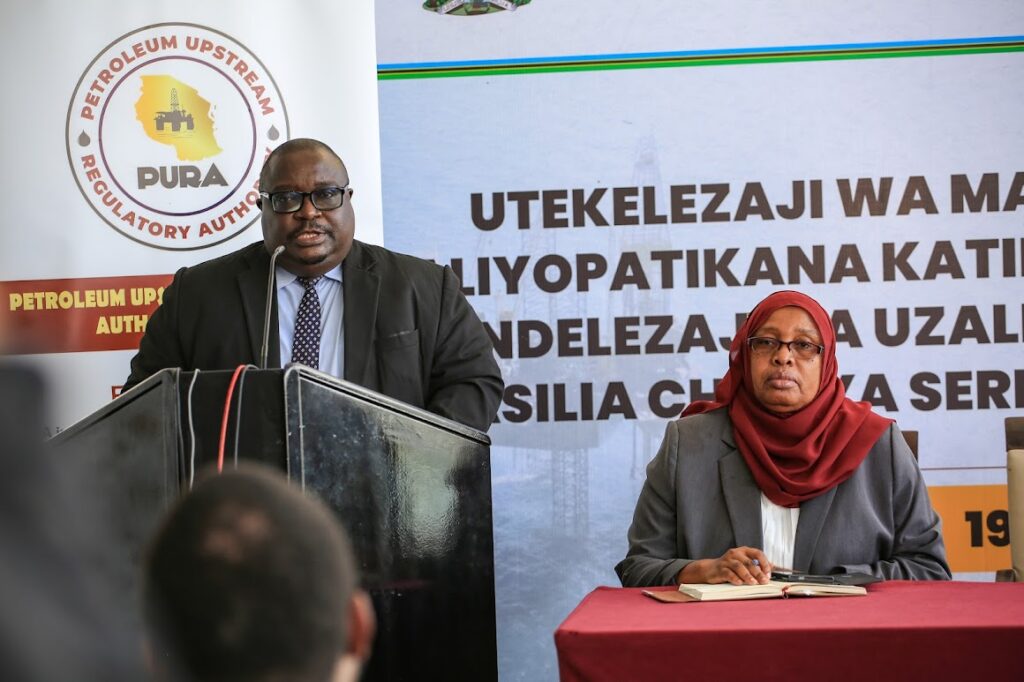
Speaking to reporters in Dar es Salaam on May 19, 2025 the director general of the Petroleum Upstream Regulatory Authority (PURA), Mr Charles Sangweni, said the administration under President Samia Suluhu Hassan has revitalised long-stalled discussions with multinational oil and gas giants, breathing new life into a project that had for years remained in limbo.
“Above all, I extend my deepest gratitude to the Sixth-Phase Government under the leadership of President Dr Samia Suluhu Hassan for enabling the successful continuation of negotiations for the implementation of the LNG project,” said Mr Sangweni.
He noted that the talks, which had previously faltered under earlier administrations, have now gained momentum thanks to direct presidential involvement.
He singled out the President’s hands-on approach to the negotiations, noting that apart from delegating responsibilities to government negotiators and the inter-ministerial Steering Committee, she has personally guided the process, intervened in critical moments, and provided strategic direction where bottlenecks emerged.
“All government’s eyes are on this projects, which will be one of the single most important investments in Tanzania’s economic future,” he noted.
A New Economic Frontier
The LNG facility, to be constructed in Lindi, is expected to process natural gas into liquefied form for export and domestic use.
The project’s projected cost now stands at a staggering $42 billion—more than double the earlier estimates—reflecting its growing scale and ambition.
Mr Sangweni explained that the final cost will be determined following the completion of Front-End Engineering Design (FEED) and Pre-FEED studies, which will lay the foundation for the Final Investment Decision (FID).
“The FEED process is critical to ensure all technical, environmental, and logistical elements are fully understood and factored in. Only then can the actual construction commence, which is estimated to take four to five years,” said Mr Sangweni.
He revealed that the government is encouraging investors to adopt a modular construction approach, whereby key components will be manufactured in locations that already possess the requisite machinery and expertise, and then transported to Tanzania for installation—rather than building every element entirely on-site.
This strategy is intended to reduce construction timelines and increase efficiency.
During the peak construction phase, the project is expected to generate approximately 15,000 jobs.
Post-construction, the workforce will drop to about 600 permanent employees.
However, Mr Sangweni was quick to note that additional employment opportunities will emerge through the establishment of downstream industries that will use domestically retained gas as feedstock.
To prepare for this, PURA is working with vocational training institutions in Lindi and Mtwara to develop specialised curricula aimed at equipping the local youth with skills necessary for employment in the energy and industrial sectors.
Unlocking Tanzania’s Vast Offshore Gas Reserves
According to Equinor—one of the lead developers alongside ExxonMobil—Tanzania has discovered over 20 trillion cubic feet (Tcf) of natural gas in Block 2, located approximately 100 kilometres off the coast of Lindi.
These reserves are spread across multiple deep-sea reservoirs, necessitating the use of advanced subsea wells to extract and transport gas via pipeline to the onshore LNG facility.
Equinor has already carried out extensive geological and technical surveys and concluded that the development is not only feasible but strategically advantageous.
The Norwegian energy giant plans to bring global experience from other LNG ventures to ensure the project’s success.
Once operational, the LNG plant is expected to produce 7.5 million tonnes per annum (MTPA) of liquefied gas, primarily for export to global markets in Asia, Europe, and South America.
However, a portion of the gas will be earmarked for Tanzania’s domestic consumption in line with provisions under the Production Sharing Agreements (PSAs).
“Domestic gas can play a critical role in achieving Vision 2025 by supporting electrification and industrialisation efforts, and by substituting costly imported heavy fuel oil,” Equinor stated in its latest Tanzania prospectus.
Government Revenues and Local Content
Estimates suggest that more than 60 percent of the value created by the project will remain in Tanzania—a figure that outpaces returns from similar projects globally.
This includes revenues from production volumes allocated to the government, Tanzania Petroleum Development Corporation (TPDC) participation, and taxation.
The project is also poised to catalyse extensive local economic development through procurement of goods and services, infrastructure upgrades, and knowledge transfer.
“Local content is a key area of focus,” said Mr Sangweni. “We are working with Equinor and TPDC to ensure Tanzanian businesses and workers benefit from every phase of the project.”
The ripple effects of the LNG plant are expected to be substantial, with indirect employment opportunities far outpacing those directly tied to construction and operations.
Skills developed during this process will also benefit the broader economy and civil service in the long term.
Host Government Agreement
Before construction begins, the government and project stakeholders must finalise the Host Government Agreement (HGA), which outlines the commercial, fiscal, and legal framework for the project.
This agreement is critical for unlocking the vast capital investment required for the development.
Environmental and geotechnical surveys are scheduled to begin once the HGA terms are signed.
These will inform the final design and preparation for construction activities at the designated site north of Lindi.
If successful, the Tanzania LNG Project will not only position the country as a major gas exporter in East Africa but will also lay the groundwork for an industrial renaissance that could shape the country’s economy for decades to come.
“Equinor has played a key role in shaping Norway’s oil and gas sector, and we are ready to help industrialise Tanzania,” reads a statement from the company.
As negotiations near conclusion and preparatory work intensifies, all eyes are on the anticipated signing of key agreements—events that could mark the beginning of Tanzania’s journey into the global LNG market and the next chapter in its economic transformation.
Shares:
President Samia Suluhu Hassan has adopted a hands-on approach to the negotiations, as she has person

thebizlens.co.tz