Battle: Dar es Salaam vs Nairobi

Battle: Dar es Salaam vs Nairobi

Five more years? Business prepares for Magufuli’s second term

Twitter Facebook LinkedIn
000_1WU6CI.jpg


Tanzania’s President John Magufuli has gained a negative reputation for his treatment of international investors and his controversial approach to the Covid-19 pandemic, but does the criticism conceal real progress in the economy since he took office in 2015? Tom Collins reports from Tanzania on the eve of its parliamentary and presidential elections.

In the last five years, Tanzanian President John Magufuli’s combative approach to international business, aggressive domestic policies and unusual response to coronavirus have made him one of the most high-profile and controversial presidents on the continent.

The 60-year-old’s blunt approach – which includes a willingness to intervene in domestic markets – has attracted strong domestic support but spooked some foreign investors and drawn condemnation from Tanzania’s East African partners.

One term in, his overall impact on the economy, however, is far less clear. With the president facing a crucial re-election battle in October and the prospect of a second five-year term, Magufuli’s business and economic record is coming under increasing scrutiny.

Foreign direct investment (FDI) fell by 43% in the year after Magufuli entered office in October 2015, but Tanzanian GDP continued to grow at an average of around 6% a year, backed by a strong performance in sectors including light manufacturing, mining, agriculture and logistics.

Some believe that the president’s campaign against corruption, although understandably popular with ordinary voters, has restricted liquidity. With the state the largest employer in the market, any blockage to illicit channels necessarily affects the individual wealth of Tanzanians and their ability to spend.

The president’s supporters in the business community argue that the lack of confidence in Tanzania’s economy is misplaced. They say that negative political headlines, a controversial coronavirus response and well-documented tension with multinational firms have led to an international reputation lacking nuance.

Despite economic reforms that weigh on the private sector, including the crackdown on corruption and tax rises, many businesspeople in Tanzania tell African Business that they will vote for Magufuli in October.

Pragmatist or populist?​

Magufuli’s first term has been marked by a strained relationship with business, with several incidents sending shockwaves through the investment community.

In 2017, Acacia Mining, Tanzania’s largest gold-miner, was slapped with a $190bn retrospective tax bill for failing to pay royalties on alleged undeclared exports. In January this year, Canada’s Barrick Gold – which gained full control of Acacia Mining in 2019 – agreed to settle the dispute by paying the Tanzanian government $300m and ceding 16% ownership of its three mines in the country.

Barrick agreed to create a joint venture with the government, Twiga Minerals, to manage the company’s assets and to oversee a 50/50 economic benefit sharing deal, but outstanding issues are still being worked out, according to Barrick.

Though the deal has restored a degree of confidence in Tanzania’s business environment, the episode – which some saw as a shakedown – has had a long-lasting impact on an investor community that covets predictability.

“After the announcement, some people who were planning to invest in Tanzania decided to relocate to Uganda, the DRC and elsewhere,” says Donath Olomi, CEO of the Dar es Salaam-based Institute of Management and Entrepreneurship Development.

Magufuli’s combative attitude to the natural resources sector can be traced to his experience growing up in a poor village in a mining area near the shores of Lake Victoria in Tanzania’s northwest. It is also a legacy of the socialist past of Magufuli’s ruling Chama Cha Mapinduzi (CCM) – which translates as Party of the Revolution – in which the market and its companies are tightly regulated to ensure that the state is the main vehicle for development.

Despite its controversy, the Barrick saga set the stage for how Magufuli would engage with foreign companies in Tanzania. He has since overturned two agreements with China negotiated by his predecessor Jakaya Kikwete, arguing that they were not good deals for Tanzania. Commenting on a $10bn development to build East Africa’s biggest port in Bagamoyo, 50km north of Dar es Salaam, Magufuli said only a “madman” would accept the terms.

While the aggressive approach has stunted investment in key sectors and projects, Tanzanians applaud Magufuli’s uncompromising attitude, in which he paints himself as a regional champion against neo-colonial interests. His tough approach finds unlikely allies in the country’s private sector.

“There are many countries where foreign investors enter with huge capex, but they don’t pay corporate tax and they leave big holes in the economy,” says Mohammed Dewji, CEO of Tanzania’s largest conglomerate, MeTL, a producer and trader of agricultural and industrial goods.

“Initially Barrick was a bad thing in terms of sending out shockwaves, but now the confidence is coming back. The government has clamped down on exemptions and it has strengthened its revenue collection. Our budget support over the last five years has reduced tremendously. These are all the good things not being talked about.”

Indeed, Magufuli may be more pragmatic than observers think. Although it still remained below the $1.5bn recorded in 2015, FDI had risen to $1.1bn last year. And along with reaching a deal in the mining sector, Magufuli’s government has made concessions to companies looking to develop Tanzania’s offshore gas industry. Estimated reserves stand at around 58 trillion cubic feet – just under half of the estimated potential in neighbouring Mozambique.

Laws delay investment​

In 2017, the government introduced legislation for the extractive sector that raised taxes, established arbitration in Tanzania and deemed that “unconscionable” contracts could be unilaterally renegotiated by the government. These laws delayed any possible deal between gas companies Shell and Equinor and the government, further prolonging development.

However, the government has quietly rescinded some of its earlier demands, says Thomas Scurfield, Africa economic analyst at the Natural Resource Governance Institute.

“Early this year the government started to introduce an arbitration act that essentially allows international arbitration with an international body to take place, so long as arbitration is physically taking place in Tanzania,” he says.

This may help to move forward the $30bn project, which has been floundering since 2014. Still, with low gas prices and unfavourable regulation, analysts do not expect the project to come online for several years – delaying an important foreign currency earner for Tanzania.
While Mozambique’s terms are more concessionary, according to Scurfield, some observers argue that Tanzania’s approach is consistent with the country’s historical scepticism towards free market capitalism.

“Certainly, it slows down foreign investment – some investments would have happened earlier if the process were quicker,” says Jens Reinke, IMF representative in Tanzania. “But I think that is a cost Tanzanians are willing to pay.”

Failure of communication​

Many companies argue that Magufuli’s ideological approach to the economy feeds a negative perception in the international press.

“When you go after a conglomerate or multilateral, they are going to push a story that what you are doing is not fair, that it is erratic and unpredictable,” says Fahad Awadh, co-founder of YYTZ Agro-Processing, which processes up to 2,500 tonnes of raw cashew per year from a factory in Zanzibar.

However, like other businesses in the domestic market that spoke to African Business, he points to a faster and more accountable state under Magufuli – so long as you “play by the rules”. He explains that a zero-tolerance policy on corruption has made engagement with the local authorities much easier.

“I just want to know what the rules are and know that if I follow the rules no one will come to harass me and try to extort money and I’ve seen that improve.”

He says that an association of cashew nut producers he set up persuaded the government to remove excise duties and VAT on vacuum bags used to package nuts within six months.

Taxes have been removed in key sectors to encourage industrialisation, and the business community argues that the government has introduced positive reforms and made efforts to shed the less successful parts of its statist DNA.

Jumanne Mtambalike, CEO of Sahara Ventures, an accelerator and tech-consultancy based in Dar es Salaam, believes that Tanzania’s inability to broadcast its positives is a major reason why the country fails to attract foreign investment.

Tanzania only has around 60 tech companies due to a lack of foreign capital, rather than a lack of tech-led innovation, he says. Last year the company held an industry event, Sahara Sparks, which welcomed over 200 Tanzanian startups searching for funding. A technology district known as “Silicon Dar” has begun to emerge on Dar es Salaam’s Bagamoyo Road, consisting of 10 innovation hubs and several large telecoms companies.

“Things are happening here. Young people are running innovation spaces and successful businesses, but our biggest challenge is that we are not telling our stories right. That is one of the strategic advantages they have in Rwanda and Kenya – they know how to tell their stories. I can tell you I have worked with some amazing startups but some of them don’t even have a website.”

The failure to communicate Tanzania’s strengths is partly a product of the Magufuli administration, which too often shows an active disregard for its international reputation. The president prioritises his reputation among a support base of mostly lower income citizens in rural areas. While journalists writing a negative story about Magufuli in Swahili risk jail time, the same story in English – which is less widely spoken – will arouse limited attention.

Magufuli’s seeming carelessness towards his international reputation has returned to the fore during the coronavirus pandemic.

Unlike many other African countries, Tanzania has downplayed the pandemic’s impact and avoided lengthy lockdowns. When Magufuli declared Tanzania “Covid-19 free” in June, he made no effort to rectify a torrent of negative press, even though some claim his statement was taken out of context. His bizarre claim that Covid-19 tests were inaccurate due to a goat, papaya and paw paw testing positive in a lab was allegedly a joke made in Swahili – but was perceived as a serious statement elsewhere.

Such gaffes have obscured real progress made in Tanzania, some say. Local businesses point to Tanzania’s recent graduation to lower-middle income status as defined by the World Bank.

The country also moved up three places in the World Bank’s Ease of Doing Business Ranking last year, although it still came 141st out of 190 countries. The difficult business environment is one of the main reasons that Tanzania’s economy has been gradually dwarfed by that of neighbouring Kenya, which occupied 56th spot in the Ease of Doing Business Ranking.

Despite its bountiful natural resources, its location in a strategic position for facilitating trade to the rest of East and Central Africa and its larger population, Tanzania has not kept up with its more liberal neighbour. In 2019 Tanzania’s GDP was $63.2bn, almost a third smaller than Kenya’s $95.5bn.

Politics as usual?​

While Magufuli’s battle against corruption is applauded by many – his tough approach earned him the nickname “The Bulldozer” – his efforts have been framed by critics as a way to persecute political opponents. Since Magufuli came to power, opponents allege that he has disregarded the rule of law and subverted the judiciary by forcing legislation through parliament and using draconian statutes to harass and imprison opponents.

A local journalist, who wishes to remain anonymous, was imprisoned for 13 days for running an unlicensed blog after the authorities imposed a $900 registration fee on all bloggers in 2018. “I wasn’t even critical of the government,” he says.

The concern for the private sector is that Magufuli’s ability to enact laws and evade normal checks and balances is forging an unpredictable actor that can vilify certain sectors and impose his will on individual companies. The business community is closely watching October’s presidential elections for signs of further erosion of the political environment.

A prominent lawyer, speaking on condition of anonymity in Dar es Salaam, says the president’s goal is to secure enough ruling party candidates to amend the constitution to extend term limits.

But the president may not have everything his own way. Semi-autonomous Zanzibar, an opposition stronghold, remains a thorn in the side of the CCM party and is a crucial electoral target for the newly formed ACT-Wazalendo party. At the last election, the Zanzibar Electoral Commission (ZEC) overturned the outcome of the vote when it became clear CCM had lost, opposition figures allege.

A video posted on social media in early September showed multiple army trucks packed with soldiers driving through the island of Pemba, which is part of the Zanzibar archipelago and falls under its administration. In the run-up to the national vote, the government has banned numerous opposition candidates from running in key constituencies and it has attempted to block thousands of Zanzibaris from being eligible to vote.

“CCM will do anything to claim victory,” says Ally Saleh, a Zanzibari politician and ACT-Wazalendo party member.

According to the constitution, Magufuli needs a two-thirds outright majority from both sides of the union to amend the constitution – making these elections about far more than just the next five years.

Along with the almost total subversion of an independent judiciary since 2016, the prospect of an enlarged executive with the ability to amend the constitution worries Tanzania’s private sector.

“We have changes that were brought about by one person, and in so doing they have weakened some of the institutions,” says Olomi from the Institute of Management of Entrepreneurship Development.

“The media, the parliament, the opposition. If you don’t institutionalise this period where Magufuli is making government stricter and more straightforward, then what happens when you have weakened institutions and that spirit is no longer there? Then you have a worse situation.”

Regional issues​

Tanzania’s political environment – and Magufuli’s unapologetic stances on controversial issues – are also straining relations with its regional partners in the East African Community (EAC), creating problems for EAC businesses in trade, transport and logistics.

When Magufuli first came to power it seemed he had found a powerful ally in Rwanda’s President Paul Kagame, taking his first international trip to stay at his counterpart’s village retreat. The two leaders agreed to co-finance and build a railway from Tanzania’s northwestern town of Isaka to the Rwandan capital of Kigali, connecting the port of Dar es Salaam with the hinterland.

The relationship has since soured due to Magufuli’s support for Burundi’s late president Pierre Nkurunziza and other disagreements, delaying the project and the possibility of boosting Tanzania’s main port.

Relations with neighbouring states have reached their nadir this year. After Tanzania failed to introduce strong Covid-19 measures, neighbouring Zambia and Kenya, fearing overlapping transmission, closed their borders with the country in May. Kenya then banned direct flights arriving from Tanzania, and Tanzania retaliated by banning Kenyan carriers from its airspace.

The deterioration in relations has impacted Tanzania’s exporters and traders, who are desperate for diplomacy and a return to normality. Awadh reports a fall in cashew export volumes and Dewji from the MeTL conglomerate reports a slowdown in his transnational logistics line.

While flights have resumed to Kenya, Magufuli’s nationalist rhetoric – often imbued with hostility to Tanzania’s neighbours – damages commerce for companies that are focused on the wider region.

Nonetheless, the broad perception of Tanzania’s business sector is that Magufuli has made some important government reforms on corruption and easing some business regulations while pursuing policies that secure Tanzania’s national interest.

The conduct and aftermath of October’s election could prove a turning point in Tanzania’s economic history. The expected decisive win for Magufuli could see his more pragmatic side prevail – or lead him to double down on aggressive policies.

“Our opposition focus on a one-sided picture that it is all bad,” says Awadh.

“Like everything there is some bad and some good. I cannot say it is perfect. Are we better off – yes. Are things getting better – yes. Has he done some things really well – he has. Does he have things he could improve on? Of course.”

 
Badala ya kungoja miaka miwili ili kupokea mpya naona ni afadhali tununue second hand (kama itapatikana) ili tuanze operation mapema. Halafu baada ya miaka 5 ndio tuagize mpya.

Exactly! U see hapo ndo mnachezwa! Sisi huku hu-plan ahead!


20.03.2020

Six RTGs for Tanzania​

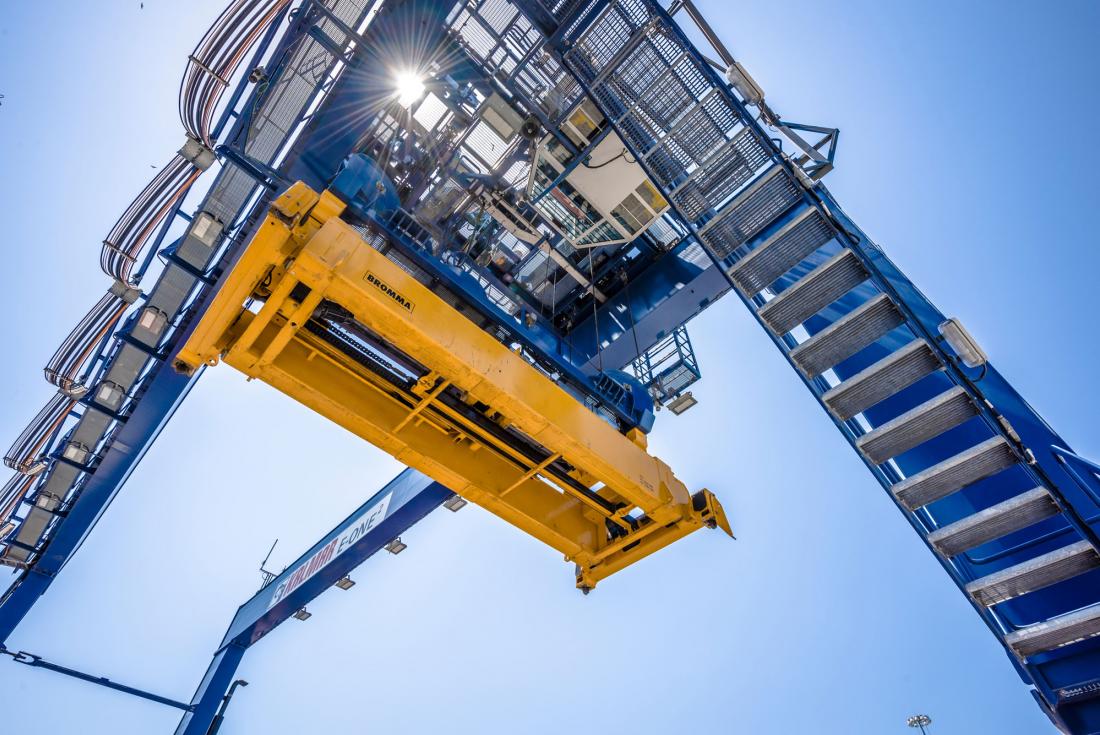
State owned port operator and owner Tanzania Ports Authority (TPA) has ordered six Kalmar rubber tyred gantry cranes for its Dar es Salaam port.

Part of the company’s extension plans for Dar es Salaam, the new 40 tonne diesel/electric cranes can handle six plus one rows wide and one over five high. Features include the company’s Variable Speed Generator which automatically optimises engine speed to match the required power. All six units are scheduled for delivery this month.

Regional vice president - sales, Mikko Mononen, said: “The relationship between TPA and Kalmar goes all the way back to 1987 when we delivered our first diesel electric rubber tyred gantry cranes to the customer. As one of our longest standing customers, we are very pleased to continue our collaboration going forward and look forward to supporting them in achieving their strategic objectives for Dar es Salaam port.”
11_kalmar-rtg-2000px_8b9c4675.jpg
Tanzania Ports Authority has ordered six Kalmar rubber tyred gantry cranes

Tanzania Ports Authority is both the owner and operator of ports serving Tanzania as well as the landlocked countries of Malawi, Zambia, Democratic Republic of Congo, Burundi, Rwanda and Uganda. Its port in Dar es Salaam handles approximately 95 percent of international trade for these countries.

 
Badala ya kungoja miaka miwili ili kupokea mpya naona ni afadhali tununue second hand (kama itapatikana) ili tuanze operation mapema. Halafu baada ya miaka 5 ndio tuagize mpya.

Harbouring resources​

10 July 2020


Mobile harbour cranes' versatility has made them extremely attractive to ports all over the world. Julian Champkin looks at the market.

Fixed gantry cranes in large ports are dedicated to loading and unloading containers; mobile harbour cranes offer more flexibility but nevertheless can be large, sometimes very large. “Mobile harbour cranes are typically designed to operate in different configurations,” says Mauro Cicciatore, of the commercial department of Italgru cranes. “That is why we generally describe them as multi-purpose. Their versatility allows customers to choose between different applications. Container handling, with single or twin lift spreader, is one of the standard features that we offer on our cranes.”

Technology, of course is of the latest. “Among the special features we normally offer is electronic anti-sway for suspended loads.

Paired with a camera positioned in boom tip, the combination improves safety and accuracy. Our G.P.A (assisted production management) system, installed on the PLC, digitally tracks parameters such as number of cycles, tons of goods handled per cycle, operating time and maintenance time. And all our cranes can be monitored through telemaintenance: the crane is connected, through internet, to the Italgru headquarters or the local maintenance station, for a real time monitoring and troubleshooting.

During the Covid-19 travel restrictions, telemaintenance has been an effective tool that allowed us to oversee operations from our headquarters.”

Stefano Colombo, Italgru’s sales manager, says: “We have recently introduced on all our models, a new design with electric drives on both hoisting and slewing movements, intended for customers focused on eco-friendly solutions. And our cranes can be equipped with energy saving systems based on hydraulic energy accumulators. They store energy from decelerations and lowering loads. The crane software automatically decides when to use the stored energy, by analysing the power requested to the prime mover. The result is a saving in fuel.”

Eco-friendliness is a major focus in the sector. “Ports are switching to renewable resources. Some are performing major changes in infrastructure, installing solar panels and using wind power. They are basically granting themselves free electricity; therefore an electric crane is consequential and an obvious choice.”

Cable reel power is an obvious solution: “Customers are very aware of the financial and environmental benefits of cable. On the other hand, a crane operated with cable reel reduces its operational flexibility and versatility. To avoid this, our cranes are equipped with hybrid configurations, an electric cable reel to supply the crane from quay grid and a diesel engine as an independent power source. We can provide either a diesel-hydraulic configuration or an electric configuration, allowing us to meet both customers who want to run with eco-friendly solutions or others who feel more comfortable with a diesel powered crane. In 2019, we delivered among others an 80t diesel-powered IMHC 1580 to Ben Nghe Port in Vietnam in July and a 125t diesel IMHC 2120 to a customer in the Port of Ghent (in Belgium) in September.”

The latter customer has also bought two 140t machines, which are ready to be shipped. This year Italgru has sent two cable-reel electric-drive 125t cranes to Dar es Salaam in Tanzania and will send two more in July to Gangavaram Port in India.

“The harbour mobile crane is an attractive solution for many ports as it can be moved flexibly along the edge of the pier and it can be used for a wide range of applications,” says Florian Attenhauser, public relations manager for Sennebogen.

Their latest mobile harbour crane is the giant 9300 E, which has a boom length of 40m, a 563kW electric motor and a lifting capacity of 90t.
One of the first of these has been working since October 2019 at the port of Brindisi in Italy. Another has been delivered to Turkey. The crane has been designed for continuous operation. “Our customers operate the 9300 E 24 hours a day without interruption and it therefore has to be extremely powerful and robust,” says Attenhauser.

Its 40m boom length means that it can handle ships up to Panamax class. The cabin is height-adjustable up to 21.2m, from which height the operator has a panoramic view of the entire working area. The cab can also be moved over the ship’s hold, allowing the operator to look directly down onto the load without having to rely on cameras—though these are also installed for more safety and precision.

Maintenance of the machine is designed to be notably user-friendly. The roof of the Powerpack unit, directly behind the winch house, opens up, making maintenance of the larger components safe and particularly easy; all control and analysis units can be reached conveniently. During installation it is possible to mount the Powerpack and the winch house in two separate module units.

Another plus, according to the Brindisi operators, is the simplicity of the crane's design, which works with relatively little electronics on board. “That is in line with the Sennebogen motto ‘No over-engineering’,” says Attenhauser.

Liebherr mobile harbour cranes (LHM) are all-rounders; they can handle all types of cargo, and perform heavy lifts up to 308t at 18m outreach and up to 100t at 47m outreach. The product range covers all vessel sizes up to megamax and capesize.

Drives can be chosen from a conventional diesel engine, hybrid drive or an electric system. Closed hydraulic loops are used for all main functions such as hoisting, slewing and luffing, meaning that reverse power storage is available as standard to reduce fuel consumption.

The tubular design of their tower, they say, minimises torsion and distributes forces evenly to the steel structure and the slewing ring. This significantly increases the service life of the crane. The luffing cylinder is a tension one mounted above the jib rather than below it, and this, they say, protects it from damage from swinging loads and removes the risk of buckling.

The mobile harbour crane is modular in concept, meaning that the same upper part can be mounted on any of several different bases. When configured as a portal mobile crane, on a rubber-tyred travelling system, each set of wheels can be individually controlled, giving maximum mobility in all directions. The machine can even turn on the spot. All the wheel sets are individually steerable and have load balancing so that the ground pressure for each wheel never exceeds six tonnes. Access from all sides provides for easy maintenance and the 360° mobility ensures the highest degree of manoeuvrability.

This, they say, can be a decisive advantage at narrow quays. The same crane can also be mounted as a portal slewing crane, a fixed slewing crane, or even bargemounted crane.

As mobiles, the range can serve vessels with widths up to 22 rows of containers, which covers everything from feeder ships to the latest generation of Ultra Large Container Vessels (ULCVs). Using manual, semi- or fully-automatic telescopic spreaders, all regular container sizes between 10ft and 53ft in single or twin lift can be handled.

The multifunctionality of Liebherr’s mobile harbour cranes means they are not limited to container-lifting. The same crane can perform bulk handling, general cargo and heavy lifts. Lifting attachments can be exchanged within a matter of minutes thanks to the simple modular structure. After selecting the software the new attachment is ready for immediate use.

Konecranes introduced their first mobile harbour crane in 1956. Since then, they have focused on diesel-electric drive systems generating power on board the machines. This drive technology means that external power from on-shore power grids can be used easily, forming an ideal match since additional equipment for energy conversion is not required. This not only improves eco-efficiency but allows surplus energy to be fed back into the grid.

They have three crane families based on the same technology. Offerings range from entry-level models suitable, they say, for start-up operations up to the Gottwald Model 8, the largest and most powerful crane in their range. It has 200t lifting capacity, a maximum working radius of 64 m and lifting speeds of up to 140 m/ min. The Model 8 can be used on ships up to super-post-Panamax and capesize. Optional smart crane features include: load anti-sway, hoisting height and working range assistants, and verifiable weighing systems.

Konecranes harbour cranes can be mounted on mobile chassis, on portals, or on barges.

As we said at the outset, it is the flexibility of harbour mobile cranes that gives them their niche in the logistics market. They can handle every kind of cargo on large vessels and small; so they will continue to be in demand.


Harbouring resources​

10 July 2020


Mobile harbour cranes' versatility has made them extremely attractive to ports all over the world. Julian Champkin looks at the market.

Fixed gantry cranes in large ports are dedicated to loading and unloading containers; mobile harbour cranes offer more flexibility but nevertheless can be large, sometimes very large. “Mobile harbour cranes are typically designed to operate in different configurations,” says Mauro Cicciatore, of the commercial department of Italgru cranes. “That is why we generally describe them as multi-purpose. Their versatility allows customers to choose between different applications. Container handling, with single or twin lift spreader, is one of the standard features that we offer on our cranes.”

Technology, of course is of the latest. “Among the special features we normally offer is electronic anti-sway for suspended loads.

Paired with a camera positioned in boom tip, the combination improves safety and accuracy. Our G.P.A (assisted production management) system, installed on the PLC, digitally tracks parameters such as number of cycles, tons of goods handled per cycle, operating time and maintenance time. And all our cranes can be monitored through telemaintenance: the crane is connected, through internet, to the Italgru headquarters or the local maintenance station, for a real time monitoring and troubleshooting.

During the Covid-19 travel restrictions, telemaintenance has been an effective tool that allowed us to oversee operations from our headquarters.”

Stefano Colombo, Italgru’s sales manager, says: “We have recently introduced on all our models, a new design with electric drives on both hoisting and slewing movements, intended for customers focused on eco-friendly solutions. And our cranes can be equipped with energy saving systems based on hydraulic energy accumulators. They store energy from decelerations and lowering loads. The crane software automatically decides when to use the stored energy, by analysing the power requested to the prime mover. The result is a saving in fuel.”

Eco-friendliness is a major focus in the sector. “Ports are switching to renewable resources. Some are performing major changes in infrastructure, installing solar panels and using wind power. They are basically granting themselves free electricity; therefore an electric crane is consequential and an obvious choice.”

Cable reel power is an obvious solution: “Customers are very aware of the financial and environmental benefits of cable. On the other hand, a crane operated with cable reel reduces its operational flexibility and versatility. To avoid this, our cranes are equipped with hybrid configurations, an electric cable reel to supply the crane from quay grid and a diesel engine as an independent power source. We can provide either a diesel-hydraulic configuration or an electric configuration, allowing us to meet both customers who want to run with eco-friendly solutions or others who feel more comfortable with a diesel powered crane. In 2019, we delivered among others an 80t diesel-powered IMHC 1580 to Ben Nghe Port in Vietnam in July and a 125t diesel IMHC 2120 to a customer in the Port of Ghent (in Belgium) in September.”

The latter customer has also bought two 140t machines, which are ready to be shipped. This year Italgru has sent two cable-reel electric-drive 125t cranes to Dar es Salaam in Tanzania and will send two more in July to Gangavaram Port in India.

“The harbour mobile crane is an attractive solution for many ports as it can be moved flexibly along the edge of the pier and it can be used for a wide range of applications,” says Florian Attenhauser, public relations manager for Sennebogen.

Their latest mobile harbour crane is the giant 9300 E, which has a boom length of 40m, a 563kW electric motor and a lifting capacity of 90t.
One of the first of these has been working since October 2019 at the port of Brindisi in Italy. Another has been delivered to Turkey. The crane has been designed for continuous operation. “Our customers operate the 9300 E 24 hours a day without interruption and it therefore has to be extremely powerful and robust,” says Attenhauser.

Its 40m boom length means that it can handle ships up to Panamax class. The cabin is height-adjustable up to 21.2m, from which height the operator has a panoramic view of the entire working area. The cab can also be moved over the ship’s hold, allowing the operator to look directly down onto the load without having to rely on cameras—though these are also installed for more safety and precision.

Maintenance of the machine is designed to be notably user-friendly. The roof of the Powerpack unit, directly behind the winch house, opens up, making maintenance of the larger components safe and particularly easy; all control and analysis units can be reached conveniently. During installation it is possible to mount the Powerpack and the winch house in two separate module units.

Another plus, according to the Brindisi operators, is the simplicity of the crane's design, which works with relatively little electronics on board. “That is in line with the Sennebogen motto ‘No over-engineering’,” says Attenhauser.

Liebherr mobile harbour cranes (LHM) are all-rounders; they can handle all types of cargo, and perform heavy lifts up to 308t at 18m outreach and up to 100t at 47m outreach. The product range covers all vessel sizes up to megamax and capesize.

Drives can be chosen from a conventional diesel engine, hybrid drive or an electric system. Closed hydraulic loops are used for all main functions such as hoisting, slewing and luffing, meaning that reverse power storage is available as standard to reduce fuel consumption.

The tubular design of their tower, they say, minimises torsion and distributes forces evenly to the steel structure and the slewing ring. This significantly increases the service life of the crane. The luffing cylinder is a tension one mounted above the jib rather than below it, and this, they say, protects it from damage from swinging loads and removes the risk of buckling.

The mobile harbour crane is modular in concept, meaning that the same upper part can be mounted on any of several different bases. When configured as a portal mobile crane, on a rubber-tyred travelling system, each set of wheels can be individually controlled, giving maximum mobility in all directions. The machine can even turn on the spot. All the wheel sets are individually steerable and have load balancing so that the ground pressure for each wheel never exceeds six tonnes. Access from all sides provides for easy maintenance and the 360° mobility ensures the highest degree of manoeuvrability.

This, they say, can be a decisive advantage at narrow quays. The same crane can also be mounted as a portal slewing crane, a fixed slewing crane, or even bargemounted crane.

As mobiles, the range can serve vessels with widths up to 22 rows of containers, which covers everything from feeder ships to the latest generation of Ultra Large Container Vessels (ULCVs). Using manual, semi- or fully-automatic telescopic spreaders, all regular container sizes between 10ft and 53ft in single or twin lift can be handled.

The multifunctionality of Liebherr’s mobile harbour cranes means they are not limited to container-lifting. The same crane can perform bulk handling, general cargo and heavy lifts. Lifting attachments can be exchanged within a matter of minutes thanks to the simple modular structure. After selecting the software the new attachment is ready for immediate use.

Konecranes introduced their first mobile harbour crane in 1956. Since then, they have focused on diesel-electric drive systems generating power on board the machines. This drive technology means that external power from on-shore power grids can be used easily, forming an ideal match since additional equipment for energy conversion is not required. This not only improves eco-efficiency but allows surplus energy to be fed back into the grid.

They have three crane families based on the same technology. Offerings range from entry-level models suitable, they say, for start-up operations up to the Gottwald Model 8, the largest and most powerful crane in their range. It has 200t lifting capacity, a maximum working radius of 64 m and lifting speeds of up to 140 m/ min. The Model 8 can be used on ships up to super-post-Panamax and capesize. Optional smart crane features include: load anti-sway, hoisting height and working range assistants, and verifiable weighing systems.

Konecranes harbour cranes can be mounted on mobile chassis, on portals, or on barges.

As we said at the outset, it is the flexibility of harbour mobile cranes that gives them their niche in the logistics market. They can handle every kind of cargo on large vessels and small; so they will continue to be in demand.

Naona mumejipanga kweli.
 
Kingine tony sijajua elimu yake lakini ni mtu smart sana na bright pia kwenye ukweli anasema japo kunamuda anaonyesha ukenya wake ningependa watanzania na sisi tuwe hivyo na baadhi ya wakenya wabadilike kuna vitu tanzania tujifunze kupitia Kenya na kuna vitu kenya wajifunze kupitia tanzania
Economist.
 
Hapa ndipo Magufuli anapokosea tena Sana..
Huwa wakati mwingine anatumia nguvu nyingi pasipo sababu ya msingi, wkt hata wapinzani wanamuelewa japo kwa siri, leo asilimia kubwa ya wapiga kura kutoka upinzani wamechagua wabunge wao na madiwani lkn kura ya urais wamempa yeye kuonesha jinc gn wanamkubali, ss hapo nguvu kubwa ya nn wkt hata hao wabunge na madiwani bado nusu ya wapinzani wamewapa wagombea wa ccm.
 
Huwa wakati mwingine anatumia nguvu nyingi pasipo sababu ya msingi, wkt hata wapinzani wanamuelewa japo kwa siri, leo asilimia kubwa ya wapiga kura kutoka upinzani wamechagua wabunge wao na madiwani lkn kura ya urais wamempa yeye kuonesha jinc gn wanamkubali, ss hapo nguvu kubwa ya nn wkt hata hao wabunge na madiwani bado nusu ya wapinzani wamewapa wagombea wa ccm.

Sio vyema kuconclude kuwa hilo analosema Halima Mdee ni la kweli...hiyo ni SIASA na mwanasiasa anaweza cheza na akili ya mtu ili kupata anacho taka kama Mbowe aliweza sema alikanyagwa kanyagwa miguu ili asishiriki uchaguzi wakati alilewa sembuse hyo ya halima mdee...ndo maana ulimwengu wa sasa kithibitisho kisichokuwa na shaka ndo kinahitajika na sio maneno tu.

Maana hata mm naweza kuamka asubhi nkasema nimeona kula feki zinaingizwa na Jeshi la Jwtz na kama mtu ambaye unaendeshwa na maneno pasipo uthibitisho uta react na kusema ni kweli. Politicians Use lies to Cover the truth don’t trust them easily.
 
Sio vyema kuconclude kuwa hilo analosema Halima Mdee ni la kweli...hiyo ni SIASA na mwanasiasa anaweza cheza na akili ya mtu ili kupata anacho taka kama Mbowe aliweza sema alikanyagwa kanyagwa miguu ili asishiriki uchaguzi wakati alilewa sembuse hyo ya halima mdee...ndo maana ulimwengu wa sasa kithibitisho kisichokuwa na shaka ndo kinahitajika na sio maneno tu.

Maana hata mm naweza kuamka asubhi nkasema nimeona kula feki zinaingizwa na Jeshi la Jwtz na kama mtu ambaye unaendeshwa na maneno pasipo uthibitisho uta react na kusema ni kweli. Politicians Use lies to Cover the truth don’t trust them easily.
Sure
 
Back
Top Bottom