Battle: Dar es Salaam vs Nairobi

Battle: Dar es Salaam vs Nairobi

Nairobi moves to lift barriers on Ugandan milk, poultry products​


TUESDAY NOVEMBER 01 2022​

A farmer milking his cow in Embu, Kenya.

Cow being milked at a farm in Embu, Kenya. President William Ruto has given the strongest hint that he would open up the Kenyan market to Ugandan poultry and milk products and do away with the protectionism exhibited by his predecessor’s regime. PHOTO | IRENE MUGO | NMG


General Image

By LUKE ANAMI
More by this Author

Only the work rate of President William Ruto’s new technocrats can fulfil Kenya’s pledge to unban Uganda’s poultry and milk products into its market by unbinding the restrictions imposed last year to protect local producers.

Last week, while at a function at the Kenya Association of Manufacturers (KAM), President Ruto gave the strongest hint that he would open up the Kenyan market to Ugandan products and do away with the protectionism exhibited by his predecessor’s regime.

“Uganda should bring cheaper milk here because they can produce it more cheaply. We should (also endeavour) to add value to our milk,” he said.

The idea, the Kenyan leader argues is to allow in goods from neighbours in exchange for their opening up to ensure Nairobi benefits from the provisions of the Africa Continental Free Trade Area (AfCFTA), which it can exploit instead of quarrelling.

Value addition​

“We should be adding value (to our milk), producing butter, powder for sale in the DRC, Central Africa and West Africa and we import cheaper milk from Uganda for our consumption,” said Ruto.

“Why should we quarrel with Uganda? It is because we have refused to take our rightful place in our continent. We should have taken action earlier but allowed Uganda to occupy this space. We must (therefore) have a different conversation.”

Kenya will, instead, task the Kenya Development Corporation to help producers improve the value of their products and target the broader market offered by AfCFTA.

“We now have the market infrastructure for us to take over the market in our continent. The reason our continent imports milk, powder and food is because Kenya has not taken its rightful place.”

Trade Remedies Act​

But the immediate task of lifting the ban will bank on the bureaucracy involved. As is the tradition, presidential declarations do not amount to policy until the local technocrats turn around the way of doing things, in writing.

“The ban on Ugandan milk was not imposed by us (Trade) but by another ministry (Agriculture). Only they can lift the ban,” said Johnson Weru, Kenya’s Trade Principal Secretary.

“There is a specific process under the Trade Remedies Act of 2017. We have not prescribed any action under the Act and will have to sit down with Uganda under a bilateral arrangement.”

The PS hinted that trade, Agriculture and EAC Cabinet ministers will hit the road to ensure the trade bans of Ugandan milk are lifted by the end of 2022.

Road to unban milk products​

Kenya’s Trade Cabinet Secretary Moses Kuria has already met and held discussions with his Ugandan counterpart Frank Tumwebaze, on the road to unbanning the milk products this week. On Thursday, Mr Kuria formally took office, providing certainty to the Ministry charged with trade policy.

But EAC issues fall under a different docket handled by new Cabinet Secretary Rebecca Miano. Successful unbanning will depend on priorities the three ministries will focus on.

The plan to lift the ban is informed by Dr Ruto’s policy and plan to open up trade in the region to increase intra trade within the EAC, which is currently below 20 percent.

Volumes matter​

Trade hostilities between the two EAC partner states began brewing in December 2019, when Kenya stopped importing Ugandan milk, particularly the Lato brand. And in July 2020, Kenya followed up with a ban on Ugandan sugar, against an earlier agreement to increase Uganda’s sugar exports to Kenya.

Kenya averted the ban on the export of its agricultural produce to Uganda after Nairobi agreed to lift restrictions on imports of poultry products from the neighbouring country at the end of last year.

The bilateral talks in December discussed and resolved trade issues touching on poultry, eggs, sugar and fish.

But immediately he took over from President Uhuru Kenyatta, Dr Ruto wants to have the ban on Ugandan goods totally lifted.

Open up more markets​

The East African Business Council Kenyan chapter welcomed the move by president Ruto saying it will open up more markets for Kenyan goods as well.

“The point is for neighbours to trade with each other. It is the volume of that trade that matters rather than who is selling more eggs, milk or beans to the other, otherwise we will never grow. We must open up the market so that everybody can trade freely,” said Mucai Kunyiha, EABC board member and former chairman of KAM.

“People must also be able to trade in what they are competitive in because if we have expensive milk in Kenya, then you can’t sell it to Uganda. Conversely, since Uganda has cheaper milk, we must allow them to sell to us.”

The move is likely to see milk retail cheaply on Kenyan shelves where a litre milk costs Ksh78, the highest in recent times.

Struggling dairy farms​

However, he warned that it could also impact negatively on Kenya’s dairy farms that are struggling.

“We have two levels of impact. We have two levels of producers, there are producers who are not competitive in Kenya; these will be outcompeted by the regional products which is a negative impact to some people,” Kunyiha explained.

“But on the positive scale, East Africa commerce grows, because that is the whole point of regional trade. Open markets are useful for us.”

“EAC intra-trade is between five to 10 percent of each country’s capacity and needs to be boosted. However, as we worry about Uganda, what about milk from Brazil, milk powder from New Zealand?” he posed.

 
Dar es Salaam province has only 5.3 million people?

Na mbona huwa tunadhani Nairobi has the lower population.
Wider Nairobi (Nairobi metropolitan) has 9.3 million people.
Mkuu Dar es Salaam kiographia ni ndogo lakini inahudumia na vitongoji vyake.Mtu mchana Yuko Dar usiku pwani au yuko pwani mchana usiku yupo Dar es Salaam.Ndio maana mtu aliyejenga bagamoyo,Mkuranga,kibaha,kisarawe au kiluvya hata ukimwuliza anakwambia anaishi Dar maana hata huoni mpaka
 
Aisee, Mwanza hata baada ya kumegwa megwa bado ni ya pili. Mbeya ilikuwa na watu wengi zamani ila baada ya kumegwa idadi ya watu imepungua sana.
Hivi Dar yote imetoshana in population na Nairobi City Proper na bado mnasema ndio jiji kubwa EA considering 40% of Nairobi Metro population wako nje ya Nairobi proper?
 
Wee hiki unachoonesha ni kidudu gani¿¿¡¡

Vidude vya open source hatuvitaki. Tunataka vitu licenced, fhd, high resolution, clear perception etc.
but this is a level playing field. no bias of any kind whatsoever..
better still I ll bring a higher resolution at a closer altitude to satisfy your quest
 
but this is a level playing field. no bias of any kind whatsoever..
better still I ll bring a higher resolution at a closer altitude to satisfy your quest

Unasikia bwana mdogo, unapoleta facts hapa hatutaki vitu vya kuokoteza okoteza hapa.
 
Unasikia bwana mdogo, unapoleta facts hapa hatutaki vitu vya kuokoteza okoteza hapa.
'Google Earth at Night' ni kitu cha kuokoteza kweli? this is a very reliable and authentic source tht even Nasa or US Marines would use it, to map out eastern africa even at this moment

Screenshot_20221102-095853_Chrome.jpg
 
There are very few residential highrises in Tanzania. Mingi ni nyumba tu ovyo moja moja bila ghorofa.
Kenya is the opposite. Residential flats with tens of houses are the norm in all towns, big and small.

So, I expect our buildings count is lower.
Acha porojo
 
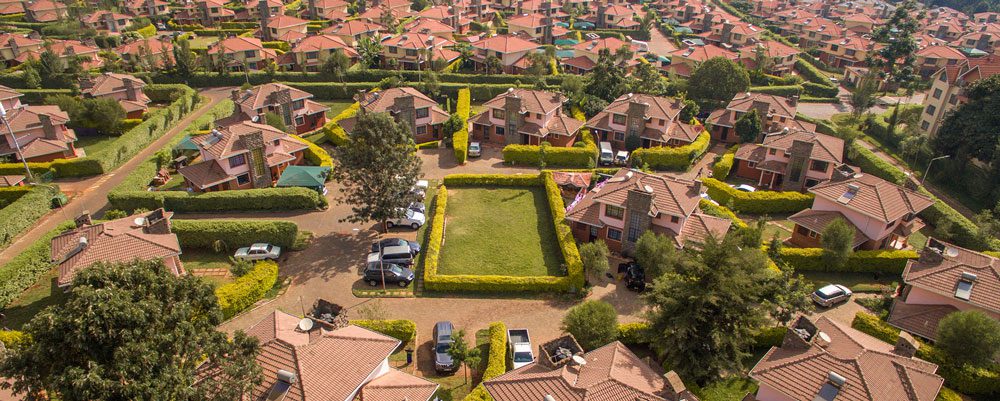
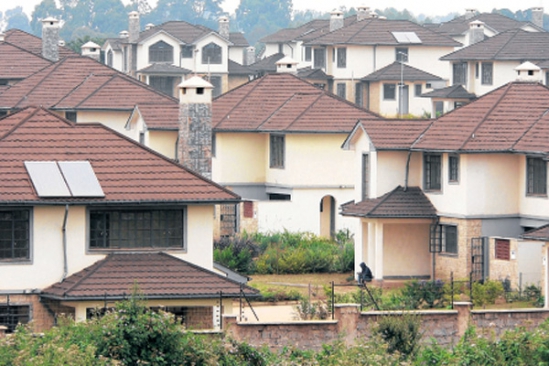
Mbona huwa mnashindwa kuelewa vitu rahisi? Nairobi city limits are tiny, 696 sq. km. But the built up area of Nairobi metropolis is the largest in East Africa and only smaller than Gauteng in SA, Lagos in Nigeria, Kinshasa in DRC and Cairo in Egypt. Half of Nairobi City population live outside the City Proper boundaries. When they say people come from out of Nairobi to work in Nairobi they mean from within Nairobi Metro. Let me give you an example, a half of Runda Estate is outside Nairobi, the Crystal Rivers mall that someone posted is outside Nairobi boundaries but people who live in these areas consider themselves Nairobians. Understood?

Runda
whwhwifqpezohi55ba12ae94b4f.jpg
CaptureZA-1024x576.jpg
Suraya-Four-Ways-Junction-u.jpg


Crystal Rivers
projects.jpg
Wait iyo estate inaidadi gani ya watu?na tunajua Runda ni kwa wadosi hawawezi fika hata 10K naguess
 
Hawa wachina ni ndugu zetu wa damu kabisa .. ningekua mimi ndio Rais ningewapa maeneo (sio kuwauzia kabisa) wafanye free investments kwenye miradi yenye tija kwa taifa
We jamaa vp,we kule kwao unaweza pewa nn for free?
 
Back
Top Bottom