Battle: Dar es Salaam vs Nairobi
You are using an out of date browser. It may not display this or other websites correctly.
You should upgrade or use an alternative browser.
You should upgrade or use an alternative browser.
Battle: Dar es Salaam vs Nairobi

Simba 254
JF-Expert Member
- Nov 29, 2020
- 2,679
- 1,766
Fwata nyayo za mababu zenyu waliojipaka maji eti watazuia risasi hehe eh tangu zamani tanzania vituko ni vile vile haya kunyweni sasa ndimu mjitibu
US FDA says single-shot Johnson & Johnson vaccine highly effective against severe Covid-19
Johnson & Johnson’s single-dose vaccine offers strong protection against severe COVID-19, according to an analysis released Wednesday by U.S. regulators that sets the stage for a final decision on a…www.france24.com

Johnson and Johnson vaccine: FDA finds the single-shot jab safe
US regulators say Johnson and Johnson's single-shot vaccine is safe, and could be approved in days.www.bbc.com

FDA scientists endorse J&J's Covid vaccine, as new data shed light on efficacy
Johnson & Johnson revealed new, encouraging data showing its Covid-19 vaccine may do a better-than-expected job at protecting patients against new variants of the virus that causes the disease.www.statnews.com

Nicxie
JF-Expert Member
- Jun 20, 2017
- 22,311
- 18,151
He's behaving like Dar hakuna sehemu chafu ama sizizopendeza. Inferiority complex ni ugonjwa mbaya sanaLakini Nairobi ina sehemu nyingi nzuri mbona unapotosha wenzako hapa kwamba Nairobi nzima ni chafu? Hilo hata wewe unajua sio kweli. Unachaguachagua picha mbaya za kupost. Kama ungekuwa mngwana ungepost picha zote nzuri na mbaya lakini kuchagua mbaya ili kufurahisha wenzako sio jambo nzuri. Nairobi ipo tu sawa kwa usafi hususan kwenye city centre. Pia Nairobi imejengeka sana mbona usipost picha za skyscrapers ama unaona woga kwamba wenzako watakupiga?

Lusematic

JF-Expert Member
- Feb 2, 2017
- 12,052
- 11,840
naona huyo mshikaji chokoraa kachapa usingizi kama kawaida yao....ikifika night hapo si kunakuwa na family kabisa yenye zaidi ya watu 50[emoji19][emoji1787][emoji1787][emoji1787][emoji1787][emoji1787]Nairobi highway finishing [emoji846]
Mshikaji kapewa eneo[emoji846]View attachment 1711584

Geza Ulole
Platinum Member
- Oct 31, 2009
- 76,152
- 107,720

Geza Ulole
Platinum Member
- Oct 31, 2009
- 76,152
- 107,720
Regional projects financed by international financing institutions hatuwezi kui-influence uharaka wake! As far as i know Southern Africa power pool is U/C!Mtafunga turbines mwaka huu lakini nyaya za umeme kati ya Kenya na Tanzania bado haujakamilika. Hata sijui ujenzi umefikia wapi. Sitashangaa ikiwa ujenzi bado haujafikia 50%.
Lusematic
JF-Expert Member
- Feb 2, 2017
- 12,052
- 11,840
wanakuja hapa kupigia kelele wakifikiri kuwa waTz hatuijui nairobi....[emoji1][emoji1][emoji1787][emoji1787]***** nyingine hii hapa[emoji846]
View attachment 1711585
tuwaache wao waendelee kuishi kwa picha sisi tunazama in deep reallity live camera tuna take one action[emoji1][emoji1787][emoji1787][emoji1787]
mkuu usisahau kuchukua na video

Shebby01
JF-Expert Member
- Nov 11, 2020
- 2,520
- 5,872
Mbona msimtoe huyo jamaa hapo🙄 ndo makazi yake?Hapa ni thika road

Tony254
JF-Expert Member
- May 11, 2017
- 16,016
- 16,435
Hahaha. Naona umegive-up na kuuzia Kenya umeme. That is good. Umeme wenu mkajipange mtauzia nani maana sisi hatuutaki. Tunajitosheleza.Regional projects financed by international financing institutions hatuwezi kui-influence uharaka wake! As far as i know South African power pool is U/C!

Teargass
JF-Expert Member
- Apr 23, 2018
- 31,647
- 34,271
Construction, construction, construction. Kenya is currently constructing more roads than the remaining East Africa countries combined.
View attachment 1711597


View attachment 1711597
Geza Ulole
Platinum Member
- Oct 31, 2009
- 76,152
- 107,720
Tatizo lako una akili ugoro ulichanganyika na mbolea sasa tuwauzie nyie tu wakati tuna nchi zaidi ya 8 zinatozunguka options ni kubwa ukizingatia sisi ni member wa SADC!Hahaha. Naona umegive-up na kuuzia Kenya umeme. That is good. Umeme wenu mkajipange mtauzia nani maana sisi hatuutaki. Tunajitosheleza.
Kenya-Tanzania power project moves forward to meet its 2020 deadline
0Africa, International
February 13, 2019
A+A-
EMAILPRINT
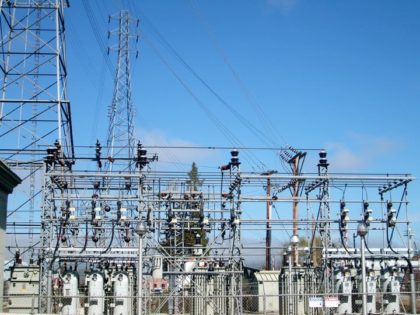
The Kenya-Tanzania Power Interconnection Project has moved forward with the division of lots and the commitment of contractors to set up a 510km 400kV transmission line and accompanying substations.
With the completion deadline set for 2020, the project is being implemented by the Tanzania Electric Supply Company (Tanesco) in collaboration with Kenya Electricity Transmission Company (Ketraco).
The works in Kenya are financed by the government and the African Development Bank (AfDB) at a cost of $4.25 million and $22.42 million respectively, while the Tanzanian project costs $258 million and is funded by a loan from AfDB and the Japanese International Cooperation Agency (JICA).
The objective of the Project is to ensure stable and reliable power supply in Tanzania and other East African countries.
The project will also help both countries replace high-cost thermal energy with cheaper hydropower, reducing greenhouse gas emissions in the process.
By 2020, the double-circuit will run from Singida to Isinya in Kenya through Babati, Arusha and Namnga in Tanzania.
Kenya will extend its line to Ethiopia, while Tanzania will extend its line to Zambia, which will connect the East Africa region to the Southern African Power Pool where connected countries will be able to buy and sell electricity from each other.
The East African Power Master Plan (EAPMP), which was developed in 2003, recommended the establishment of a power pool to facilitate electricity trade and joint least cost power development planning in the region.

POSTED BY NORTH AFRICA POST
North Africa Post's news desk is composed of journalists and editors, who are constantly working to provide new and accurate stories to NAP readers.
TANESCO at centre of efforts to spread power supply across Africa
January 30, 2019

30Jan 2019
PETER NYANJE
DAR ES SALAAM
Business
Financial Times
TANESCO at centre of efforts to spread power supply across Africa
Various power projects implemented by TANESCO are slowly placing Tanzania well within continental power trade plans.
Tanzania's power resources include hydro, natural gas, coal, uranium, wind, geothermal, biomass, solar, tidal and waves. In 2016, the country’s total grid installed capacity was 1,357.69 MW composed of hydro 566.79 MW (42 per cent), natural gas 607 MW (45 per cent) and liquid fuel 173.40 MW (13 per cent). File photo
The state-owned power utility firm is currently undertaking the Kenya-Tanzania Power Interconnection Project (KTPIP) which enables the two countries to exchange electricity easily.
The project involves construction of a 400kV transmission line from Singida to Isinya in Kenya through Babati, Arusha and Namanga.
Kenya will also extend this transmission line to Ethiopia while Tanzania extends the same to Zambia, thus connecting East Africa to the Southern Africa Power Pool (SAPP).
The project is part of a grand plan to have a 400kV transmission line traversing across Africa from Cairo in Egypt to South Africa.
“This means that Tanzania can sell or buy electricity from any country connected to this transmission line. In case of shortages we can buy from our colleagues and if we have a power surplus we can sell to them,” explained Emmanuel Manirabona, TANESCO’s senior manager projects.
Speaking to journalists at Nanja village where the contractor undertaking the Babati-Isanya section of the project has established his camp, project coordinator Peter Kigadya said it adds to other plans being implemented by the power utility firm to strengthen power generation, transmission and distribution in the country and beyond.
“This section of the project is financed through a loan obtained from the Africa Development Bank and JICA. The project entails construction of a 510-kilometre transmission line from Singida to Isinya, and five 400kV substations.
Because part of this project is being undertaken in Kenya, we are working together with our counterparts from there, KETRACO,” Kigadya explained.
He said the project aims to increase and improve power supply in the country, as well as strengthen the institutional capacity of the East African Power Pool (EAPP) for regional power trade.
“The project will contribute to, one, improving power supply in both countries and the East Africa region in general; and two, reducing operational costs of energy production,” he elaborated.
He also said the project will help both countries to displace high-cost thermal energy production with cheaper hydropower, hence reducing greenhouse gas emissions.
According to Kigadya, the interconnection starts at Isinya station, about 40 kilometres south of Nairobi, to Arusha. From Arusha, the line will connect with Singida through Babati.
“We are doing this as part of the Energy Sector Development Plan, which will enable interconnection with national power grids in Kenya in the north and Zambia in the south.
This will enable Tanzania to import significant amounts of cheap hydroelectricity in the short to medium-term from Ethiopia through the planned Ethiopia–Kenya interconnector, or from the Southern Africa Power Pool through the Zambia power connector,” he said.
He noted that in 2016, the Power System Master Plan (PSMP) considered six interconnection projects including the 400kV interconnector to Kenya which is currently being implemented and scheduled for operation in 2020.
Another one is the Tanzania–Zambia interconnection project currently on schedule for implementation starting financial year 2019 to enter into operation in 2022.
There is also a 200MW Masaka (Uganda)–Mwanza (Tanzania) interconnector; an interconnection with Mozambique; the Tanzania–Rwanda and Burundi interconnection through a 63MW hydropower plant project at the Rusumo border; and a 340MW hydropower plant project at the Songwe border involving both Tanzania and Malawi, which would enable the national power grids of the two countries to be connected in 2021.
This means that when the Stiegler’s Gorge hydropower project comes into operation in three years’ time and Tanzania finds itself with abundant power reserves, it can sell the same to any neighbouring country through these interconnections. Tanzania can also produce more power from other sources such as natural gas, geothermal and wind, and sell to needy countries.
“The Kenya–Tanzania interconnection project plays an important role in promoting regional integration through power trade… the power interconnection project is a win-win solution for both Kenya and Tanzania,” said Kigadya.
He said the 510km project has been divided into several lots with contractors conducting the work simultaneously to make sure that the entire project is completed by 2022/23.
In addition to the transmission line, the project also entails the building of modern sub-stations to ensure standardization and effectiveness of power transmission between the two countries.
“This project costs $258.82 million being a loan from AfDB and JICA,” he said.
Elaborating, he said lot number one of the project will involve construction of a 150km, 400kV double-circuit overhead transmission line between Singida and Babati, a work contracted to the Indian firm, Kalpataru Power Transmission Limited (KPTL) at a cost of $34.84 million and 17.982 billion/-.
“Lot number two entails construction of another 400kV transmission line between Babati and Arusha, covering distance of 150 kilometres. This work is being undertaken by Bouygues Energies & Services (BYES) of France at a cost of $36.89 million and 22.354 billion/-,” he added.
Powered by PrintFriendly.com

toptorn
JF-Expert Member
- Jan 6, 2019
- 1,224
- 3,057
So, na wewe unaona ni bora tusubiri mpaka matumizi yazidi ndio tujenge miundombinu ya umeme?Wacha ujinga. Ethiopia tayari wanaconsume more than 4,000 MW. Halafu wana deficit ya umeme. Yaani hio 4,000 MW haiwatoshi maana wana industries nyingi. Wao wanahitaji umeme mwingi na kampuni nyingi za kichina zinahamia Ethiopia sasa hivi. Nyinyi upande mwingine mnaconsume only 1,400 MW ya umeme na mnajenga dams kama nne with total output of more than 3,000 MW. Nyinyi hamtumii umeme kwa wingi kama Ethiopia.
Geza Ulole
Platinum Member
- Oct 31, 2009
- 76,152
- 107,720
Kisutu market opening!
Geza Ulole
Platinum Member
- Oct 31, 2009
- 76,152
- 107,720
New Dar Bus Terminal

babayao255
JF-Expert Member
- Apr 4, 2019
- 13,425
- 36,036
Tulieni dawa iwaingie.He's behaving like Dar hakuna sehemu chafu ama sizizopendeza. Inferiority complex ni ugonjwa mbaya sana
Unakumbuka huyu Levi alivyo kuja Dar Es Salaam alikuwa anafanya nini humu?
Shebby01 post picha wasikuletee makasiriko.
Halafu mbona mnatumia picha ya Dar [emoji23][emoji23][emoji23]
Geza Ulole
Platinum Member
- Oct 31, 2009
- 76,152
- 107,720
Tony254
JF-Expert Member
- May 11, 2017
- 16,016
- 16,435
[emoji23]
NA hako karefa ni kafupi na kadogo. Kanaweza kupigwa sana.
Similar Discussions
-
 Tanzania’s Dar es Salaam port surges ahead of Kenya’s Mombasa in global efficiency ranking
- Started by Zack Abdul
- Replies: 0
-
Kuchagua POS Bora kwa Maduka jijini Dar es Salaam
- Started by BIASHARABORA
- Replies: 2
-
-
 Need Someone in Dar es Salaam to Handle Tasks for You? (On-Ground Support in Tanzania)
- Started by Powell Gonzalez
- Replies: 1
-
Need Someone in Dar es Salaam to Handle Tasks for You? (On-Ground Support in Tanzania)
- Started by Powell Gonzalez
- Replies: 0