Battle: Dar es Salaam vs Nairobi
You are using an out of date browser. It may not display this or other websites correctly.
You should upgrade or use an alternative browser.
You should upgrade or use an alternative browser.
Battle: Dar es Salaam vs Nairobi

Geza Ulole
Platinum Member
- Oct 31, 2009
- 76,155
- 107,724
ambayo hailipwi in full! hata sie tuna budget ya city/town/district councils pia!Na usichojua kenya kuna budget ya serikali kuu na budget ya county
Geza Ulole
Platinum Member
- Oct 31, 2009
- 76,155
- 107,724
ndio maana tunaona matokeo chanya Tanzania bila munkari!Tanzania vs Kenya - Policy: Understanding the Difference Between Decentralization by Devolution (D by D) and Devolution
Tanzania’s D by D Model: Administrative Decentralization
Tanzania officially adopted the Decentralization by Devolution (D by D) policy during the 1990s as part of public sector reforms. The goal was to transfer responsibility for service delivery from the central government to Local Government Authorities (LGAs), commonly known as councils or municipalities.
Under this system:
The system is heavily coordinated through TAMISEMI (President’s Office – Regional Administration and Local Government).
- The central government formulates policy.
- Ministries provide standards and oversight.
- Local governments implement projects and deliver services.
This means sectors such as:
are largely implemented at council level.
- education,
- primary healthcare,
- local roads,
- water projects,
- sanitation,
- agricultural extension services,
For example, in education:
This is why Tanzania’s Ministry of Education budget alone does not fully represent the country’s total education spending. A large portion of implementation funds flows through TAMISEMI and local councils.
- teachers in public primary and secondary schools are managed through local authorities,
- school infrastructure projects are executed by councils,
- capitation grants are disbursed through local government systems.
Kenya introduced a much more politically autonomous structure through the 2010 Constitution, creating 47 County Governments.
Unlike Tanzania’s administrative decentralization, Kenya’s devolution created:
Counties in Kenya function almost like semi-autonomous regional governments.
- Governors,
- County Assemblies,
- County Executives,
- independent county budgets,
- and constitutionally protected local political authority.
They control major functions such as:
However, some key sectors remain highly centralized, especially education.
- county health systems,
- local trade,
- agriculture,
- urban planning,
- county roads,
- local taxation.
For example:
As a result, Kenya’s counties have stronger political power than Tanzania’s councils, but less operational control over some major national services such as education.
- teachers are employed nationally through the Teachers Service Commission (TSC),
- national curriculum remains centralized,
- national examinations are controlled by the central government,
- universities operate under national structures.
The major distinction between the two systems lies in what exactly is being decentralized.
- administration,
- implementation,
- service delivery.
In practical terms:
- political power,
- governance authority,
- regional autonomy.
Many observers mistakenly assume Tanzania is highly centralized because the country does not have governors or regional political governments like Kenya.
- Tanzania pushes government services downward.
- Kenya pushes political power outward.
However, in terms of actual implementation of public services, Tanzania is deeply decentralized through:
A significant share of:
- councils,
- municipalities,
- district authorities,
- and TAMISEMI structures.
happens outside sector ministries and through local government authorities.
- school construction,
- teacher management,
- healthcare facilities,
- rural infrastructure,
- and local development spending
This creates a model where:
Kenya’s model gives local populations stronger political representation.
- national policy remains unified,
- but implementation is localized.
Governors are directly elected and possess substantial visibility and influence. County governments can:
This has increased local political participation and regional competition.
- prioritize local development differently,
- negotiate investments,
- shape county-level agendas,
- and compete for regional growth.
However, the system has also introduced:
Tanzania’s D by D approach tends to maintain stronger national coordination.
- duplication of bureaucracy,
- rising administrative costs,
- conflicts between national and county governments,
- and uneven development across counties.
Because local authorities operate under nationally coordinated frameworks:
This is particularly visible in:
- national priorities are easier to implement uniformly,
- large-scale programs can be rolled out faster,
- and sector reforms remain more standardized.
The tradeoff is that local governments possess less independent political power compared to Kenya’s counties.
- school expansion,
- health facility construction,
- free education programs,
- and national infrastructure rollout.
There is no universal answer.
- political autonomy,
- regional representation,
- local democratic visibility.
Ultimately, the two countries reflect different state philosophies:
- centralized coordination,
- nationwide program implementation,
- service delivery integration.
- Kenya prioritizes devolved political governance.
- Tanzania prioritizes decentralized administrative execution.

President of China
JF-Expert Member
- Dec 6, 2018
- 34,608
- 94,198
Kwetu Tanzania Halmashauri zinakusanya mapato vizuri sana kwasababu yupo mratibu ambaye ni TAMISEMI, huko kenya mapato ya County yanasimamiwa na mwanasiasa ambaye ni Gavana, kwahiyo hapo hakuna utaalamu wowote.ambayo hailipwi in full! hata sie tuna budget ya city/town/district councils pia!
Kwetu Meyor yupo kisiasa bali kuna mtu anaitwa Mkurugenzi. Makusanyo yetu na bajeti za Halmashauri zinakuwa chini ya baraza la madiwani na kapato hukusanywa kwa kutumia mfumo wa LGRCIS
Mfumo wa kenya unavutia sana ufisadi na rushwa. Hatutakiwi hata siku moja kuwa na mfumo kama wa kenya.
Check tofauti
| Kipengele | Halmashauri za Tanzania | Counties za Kenya |
| Usimamizi | Inaratibiwa na TAMISEMI (Moja kwa moja). | Inaratibiwa na Gavana (Nguvu ya Kisiasa). |
| Uvujaji | Mdogo (Mifumo ya kielektroniki imefungwa nchi nzima). | Mkubwa (Mifumo ya kaunti inatofautiana na haina udhibiti mkali). |
| Gharama za Ukusanyaji | Chini (Inatumia watumishi wa umma waliopo). | Juu (Kaunti nyingi hukodisha kampuni binafsi kukusanya mapato). |

concordile 101
JF-Expert Member
- Oct 13, 2013
- 6,999
- 15,466
Budget kuu inawasilisha mpaka zile za local governments , usidanganiyike hata tz tunahiyo kitu ila inawasilisha kupitia tamisemiNa usichojua kenya kuna budget ya serikali kuu na budget ya county
Geza Ulole
Platinum Member
- Oct 31, 2009
- 76,155
- 107,724
Jamaa ni falamanga!Budget kuu inawasilisha mpaka zile za local governments , usidanganiyike hata tz tunahiyo kitu ila inawasilisha kupitia tamisemi
Geza Ulole
Platinum Member
- Oct 31, 2009
- 76,155
- 107,724
concordile 101
JF-Expert Member
- Oct 13, 2013
- 6,999
- 15,466
In
Inshort bajeti yao ni ndogo sana, kupitia local governments zinatengenga fedha za maendeleo kulingana na mapato. Mfano dar , municipality zote zinatakiwa kutenga 70% ya makusanyo yao kwenye maendeleo huku wakitakiwa kuwa na 10% kwa ajili ya mikopo.
Ingekuwa tofauti wasingekuwa na allocation kwenda counties🤣.Mzee Kenya is not Decentralized Government but it is a devolved government.
Nikufundishe hilo? Tanzania is the first country to implement D by D policy.
Most countries zinakuja kujifunza Tanzania
Devolution ya Kenya is most political than Administration
Kama unataka kujifunza nitaeleza vizuri sana.
Inshort bajeti yao ni ndogo sana, kupitia local governments zinatengenga fedha za maendeleo kulingana na mapato. Mfano dar , municipality zote zinatakiwa kutenga 70% ya makusanyo yao kwenye maendeleo huku wakitakiwa kuwa na 10% kwa ajili ya mikopo.

chongchung
JF-Expert Member
- Jun 23, 2013
- 14,740
- 46,079
Hii kitu ulishaiona maisha yako? Considering our sgr is loading 1.7 times of your SGR capacity, reaching the destination earlier 1.9 times than youDid Dangote told you that he is planning to use a railway?🤣🤣😂
concordile 101
JF-Expert Member
- Oct 13, 2013
- 6,999
- 15,466
Jamaa ni falamanga!
Haha hamna anachojua , unajisifia kuwa na bajeti tofauti wakati kuna county kama mandera zinazidiwa mapato na magufuli bus terminal🤣🤣🤣
chongchung
JF-Expert Member
- Jun 23, 2013
- 14,740
- 46,079
Hizo assets na bado hata kufund simple stadium like Talanta mpaka mtapeliwe 10 times na mchina! 😢Leo hii ndio mmegundua mambo ya Bonds?😂😂😂.
By the way Kenya's financial assets are 10 times ya Tanzania.
concordile 101
JF-Expert Member
- Oct 13, 2013
- 6,999
- 15,466
Kwetu Tanzania Halmashauri zinakusanya mapato vizuri sana kwasababu yupo mratibu ambaye ni TAMISEMI, huko kenya mapato ya County yanasimamiwa na mwanasiasa ambaye ni Gavana, kwahiyo hapo hakuna utaaramu wowote.
Kwetu Meyor yupo kisiasa bali kuna mtu anaitwa Mkurugenzi. Makusanyo yetu na bajeti za Halmashauri zinakuwa chini ya baraza la madiwani na kapato hukusanywa kwa kutumia mfumo wa LGRCIS
Mfumo wa kenya unavutia sana ufisadi na rushwa. Hatutakiwi hata siku moja kuwa na mfumo kama wa kenya.
Check tofauti
Kipengele Halmashauri za Tanzania Counties za Kenya Usimamizi Inaratibiwa na TAMISEMI (Moja kwa moja). Inaratibiwa na Gavana (Nguvu ya Kisiasa). Uvujaji Mdogo (Mifumo ya kielektroniki imefungwa nchi nzima). Mkubwa (Mifumo ya kaunti inatofautiana na haina udhibiti mkali). Gharama za Ukusanyaji Chini (Inatumia watumishi wa umma waliopo). Juu (Kaunti nyingi hukodisha kampuni binafsi kukusanya mapato).
Correction mfumo wa ukusanyaji mapato sasa hivi ni TAUSI hapa hakuna Cha kuforge risiti Wala nini.
Waziri wa tamisemi anaweza kuona makusanyo yote ya halmashauri na defaulters,
Bajeti target za makusanyo lazima zifikie walau kwa 60% ya makusanyo.
Kuna mapato lindwa na mapato yasiyolindwa.
Mapato lindwa ni ya vijiji na hospitali za wilaya na zahanati.
Mapato yasiyolindwa ni Yale ya halmashauri .
concordile 101
JF-Expert Member
- Oct 13, 2013
- 6,999
- 15,466
Kwetu Tanzania Halmashauri zinakusanya mapato vizuri sana kwasababu yupo mratibu ambaye ni TAMISEMI, huko kenya mapato ya County yanasimamiwa na mwanasiasa ambaye ni Gavana, kwahiyo hapo hakuna utaaramu wowote.
Kwetu Meyor yupo kisiasa bali kuna mtu anaitwa Mkurugenzi. Makusanyo yetu na bajeti za Halmashauri zinakuwa chini ya baraza la madiwani na kapato hukusanywa kwa kutumia mfumo wa LGRCIS
Mfumo wa kenya unavutia sana ufisadi na rushwa. Hatutakiwi hata siku moja kuwa na mfumo kama wa kenya.
Check tofauti
Kipengele Halmashauri za Tanzania Counties za Kenya Usimamizi Inaratibiwa na TAMISEMI (Moja kwa moja). Inaratibiwa na Gavana (Nguvu ya Kisiasa). Uvujaji Mdogo (Mifumo ya kielektroniki imefungwa nchi nzima). Mkubwa (Mifumo ya kaunti inatofautiana na haina udhibiti mkali). Gharama za Ukusanyaji Chini (Inatumia watumishi wa umma waliopo). Juu (Kaunti nyingi hukodisha kampuni binafsi kukusanya mapato).
Inshort tukija kwenye local governments, Tanzania Ina perform vizuri sana, ni nadra kukuta shule za miti kama kenya
chongchung
JF-Expert Member
- Jun 23, 2013
- 14,740
- 46,079
Zero in planning pia, si unaona SGR yao walivyo plan na saivi wanahangaika kuirenovateKenyans are good in planning, but zero implementation.
President of China
JF-Expert Member
- Dec 6, 2018
- 34,608
- 94,198
Umenikumbusha hiiZero in planning pia, si unaona SGR yao walivyo plan na saivi wanahangaika kuirenovate
chongchung
JF-Expert Member
- Jun 23, 2013
- 14,740
- 46,079
uzuri sisi tumeshika mpini! OP inaishia Tanga so we have upperhand in this! tunajua kelele zao ati Tanga with the most modern terminal in Africa is not deep water port! Yaani wanamaanisha crude oil itabebwa na mitumbwi kutoka Chongoleani! These people r wicked!
View: https://www.instagram.com/p/DYNGhZ9DRML/?utm_source=ig_web_copy_link&igsh=NTc4MTIwNjQ2YQ==
Wanafikiri oil tankers ni kama container ships 😂😂 hata Dangote akichagua Kenya, meli za mafuta hazotadock kwenye port berths kama wanavyodhani
Geza Ulole
Platinum Member
- Oct 31, 2009
- 76,155
- 107,724
Na usichojua kenya kuna budget ya serikali kuu na budget ya county
Kenya's FY 2026/27 budget
Projections show total revenue at Sh3.6 trillion, creating a fiscal deficit of Sh1.1 trillion, equivalent to 5.3 per cent of GDP
by ROSA MUMANYI
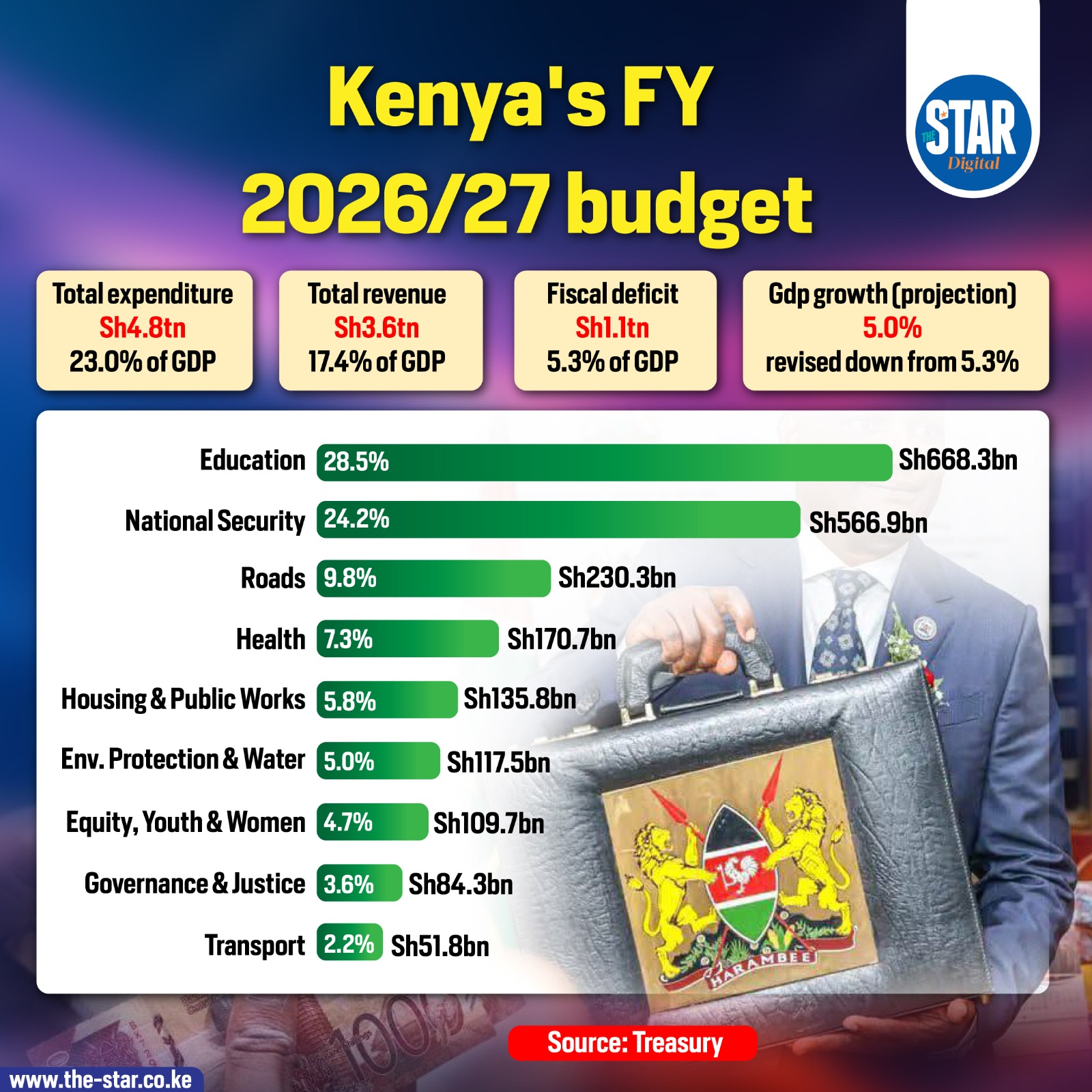
Kenya’s proposed 2026/27 financial year budget will hit Sh4.8 trillion, with education receiving the largest allocation as the government prioritises learning, security and infrastructure.
Treasury projections show total revenue at Sh3.6 trillion, creating a fiscal deficit of Sh1.1 trillion, equivalent to 5.3 per cent of GDP.
Education has been allocated Sh668.3 billion, accounting for 28.5 per cent of the budget, followed by national security at Sh566.9 billion.
Roads will receive Sh230.3 billion while the health sector has been allocated Sh170.7 billion.
Treasury also revised Kenya’s projected economic growth downwards from 5.3 per cent to 5.0 per cent.

Kenya's FY 2026/27 budget
Projections show total revenue at Sh3.6 trillion, creating a fiscal deficit of Sh1.1 trillion, equivalent to 5.3 per cent of GDP
MY TAKE
Na hi kutoka treasury?
chongchung
JF-Expert Member
- Jun 23, 2013
- 14,740
- 46,079
Si mlisema hamtegemei mafuta ya mfaransa 😅
Geza Ulole
Platinum Member
- Oct 31, 2009
- 76,155
- 107,724
Nimeona Uhuru akitoa macho akidhani Kenya itatajwa kwenye accolades za Museveni
View: https://youtu.be/uq1zsAi9nMw?si=93pj3vQ0Jir6wKHP
View: https://youtu.be/uq1zsAi9nMw?si=93pj3vQ0Jir6wKHP
President of China
JF-Expert Member
- Dec 6, 2018
- 34,608
- 94,198
Leo nitaelezea tofauti ya serikali ya Kenya na ya Tanzania hususani Cabinet.
Kwa utangulizi Tanzania inafuata mfumo unaoitwa Fusion of Powers na Kenya inafuata mfumo unaoitwa Separation of Powers.
AKA Mfumo wa Tanzania (Westminster Model) na Mfumo wa Kenya (Pure Presidential System).
Tanzania tunaiga mfumo wa Uingereza lakini Kenya wameiga mfumo wa USA. Sasa naomba nieleze tofauti ya mifumo hii kiutendaji Kati ya Kenya na Tanzania:
Mfumo wa Tanzania umelenga Uthabiti (Stability). Uwepo wa Makatibu Wakuu ambao ni watumishi wa kudumu unailinda nchi dhidi ya migogoro ya kisiasa. Miradi ya maendeleo nchini Tanzania inatambuliwa kama mali ya Dola, ndiyo maana hata awamu zikibadilika, mwelekeo wa kitaifa unabaki palepale.
Kenya, kwa kuiga mfumo wa Marekani, wameingia kwenye changamoto ya nchi kuendeshwa kwa "Msimu wa Rais" mmoja mmoja. Hii inapunguza kasi ya maendeleo ya muda mrefu (Long-term Development) kwani kila uongozi unakuja na watu wake wapya na vipaumbele vipya, huku ukiondoa watendaji wa zamani wenye uzoefu.
Kwa kifupi: Tanzania ina Mfumo (System) unaojiendesha, wakati Kenya ina Watu (Personalities) wanaoendesha mfumo.
Kwa utangulizi Tanzania inafuata mfumo unaoitwa Fusion of Powers na Kenya inafuata mfumo unaoitwa Separation of Powers.
AKA Mfumo wa Tanzania (Westminster Model) na Mfumo wa Kenya (Pure Presidential System).
Tanzania tunaiga mfumo wa Uingereza lakini Kenya wameiga mfumo wa USA. Sasa naomba nieleze tofauti ya mifumo hii kiutendaji Kati ya Kenya na Tanzania:
Ulinganifu wa Mifumo ya Utawala: Tanzania (Fusion of Powers) vs. Kenya (Separation of Powers)
Ili kuelewa kwanini Tanzania ina utulivu wa kiutendaji na Kenya ina mfumo wa ushindani mkali, ni lazima tuchambue kiini cha mifumo yao ya Baraza la Mawaziri (Cabinet).1. Chimbuko la Mifumo (The Models)
- Tanzania: Inafuata Westminster Model (kutoka Uingereza). Huu unajulikana kama mfumo wa Fusion of Powers (Mshikamano wa Madaraka). Hapa, muhili wa Serikali na Bunge imefungamanishwa; huwezi kuwa Waziri kama wewe si Mbunge.
- Kenya: Inafuata Pure Presidential System (kutoka Marekani). Huu unaitwa mfumo wa Separation of Powers (Utengano wa Madaraka). Mawaziri (Cabinet Secretaries) wako nje ya Bunge, na kuna ukuta mkali wa kisheria kati ya watunga sheria na watekelezaji.
2. Mwendelezo wa Taasisi na "Institutional Memory"
Hapa ndipo penye tofauti kubwa ya kiutendaji ambayo huamua hatari au usalama wa miradi ya nchi:Tanzania: Career Civil Service (Makatibu Wakuu kama Walinzi wa Dola)
Nchini Tanzania, wizara inaendeshwa na Katibu Mkuu (Permanent Secretary).- Utaalamu (Technocracy): Hawa ni watumishi waandamizi wa umma ambao wamekulia ndani ya mfumo (Career Diplomats/Administrators). Sio wanasiasa.
- Mwendelezo (Continuity): Katibu Mkuu ndiye "Accounting Officer." Hata Serikali ikimaliza muda wake au Baraza la Mawaziri likivunjwa, Katibu Mkuu anabaki ofisini. Miradi ya kimkakati haisimami kwa sababu "injini" ya wizara (Katibu Mkuu) haiondoki na wanasiasa. Hii inahakikisha kuwa nchi inaendeshwa kama Dola (State) na si kama kundi la kisiasa.
Kenya: Political Appointees (Wateule wa Rais)
Nchini Kenya, mfumo unaruhusu Rais kuteua si tu Mawaziri (Cabinet Secretaries) , bali hata Makatibu (Principal Secretaries) kutoka nje ya utumishi wa umma.- Utii kwa Rais: Wateule hawa mara nyingi wanakuwepo kutekeleza ilani ya Rais aliyepo pekee. Hawana mizizi ndani ya utumishi wa umma.
- Athari (Policy Rupture): Rais mmoja akiondoka madarakani, huondoka na timu yake yote hadi ngazi ya utendaji. Hii inasababisha nchi "kuanza upya" (Resetting) kila baada ya uchaguzi. Miradi mingi hukwama au kutelekezwa kwa sababu hakuna Makatibu wa kudumu wa kuilinda dhidi ya mabadiliko ya upepo wa kisiasa.
3. Uwajibikaji na Ufanisi wa Bajeti
Tanzania: Uwajibikaji wa Pamoja (Collective Responsibility)
Kwa sababu Mawaziri ni Wabunge, wanawajibika kwa wananchi na kwa Rais wakati mmoja.- Waziri anapokuwa Bungeni, analazimika kujibu hoja za kitalamu zilizotayarishwa na Katibu Mkuu wake. Hii inatengeneza muunganiko imara (Synergy) kati ya Siasa (Waziri) na Utaalamu (Katibu Mkuu).
Kenya: Utengano wa Kimamlaka (Check and Balance)
Mawaziri wa Kenya huonekana kama "wafanyakazi" wa Rais kuliko wawakilishi wa watu.- Hii inasababisha msuguano wa mara kwa mara kati ya Bunge na Serikali. Bunge la Kenya linaweza kukataa bajeti au mipango ya Waziri kwa sababu tu hakuna ufungamanishi wa kikazi wa kila siku kati ya mawaziri na wabunge.
Mfumo wa Tanzania umelenga Uthabiti (Stability). Uwepo wa Makatibu Wakuu ambao ni watumishi wa kudumu unailinda nchi dhidi ya migogoro ya kisiasa. Miradi ya maendeleo nchini Tanzania inatambuliwa kama mali ya Dola, ndiyo maana hata awamu zikibadilika, mwelekeo wa kitaifa unabaki palepale.
Kenya, kwa kuiga mfumo wa Marekani, wameingia kwenye changamoto ya nchi kuendeshwa kwa "Msimu wa Rais" mmoja mmoja. Hii inapunguza kasi ya maendeleo ya muda mrefu (Long-term Development) kwani kila uongozi unakuja na watu wake wapya na vipaumbele vipya, huku ukiondoa watendaji wa zamani wenye uzoefu.
Kwa kifupi: Tanzania ina Mfumo (System) unaojiendesha, wakati Kenya ina Watu (Personalities) wanaoendesha mfumo.
Similar Discussions
-
 Tanzania’s Dar es Salaam port surges ahead of Kenya’s Mombasa in global efficiency ranking
- Started by Zack Abdul
- Replies: 0
-
Kuchagua POS Bora kwa Maduka jijini Dar es Salaam
- Started by BIASHARABORA
- Replies: 2
-
-
 Need Someone in Dar es Salaam to Handle Tasks for You? (On-Ground Support in Tanzania)
- Started by Powell Gonzalez
- Replies: 1
-
Need Someone in Dar es Salaam to Handle Tasks for You? (On-Ground Support in Tanzania)
- Started by Powell Gonzalez
- Replies: 0