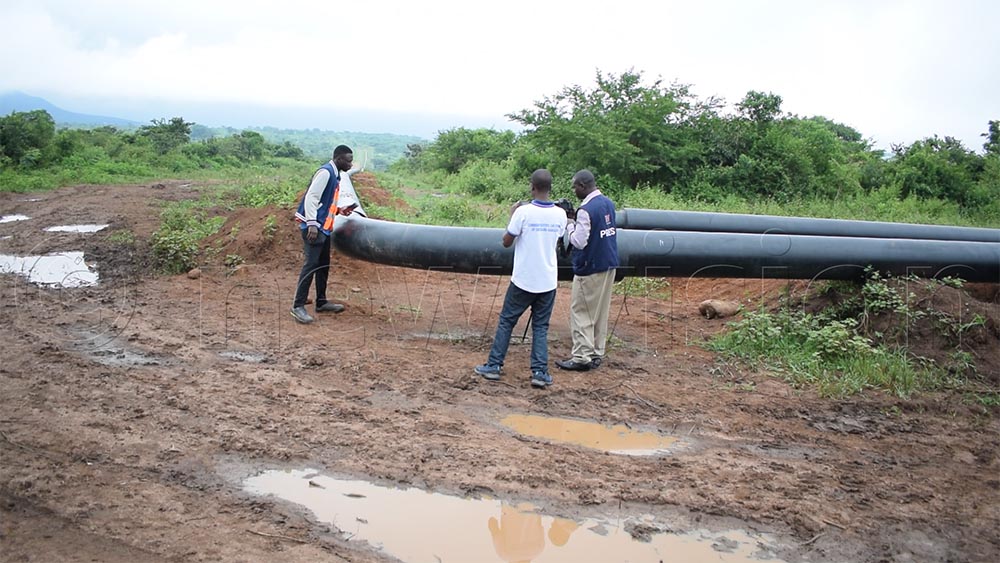
Iko hivi, reli ya SGR inaizidi upana reli ya cape gauge kwa zaidi ya futi moja na nchi mbili (~ 36.8cm). Hivyo kwenye tuta la cape gauge huwezi tu kubadilisha na kuweka SGR na bila kurekebisha upana wa tuta utaleta tatizo la stability.
Suala la mwendo halichangiwi sana na upana wa reli bali jinsi reli ilivyosanifiwa kuzingatia ukali wa kona zake na miinuko.
Huyu jamaa ana-bore kinoma! Yaani naanza kujiuliza upeo wake!
Hii maneno kuna wakati nilisema hata Mtwara port ikiunganishwa na reli itafaa iwe ya Cape Gauge maana Mtwara ipo strategic ku-serve Malawi, Mozambique, Zambia, DRC e.t.c.! Nilibishiwa humu lakini ndo kinachoenda kutokea! Wamarekani wanajenga reli toka Benguela kwenda DRC na believe me watajenga Cape Gauge Standard!
US and EU jointly support new African railway line between Zambia and Angola
Published on 11-09-2023 at 16:37
The European Union and the United States are teaming up to support the development of a new Greenfield African railway line expansion between Zambia and Angola by launching feasibility studies. The countries committed to this at the G20 Summit in India last Saturday.
The new African railway line is part of developing the Trans-African Corridor connecting southern Democratic Republic of the Congo (DRC) and northwestern Zambia to regional and global trade markets via the Port of Lobito in Angola. The project was announced on the margins of the Partnership for Global Infrastructure and Investment (PGII) event at the G20 in India.
The Lobito Corridor presents an alternative strategic route to export markets for Zambia and DRC and offers the shortest route linking key mining regions in these two countries to the sea. The EU-U.S. partnership will upgrade critical infrastructure across sub-Saharan Africa to unlock the “enormous potential of this region”, they say in a joint statement. “We are excited to join forces to generate economic benefits with our partners in Angola, the Democratic Republic of the Congo and Zambia”.
The partnership will combine financial resources and technical know-how to accelerate the Trans-African Corridor development, including investments in digital access and agricultural value chains that will increase regional competitiveness.
According to the EU, this represents a “powerful evolution of the Partnership element of the Partnership for Global Infrastructure and Investment with a collaborative approach that could be replicated in other strategic corridors around the world”.
The three African countries signed an agreement for a corridor governance instrument on 27 January this year called the “Lobito Corridor Transit Transport Facilitation Agency (LCTTFA) Agreement”. This creates a framework for the three SADC Member States to jointly develop harmonised corridor laws, policies, regulations and systems including infrastructure development in a coordinated manner. It should accelerate growth in domestic and cross-border trade along the Corridor through the implementation of harmonised trade facilitation instruments, strengthening coordination of joint corridor development activities, and fostering effective participation of small and medium enterprises (SMEs) in value chains. According to the Chairperson of the Lobito Corridor Meeting, Director of Infrastructure Mapalao Rosemary Mokeona, it was a historical agreement which had taken over ten years to get to.
The European Union and United States will support the Governments of Zambia, the Democratic Republic of Congo and Angola in launching pre-feasibility studies for the construction of the new African railway line from eastern Angola through northern Zambia. This builds on the initial U.S.-led support to refurbish the railway section from the Lobito port in Angola to the Democratic Republic of the Congo.
What do the EU and US have to gain?
Once transport infrastructure connecting all three countries is fully operational, the Lobito Corridor will enhance export possibilities for Zambia, Angola and the Democratic Republic of the Congo, boost the regional circulation of goods, and promote the mobility of citizens, the EU and US say. But it is clear the the two Western powers also have something to gain by investing in African infrastructure. By significantly reducing the average transport time, the new railway will “lower the logistics costs and carbon footprint of exporting metals, agricultural goods, and other products as well as for future development of any mineral discoveries”, they say in a statement. It is not for nothing that the Corridor is named after the Lobito port, with export of raw materials being one of the key drivers for the development.
The Lobito Corridor covers the mining areas of the Katanga Province of DRC and the Copperbelt of Zambia. The International Energy Agency projects that demand for rare earth metals – for example needed for electric vehicle (EV) motors and wind turbines – will grow by three-to-seven-fold by 2040. According to IEA data, total demand for copper and rare earth metals will increase by 40 percent, nickel and cobalt by 60-70 percent and lithium by almost 90 percent.
In addition to transport infrastructure, the US and EU would corporate with the African countries in developing clean energy projects to increase the power supply to surrounding communities, supporting diversified investment in critical minerals and clean energy supply chains, extending digital access, growing agriculture value chains to enhance local food production for the region’s expanding population and to address global food insecurity, as well as augmenting local workforce training, support for small and medium enterprises and economic diversification.
Similarly, China has in the past years made large investments in Africa as part of their Belt and Road initiative. For example, they built and funded a railway between Mombasa and Nairobi in Kenya, which started running in 2017, as well as a rail link between Ethiopia and Djibouti, and a new line connecting Lagos and Ibadan in Nigeria.
A ‘Greenfield’ African railway line
Apart from that it will connect Angola and Zambia, it is not yet clear how new rail link could look like has not been announced, apart from the fact that it is called ‘greenfield’, hinting that is comes in addition to the existing rail infrastructure between the countries, called the Benguela railway.
The current Lobito railway extends across Angola for almost 1,300 kilometres and then continues for 400 kilometres into the Democratic Republic of the Congo to Kolwezi, the heart of the Copperbelt. It also connects with the rail network run by the National Railway Society of the Congo (SNCC). A 30-year concession to run rail operations on the line was recently signed on 4 July, being awarded to the Lobito Atlantic Railway consortium joint venture company comprising Trafigura, a market leader in the global commodities industry, Mota-Engil Engenharia e Construcao Africa SA (“Mota-Engil”), an international construction and infrastructure management company and Vecturis SA, an independent rail operator.
The concession includes investing into rolling stock, and involved securing 1,555 wagons and 35 locomotives for the Angolan side of the corridor alone. Overall, the consortium plans to invest USD 455 million in Angola and up to USD 100 million in the DRC.