
Smartkahn
JF-Expert Member
- Jun 22, 2020
- 1,027
- 1,788

ata kama ilikua 34.1 tonnes last year, bado hio ni mingi sana👏🏽wacha kuharisha humu ati Mombasa port ina handle 63.5 mln tons? Kwahiyo hata Durban port haioni ndani?
Mombasa port sees marginal cargo growth
WEDNESDAY NOVEMBER 24 2021

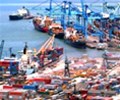
Pedestrian walk next to a Container Freight Station (CFS) along the Portrietz road in Mombasa on September 21, 2021.
Mombasa port continues to reel from the effects of the Covid-19 pandemic, recording minimal cargo growth in the first nine months of 2021.
The port handled 26.17 million tonnes of cargo this year up to September compared to 25.05 million tonnes in the corresponding period in 2020.
In the period under review, the Mombasa port witnessed increased volumes in container traffic registering 1.1 million containers against 1 million last year.
Acting Kenya Ports Authority (KPA) managing director John Mwangemi said notable resilience has been observed this year and expressed optimism the port will record significant growth in the coming few months.
“We remain optimistic that as the year comes to a close, the port will continue handling more cargo to further increase the positive performance,” said Mr Mwangemi.
While making remarks during the annual KPA Corporate Golf Tournament played over the weekend in Mombasa, Mr Mwangemi said the ongoing key infrastructural projects in various port facilities will ensure more efficiency to attract more business in future.
“The construction of the second container terminal (CT2) Phase II is on course which once completed will add more space of more than 450 twenty-foot equivalent units (Teus) thus ensuring there is no congestion at the facility,” said Mr Mwangemi.
Once completed, the new CT2 will enable the ports to handle post-panamax-plus vessels to grow container capacity from 1.65 million Teus to 2.2 million, which will give the port an edge over that of Dar es salaam.
Regarding the new Kipevu Oil Terminal, the facility is expected to be completed next month. The new oil facility which is bigger and modern will have facilities for offloading crude oil, refined petroleum and liquified petroleum gas (LPG) and is due for completion by end of the year.
"Once complete, KPA will have a terminal consisting of four berths capable of berthing four vessels of up to 200,000 deadweights tonnes (DWT) at ago, to benefit from economies of scale and reduction of demurrage,” said the acting MD.
Apart from facilities at the Port of Mombasa, KPA is also investing heavily in Lamu and Kisumu ports where it is banking on the latter to increase in business between Kenya and its neighbours via Lake Victoria.
Already developments and rehabilitation of the Port of Kisumu have been completed while in Lamu, the first berth is operational while second and third berths are expected to start operating next year.
"Since Lamu port came into operation on May 20 this year has so far received nine vessels. Plans are underway to procure additional equipment to ensure efficient delivery of services," he said.
akitimo@ke.nationmedia.com

Mombasa port sees marginal cargo growth
Mombasa port continues to reel from the effects of the Covid-19 pandemic, recording minimal cargo growth in the first nine months of 2021.www.businessdailyafrica.com

18 mln tons in 2020!Mzee kusoma hujui au nini? Mombasa port huwa ina handle 35 million tonnes kila mwaka. Hio data uliyokoleza kwa rangi nyekundu ni data ya up to September (9 months). Na ineandikwa vizuri sana.

Hio 18 million tonnes umetoa wapi? Kwani hujui kuconvert from TEUs to metric tonnes? Kwa habari yako 1 TEU=24 metric tonnes. Kwa hivyo 1.42 million TEUs itakuwa 1.42×24= 34.08 million tonnes.18 mln tons in 2020!
Mombasa port nearing capacity limit – report
in Port News 17/11/2020
The Mombasa port is among facilities in Africa that are almost full, a situation likely lead to congestion and a need for expansion, a continental report shows.
‘The Africa’s Port: Fast-tracking Transformation’ report lists Mombasa alongside Lagos (Nigeria), Dar es Salaam (Tanzania) and Cape Town (South Africa), as among facilities with infrastructure deficit in the short-term.
“Existing port infrastructure is often inadequate to meet demand. As a result, several major ports, including Lagos, Mombasa, Dar es Salaam and Cape Town, are on the verge of reaching their capacity limit, which can lead to costly congestion issues,” the report states.
“Without investment and taking into account growth in demand, the situation runs the risk of worsening.”
The report was put together by Africa CEO Forum and Okan — a strategy consulting and financial advisory firm.
The Port of Mombasa comprises Kilindini harbour, Port Reitz, the Old Port, Port Tudor and the whole of the tidal waters encircling Mombasa Island. The port has a capacity of 2.65 million twenty-foot equivalent unit.
Kenya is ranked highly among Africa’s top 20 ports in cargo handling and container dwell-time.
Dwell time is the amount of time which cargo or ships, spend within a port. It is a key indicator of how efficiently a port is operating, how quickly cargo is flowing through its terminals and how long a ship is spending in port.
The annual report puts Kenya in fifth position among ports which handled most cargoes in the continent in recent time. The Mombasa port had an average annual throughput of 1.3 million TEUs, a measure of volume in units of twenty-foot long containers.
The Kenya Ports Authority last year set a new record of 1.42 million TEUs.
Egypt tops with its Alexandria and Port Said facilities with an average capacity of 6.2 million TEUs, followed by South Africa (Durban) with 4.9 million TEUs, then Morocco with its Tanger Med port (4.8 million TEUs).
Algeria, which has about 15 ports with six major ones, comes fourth with an annual handing capacity of 4.8 million TEUs.
In cargo dwell-time, Mombasa is the second-best performing in Africa with five days, after Durban which has an average of four days.
Europe’s largest seaport– Port of Rotterdam, the Netherlands, has the best time of two days.
Only three African countries (Egypt, Morocco and South Africa) rank in the top 50 in terms of efficiency of seaport services.
The three are also the African countries equipped to handle more than four million TEU, as of 2018.
Taken together, these three countries account for 51 per cent of volumes transported in Africa.
The Africa CEO Forum has urged governments to invest wisely and avoid notorious ‘white elephants’.
“Investment requirements continue to be very high on the continent, but before rushing into developing major, costly projects, African states must first clearly define the aim of their port projects,” said Frédéric Maury, editorial director for Africa CEO Forum.
The KPA is counting on the Sh32 billion Mombasa port phase II second container terminal under construction to increase cargo handling capacity at Mombasa.
The project being undertaken by Japan’s Toyo Construction Company commenced in September 2018 and is currently at above 56.3 per cent complete. It is due in November 2021.
It is an extension to the first phase built on a Sh26 billion loan from Japan, and commissioned in April 2016. The project created 550,000 TEUs capacity with two new berths.
Phase II is expected to add 450,000 TEUs capacity at the facility, bringing the total capacity at the new terminal to one million TEUs.
“Construction of the second container terminal was informed by the need to expand capacity ahead of demand to cope with the exponential growth in containerised traffic,” KPA management told the Star.
It is estimated the port will handle 47 million tonnes in the next 10 years, from the current 30 million and eventually 111 million by 2047.
“Over the years, the Port of Mombasa has consistently recorded significant growth of cargos thereby necessitating capacity expansion in the short to medium term to avoid congestion,”KPA head of corporate affairs Bernard Osero told the Star in an interview.
Source: The Star
Mombasa port nearing capacity limit – report | Hellenic Shipping News Worldwide
www.hellenicshippingnews.com

Kama mbele mwanangu [emoji8][emoji8][emoji7][emoji1241][emoji91][emoji91][emoji91][emoji123][emoji2936][emoji122][emoji122][emoji122][emoji122][emoji122][emoji122]

alafu asante sana 👏🏽👏🏽 KENPAULITE kwa kutusindua tusome hio article yote hadi mwisho!
yaani hawa wadanganyika niwajanjez sana..😆
..hivi Port of Mombasa quadruples(×4) Dar Es Saalam.. ie. 11million tonnes against 63million tonnes!🤔
Tony254 ukowapi uone hii, na rafiki yako The best 007 sijui pia nae kama ako hapa, yani yule mzee wa $150b gdp
👇🏽👇🏽😆😆 source: The Citizen Newspaper, Tanzania
View attachment 2302240View attachment 2302241
18 mln tons in 2020!
Mombasa port nearing capacity limit – report
in Port News 17/11/2020
The Mombasa port is among facilities in Africa that are almost full, a situation likely lead to congestion and a need for expansion, a continental report shows.
‘The Africa’s Port: Fast-tracking Transformation’ report lists Mombasa alongside Lagos (Nigeria), Dar es Salaam (Tanzania) and Cape Town (South Africa), as among facilities with infrastructure deficit in the short-term.
“Existing port infrastructure is often inadequate to meet demand. As a result, several major ports, including Lagos, Mombasa, Dar es Salaam and Cape Town, are on the verge of reaching their capacity limit, which can lead to costly congestion issues,” the report states.
“Without investment and taking into account growth in demand, the situation runs the risk of worsening.”
The report was put together by Africa CEO Forum and Okan — a strategy consulting and financial advisory firm.
The Port of Mombasa comprises Kilindini harbour, Port Reitz, the Old Port, Port Tudor and the whole of the tidal waters encircling Mombasa Island. The port has a capacity of 2.65 million twenty-foot equivalent unit.
Kenya is ranked highly among Africa’s top 20 ports in cargo handling and container dwell-time.
Dwell time is the amount of time which cargo or ships, spend within a port. It is a key indicator of how efficiently a port is operating, how quickly cargo is flowing through its terminals and how long a ship is spending in port.
The annual report puts Kenya in fifth position among ports which handled most cargoes in the continent in recent time. The Mombasa port had an average annual throughput of 1.3 million TEUs, a measure of volume in units of twenty-foot long containers.
The Kenya Ports Authority last year set a new record of 1.42 million TEUs.
Egypt tops with its Alexandria and Port Said facilities with an average capacity of 6.2 million TEUs, followed by South Africa (Durban) with 4.9 million TEUs, then Morocco with its Tanger Med port (4.8 million TEUs).
Algeria, which has about 15 ports with six major ones, comes fourth with an annual handing capacity of 4.8 million TEUs.
In cargo dwell-time, Mombasa is the second-best performing in Africa with five days, after Durban which has an average of four days.
Europe’s largest seaport– Port of Rotterdam, the Netherlands, has the best time of two days.
Only three African countries (Egypt, Morocco and South Africa) rank in the top 50 in terms of efficiency of seaport services.
The three are also the African countries equipped to handle more than four million TEU, as of 2018.
Taken together, these three countries account for 51 per cent of volumes transported in Africa.
The Africa CEO Forum has urged governments to invest wisely and avoid notorious ‘white elephants’.
“Investment requirements continue to be very high on the continent, but before rushing into developing major, costly projects, African states must first clearly define the aim of their port projects,” said Frédéric Maury, editorial director for Africa CEO Forum.
The KPA is counting on the Sh32 billion Mombasa port phase II second container terminal under construction to increase cargo handling capacity at Mombasa.
The project being undertaken by Japan’s Toyo Construction Company commenced in September 2018 and is currently at above 56.3 per cent complete. It is due in November 2021.
It is an extension to the first phase built on a Sh26 billion loan from Japan, and commissioned in April 2016. The project created 550,000 TEUs capacity with two new berths.
Phase II is expected to add 450,000 TEUs capacity at the facility, bringing the total capacity at the new terminal to one million TEUs.
“Construction of the second container terminal was informed by the need to expand capacity ahead of demand to cope with the exponential growth in containerised traffic,” KPA management told the Star.
It is estimated the port will handle 47 million tonnes in the next 10 years, from the current 30 million and eventually 111 million by 2047.
“Over the years, the Port of Mombasa has consistently recorded significant growth of cargos thereby necessitating capacity expansion in the short to medium term to avoid congestion,”KPA head of corporate affairs Bernard Osero told the Star in an interview.
Source: The Star
Mombasa port nearing capacity limit – report | Hellenic Shipping News Worldwide
Leo tuko kwa article ya ichoboy, karibu kwa mada😁😁Kama mbele mwanangu [emoji8][emoji8][emoji7][emoji1241][emoji91][emoji91][emoji91][emoji123][emoji2936][emoji122][emoji122][emoji122][emoji122][emoji122][emoji122]

 global-converter.com
More than 30tons bado ni mob sana... kwani dar iko ngapi?ichoboy01 njoo usome article yako mwenyewe na ukalie twitter 😂😂😂
Hii site yako inaconvert register ton into TEU. Mimi nazungumza kuhusu metric ton. Kuna tofauti kubwa kati ya register ton na metric ton. Soma hapa.register ton to twenty foot equivalent unit conversion | Units of Volume
Use this tool for an immediate conversion from register ton to twenty foot equivalent unit | Global Converter


Hatari mkuu 😊😊Kama mbele mwanangu [emoji8][emoji8][emoji7][emoji1241][emoji91][emoji91][emoji91][emoji123][emoji2936][emoji122][emoji122][emoji122][emoji122][emoji122][emoji122]
now this are the findings..

Hio 26.28 tonnes ina include the weight of the metallic container (TEU) ambayo ni 2.28 tonnes. Sisi tupo interested only with the weight of the cargo inside the container when it is full. When a container is full, it carries up to a maximum of 24 tonnes. It is this 24 tonnes that we are interested in. Hatustahili kuinclude weight ya container yenyewe coz we are only interested in the weight of the cargo.
register ton to twenty foot equivalent unit conversion | Units of Volume
Use this tool for an immediate conversion from register ton to twenty foot equivalent unit | Global Converter
dyfre Geza Ulole someni hii paragraph. Link nimeweka chini. Ipo under sub-heading "Equivalence"


Hii kazi unaweza sema imeisha ila wanakuambia bado tuko 96% na kweli kila siku kuna vitu vipya tunaviona...kazi nzuri

