Battle: Dar es Salaam vs Nairobi

Battle: Dar es Salaam vs Nairobi

By 2014 Eastleigh contributed $23M to the Economy, do you know how much Kariako contributed to Tanzanian Economy in 2017? It`s $1.2M


Nimesoma huo ushubwada wako kuhusu Eastleigh hakuna chochote kinachosema Eastleigh contributed $23m popote 😅😅😅

Nilikua nishangae sana laid-back residential area inachangiaje hiyo figure
 
Moja ni business ward na nyingine ni neighborhood (with poor infrastructure) 😂😂😂😂😂

Wakunya kwa kulazimisha kwenye hakuna hamjambo

Screenshot_20220127-230121.png


Screenshot_20220127-225901.png
 
Nimesoma huo ushubwada wako kuhusu Eastleigh hakuna chochote kinachosema Eastleigh contributed $23m popote 😅😅😅

Nilikua nishangae sana laid-back residential area inachangiaje hiyo figure
Maybe kusoma ndio hujui😂😂

“Business is down 75 percent. Eastleigh businesses contribute about 30 percent of Nairobi revenues, and that is about two billion Kenyan shillings [$23m].”
 
Maybe kusoma ndio hujui😂😂

“Business is down 75 percent. Eastleigh businesses contribute about 30 percent of Nairobi revenues, and that is about two billion Kenyan shillings [$23m].”
Huu ushubwada umetoka kwa nani? A mere camel milk vendor 🤣🤣🤣🤣
 
Huu ushubwada umetoka kwa nani? A mere camel milk vendor 🤣🤣🤣🤣
Pole kwa maumivu. Remember that was in 2014, now try to imagine what it contributes in 2022🤣🤣

Somali businesses feel the heat in Nairobi​

Customer traffic in Eastleigh has been decimated by Kenyan government crackdown on migrants, shop owners say.


Play Video
Video Duration 02 minutes 33 seconds02:33
Kenyan MP: "Excess force" used in Eastleigh
By Hamza Mohamed
Published On 18 May 201418 May 2014
Nairobi, Kenya – Abdi Qadir Ali and his five staff sit idly drinking tea and surfing the Internet on their smart phones in an electronics shop in the heart of Eastleigh – the economic engine of the Kenyan capital, Nairobi.
It is well past 5pm and they haven’t sold any wares this Saturday, a busy shopping day in a normal week. But since April 1, things haven’t been normal in this district of Nairobi thanks to a Kenya government crackdown on foreign nationals.

KEEP READING​

list of 4 itemslist 1 of 4

Amazon illegally threatened staff, union board alleges

list 2 of 4

India’s Modi, Central Asian leaders pledge closer economic ties

list 3 of 4

US economy grew 6.9% in Q4 but headwinds are gathering

list 4 of 4

Tata regains Air India control after years of taxpayer bailouts

end of list

“On a normal Saturday, we used to sell 10 phones, three laptops and at least five TV sets. Today we sold nothing,” Ali told Al Jazeera, standing by the counter of his shop facing the busy dust-covered street.
Following a series of explosions and shootings in Nairobi and the tourist hotspot of Mombasa that killed at least a dozen people, the Kenyan government sent in its security forces to Eastleigh to round up migrants it accuses of causing insecurity in the country, and for hosting members of the hardline Somali rebel group al-Shabab, who were behind last year’s September mall siege that left more than 65 people dead.
The security operation in Nairobi has led to the arrests of more than 4,000 people, most from Eastleigh. These arrests, the business community says, have hurt trade in the once-thriving commercial district of East Africa’s economic powerhouse.
undefined
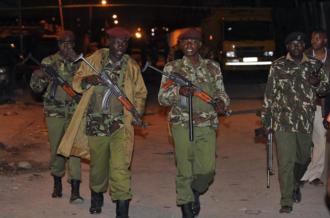
More than 4,000 people, most from Eastleigh, have been arrested since April [AFP]
“Everyone is scared. Some of our customers have run away. Some are in prison and the remaining ones are fearful. No one is coming out,” Ali said, his eyes fixed on the brand new TVs he imported from Dubai before the crackdown commenced.
Ali’s G12 electronics shop has served the community in Eastleigh and beyond for the past 14 years. He has witnessed attacks in the community, as well as the 2007 post-election violence that killed more than 1,200 people, and the affects these have had on businesses. But it has never been this bad, he said.
“We have stopped placing new orders from our suppliers in Dubai and Turkey, since no one is buying anything from us. It is the worst I have seen in the 14 years I’ve had my shop here,” Ali said.
Chasing customers away
A short distance away in the Baraka Bazaar shopping mall, the story is not much different.
At the City Pride Shop, security forces have visited the busy clothes shop twice since the security sweep started last month, and sent shoppers scurrying away.
“They came into the shop asking shoppers for ID. Their uniforms chased away the customers who also wanted to come into the shop,” shop manager Mahad Osman told Al Jazeera.
The visit by the security officers and the crackdown in general has severely affected Osman’s customer numbers.
“On a very good day since the arrests started, we see 30 percent of the normal customer numbers we used to see. Almost all the customers we see now are Somalis. The non-Somalis see what is happening on the TV and stay away from Eastleigh.”
We used to get as much as 200 customers on a night like this. But now there are four to five people.
- ALOORE WARSAME, CINEMA MANAGER

Osman was expecting a shipment of new stock from Turkey when the police clampdown began but had to cancel it and pay a fine. He also had to lay off one of his three permanent staff.
“This crackdown has not just affected me, the shop-owner,” Osman said.
“It is affecting suppliers and their families in Turkey, Dubai. It is affecting the children of my staff who need food and their school fees. If this continues, I will not be laying off staff, I will be closing my shop.”
The situation is even more precarious at the other end of Eastleigh. It is a few minutes before 8pm and Aloore Warsame stands in front of the district’s most popular movie theatre – Ayan cinema. He furiously puffs on one cigarette after another while chewing khat – mild narcotic leaves enjoyed by men in East Africa and the Middle East.
On a normal weekend night the cinema would be filled with movie-goers, but today there are about half a dozen frightened young men sitting on the wooden benches with the lights turned off to keep their presence hidden.
“We used to get as much as 200 customers on a night like this, but now there are four to five people,” the cinema’s manager, Warsame, told Al Jazeera, while placing a padlock on the cinema door to make it look like it wasn’t open for business in case security officials arrived.
“I have to do this [padlocking the door]. I have lost count of the number of times the police came and took my customers away, even those with Kenyan IDs.”
“They want bribes and I cannot afford bribing them every time,” he added, blowing a huge puff of smoke into the thick air in the cinema’s hall.
Crackdown ‘victims’
We don't know if this is against illegal immigrants, terrorists or the Somali business community.
- AHMED MOHAMED HASSAN, EASTLEIGH BUSINESS COMMUNITY

Shop owners are on edge, worried that when operation “Usalama” – which means “peace” in Swahili – finishes, they may have no business left at all.
“We don’t know if this is against illegal immigrants, terrorists or the Somali business community,” Ahmed Mohamed Hassan, general secretary of Eastleigh Business Community, told Al Jazeera.
“Business is down 75 percent. Eastleigh businesses contribute about 30 percent of Nairobi revenues, and that is about two billion Kenyan shillings [$23m].”
Traders in this mainly Somali businesses district say they have been victimised twice.
“First we were the victims of explosions and we are now victims of this crackdown. And no one is compensating us,” Hassan added.
The Kenya government has denied that the security sweep targets any specific community.
“It is clear to all law-abiding citizens that this is not something targeting on any one community, or targeted on one religion. It is an operation targeted on criminals,” said Joseph Ole Lenku, Kenya’s cabinet secretary for the interior, speaking on a local TV station about the clampdown.
Ole Lenku added the “operation will not stop until the city is secure and Kenya is safe”.
As the government remains steadfast on its security operation, leaders of the business community say if it continues for long, the government may not have stores to collect taxes from.
“Over 100,000 use to come to shop in Eastleigh daily, but now we see about 20,000. If this continues there will be shutdowns and everyone, including the government, will suffer,” said Hassan.
 
Huu ushubwada umetoka kwa nani? A mere camel milk vendor 🤣🤣🤣🤣
Transaction worth $20M dollars is being done in Eastleigh everyday. I doubt that kama ya Kariako inaezafika $10,000


NAIROBI, Kenya, June 7- A business lull that lasted for 30 days following cessation of movement in and out Eastleigh area in Nairobi is a thing of the past, barely a few hours after President Uhuru Kenyatta said he will not extend the order, that also covered Old Town in Mombasa.

As it were before the lockdown, Eastleigh is now bustling with activities and cash is once again flowing within Kenya’s biggest business hub.

Transactions worth an estimated Sh2 billion take place in Eastleigh daily, according to available data.

Along Eastleigh First Avenue, tens of trucks were on Sunday seen offloading goods while Matatu and Boda Boda operators were back into their usual spots.

The silence that characterized the streets has been replaced by noise from public service vehicle operators, hawkers, and other traders calling for clients.

The streets are once again crowded while shopping malls like Emirates, Bangkok, and Hongkong have all reopened.

eastleigh-1-1024x682.jpg
Eastleigh is now bustling with activity
“We can now comfortably feed our children now that our businesses are back,” a visibly excited resident only identified as Mohamud told Capital News.

It is hub that Ahmed Ismail, an official within the Eastleigh Business Community said contributes 25 per cent of the city’s Gross Domestic Product (GDP).

“Eastleigh’s stake to the economy cannot be underestimated,” he said.

Most of the residents of the populous estate who spoke to Capital News welcomed President Kenyatta’s decision not to extend the lockdown, saying they can once again do business and earn their daily income.

ADVERTISEMENT. SCROLL TO CONTINUE READING.

They are equally elated by the extension of dusk to dawn curfew time, which will now kick in at 9pm and end at 4am.

“It means we will now have more time to do business and also give our clients enough time to do their shopping,” Meshack Waigwa, a trader in Eastleigh said.

They described the 30 days they were locked from the rest of Nairobi as challenging, saying the government should consider giving financial support to the vulnerable and small businesses owners.

“Officials captured our details a while back and yet we have never received even a coin, yet we hear million of shillings have been spent. Who are the beneficiaries?” George Ole Kina, a matatu conductor within Eastleigh said.

Ole Kina is however happy that he can now earn a living, without waiting for aid from the government.

“I believe business will be back. People will start moving in and out of Eastleigh,” he said.

Notably, most residents have their masks on, to avoid being infected by COVID-19 disease, as they expect back people from other areas, who are largely their clients.

While coronavirus infections in Eastleigh and Old Town have not been fully contained, the President on Saturday said the situation is now better than before.

He urged Kenyans to continue observing precautionary measures issued by the Ministry of Health, to avoid further spread of the disease.

ADVERTISEMENT. SCROLL TO CONTINUE READING.

Since the first case was registered in the country in March, at least 2,600 cases have been recorded, with 83 fatalities while 706 others have since recovered.

7
SHARES
ShareTw
 
Pole kwa maumivu. Remember that was in 2014, now try to imagine what it contributes in 2022🤣🤣

Somali businesses feel the heat in Nairobi​

Customer traffic in Eastleigh has been decimated by Kenyan government crackdown on migrants, shop owners say.


Play Video
Video Duration 02 minutes 33 seconds02:33
Kenyan MP: "Excess force" used in Eastleigh
By Hamza Mohamed
Published On 18 May 201418 May 2014
Nairobi, Kenya – Abdi Qadir Ali and his five staff sit idly drinking tea and surfing the Internet on their smart phones in an electronics shop in the heart of Eastleigh – the economic engine of the Kenyan capital, Nairobi.
It is well past 5pm and they haven’t sold any wares this Saturday, a busy shopping day in a normal week. But since April 1, things haven’t been normal in this district of Nairobi thanks to a Kenya government crackdown on foreign nationals.

KEEP READING​

list of 4 itemslist 1 of 4

Amazon illegally threatened staff, union board alleges

list 2 of 4

India’s Modi, Central Asian leaders pledge closer economic ties

list 3 of 4

US economy grew 6.9% in Q4 but headwinds are gathering

list 4 of 4

Tata regains Air India control after years of taxpayer bailouts

end of list

“On a normal Saturday, we used to sell 10 phones, three laptops and at least five TV sets. Today we sold nothing,” Ali told Al Jazeera, standing by the counter of his shop facing the busy dust-covered street.
Following a series of explosions and shootings in Nairobi and the tourist hotspot of Mombasa that killed at least a dozen people, the Kenyan government sent in its security forces to Eastleigh to round up migrants it accuses of causing insecurity in the country, and for hosting members of the hardline Somali rebel group al-Shabab, who were behind last year’s September mall siege that left more than 65 people dead.
The security operation in Nairobi has led to the arrests of more than 4,000 people, most from Eastleigh. These arrests, the business community says, have hurt trade in the once-thriving commercial district of East Africa’s economic powerhouse.
undefined
More than 4,000 people, most from Eastleigh, have been arrested since April [AFP]

“Everyone is scared. Some of our customers have run away. Some are in prison and the remaining ones are fearful. No one is coming out,” Ali said, his eyes fixed on the brand new TVs he imported from Dubai before the crackdown commenced.
Ali’s G12 electronics shop has served the community in Eastleigh and beyond for the past 14 years. He has witnessed attacks in the community, as well as the 2007 post-election violence that killed more than 1,200 people, and the affects these have had on businesses. But it has never been this bad, he said.
“We have stopped placing new orders from our suppliers in Dubai and Turkey, since no one is buying anything from us. It is the worst I have seen in the 14 years I’ve had my shop here,” Ali said.
Chasing customers away
A short distance away in the Baraka Bazaar shopping mall, the story is not much different.
At the City Pride Shop, security forces have visited the busy clothes shop twice since the security sweep started last month, and sent shoppers scurrying away.
“They came into the shop asking shoppers for ID. Their uniforms chased away the customers who also wanted to come into the shop,” shop manager Mahad Osman told Al Jazeera.
The visit by the security officers and the crackdown in general has severely affected Osman’s customer numbers.
“On a very good day since the arrests started, we see 30 percent of the normal customer numbers we used to see. Almost all the customers we see now are Somalis. The non-Somalis see what is happening on the TV and stay away from Eastleigh.”


Osman was expecting a shipment of new stock from Turkey when the police clampdown began but had to cancel it and pay a fine. He also had to lay off one of his three permanent staff.
“This crackdown has not just affected me, the shop-owner,” Osman said.
“It is affecting suppliers and their families in Turkey, Dubai. It is affecting the children of my staff who need food and their school fees. If this continues, I will not be laying off staff, I will be closing my shop.”
The situation is even more precarious at the other end of Eastleigh. It is a few minutes before 8pm and Aloore Warsame stands in front of the district’s most popular movie theatre – Ayan cinema. He furiously puffs on one cigarette after another while chewing khat – mild narcotic leaves enjoyed by men in East Africa and the Middle East.
On a normal weekend night the cinema would be filled with movie-goers, but today there are about half a dozen frightened young men sitting on the wooden benches with the lights turned off to keep their presence hidden.
“We used to get as much as 200 customers on a night like this, but now there are four to five people,” the cinema’s manager, Warsame, told Al Jazeera, while placing a padlock on the cinema door to make it look like it wasn’t open for business in case security officials arrived.
“I have to do this [padlocking the door]. I have lost count of the number of times the police came and took my customers away, even those with Kenyan IDs.”
“They want bribes and I cannot afford bribing them every time,” he added, blowing a huge puff of smoke into the thick air in the cinema’s hall.
Crackdown ‘victims’


Shop owners are on edge, worried that when operation “Usalama” – which means “peace” in Swahili – finishes, they may have no business left at all.
“We don’t know if this is against illegal immigrants, terrorists or the Somali business community,” Ahmed Mohamed Hassan, general secretary of Eastleigh Business Community, told Al Jazeera.
“Business is down 75 percent. Eastleigh businesses contribute about 30 percent of Nairobi revenues, and that is about two billion Kenyan shillings [$23m].”
Traders in this mainly Somali businesses district say they have been victimised twice.
“First we were the victims of explosions and we are nowvictims of this crackdown. And no one is compensating us,” Hassan added.
The Kenya government has denied that the security sweep targets any specific community.
“It is clear to all law-abiding citizens that this is not something targeting on any one community, or targeted on one religion. It is an operation targeted on criminals,” said Joseph Ole Lenku, Kenya’s cabinet secretary for the interior, speaking on a local TV station about the clampdown.
Ole Lenku added the “operation will not stop until the city is secure and Kenya is safe”.
As the government remains steadfast on its security operation, leaders of the business community say if it continues for long, the government may not have stores to collect taxes from.
“Over 100,000 use to come to shop in Eastleigh daily, but now we see about 20,000. If this continues there will be shutdowns and everyone, including the government, will suffer,” said Hassan.
Mzee leta data za KRA, usiniletee huu ushubwada, sikuelewi

Halafu kuna biashara gani hapo Eastleigh?

Kariakoo, containers kutoka bandarini huwa zinafunguliwa hapo na kuuzwa kwa nchi zote zinazopakana na Tanzania nchi zaidi ya 8, from wholesale to retail selling, sasa Eastleigh ni kipi cha tofauti? Naona ni mkaa tu kwa wingi ndio unauzwa Eastleigh 😂😂😂😂😂
 
Mzee leta data za KRA, usiniletee huu ushubwada, sikuelewi

Halafu kuna biashara gani hapo Eastleigh?

Kariakoo, containers kutoka bandarini huwa zinafunguliwa hapo na kuuzwa kwa nchi zote zinazopakana na Tanzania nchi zaidi ya 8, from wholesale to retail selling, sasa Eastleigh ni kipi cha tofauti? Naona ni mkaa tu kwa wingi ndio unauzwa Eastleigh 😂😂😂😂😂
The good thing arguing with you is that you are full of empty talks🤣🤣🤣. I have shown you multiple articles saying that Eastleigh contribute 30% of Nairobi`s total revenue.
 
Back
Top Bottom