Lusematic

JF-Expert Member
- Feb 2, 2017
- 12,052
- 11,840
hiyo twiga kapitwa kidogo tu na britam tower[emoji1787][emoji1787]Cant beat this beautiful green city under the sunView attachment 1887206
hiyo twiga kapitwa kidogo tu na britam tower[emoji1787][emoji1787]Cant beat this beautiful green city under the sunView attachment 1887206
@komora096 jione hapo juu jinsi ulivyokula pozi[emoji1787][emoji1787]Tanzania cutting all the trees but kenya maintaining green cities this what's happening in tanzania too View attachment 1887218

 businessdailyafrica.com/bd/opinion-analysis/columnists/is-lamu-port-white-elephant--3505636

Hii mambo bya 2026 soko litadondoka maana naona calculation za wakulima zinafnywa kwa kuangalia hesabu za sasa huko sokoni.Kenya is already top 10 avocado exporter globaly...,
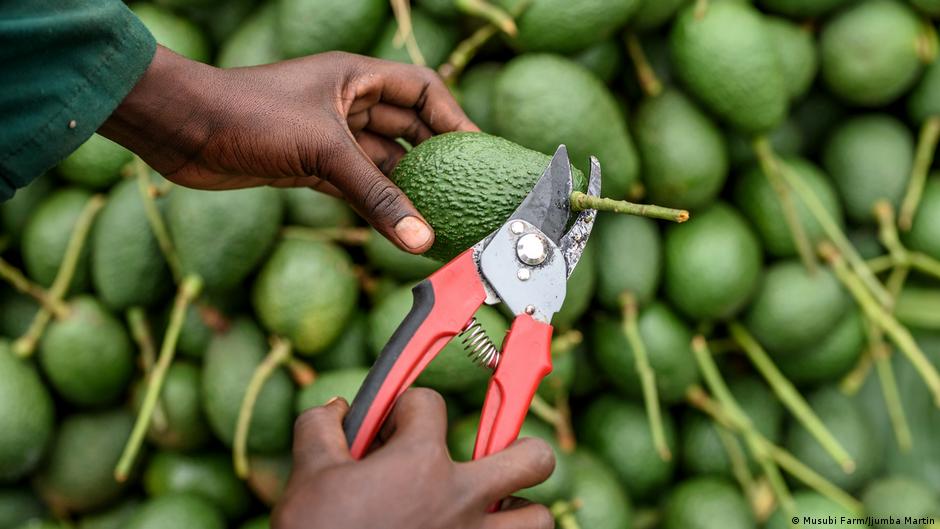
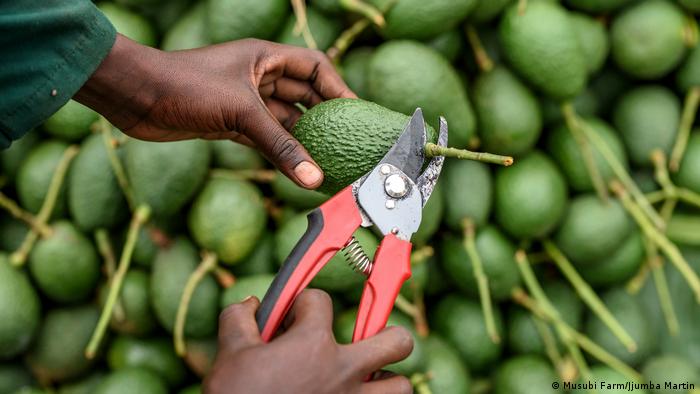
Green gold: Avocado farming on the rise in Africa | DW | 01.05.2021
In East Africa and Nigeria, avocado farmers want to enter the insatiable export market. Environmental concerns cast a shadow over the crop in other parts of the world. What will African farmers do differently?www.dw.com
AFRICA
Green gold: Avocado farming on the rise in Africa
In East Africa and Nigeria, avocado farmers want to enter the insatiable export market. Environmental concerns cast a shadow over the crop in other parts of the world. What will African farmers do differently?
Smallholder farming holds the promise of more sustainable avocado production in East Africa and Nigeria
Baker Ssengendo's vision for the future of Uganda starts with an avocado seedling. "The avocado tree has a lifespan of about 50 years. The life expectancy of an average Ugandan is about 60 years. A tree can benefit them their entire life," he told DW.
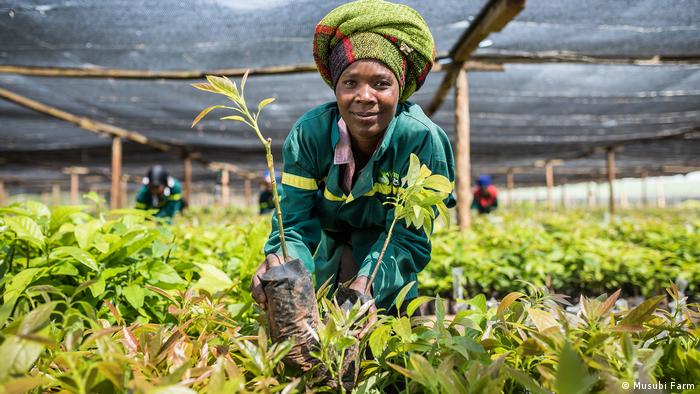
Ssengendo works on the 1,000 hectares (2,470 acres) of Musubi Farm in Mayuge district, eastern Uganda — the largest Hass avocado farm in the country. "By working in avocado farming, I am fulfilling my life dream. We want to lift our communities out of poverty."
Due to high global demand, the avocado has become a lucrative export product. Its consumption per capita increased by 406% between 1990 and 2017 in the US alone.
The so-called green gold is rapidly gaining popularity on the African continent. Both Nigeria and Uganda aim to drastically increase their avocado production and become top exporters in the next decade. Kenya is already among the global top 10. Export revenues in the East African country surged by a third between 2019 and 2020. Farmers are hailing the crop as an antidote to poverty in rural areas.
Uganda is aiming to become a top global avocado exporter
But the sought-after fruit has been making negative headlines around the world. Water shortages and the destruction of biodiversity have been linked to its production. The environmental issues have cast a dark shadow over the commercial farming of avocados in Latin America's top exporting countries, such as Mexico and Chile.
But African avocado farming is promising a brighter future, according to both farmers and scientists. Due to an emphasis on smallholders and beneficial rain patterns, the crop's production is expected to be less environmentally harmful than on the American continent.
Avocados the new oil?
"Avocado is actually a godsend because farmers can use it as an alternative to coffee farming," Sammy Carsan, agroforestry scientist at the World Agroforestry Center in Nairobi, told DW.
In recent years, fierce competition between large retailers has driven down coffee prices. In 2019, coffee farmers' earnings dropped to their lowest in 13 years. Now, hopes are high for avocado to fill the income gap.
According to The Guardian newspaper in Nigeria, former Nigerian President Olusegun Obasanjo called the fruit "the new oil of Nigeria" during a meeting with members of the Avocado Society of Nigeria (ASN) late last year. The politician-turned-avocado-enthusiast is the largest stakeholder in the society and owns 20 hectares of Hass avocado farming land himself — the avocado variety most commonly used for exports.
Volume 90%
Listen to audio10:15
Living Planet: Avocados — a not-so-super food after all?
"He gave us the mandate of making the country Africa's largest avocado exporter by 2030," Adeniyi Sola Bunmi, executive director of ASN, told DW. Currently, there are only 120 Hass avocado farmers in Nigeria. ASN is training smallholders wishing to switch to the crop and provides them with Hass seedlings.
In Uganda, the Agriculture Ministry recently partnered with Musubi Farm, hoping to start commercial export next year. Musubi is already employing 1,000 people from the local community. "We are also financially supporting a local school and are providing land for a local police force in order to deal with crime in the community. Avocados can transform our community," said Ssengendo, the director of communications.
Promise of smallholder farming
Large-scale commercial avocado farming is at the core of environmental issues, such as soil degradation, in Latin America. However, in East Africa and Nigeria, smallholders are at the center of a more sustainable avocado farming approach.
"Our plan is to have 75% of avocados produced by smallholder farmers and 25% by our farm," Ssengendo said of his vision for Uganda. In neighboring Kenya, smallholders are already spearheading avocado production, with most avocado farmers only owning about 2 hectares of land, according to Carsan.
Small farms mean less strain on the environment, Ruben Sommaruga, professor of limnology, or inland aquatic ecosystems, at the University of Innsbruck, told DW. "Large industrial production always implies a large use of pesticides. That is usually not the case with smallholder farmers, who can control their small number of trees more easily."
In smallholder settings, the crop is often complemented with other farming enterprises, such as maize and bean crops, planted for subsistence. According to Samson Ogbole, a sustainable farmer in Nigeria, mixing avocado trees with agroforestry systems can curtail negative environmental effects. "Planting crops like legumes around the tree crops helps replenish the soil."
Avocados for rainy days
According to the Water Footprint Network, it takes 2,000 liters of water (528 gallons), or 10 full bathtubs, to grow just one kilo of avocados. Planting the fruit has been linked to water shortages in Chile, for example, where farming has affected water availability for human consumption.
But the water consumption of the crop shouldn't be removed from its local context, according to Sommaruga. "It's always a matter of how much and what kind of water you have in the countries where you grow the trees."
In Uganda and Nigeria, avocado farms are mainly located in areas with beneficial rain patterns, according to Sommaruga.
Volume 90%
Watch video02:21
Ugandan farmers reap avocado demand
"The central and southern part of Nigeria receives relatively high precipitation. The south of Uganda does as well. In Kenya, much of the avocado farming is done north of Nairobi, where mountains retain most of the rain," said Sommaruga.
Frequent rainfall means farmers do not have to rely on irrigation systems, which artificially apply water to the soil. "In smallholder settings, avocado is produced on a rain-fed basis with few irrigation systems," Carsan said about avocado farmers in Kenya.
For now, avocado production has not been linked to water shortages across African farmlands. But, as Sommaruga points out, the rain patterns that avocado farmers in sub-Saharan Africa are benefitting from today are expected to decrease in the future due to climate change.
Bunmi from the Avocado Society of Nigeria has also been farming avocados on his land, hoping to export to Ukraine and the United Kingdom in five years. "Regarding water, I don't see any problem in the next 20 years. But maybe as time goes on," Bunmi said.
Haka kademu ni lini mtakashikisha adabu? kana kashfa sana hata kama ni uhuru mimi siwezi ku guarantee uhuru wa hivi,nadhani hakajajifunza kwa mwenyekiti wao na yule anaitwa mdude.

Ingekuwa Kenya ingeitwa international airport iyo kama ile ya isiolo
kwani tatizo nn? mbona kijembe cha kawaida tu tena hajataja jina! ndo maana hata dhamana ya Ujumbe wa nyumba 10 huna!Haka kademu ni lini mtakashikisha adabu? kana kashfa sana hata kama ni uhuru mimi siwezi ku guarantee uhuru wa hivi,nadhani hakajajifunza kwa mwenyekiti wao na yule anaitwa mdude.
Ingekuwa Kenya ingeitwa international airport iyo kama ile ya isiolo
Geza achana na isiolo,serikali inahimiza kilimo cha matunda ili ndege zianze kutua ,wamakonde wanasemaga nanga chinu somo.kabisaa halafu runway ya chato airport ni 3000 m ukilinganisha na Isiolo international airport 1500 m!

Niliwaambia Kilimani ni pana kuliko dar...sasa hamuamini hiyo ni Kilimani pekeeUpper hill ndani, CBd ndani [emoji38][emoji38][emoji38]

Alie kudanganya mnatuzidi forest coverage ni nani?🤣🤣🤣Tanzania cutting all the trees but kenya maintaining green cities this what's happening in tanzania too View attachment 1887218
sasa kama runway ili-crack, nani atapeleka ndege huko?Ile ai
Isiolo tangu imefunguliwa mwaka juzi hapajatua ndenge ,white elephant.

Is Lamu Port a white elephant?
By TONY WATIMA
More by this Author
Summary
- In Africa, Egypt, Morocco and South Africa together account for 51 percent of volumes transported in Africa and the three rank among the top 50 in terms of efficiency of seaport services.
- Apart from the three Djibouti comes as a bigger contender for the transshipment hub.
- In addition to its strategic geographical location it’s also stands out as the most efficient port in Africa, according to the latest ranking and its container terminal SGTD is establishing itself as the transshipment hub for the East African region.
Columnists
Tuesday August 10 2021
A ship docks at Lamu Port during the official launch by President Uhuru Kenyatta. FILE PHOTO | NMG
A month ago, a journalist looking at the impact of infrastructure investment on the continent asked me if it is beneficial for the East African region to have the Lamu and Bagamoyo ports rivalling each other as transship hubs.
This question came up again last week in a conversation with some friends on whether the port investment race among countries in the Horn of Africa and East Africa is sustainable.
So let us look at the throughput of the main seaports. Throughput is the average quantity of cargo that can pass through a port daily.
The Port of Djibouti, strategically located at the crossroads of Africa, Asia and Arabian Peninsula, has a throughput capacity of 1.6 million twenty-foot equivalent unit (TEU).
Port Said located in Egypt has a 2.7 million TEU throughput capacity and is also designed to be a transshipment hub.
The Port of Sudan has throughput of 487336 TEU. Somaliland has Berbera and Puntland Bosaso, and plan to expand the ports for commercial positioning.
Come to Kenya, which has the Mombasa Port with a throughput capacity of 2.65 million TEU and Lamu Port, which is being designed for transshipment.
In Tanzania’s Dar es salaam Port has a throughput capacity of one million TEU while Bagamoyo is expected to be revived and designed for transshipment.
Clearly, there is an overcapacity of seaport infrastructure investment on the East and Horn of Africa.
But this is not a trend in Eastern side of Africa only. The race to be a regional transshipment hub is also happening on the West side of the continent.
HEAVY COMPETITION
Togo’s Port of Lome is the busiest port in West Africa with a throughput of 1.5 million TEU but is about to face heavy competition as a transshipment hub from Nigeria’s new Lekki Deep Seaport, which is expected to start operations in 2023 with a throughput capacity of up to 2.7 million.
Ghana is designing its Tema Port to be also a transshipment hub with a throughput capacity of 3.5 million TEU whilst Senegal’s newly constructed port by DP World will be having a throughput capacity of 1.5 million TEU. Cote d’Ivoire is also expanding its port’s capacity.
So how many regional transshipment hubs can the continent have? Transshipment hubs are designed to be few and spread out, so that means Africa should most likely have a maximum of four regional transshipment hubs. For example, Singapore serves as the continental hub in Asia-Pacific, Dubai for the Middle East and Rotterdam for Europe.
In Africa, Egypt, Morocco and South Africa together account for 51 percent of volumes transported in Africa and the three rank among the top 50 in terms of efficiency of seaport services.
Apart from the three Djibouti comes as a bigger contender for the transshipment hub.
In addition to its strategic geographical location it’s also stands out as the most efficient port in Africa, according to the latest ranking and its container terminal SGTD is establishing itself as the transshipment hub for the East African region.
So, Tanzania and Kenya, which are building Lamu and Bagamoyo ports as transshipment hubs, need to ask themselves if they have been caught up in a port investment race and may be building white elephants instead.
TRANSPORT CORRIDOR
For, Kenya it plans to establish Lamu Port as a transport corridor for Ethiopia and South Sudan but this doesn’t seem to be a reality that will happen anytime soon.
Djibouti, with a refurbished railway line connecting with Ethiopia, handles 90 percent of inbound and outbound trade from Ethiopia. Apart from that Djibouti, Lamu will also be facing competition from Berbera Port in Somaliland, which is already emerging as a connecting corridor for Ethiopia.
So as Kenya plans to build a total of 23 modern berths on the Lamu Port, is it caught up in a doomed investment race?

Ndege ziende zikafanye nn kulee labda Ndege wanyamaIle ai
Isiolo tangu imefunguliwa mwaka juzi hapajatua ndenge ,white elephant.

Uko vizuri kwenye research

He was not against that.he just wanted to be sure of safety.Hayati Magufuli akifufuka leo hii!!.., sijui atasema nini..., he was totally against such.