<TABLE style="WIDTH: 580px"><TBODY><TR><TD vAlign=center>
Black Biography: Remmy Ongala </TD></TR></TBODY></TABLE>
<TABLE class=AFCAd><TBODY><TR><TD onmouseover="return setStatus('Scientology.org');" onclick="_hbLink('G_AFC','BL_0');gotoURL('http://googleads.g.doubleclick.net/aclk?sa=l&ai=BK8UoP0w4S6vbAeW6jQfro6C_Ao_jq8IBpeWUxw-L3eP3CODUAxABGAEgtpiGAygDOABQv4HJ1QJgwwagAYHa1_EDsgEPd3d3LmFuc3dlcnMuY29tyAEB2gEraHR0cDovL3d3dy5hbnN3ZXJzLmNvbS90b3BpYy9yZW1teS1vbmdhbGEtMYACAcACAcgC34eLEKgDAegDI-gDxwToA8ME9QMABACE&num=1&sig=AGiWqtytWK20j-UGWCm3XP2RKfdgDW92gw&client=ca-gurunet_js&adurl=http://www.scientology.org/%3Fsource%3Dga');" onmouseout=clearStatus();>
</TD></TR></TBODY></TABLE>Born Ramadhani Mtoro Ongala, 1947, in the Kivu region of Belgian Congo (now Zaire); married, with three children.
Politics: Populist.
Career
Itinerant guitarist and singer, touring throughout Eastern Zaire and Uganda, 1964-78; member of Orchestra Makassy, 1978-81; leader of Orchestre Super Matimila, 1981--; participated in World of Music, Arts, and Dance (WOMAD) tours, 1988-89; released albums on England's Real World label, 1989-90. Has made frequent tours of Africa and Europe, 1988--.
Life's Work
American children dream of becoming pop musicians because of the
glamorous lifestyle that accompanies pop
stardom in the United States. For Remmy Ongala, who grew up in Zaire and lives in Tanzania, music was a constant, completely woven into his everyday life. Becoming a musician was as natural for him as a career in agriculture would be to somebody who grew up in a remote farming village. In his song "Lolango," Ongala articulated his reasons for being a musician: "What is my work? My work is to sing! I live so I can sing, I eat because I sing. Everything in life is because I sing."
Performing mainly in a country where recording facilities are
scarce, copyright laws are
nonexistent, and music is played in small clubs rather than
gigantic sports arenas, Ongala has managed to gain an international following. Many of his songs deal directly with the subjects of urban poverty, unemployment, and death. Nevertheless, his message of hope for the
underdog in the face of
oppression seems to strike a chord with listeners of diverse backgrounds. Although he sings primarily in Swahili, the passion with which Ongala presents his case transcends barriers of language.
Ongala was born in 1947, in the
Kivu region of eastern Zaire, which at that time was known as Belgian Congo. His family lived at Kindu, not far from the Tanzanian border. Shortly after Remmy was born, they relocated to
Kisangani, about 250 miles to the north. In these areas, as in much of Africa, music
permeated just about every
facet of life, and Ongala was
immersed in it from birth. His father was a talented musician, regionally well-known as a hand drum and mbira player. The mbira, a hollowed piece of wood or
gourd bearing wooden or metal strips that
vibrate when plucked, is one of the variety of instruments Ongala began learning from his father at a very early age.
Gary Stewart, in his book
Breakout, retold Ongala's own account of the uncommon circumstances surrounding the musician's birth. According to Stewart, Ongala's mother had been pregnant twice before, and both times the child had died. As a last hope, she turned to one of the local traditional doctors for advice. He told her not to go to the hospital next time she was pregnant; instead, the baby was born in the forest with the help of the healer. He then warned her never to cut the child's hair, a
vow that she kept for the remainder of her life.
As a youth, Ongala was
ashamed of his
shaggy hair. But later, when
reggae star
Bob Marley's image became visible in Zaire, the locks became a source of pride. Remmy was also born with two front teeth intact, thought to be a sign that he himself could become a healer. Although he elected not to pursue that career path, "The Doctor" did eventually become Ongala's nickname among fans in Zaire and Tanzania.
When Ongala was only six years old, his father died. Since his mother could not pay for school, Ongala was forced to quit. By the early 1960s, Ongala was teaching himself to play guitar. When his mother died in 1964, he became the head of the family, responsible for the care of his younger siblings. With no other job options available, Ongala began eking out a living playing music. His guitar playing improved quickly, and soon he was able to get frequent jobs playing at area hotels. For the next dozen years, he toured throughout eastern Zaire and Uganda, playing guitar and drums with a number of bands from the region, including Succ s Muachana and Grand Mickey Jazz.
While he was teaching himself to play guitar, and as he developed his own style during the early part of his career, Ongala was greatly influenced by the new urban Congo style of music that was becoming popular in the early 1960s. Cuban music was also being played widely in eastern Africa at that time. Ongala cites as his major influences from that period the singing of Joseph Kabasele and the laid-back
rumba guitar stylings of an artist known simply as Franco.
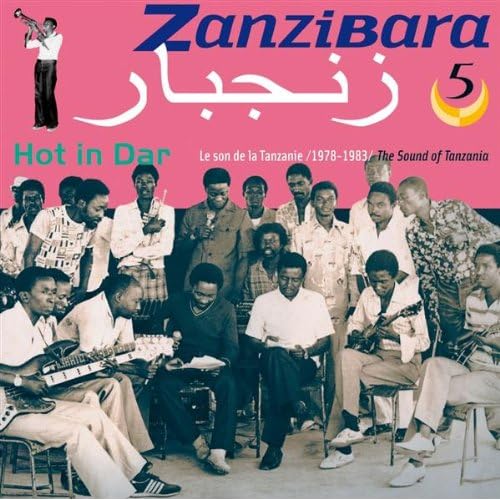
In 1978 Ongala was summoned by an uncle to Dar-es-Salaam, the capital of Tanzania, to join
Orchestra Makassy, a popular band led by Mzee Makassy, who was also originally from Zaire. While a member of that group, Ongala wrote his first hit song, "Sika Ya Kufa (The Day I Die)," honoring a friend who had passed away. Ongala's tenure with Orchestra Makassy lasted about three years. He then left to join
Orchestre Super Matimila, another up-and-coming Tanzanian group.
Matimila, whose name came from that of a small village nearby, became a
fixture on the bustling Dar-es-Salaam club music scene, and Ongala quickly emerged as the group's leader. The band had as many as 18 members, although usually only six or eight would appear on stage at any given moment of performance because club gigs in Tanzania can last as long as six hours. The casual atmosphere allowed the musicians to rotate in and out freely, usually including two guitars, a bass, a standard drum kit, other African percussion instruments, and a
saxophone. Just about everybody sang.
Over the next decade, Ongala became one of Tanzania's most prolific songwriters. He generally left the love songs to others, concentrating instead on writing lyrics that addressed social concerns. Even after achieving a reasonably comfortable standard of living for himself, Ongala continued to champion the poor in his songs. He dubbed the style of his material
ubongo, which roughly means "brain music" in Swahili.
Essentially no recording industry exists in Tanzania, and therefore, no mechanism is in place for the collection of royalties; likewise, musicians' unions and copyright laws are not available. Local musicians are almost completely
reliant on live performances for their income, and while the music scene in and around Dar-es-Salaam is certainly vibrant, the competition among bands is fierce. As Matimila gained attention, the group started recording some of its songs for Radio Tanzania, but this did not translate into big money as airplay in the West generally does.
The introduction of Ongala's music to a European audience began in simple fashion. In the late 1980s, Ongala gave a tape of his band to a British friend who was about to return to England. The tape was eventually passed along to members of World of Music, Arts, and Dance (WOMAD), an organization that promotes Third World performers. The people at WOMAD were so impressed by the material that Ongala and company were invited to take part in the 1988 WOMAD tour.
Western audiences appreciated Ongala's danceable music immediately. Back in Tanzania, however, his European debut was not universally praised. One member of the press, Omar Bawazir, was especially harsh. Writing in
Uhuru, he criticized the band for performing with "naked and rounded stomachs" rather than in normal Western garb, fueling the Western press's
biased ideas about Third World underdevelopment.
Matimila's warm European reception led WOMAD to release a collection of Ongala's best Tanzanian radio recordings from the early 1980s. The resulting album, entitled
Nalilia Mwana, featured an array of songs dealing with the politics of poverty. Included were such titles as "Ndumila Kuwila (Don't Speak With Two Mouths)," and "Mnyonge Hana Haki (The Poor Have No Rights)."
Reviews for Ongala's European debuts, both live and recorded, were almost unanimously stellar, leading WOMAD to invite the group along on its 1989 tour as well. Matimila was also invited to record in a well-equipped Western studio for the first time. The resulting product,
Songs for the Poor Man, was recorded at British rock star Peter Gabriel's Real World Studios, and released on the WOMAD-affiliated Real World label. Again, the album was packed with songs written from the perspective of the
downtrodden.
Songs for the Poor Man included "Kipenda Roho," an anti-racism anthem that proclaims the universality of love. This was a theme especially close to Ongala's heart, since he had married and had had three children with a white Englishwoman by this time. Although most of the songs on the album had
somber topics, the music itself was uplifting. With his
newfound access to sophisticated recording equipment, Ongala was able to produce a
cleaner sound without sacrificing the authenticity of his musical roots.
In 1990, Ongala and Super Matimila released a second British recording on Real World. Again drawing on the traditional soukous and rumba traditions of his homeland, Ongala produced
Mambo, another collection of songs about social and political
injustice. Mambo translates loosely from Swahili as "things," in the sense of comments or concerns. In an effort to involve his growing international audience with the meanings of his songs rather than just their infectious pulsations, Ongala sang several songs in English on
Mambo. Once again, the most prevalent theme found on the album is poverty. Among the song titles on
Mambo are "No Money, No Life," and "One World."
Meanwhile, Ongala's popularity at home in Tanzania continued to
soar as well, although the element of protest in much of his material did not always
endear him to government officials. Ongala created a controversy in 1990 by releasing a song called "Mambo Kwa Socks (Things With Socks)," a reference to Tanzanian slang for
condoms. The song was a plea to young African men to help slow the spread of AIDS by practicing safe sex.
In general, musicians are not held in high
esteem in Tanzania. Often they are portrayed in the press as vagabonds and drug addicts. Among the common people, however, whose cause his entire body of work celebrates, Remmy Ongala is well on his way to attaining folk-hero status. A bus stop in the Sinza district of Dar-es-Salaam, for example, has been renamed Sinza kwa Remmy. Even as his audience grows to include many who are neither poor nor oppressed, Ongala's message speaks loudest to people who are more
accustomed to crowded buses than to comfortable sedans.
Works
Selective Discography
- Nalilia Mwana, WOMAD, 1988.
- On Stage with Remmy Ongala, AHADI, 1988.
- Songs for the Poor Man, Real World, 1989.
- Mambo, Real World, 1990.
Further Reading
Books
- Stewart, Gary, Breakout, University of Chicago Press, 1992.
Periodicals
- Ear, May 1990, p. 49.
- Folk Roots, June 1990, p. 51.
- New York Times, April 26, 1992, p. H30.
- Popular Music, 1989, p. 243.
- Robert R. Jacobson