Battle: Dar es Salaam vs Nairobi

Battle: Dar es Salaam vs Nairobi

13MAY2017
10 Facts About Poverty in Tanzania
8863759490_1977bec893_z-530x351.jpg

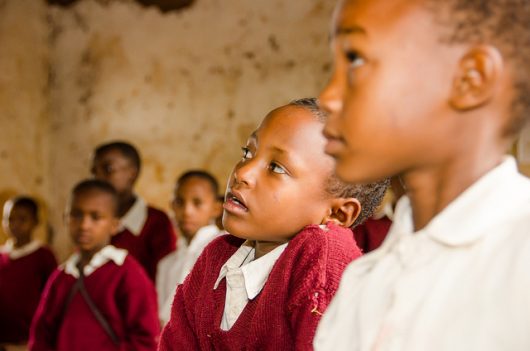
Tanzania, officially the United Republic of Tanzania, is a country in Eastern Africa that is home to natural wonders like Mount Kilimanjaro and Lake Victoria. Although the country is rich in natural resources, poverty in Tanzania persists.

10 Important Facts about Poverty in Tanzania

  1. In Tanzania, 67.9 percent of the population lives below the poverty line.
  2. Extreme poverty in Tanzania has declined in recent years, from 11.7 percent in 2006 to 9.7 percent in 2012.
  3. Poverty leads to hunger. Roughly 42 percent of children under five in Tanzania suffer from chronic malnutrition and 16 percent are underweight.
  4. Malnutrition affects children’s physical development. The rate of stunting in Tanzania ranks third in sub-Saharan Africa, after Ethiopia and the Democratic Republic of Congo.
  5. Many of the most commonly eaten foods in Tanzania, such as potatoes and cassava, are inexpensive but lack essential nutrients. Some schools in Tanzania now hold nutrition classes for students in hopes of reducing malnutrition.
  6. On average, women in Tanzania will have five children. Slowing fast population growth and the high fertility rate by empowering women through education support and family planning services is key to reducing poverty in Tanzania.
  7. Poverty is highest in rural areas, with around 80 percent of the country’s poor living in those regions.
  8. Poverty is also highest among female-headed households, particularly those that depend on livestock or food-crop production for their livelihood.
  9. Young girls and women in Tanzania often suffer from more nutritional deficiencies than men. One-third of women are deficient in iron, iodine, and vitamin A and two-fifths are anemic.
  10. Cash transfer programs, which have been successful in other parts of the world, have proven in recent years to be effective in Tanzania. While families do not receive large sums of money, it is enough to free them from constant subsistence farming and allows them to focus on generating additional, more stable, sources of income.

While improvements have been made in reducing poverty in Tanzania, much of the population still suffers from malnutrition and poor living conditions. Continuing to strengthen the economy through initiatives such as cash transfer and family planning programs could help further reduce poverty in Tanzania.
Alexi Worley
Photo: Flickr
FacebookTwitterPinterestLinkedInTumblrRedditGoogle+EmailShare
Tags: Facts, Poverty, Tanzania

Related Entries
The Tower of David: The World’s Tallest...
Top 10 Facts About
ukipata official link niletee hapa hayo maoni ya mtu mrudishie mwenyewe😂😂😂😂😂👏👏
 
Poverty Incidence in Kenya Declined Significantly, but Unlikely to be Eradicated by 2030
Latest Issue:
  • April 2018


ke-kenya-economic-update-poverty-incidence-in-kenya-declined-significantly-but-unlikely-to-be-eradicated-by-2030-780x439.jpg

Photo: Sarah Farhat/World Bank

STORY HIGHLIGHTS
  • The new country economic update shows that the proportion of Kenyans living on less than the international poverty line (US$1.90 per day in 2011 PPP) has declined from 43.6% in 2005/06 to 35.6% in 2015/16
  • Poverty incidence in Kenya is amongst the lowest in East Africa and is lower than the Sub-Saharan African regional average, according to the update
  • However, the report notes that poverty rates in Kenya remain relatively high compared to other lower middle-income countries
NAIROBI, APRIL 11, 2018 – The proportion of Kenyans living on less than the international poverty line (US$1.90 per day in 2011 PPP) has declined from 46.8% in 2005/06 to 36.1% in 2015/16, according to the 17th edition of the Kenya Economic Update.
The economic update, Policy Options to Advance the Big 4: Unleashing Kenya’s Private Sector to Drive Inclusive Growth and Accelerate Poverty Reduction, notes that current monetary and non-monetary poverty indicators in Kenya are better compared to most Sub-Saharan African (SSA) countries, but continue to lag other lower middle-income countries. Overall, given Kenya’s income levels and poverty rate, human development indicators are relatively high, illustrating that Kenya performs better on non-monetary dimensions of poverty, the update says.
The update also points out that the agricultural sector was a key driver of poverty reduction in the past decade. However, this also implies progress in poverty reduction remains vulnerability to agro-climatic shocks such as droughts that can force households back into poverty. To avoid recurrent seasonal spells of poverty experienced by agricultural households, the report recommends that the country build resilience, including climate-proofing its agriculture.
Assessing Poverty Reduction in Kenya
Kenya has registered growth domestic product (GDP) growth rates above 5% for most of the past decade. However, the KEU notes that the transmission of that growth into increased consumption at household level remains low, or GDP growth would have translated into even higher poverty reduction.
“At the current pace of poverty reduction, about one percentage point per year, Kenya cannot eradicate poverty by 2030,” says Utz Pape, World Bank poverty economist and lead author of the update’s special section on poverty. “Accelerating the pace of poverty reduction in Kenya will require higher and more inclusive growth rates coupled with a sharper focus on poverty reduction policies.”
The KEU also notes that the profile of poverty in Kenya has a significant spatial dimension that is omitted in the international comparison. For example, Most of Kenya’s poor live in rural areas predominantly in the northeastern parts of the country. This spatial dimension persists, and possibly exacerbated inequality across regions in Kenya. Scaling up and geographic targeting of anti-poverty and social protection programs are important instruments to target the neediest households and reduce regional disparities, according to the economic update.
Kenyans enjoy improved access to sanitation while access to improved water remains low, according to the update. For example, while almost 72% of Kenyan households have access to improved water sources—above the 68% average in the SSA—this is below the current access levels observed in peer countries such as Ghana, Rwanda and Uganda. However, Kenya performs better in access to improved sanitation when compared to countries with similar international poverty headcount rates.
According to the report, Kenya’s literacy rate is amongst the highest in SSA, and it has increased further by 11% since 2005, reflecting the massive progress made in Kenya’s educational system over the past decade. In 2015, 84% of the population above 14 years could read and write compared to Ghana at 71%.
The report says that today, more than half of Kenyan adults above 24 years (almost 58%) have completed primary education, a notable increase from an estimated 44% in 2005. However, the report also highlights that while just over 14% of adults aged 25 and older have completed secondary school, up from 3% in 2005, this falls below other countries with comparable poverty rates. That notwithstanding, net school enrollment ratios have improved in the last decade with a primary school enrollment ratio of about 87%, but secondary school completion presents a significant barrier.
Kenya has also made significant gains in reducing child stunting and has one of the lowest stunting rates in international comparison, according to the KEU. As of 2015, nearly one out of five (about 19%) of children under five years old were stunted in Kenya, compared to one in three in 2005. Kenya has the lowest stunting rate in Eastern Africa, but the rate is still higher compared to other SSA countries, such as Ghana.
“The forthcoming World Bank Kenya Poverty and Gender Assessment (KPGA) will provide a more detailed analysis combined with policy recommendation for poverty reduction,” said Pierella Paci, World Bank practice manager for poverty and equity covering East and Central Africa.
Using the Kenya Integrated Household Budget Survey (KIHBS 2015/16) data, the KPGA will provide a more detailed analysis of poverty characteristics and trends in Kenya, incorporating both a sectoral and a spatial lens. The KPGA will also zoom into the gender aspects of poverty, contrast poverty profiles in urban and rural areas, and examine poverty through education, health and social protection lenses. The objective of the KPGA is to foster an evidence-based debate about policy options to accelerate poverty reduction in Kenya.


RELATED
WORLD BANK
SOCIAL MEDIA


13MAY2017
10 Facts About Poverty in Tanzania
8863759490_1977bec893_z-530x351.jpg

Tanzania, officially the United Republic of Tanzania, is a country in Eastern Africa that is home to natural wonders like Mount Kilimanjaro and Lake Victoria. Although the country is rich in natural resources, poverty in Tanzania persists.

10 Important Facts about Poverty in Tanzania

  1. In Tanzania, 67.9 percent of the population lives below the poverty line.
  2. Extreme poverty in Tanzania has declined in recent years, from 11.7 percent in 2006 to 9.7 percent in 2012.
  3. Poverty leads to hunger. Roughly 42 percent of children under five in Tanzania suffer from chronic malnutrition and 16 percent are underweight.
  4. Malnutrition affects children’s physical development. The rate of stunting in Tanzania ranks third in sub-Saharan Africa, after Ethiopia and the Democratic Republic of Congo.
  5. Many of the most commonly eaten foods in Tanzania, such as potatoes and cassava, are inexpensive but lack essential nutrients. Some schools in Tanzania now hold nutrition classes for students in hopes of reducing malnutrition.
  6. On average, women in Tanzania will have five children. Slowing fast population growth and the high fertility rate by empowering women through education support and family planning services is key to reducing poverty in Tanzania.
  7. Poverty is highest in rural areas, with around 80 percent of the country’s poor living in those regions.
  8. Poverty is also highest among female-headed households, particularly those that depend on livestock or food-crop production for their livelihood.
  9. Young girls and women in Tanzania often suffer from more nutritional deficiencies than men. One-third of women are deficient in iron, iodine, and vitamin A and two-fifths are anemic.
  10. Cash transfer programs, which have been successful in other parts of the world, have proven in recent years to be effective in Tanzania. While families do not receive large sums of money, it is enough to free them from constant subsistence farming and allows them to focus on generating additional, more stable, sources of income.

While improvements have been made in reducing poverty in Tanzania, much of the population still suffers from malnutrition and poor living conditions. Continuing to strengthen the economy through initiatives such as cash transfer and family planning programs could help further reduce poverty in Tanzania.
Alexi Worley
Photo: Flickr
FacebookTwitterPinterestLinkedInTumblrRedditGoogle+EmailShare
Tags: Facts, Poverty, Tanzania

Related Entries
The Tower of David: The World’s Tallest...
Top 10 Facts About
Vilaza kwelikweli. They don't even know the meaning of balanced diet. Children under the age of 5 yrs are fed potatoes and cassavas .kwani matoke na green vegetables wanapeleka wapi?
 
Kumbe wewe ni mjinga kiasi hiki!!! yani una fikiria uzuri ama umaarufu wa media house ni news desks??, fala wa mwisho, Tanzania ni mara ya kwanza kupata media house ya standard hiyo, of which ushamba wenyu unadhihirika wazi, ni kama mwaka jana kuna mtz alileta picha za lorry za kuzoa taka za kisasa, na mwingine anaweka picha ya speed gun akisema Kenya hakuna hizo!!, things I saw in the 90s nikiwa primary!!, ndio zinafika Tz, poleni kaka, mnafika mdogo mdogo. Lakini Ichoboy1 kwa hili la Tv I didnt expect such argument from you!! Ni aibu, ulijishusha lini? Hii wachia washamba, discuss other things, I thought umeanza kufika level ya Geza, ila pia yeye ni propagandist though not always., kumbe bado!!

hili povu inabidi liingizwe kwenye hansard. limevunja record.
 
since i joined this wall no tanzanian has been able to accept the obvious glaring challenges facing them.....ukiwaambia ukweli wanadhani ni chuki hahaha,,,,,like accepting that they are an ldc nation and the likes.....79% of dar is some informals.......but wanakana hii ukweli...........denial is a disease in itself..........
 
Kulingana na baadhi ya wakenya kutaka hii battle. Sasa ni muda mwafaka wa kuonesha kipi Nairobi kipo hakipo Dar es salaam na kipo Dar es salaam hakipo Nairobi.
Ninaomba tuangalie katika positive way. Tuki post kitu kutoka Dar wale wa Nairobi wanaleta post ya kujibu. Na kama hakipo kwao wanasema hakipo na wao vilevile. Kama kipo kwenye plan wanaweza kuleta au sisi tunaweza kuleta kwaajili ya kujibu.

1. Master Plan of the city
2. Current View of the city
3. Ongoing Projects
4. Future Projects proposed
5. Culture and Life style
6. Food availability
7. Entertainment and Funny Places
8. Places to visit
9. Transport system (Private and Public)
10. Markets and Shopping malls
11. Hotels
12. Education centers
13. Health centers
14. Telecommunication and Data centers
15. Information Technologies and Innovation

Ndugu Jay456watt kutoka Nairobi kama ulivyo dai sasa thread inaanza.
Welcome to the battle.
I dare you to bring this battle fb or twitter
 
Hyu ni kilaza...leo anapinga world bank
kenya govt has not really regarded its citizens but the hardworking nature of kenyans is what has really helped us........like most of our estates in towns are put up by the citizens hence the rapid growth of kenyan towns......in tanzania seems like everyone is at the mercy of the govt and omani arabs
 
so ww na raila munajifananisha
Alafu ndo ujuwe km hao unaosemani jobless wanaendesha biashara zao...mfano..akina wanjigi,kalonzo,...
Na kuna wale wenye ni chini ya maji buda...
Heheee..haya njoo na povu tena
 
Hawa watu husikia issue ya suburbs wanatoroka
lol..........nyerere alihadaa hawa watu kweli kweli................wanasemanga hati tutawanyanganya kazi zao kukiwa na free movement of people within east africa................................in a real competition tanzania can do us nothing
 
Back
Top Bottom