Battle: Dar es Salaam vs Nairobi

Battle: Dar es Salaam vs Nairobi

Chai, kahawa, nanasi, maembe, cabbage, carrot, ovacado, maua, maziwa, viazi, nyanya, watermelon nk

Top 5 coffee-producing countries in Africa​

VICTOR OLUWOLE

June 16, 2022 11:13 AM


DjBktktTURBXy85ZmJkZmJlNy1jNjIyLTQwMGItOGEzMi1lMTUxYTc4YWVmNWUucG5nkpUDAMxkzQb1zQPpkwXNAxbNAa4


  • The top five coffee-producing countries Brazil, Vietnam, Columbia, Indonesia, and Ethiopia, account for 75% of the world's total coffee production.
  • According to the International Coffee Organization, a total of 169.6 million 60-kilogram bags of coffee were produced worldwide in 2020.
  • Several studies and research missions have found wild species of coffee growing off the coast of Côte d'Ivoire and in some areas of Sierra Leone.
Globally, more than 70 countries produce coffee, but the majority of global output comes from just the top five producers: Brazil, Vietnam, Colombia, Indonesia, and Ethiopia.

According to the International Coffee Organization, a total of 169.6 million 60-kilogram bags of coffee were produced worldwide in 2020, with the top 10 biggest coffee-producing nations accounting for 87% of the commodity's market share.

Currently the third most consumed beverage globally, after water and tea, coffee beans are in high demand in many parts of the world, and the top producing nations produce just enough coffee beans that find their way into the hands of eager consumers.

Here is a list of the top 5 largest coffee-producing nations in Africa, according to Visual Capitalist:


Ethiopia - 7.3 million (60-kg bags) in 2020
Income from Ethiopia's top products, including coffee, has dropped in recent years because of low global commodities prices

Known for its full-flavoured, down-to-earth, and full-bodied coffee beans, Ethiopia is the country that gave us the Arabica coffee plant. Today, this type of coffee is considered the most widely sold in cafes and restaurants worldwide.

Uganda - 5.6 million (60-kg bags) in 2020
A coffee farmer in Uganda

Uganda's name is written indelibly in the story of coffee for one special reason: it gave Robusta Coffee to the world. Most of the world's soluble coffee is made from Robusta, and the beans from Uganda are said to be some of the finest.

The East African nation is the eighth biggest coffee grower globally and Africa's second-biggest after Ethiopia.

Côte d'Ivoire - 1.8 million (60-kg bags) in 2020
Robusta coffee from Côte d'Ivoire


The beans from Ivory Coast are regarded for being bitter and coarse, yet so flavorful. According to AfricanCoffeeClub, French colonizers are credited with bringing coffee into Ivory Coast in the 19th century. In World War II, coffee production increased from 36,000 tonnes in 1945 to 112,500 tonnes in 1958.

After its independence in 1960, coffee production peaked in the 1970s when it became the 3rd largest producer.

Several studies and research missions have also found wild species of coffee growing off the coast of Côte d'Ivoire.

Tanzania - 0.9 million (60-kg bags) in 2020
coffee[the independent]

According to the AfricanCoffeeClub, Tanzanian coffee is often regarded for its medium roast flavour that emits an aroma with floral notes accompanied by hints of citrus, pineapple, and coconut taste. The aroma of a Tanzania coffee may exhibit a rustic note and sometimes a brown bread sweetness. The aftertaste lingers with a slight suggestion of East African wildness.


Kenya - 0.7 million (60-kg bags) in 2020
Medium roast coffee. (mt Kenya teco)

Kenyan coffee is often listed among the five best coffee globally thanks to its rich body, high acidity, intense flavour, and delightful aroma. It is known for its complex levels of acidity and berry undertones, and contains black currant - a flavour that is distinct to Kenyan beans, and one of the reasons a cup of coffee from Kenya tastes so unique.

VICTOR OLUWOLE
Head and Editor at Business Insider Africa


MY TAKE
Ubishi wa kipumbavu peleka kwa mama yako!
 
LET US ALL LAUGH AT YANGA SPORT CLUB THE GREATEST BOTTLERS OF OUR TIME 😂😂😂😂😂😂😂😂😂😂😂😂😂😂😂😂😂😂😂😂😂😂😂😂😂😂😂😂😂😂😂😂😂😂😂😂😂😂😂😂😂😂😂😂😂😂😂😂😂😂😂😂😂😂😂😂😂😂😂😂😂😂😂😂😂😂😂😂😂😂😂😂😂😂😂😂😂😂
 

Top 5 coffee-producing countries in Africa​

VICTOR OLUWOLE

June 16, 2022 11:13 AM


DjBktktTURBXy85ZmJkZmJlNy1jNjIyLTQwMGItOGEzMi1lMTUxYTc4YWVmNWUucG5nkpUDAMxkzQb1zQPpkwXNAxbNAa4


  • The top five coffee-producing countries Brazil, Vietnam, Columbia, Indonesia, and Ethiopia, account for 75% of the world's total coffee production.
  • According to the International Coffee Organization, a total of 169.6 million 60-kilogram bags of coffee were produced worldwide in 2020.
  • Several studies and research missions have found wild species of coffee growing off the coast of Côte d'Ivoire and in some areas of Sierra Leone.
Globally, more than 70 countries produce coffee, but the majority of global output comes from just the top five producers: Brazil, Vietnam, Colombia, Indonesia, and Ethiopia.

According to the International Coffee Organization, a total of 169.6 million 60-kilogram bags of coffee were produced worldwide in 2020, with the top 10 biggest coffee-producing nations accounting for 87% of the commodity's market share.

Currently the third most consumed beverage globally, after water and tea, coffee beans are in high demand in many parts of the world, and the top producing nations produce just enough coffee beans that find their way into the hands of eager consumers.

Here is a list of the top 5 largest coffee-producing nations in Africa, according to Visual Capitalist:


Ethiopia - 7.3 million (60-kg bags) in 2020
Income from Ethiopia's top products, including coffee, has dropped in recent years because of low global commodities prices

Known for its full-flavoured, down-to-earth, and full-bodied coffee beans, Ethiopia is the country that gave us the Arabica coffee plant. Today, this type of coffee is considered the most widely sold in cafes and restaurants worldwide.

Uganda - 5.6 million (60-kg bags) in 2020
A coffee farmer in Uganda

Uganda's name is written indelibly in the story of coffee for one special reason: it gave Robusta Coffee to the world. Most of the world's soluble coffee is made from Robusta, and the beans from Uganda are said to be some of the finest.

The East African nation is the eighth biggest coffee grower globally and Africa's second-biggest after Ethiopia.

Côte d'Ivoire - 1.8 million (60-kg bags) in 2020
Robusta coffee from Côte d'Ivoire


The beans from Ivory Coast are regarded for being bitter and coarse, yet so flavorful. According to AfricanCoffeeClub, French colonizers are credited with bringing coffee into Ivory Coast in the 19th century. In World War II, coffee production increased from 36,000 tonnes in 1945 to 112,500 tonnes in 1958.

After its independence in 1960, coffee production peaked in the 1970s when it became the 3rd largest producer.

Several studies and research missions have also found wild species of coffee growing off the coast of Côte d'Ivoire.

Tanzania - 0.9 million (60-kg bags) in 2020
coffee[the independent]

According to the AfricanCoffeeClub, Tanzanian coffee is often regarded for its medium roast flavour that emits an aroma with floral notes accompanied by hints of citrus, pineapple, and coconut taste. The aroma of a Tanzania coffee may exhibit a rustic note and sometimes a brown bread sweetness. The aftertaste lingers with a slight suggestion of East African wildness.


Kenya - 0.7 million (60-kg bags) in 2020
Medium roast coffee. (mt Kenya teco)

Kenyan coffee is often listed among the five best coffee globally thanks to its rich body, high acidity, intense flavour, and delightful aroma. It is known for its complex levels of acidity and berry undertones, and contains black currant - a flavour that is distinct to Kenyan beans, and one of the reasons a cup of coffee from Kenya tastes so unique.

VICTOR OLUWOLE
Head and Editor at Business Insider Africa


MY TAKE
Ubishi wa kipumbavu peleka kwa mama yako!
My take ,nmecheka kinoma

Sent from my SM-A035F using JamiiForums mobile app
 
My take ,nmecheka kinoma

Sent from my SM-A035F using JamiiForums mobile app
Mpumbavu sana huyu jamaa yaani ati wanatushinda matunda! Aende masoko yao hapo Nairobi na Mombasa awaulize wanatoa wapi mananasi, machungwa na maembe! Halafu hili swala la Air Tanzania kuingia kwenye cargo business ni mwiba wenye sumu kwao! Utaona wakulima wa horticulture watakavyoongeza produce zao maana gharama za usafirishaji to overseas zitapungua! Na Mama kasema anaongeza ndege nyingine ya cargo!
 
My take ,nmecheka kinoma
emoji2.png
emoji23.png


Sent from my SM-A035F using JamiiForums mobile app
Mpumbavu sana huyu jamaa yaani ati wanatushinda matunda! Aende masoko yao hapo Nairobi na Mombasa awaulize wanatoa wapi mananasi, machungwa na maembe!
So umechukua kahawa tu na kurubbish hizo zingine . Fact is kwa agriculture hamjatuacha sana vile mnapena kupayuka hapa. Hata zile mmetushinda ni kwa MTs kidogo sana kama hio kahawa
Nimekwambia nenda soko lolote Nairobi na Mombasa uliza matunda hutoka wapi!

there is a reason u r a shit hole country as u only go shiting on the mercy of a neighbor that feeds u!

 
Mpumbavu sana huyu jamaa yaani ati wanatushinda matunda! Aende masoko yao hapo Nairobi na Mombasa awaulize wanatoa wapi mananasi, machungwa na maembe! Halafu hili swala la Air Tanzania kuingia kwenye cargo business ni mwiba wenye sumu kwao! Utaona wakulima wa horticulture watakavyoongeza produce maana gharama za usafirishaji to overseas zitapungua!Na Mama kasema anaongeza ndege nyingine!
Boss kenya ni top 3 Africa kwa export ya nanasi. Hapa ni facts tu, matusi ya nini?
 
Nimekuelewa na ufafanuzi mzuri. Kwa hiyo wewe ni mtetezi wa hao watu bora tu hawavunji sheria. Got you my brother. Suala la mapadri nazani ni sheria tu walizojiwekea. Lakini wapo wengi wenye familia nje. Mfano padri slaa kwa hiyo hawakatazwi
Huwezi kuwa padre au mtawa na wakati huo huo ukaruhusiwa kufanya sex, au kuwa na watoto. Slaa aliamua kuukana upadre kwanza ndio akaweza kuoa mke, Kama wapo wenye familia na bado ni Mapadre, basi wanajificha machoni mwa watu, yaani wanawaogopa watu kuliko Mungu wanayemuamudu, huo ndio unafiki uliojaa miongoni mwa wanaoamini hizi dini.

Mkuu, watu wengi hujibu hoja ya kufanya sex na kuwa na watoto kwa misingi ya uasili wa maumbile ya binadamu na Dunia, kwamba Mungu ameumba mwanamume na mwanamke Ili waje duniani kuzaana na kuijaza Dunia.

Wakatoliki tumefikia hatua ya kukataza kutumia kondom au kumwaga mbegu nje Ili ziweze kuingia kwa mwanamke Ili kupata watoto. Jambo la kushangaza ni kwamba, wakatoliki haohao ndio wanaokataa viongozi wao wa dini kuoa, kufanya sex na kuwa na watoto, tukianzia na kiongozi wetu mkuu "Papa", hili kweli linakuingia akilini?.


Sent from my itel L5007 using JamiiForums mobile app
 
So umechukua kahawa tu na kurubbish hizo zingine . Fact is kwa agriculture hamjatuacha sana vile mnapena kupayuka hapa. Hata zile mmetushinda ni kwa MTs kidogo sana kama hio kahawa

How cheap food imports from Tanzania bridge deficit​

News
By Anne Atieno | Apr 27, 2021

utwpjcterqvwnwjw608701571a655.jpg

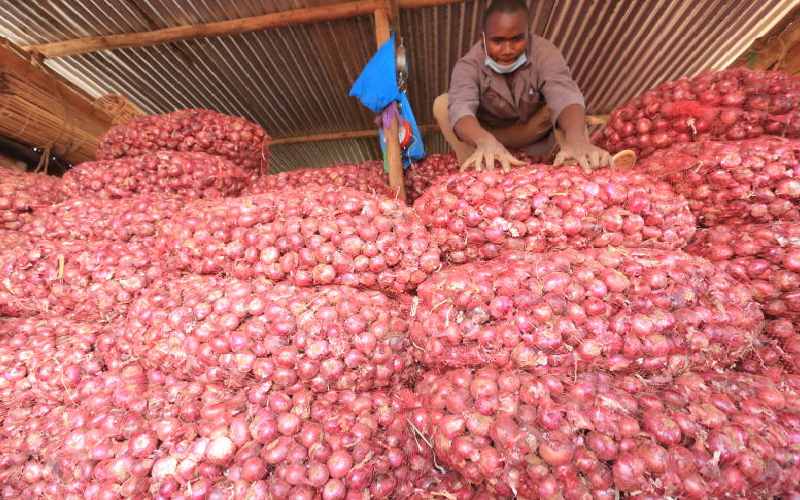
Enock Magara sorts red onions imported from Tanzania at Daraja Mbili market in Kisii County. [Sammy Omingo, Standard]

Data by the Kenya Health Inspectorate Service (Kephis) shows that approximately Sh15 million was collected at the Kenya-Tanzania border post from food imports from Tanzania in the last three years.

Food imports from neighbouring Tanzania into the country have for years been helping bridge the gap of insufficient supply and a huge demand for the products.

Traders source cereals such as rice, sorghum, millet, maize, and fruits such as pineapple, oranges, watermelon, bananas, and tangerine from Tanzania.

The government has, however, banned the importation of maize from the neighbouring country.

Other products imported from Tanzania include animal feeds like cotton seed cake, sunflower seed cake, rice bran, and vegetables such as onions and tomatoes.

Commodities identified to be contributing the highest revenue include rice, maize, tomatoes, oranges, and pineapples.

However, revenue collection at the border has been a challenge due to foodstuff transported through the porous borders, which lead to the loss of millions of shillings in uncollected revenue.

“Data from unofficial routes is currently unavailable, however, we are addressing this together with other stakeholders at the border post,” said Theophilus Mutui, Kephis managing director.

Before banning maize importation in March, Kenya imported 4.47 million kilogrammes of the produce from Tanzania annually.

The country also imports 5.17 million kilos of rice annually, most of which finds itself in Migori markets.

The country further imports 58,500kg of groundnuts, 99,000kg of green grams, 49,000ks of pigeon peas, 49,700kg of millet, and 1,600kg of bambara nuts. Others are 2,200kg of sorghum, 2,110kg of beans, 525kg of sesame, 100kg of cowpeas and 70kg of cardamom annually.

Transport coast
Kenya also imports 140,856kg of tomatoes, 121,550kg of oranges, 55,352kg of onions, 55,973kg of watermelons, 121,280kg of pineapples, 15,370kg of lemons, 49,162kg of bananas, and 2,880kg of avocados.

Others food imports include 2,990kg of grapes, 443,600kg of cassava, 104,490kg of sweet potatoes, 8,560kg of passion fruits, 19,080kg of mangoes, and 5,000kg of capsicum.

According to Migori traders, getting commodities from Tanzania is much cheaper as the transport cost is also favourable.

“What makes us get our stock from Tanzania is that their products are much cheaper and we use less money in transporting them,” Alice Odhiambo, a vegetable vendor says.

Traders also prefer importing onions from Tanzania as they are of superior quality compared to the ones grown in Kenya.

Mercy Anyango, an onion trader in Migori says before fuel prices went up, they would buy one kilo of onions between Sh20 and Sh22, but now the prices have shot to Sh35.

While transporting the onions one needs Sh1,800 from the previous Sh400 a sack, the traders now rely on suppliers who bring them from Tanzania with prices ranging from Sh200 to Sh300 per sack.

Christina Makoreri, who supplies onions to traders at Migori market, says she buys a 40kg bag of onions at Sh7,000 and sells the same at Sh9,000, earning her Sh2,000 profit.

“Traders usually scramble for my onions because they are fresh, of good quality, and pocket friendly,” says Makoreri.

Rosemary Mwita, who imports onions, garlic, lemons and cucumbers, says she started bringing the produce from Tanzania to Migori after she realised the demand was high.

“There is a very high demand for Tanzanian products here because of the quality and price,” Mwita says.

Loice Chialo, who specialises in importing rice from Tanzania, says she has no regrets since she ventured into the trade three years ago.

She gets a 90kg bag of rice from Tanzania at Sh4,000 which earns her Sh500 profit.

Data from the department of Crops in the Agriculture, Livestock and Fisheries Development docket in Migori shows that in 2019, Migori produced 103. 9 million kilogrammes of maize, 230,000kg of rice, 10 million kilos of sorghum, one million kilos of millet, and 5.3 million kilos of tomatoes. The county also produced 600,000kg of bulb onions, one million kilos of spring onions, 2.8 million kilos of groundnuts, 90,000kg of oranges, 25,000kg of lemon, 60,000kg of mangoes, 20,000kg of avocados, and 304,000kg of watermelons, among other produce.

According to Migori Agriculture Executive Valentine Ogongo, the county relies heavily on food imports from Tanzania as demand outstrips production.


MY TAKE
Again ubishi pelekea mamako! U beat us Only on tea, flowers n miraa!
 
Back
Top Bottom