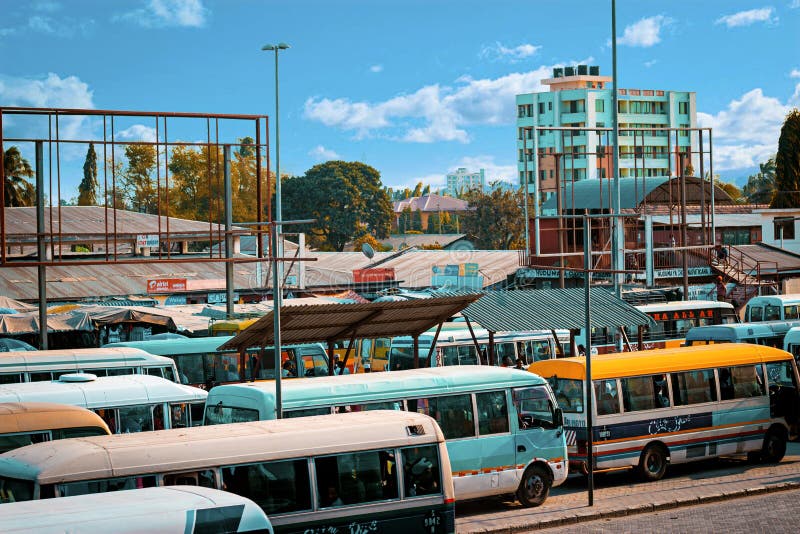
Hizi zinafika hadi Mombasa in 2021 nimeziona pale mwembe tayari stage ya dala dala za Tz, wamejaza mizigo hadi juu na watu ndani wanatoa jasho! wacha wewe..,
Kisha fahamu[emoji116] [emoji116]
Dar es Salaam’s new rapid bus system won international acclaim – but it excludes the poor
Daladalas stuck in traffic.
CokeeOrg/Flickr.,
CC BY-NC-ND
Despite investments of US$150m for the first phase of BRT, the poor are still stuck in traffic on cheaper buses every day. By contrast, those who are wealthy enough to afford the higher fare have the option of cutting travelling time by two hours a day.
Roughly 70% of Tanzanians live on less than 4,400 Tanzanian shillings a day, (that’s less than US$2). Yet a two-way commute along the main branch of the BRT would cost 1,300 shillings – that’s a staggering 30% of poor people’s daily income being spent on transport. By comparison, the same commute by daladala would have cost 800 shillings.
What’s more, the lack of jobs is a major problem in Dar es Salaam, as in many other metropolises in developing countries. Since BRT buses can carry more passengers than minibuses, about
ten daladalas will be displaced by each BRT bus. This will have devastating consequences for the
20,000 to 30,000 people employed in public transport. There are currently no plans to address the fate of these workers.
BRT advocates commonly praise it as a financially self-sufficient bus transport system. But BRT in Dar es Salaam,
as elsewhere in the world, is not sustainable without public subsidies – even with its current high fares. Whether or not the Tanzanian government is willing to subsidise the system
remains to be seen. But in a country with very limited public resources, doing so would divert funding from other vital development needs.