Battle: Dar es Salaam vs Nairobi

Battle: Dar es Salaam vs Nairobi

Tanzania’s Tourism Sector Rebounds​

  • by Chris Bown
  • January 23, 2026
MarriottSerengeti.jpg.webp
Mapito Safari Camp, Serengeti, Autograph Collection — image courtesy of Marriott

Tanzania is enjoying the fruits of investment in tourism promotion, as international arrivals boom
Tanzania’s tourism market has rebounded strongly, and with success has come an impetus from major hotel brands to build a presence in the country.

International visitor numbers grew to 2.14 million in 2024, according to tourism minister Ashatu Kijaji, up from less than 923,000 as recently as 2021. Successful marketing has been targeted at European and North American visitor audiences. Domestic visitor numbers are up, too, reflecting improved economic spending power within the country, better infrastructure and government promotional campaigns.

A Focus on Creating Broader Options​

While final figures for 2025 have yet to be added up, Kijaji said volumes for 2025 were up around 9%, indicating a continuing momentum for the country. Tourism currently contributes around one quarter of Tanzania’s foreign exchange earnings, and around 17.2% of its GDP. As a result, the sector is also a major employer too.

Marriott opened its Mapito Safari Camp in autumn 2025, with the property joining its Autograph Collection. The exclusive destination has just 16 tented suites. It is also working on delivering the 30 room JW Marriott Serengeti Lodge, opening during 2026. Also in the Serengeti, Kempinski is planning its Longosa Lodge, a 75 room luxury retreat which will open in autumn 2027.

Most of the current tourism revenue is around the provision of wildlife safari holidays, which government ministers are looking to diversify away from. Opportunities exist to grow the holiday sector on the country’s Indian Ocean coast and islands, encourage meetings and events, and build ecotourism options.

In the country’s former capital, Dar es Salaam, upcoming hotel developments include the Serena Tanzania, a 230 room refurbishment by Kenyan operator Serena. Radisson is preparing to open a Radisson Blu hotel and apartments, with the hotel occupying the top 14 floors of a 33 storey tower in the city. The 196 room property is due to open in autumn 2026.

According to the W Hospitality annual report on hotel development across Africa, the Tanzania market had a pipeline measured in early 2025 at 3,432 rooms, putting the country in ninth place across the continent. The figure recognises 29 live hotel projects in the country, with an average room count of 118.

Developments on Zanzibar​

The island of Zanzibar, just off the country’s coast, is a focus of significant hotel development activity. Upcoming projects include the Canopy by Hilton Zanzibar, along with resorts for Four Seasons and Le Meridien, both well under way. Minor Hotels is also planning an Anantara branded hotel, with local partner Infinity Developments responsible for delivering the 100 room new build.

Also coming to Zanzibar is the first hotel in East Africa for Iberostar. The 360 room Iberostar Selection Muyuni Beach will open in late 2026. Swiss-Belhotel is also coming to the island, planning to open the 125 room Swiss-Belresort Zanzibar. Marriott is also looking to add to its presence in the region, with a hotel signed to its Tribute Portfolio.


Nani anajenga hii reli 😂😂
Inajengwa na siafu au mchwa? Sababu sijaona constructor wala mtambo site!
Funny enough sijaona hata balozi wa nyumba kumi kutoka Malaba 😂


View: https://x.com/i/status/2034548944789815623

Huamini baba inajengwa ila financing haijakaa vizuri! :EZclap: :EZclap: :Agakakskagesh: :Agakakskagesh:

hata mie sijaona constructor!

Inside the Ksh.500B Naivasha-Malaba SGR extension project​

Moses Kinyanjui
By Moses Kinyanjui Published on: March 19, 2026 11:59 (EAT)

Inside the Ksh.500B Naivasha-Malaba SGR extension project

President William Ruto breaks ground for the land-mark construction of the Naivasha-Kisumu-Malaba Standard Gauge Railway line in Narok on March 19, 2026.

Listen to the article now
1.0x
Audio by Vocalize


Audio by Vocalize

Kenya is set to restart a multi-billion-dollar railway extension, a project that has been stalled for over six years after initial lending from China dried up.

President William Ruto on Thursday launched the railway project in Narok County.

The project stalled near Naivasha, more than 350 km short of reaching the Ugandan border, due to China's slashed funding for large African infrastructure projects under its Belt and Road Initiative.

The project, implemented by Kenya Railways in collaboration with the National Land Commission, comprises two sections: the Naivasha – Kisumu section and the Kisumu – Malaba section.

The State plans to use over Ksh.500 billion in the project, with more money allocated to the longer Naivasha to Kisumu leg of 264 kilometres.

Kenya Railways Managing Director Philip Mainga indicated that phase 2B of the line will be completed by June 2027.

The Naivasha – Kisumu section is set to commence from Emurtoto, in Narok County, to Kisumu, and a branch line of 8.69km to the proposed new Kisumu Port.

The railway line will have six intermediate stations located in Narok, Mulot, Bomet, Sotik, Sondu, and Ahero, traversing through 17 crossing sections that traverse through Narok, Bomet, Nyamira, Kericho, and Kisumu Counties.

The Kisumu – Malaba 107km section will have two intermediate stations in Yala and Mumias and will traverse through six crossing stations across Kisumu, Siaya, Vihiga, Kakamega and Busia Counties. The stations include Kisian West, Ramala, Yala, Musanda, Manyulia, and Amukura.

Likewise, the project design includes 13 tunnels, 23 bridges and 376 culverts.

Each passenger train will have a capacity of 1,096 passengers, and with a designed speed of 120 kilometres per hour, and each freight train will have a haulage capacity of 4,000 tonnes (216 TEUS) with a designed speed of 80 kilometres per hour.

The designed freight carrying capacity of the railway is 22 million tonnes per annum.

Other key features in the extension project include a uniform design specification, which will permit seamless operation across the borders.

The project is projected to significantly improve logistics efficiency within the country and the neighbouring countries.

Some of the projected benefits include reduced freight transport costs, faster movement of goods and passengers, increased trade competitiveness and promoting regional connectivity and integration.

The railway’s first section, linking the port of Mombasa to Nairobi, was completed in 2017.

Critics have said the stalled project had become a symbol of China's debt trap diplomacy, with Beijing extending large, often opaque loans to a poorer country for infrastructure projects - though that is a claim rejected by the Chinese government.


Screenshot 2026-03-19 162317.png

​

Princess Pamunda​


The_Soul-icon.png


EXCLUSIVE How Zanzibar will turn small islands into big-time holiday spots

19 small islands are to become prime luxury hideaways. THE FUMBA TIMES was given exclusive access to the amazing plans for the first of them, Pamunda A and B.

Meet Lukáš Šinogl, the new prince of – well, not Zamunda – but Pamunda. The 34 year old rightly feels like having entered a blockbuster, similar to Eddie Murphy as crown prince of the fictional African nation of Zamunda, a Hollywood mega success in the 80s. Šinogls company, the owners of renowned 5-star Tulia Beach Resort in Pongwe Pwani, was given the much-fought-over green light to develop two tiny islands, Pamunda A and B, just south-west off the Fumba peninsula. Budget: 30-50 million dollars, coincidentally just what Hollywood spent on making Murphy’s “Coming to America”.

The uninhabited Pamunda isles – until now merely coral rag bush country – are two of ten small islands recently handed over to investors by the government for a total of 261,5 million dollars in expected investments. “This shall boost the blue economy and open up more investment opportunities for Zanzibar”, a government spokesperson explained the purpose of the deal, happy about the cash flow. And because the initiative, which attracted over 50 affluent bidders, went so well, Zanzibar immediately decided to put another nine of his small isles up for grabs.

Zanzibar goes Maldives

“But we do not sell them, we only lease them”, assured Shariff Ali Shariff the public. The director of the Zanzibar Investment Promotion Authority (ZIPA) and Investment Minister Mudrik R. Soraga are the driving force behind the island scheme. Strategic investment is the key word of the deal: the daring financiers, whether local or foreign, are promised wide benefits in return for their island venture such as a 50 per cent exemption of income tax for ten years.

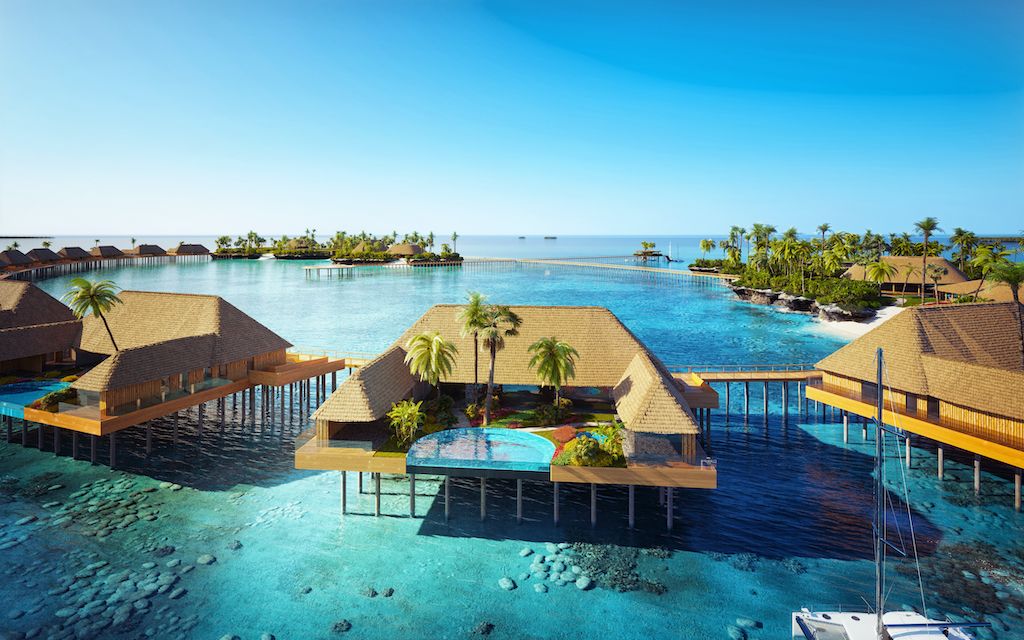
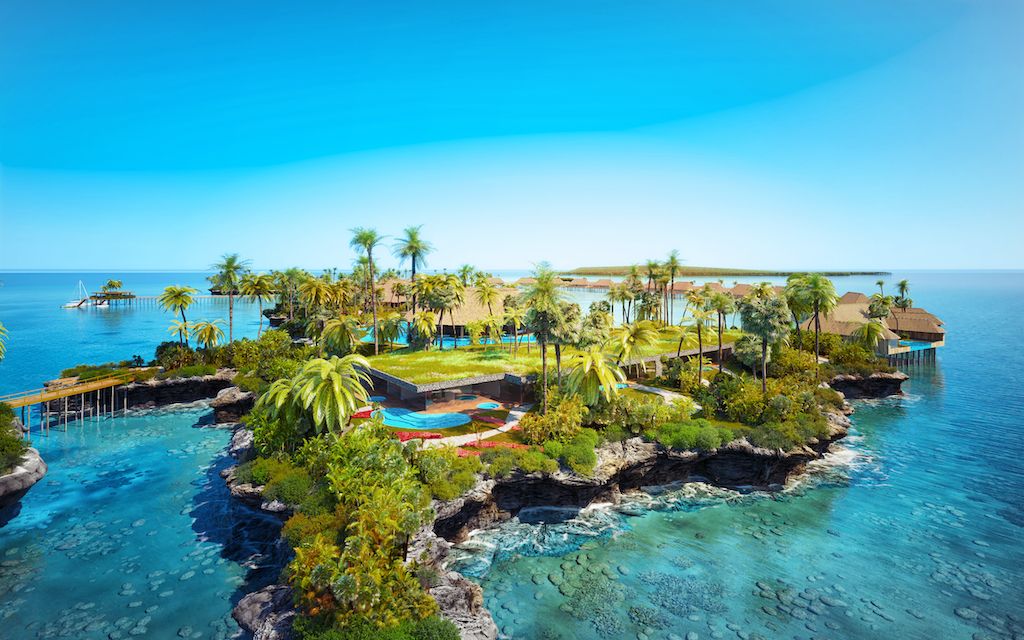
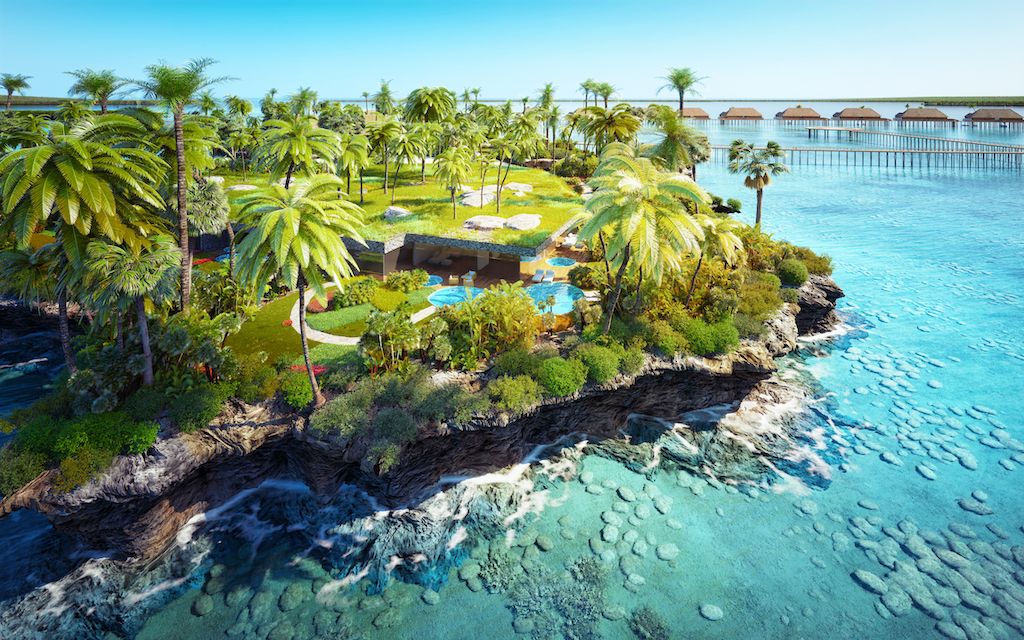
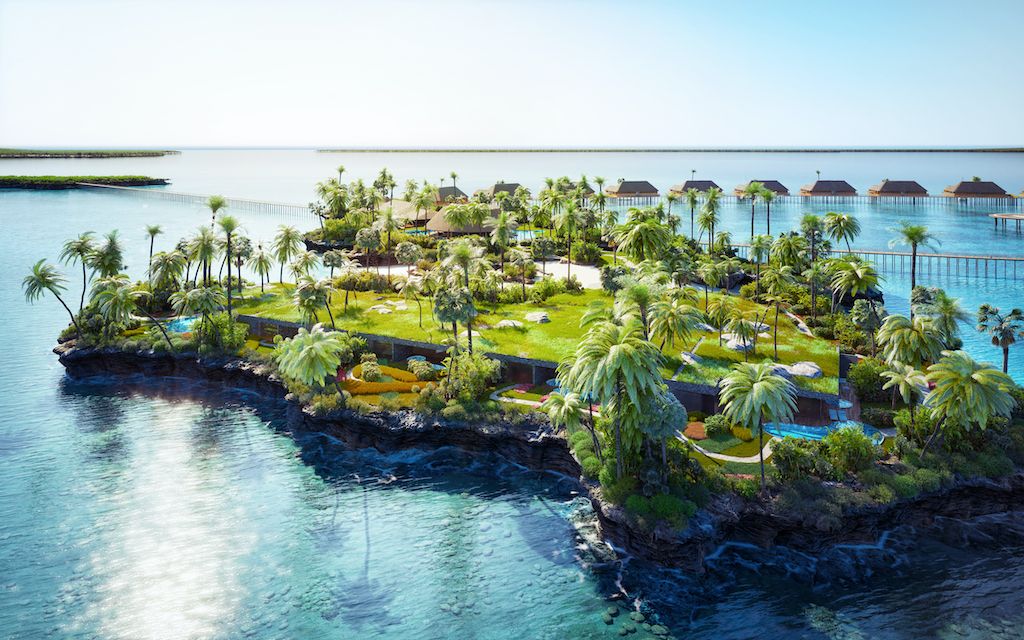
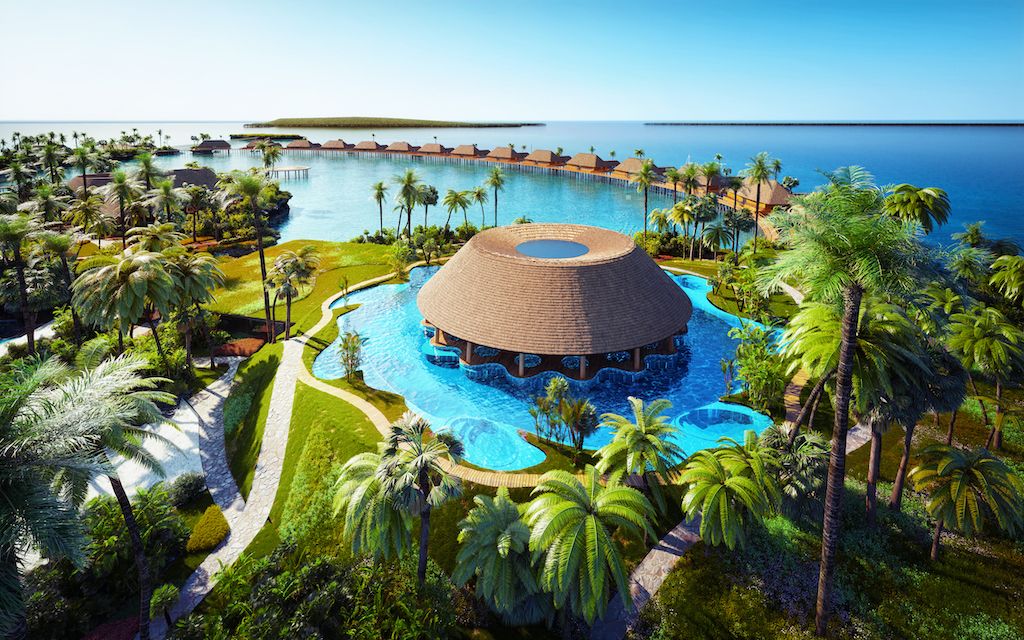
The envisaged small-island-tourism will bring a touch of Maldives to Zanzibar. Pamunda’s winning design is not just luxury but upper-upper-luxury: a circle of stilted water villas will be connecting the two Pamunda islands of together six hectares. On the slightly elevated islands, premium restaurants, bars and event space will be placed. The 16 water and 7 coral villas, each ultra-spacious with more than 300 square metres, will form a private wellness world complete with a resident doctor, sauna, gym, spa, home office. Does the lady of the house require a hairdresser? “She’ll be served in her private salon”, envisages Šinogl. Guests arrive by boat or helicopter.

No bling-bling, please!

“Will have no bling-bling”, insists the gentle, down-to-earth manager, among whose clients has been the Sultan of Oman. “Even VIPs can take their masks off with us.” His visitors want “the real thing”, he says, “genuine, natural, quality relaxation, hakuna matata, but with quality.” The architectural plans for Pamunda are drawn, the environmental assessment studies done. “Zero harm to the environment”, promise the developers; bungalows will be placed four metres above sea level facing east, taking tides, wind and yes, also global warming, into consideration.

All small-island-candidates, the ministry says, were tested but only a few found worthy of the projects after screening their financial and operational capacity. All had to prove “ability to conserve the environment, biodiversity, cultural heritage and community development”- lest no one would accuse the government of selling its assets. For cultural festivities Zanzibari still have access to the islands. Lukáš Šinogl and the two investors behind him, all hailing from the Czech republic, passed the test without hesitation.

Green care learnt in Fumba

They have learnt to master the game at the Tulia resort, opened in 2015 and one of Zanzibar’s best five star retreats. 16 bungalow suites, 125 staff, manicured gardens and a service so perfect one doesn’t even notice it, are the backbone of the property. At Tulia, Champagne is all-inclusive and so is a waterslide, rather unusual for a luxury hotel but much loved by children. Especially impressive is the green back-up, developed by the permaculture team of Fumba Town: 250 hens and 150 ducks happily roam around a huge ever-green farm in the back of the beach property which produces all there is to eat and enjoy by Tulia guests. Friendly maids are mopping shiny mahogany villa floors with lemon grass concoction, a natural insect killer.

“Much of what we have learnt here, we will also put into practice at the future Pamunda resort”, says the general manager. There, villas will start at $3200 - per night. For Šinogl and the government the ultra-luxury concept makes sense. Presently, only one per cent of accommodation in Zanzibar is in the premium range. “Zanzibar is too small to go for quantity; high-value-tourism is the better option”, says the manager. And who knows, maybe the concept will harvest just as much for Zanzibar as the Prince of Zamunda, who brought in 350 million dollars at the box office.

  • Information for investors: zipa.go.tz
  • Tulia Beach Resort, tuliazanzibar.com
By ANDREA TAPPER


04.jpg


10.jpg


09.jpg


08.jpg


07.jpg


05.jpg
 
Back
Top Bottom