Battle: Dar es Salaam vs Nairobi
You are using an out of date browser. It may not display this or other websites correctly.
You should upgrade or use an alternative browser.
You should upgrade or use an alternative browser.
Battle: Dar es Salaam vs Nairobi

Teargass
JF-Expert Member
- Apr 23, 2018
- 31,652
- 34,273
Govi limekufanya kushindwa hata kujua commerce terminologies, tafuta alietahiriwa hapo karibu yako akuelekeze, halafu company kubwa Tanzania hata haihusiani na gold
View: https://x.com/TanzaniaInsight/status/1468451573986701313?t=ppAzWK1m_xiUhRRTib_wJA&s=19
Hiyo Kampuni kubwa only had a revenue of Ksh48B, half of what Naivas made😂😂🤣😂
Teargass
JF-Expert Member
- Apr 23, 2018
- 31,652
- 34,273
Govi limekufanya kushindwa hata kujua commerce terminologies, tafuta alietahiriwa hapo karibu yako akuelekeze, halafu company kubwa Tanzania hata haihusiani na gold
View: https://x.com/TanzaniaInsight/status/1468451573986701313?t=ppAzWK1m_xiUhRRTib_wJA&s=19
Hiyo Kampuni kubwa only had a revenue of Ksh48B, half of what Naivas made😂😂🤣😂
Teargass
JF-Expert Member
- Apr 23, 2018
- 31,652
- 34,273
Nenda ukaambie Azam hivo. What the world currently knows ni kwamba has an Annual revenue of $800M, sawa na ya Naivas Supermarket😂😂😂🤣🤣🤣 mjomba upende usipende hiyo ni taarifa ya 2015.

concordile 101
JF-Expert Member
- Oct 13, 2013
- 6,999
- 15,466
Analazimisha isomeke Leo anajua alitendalo hakuna hiyo safaricom haiwez fikia hata nusu ya kipato cha azam. Tumuonee huruma tu wakenya hawanaga akili.🤣🤣🤣 mjomba upende usipende hiyo ni taarifa ya 2015.

chongchung
JF-Expert Member
- Jun 23, 2013
- 14,740
- 46,079
You mean 2 billion ni half of what? Govinda banaHiyo Kampuni kubwa only had a revenue of Ksh48B, half of what Naivas made😂😂🤣😂

President of China
JF-Expert Member
- Dec 6, 2018
- 34,615
- 94,204
Teargass
JF-Expert Member
- Apr 23, 2018
- 31,652
- 34,273
Naivas rrevenue is Ksh96B, TBL revenue is Ksh48B. Hiyo hesabu ndio huelewi ama?You mean 2 billion ni half of what? Govinda bana View attachment 3309311

Geza Ulole
Platinum Member
- Oct 31, 2009
- 76,161
- 107,729
Ausmarine - Passenger Vesselswewe ndo hauko sawa
jielimishe
AI Overview
Learn more
Revenue and assets are key financial concepts, but they represent different things. Revenue is the income a business generates from its operations, while assets are resources owned by a business that have value. Revenue is recorded over a period (like a quarter or year), while assets are measured at a specific point in time.
Here's a more detailed breakdown:
Revenue:
- Definition: Revenue is the total amount of income generated by a business from selling goods or services, or other activities like interest or royalties.
- Purpose: It's a key indicator of a business's financial performance and success, reflecting how effectively it meets customer demand.
- Timing: Revenue is measured over a period, such as a quarter or a year.
Assets:
- Definition:
Assets are resources owned or controlled by a business that have value and can be used to generate future economic benefits.
- Purpose:
Assets represent what a business owns and can use to operate and potentially generate revenue.
- Timing:
Assets are measured at a specific point in time, like the end of a reporting period.
Key Differences:
- Nature: Revenue is income generated, while assets are resources owned.
- Time: Revenue is measured over time, while assets are measured at a point in time.
- Location: Revenue is an income statement item, while assets are a balance sheet item.
Examples:
- Revenue:
The total amount of sales a retail store makes in a quarter, or the royalties a publisher receives from book sales.
- Assets:
Cash on hand, buildings, machinery, equipment, inventory, accounts receivable, and intellectual property like patents.
- Differences Between Assets and Revenue - Nasdaq
10 Feb 2016 — The major difference The single major difference between revenue (an income statement item) and assets (balance sheet i...
View attachment 3309259
VESSEL REVIEW | Kilimanjaro VII – Brand new fast ferry for Tanzania’s Dar es Salaam – Zanzibar route

Baird Maritime
Published on:
15 Oct 2019, 6:33 am
Richardson Devine Marine Constructions has just launched Kilimanjaro VII, a 45-metre catamaran passenger ferry for Azam Marine of Tanzania, Africa.
This vessel is the seventh vessel built for the operator by Richardson Devine Marine to supply a passenger ferry service between Dar es Salaam and Zanzibar. As per the previous six vessels, Sydney-based Incat Crowther was responsible for the design and engineering.
The vessel seats 224 passengers in its main deck business cabin, 72 VIP passengers and 18 "royal class" passengers in luxurious lie flat seats on the mid deck, with the remainder being economy passengers in separate areas over three decks.

VIP and royal class passengers enjoy dedicated personal entertainment screens with a food and beverage ordering service incorporated into the system. A major enhancement from earlier vessels is the relocation of the wheelhouse to the third deck. This configuration results in panoramic windows forward on the mid deck for the royal class passengers, creating an impressive experience for occupants of this high-revenue space.

The expansive wheelhouse is full width with internal wing stations and four forward facing elevated crew seats for the master, mate and engineers. There is a comfortable bank of armchairs for travelling company executives or guest VIPs.
To facilitate efficient boarding of passengers and luggage the 500-passenger, 35 knot vessel features a parallel boarding system from ship-based, electrically operated, hinged boarding access ways.
There are four passenger access entries per side with level-adjusting boarding stairs and a dedicated cargo access ramp. VIP and royal class passengers board into a discreet stair tower directly to the upper deck cabin. Main deck business passengers also board midships with economy passengers boarding aft.
Luggage trolley movements are managed safely using a high-speed winch mounted in the luggage room overhead. The luggage room houses up to 10 tonnes of luggage and cargo. The boarding system ensures passenger classes and luggage trolleys are segregated, reducing turnaround time and improving safety, whilst promoting exclusivity for the higher yield passengers.

Kilimanjaro VII is the first fast passenger vessel to use a pair of Cummins QSK95-M main engines. RDM said the large, twin-engine solution was an effective way of providing more speed whilst avoiding the through-life cost and complexity of a four-engine power train. Engine room accessibility is improved over a four-engine arrangement, and maintenance and operational requirements are reduced.
Kilimanjaro VII impressed on the sea trials last week, operating at a fully loaded speed of 30 knots at low proportion of MCR to offer very long engine life. She has a top speed in excess of 37 knots and has proven smooth and quiet. For passenger comfort and to assist seakeeping, the vessel is fitted with a Naiad active interceptor system, whilst IMO HSC code-compliant stability enhances her safety credentials. The journey between Dar es Salaam and Zanzibar is around 42 nautical miles and should take approximately one hour and 45 minutes.

| Kilimanjaro VII | |
| SPECIFICATIONS | |
| Type of vessel: | Passenger ferry |
| IMO Number: | 9887554 |
| Classification: | DNV Stucture and Stability / NSCV Fitout and Safety |
| Port of registry: | Zanzibar |
| Flag: | Tanzania |
| Owner: | Kilimanjaro Fast Ferries, Tanzania |
| Operator | Kilimanjaro Fast Ferries, Tanzania |
| Designer: | Incat Crowther, Australia |
| Builder: | Richardson Devine Marine Constructions, Australia |
| Construction material: | Aluminium |
| Plate cutting: | Router |
| Length overall: | 44.9 metres |
| Length waterline: | 42.9 metres |
| Length bp: | 42.9 metres |
| Beam: | 11.5 metres |
| Draught: | 1.5 metres |
| Depth: | 4.25 metres |
| Displacement: | 250 tonnes |
| Deadweight tonnage: | 63 tonnes |
| Gross tonnage: | 681 |
| Net tonnage: | 234 |
| Main engines: | 2 x Cummins QSK 95, each 3,600 hp (2,700 kW) |
| Gearboxs: | 2 x ZF 9050 NR |
| Propulsion: | 2 x Rolls Royce/Kongsberg 80 G4 waterjets |
| Generators: | 2 x Cummins 6-CP 136 DM/5 136ekW; Onan MDKDR/12503, 17.5kW |
| Maximum speed: | 34 knots |
| Cruising speed: | 30 knots |
| Hydraulic equipment: | Mahle NFV KFWA – 2 Fuel Scrubber |
| Electronics supplied by: | Island Marine |
| Radars: | 2 x Furuno 12 kW |
| Depth sounder: | Furuno |
| Radio: | Icom |
| Satcom: | Sea Tel |
| Autopilot: | Furuno |
| Compass: | Furuna Sat Compass |
| GPS: | Furuno |
| Plotters: | Furuno |
| AIS: | Furuno Class A |
| Audio video system: | Bazeport |
| Capstan/windlass: | Muir |
| Alarm system/s: | C-Zone |
| Paints/coatings: | Wattyl polyurethane above water; International 1100SR underwater |
| Windows: | Gjames |
| Seating: | Eknes / Beurteaux |
| Lighting: | LED |
| Floor/deck surface finishes: | Tarkett, Armstrong |
| Interior fitout/furnishings: | Ayres composite panels |
| Safety equipment: | RFD |
| Liferafts: | RFD |
| Rescue boat: | Highfield non-Solas 3.8 metres |
| Type of fuel: | Diesel |
| Fuel capacity: | 22,000 litres |
| Freshwater capacity: | 2,000 litres |
| Sewage/blackwater capacity: | 3,000 litres |
| Accommodation: | 8 crew berths |
| Crew: | 10 |
| Passengers: | 504 |
Ausmarine - Passenger Vessels
VESSEL REVIEW | Kilimanjaro VII – Brand new fast ferry for Tanzania’s Dar es Salaam – Zanzibar route

Baird Maritime
Published on:
15 Oct 2019, 6:33 am
This vessel is the seventh vessel built for the operator by Richardson Devine Marine to supply a passenger ferry service between Dar es Salaam and Zanzibar. As per the previous six vessels, Sydney-based Incat Crowther was responsible for the design and engineering.

The vessel seats 224 passengers in its main deck business cabin, 72 VIP passengers and 18 "royal class" passengers in luxurious lie flat seats on the mid deck, with the remainder being economy passengers in separate areas over three decks.
VIP and royal class passengers enjoy dedicated personal entertainment screens with a food and beverage ordering service incorporated into the system. A major enhancement from earlier vessels is the relocation of the wheelhouse to the third deck. This configuration results in panoramic windows forward on the mid deck for the royal class passengers, creating an impressive experience for occupants of this high-revenue space.
The expansive wheelhouse is full width with internal wing stations and four forward facing elevated crew seats for the master, mate and engineers. There is a comfortable bank of armchairs for travelling company executives or guest VIPs.
To facilitate efficient boarding of passengers and luggage the 500-passenger, 35 knot vessel features a parallel boarding system from ship-based, electrically operated, hinged boarding access ways.
There are four passenger access entries per side with level-adjusting boarding stairs and a dedicated cargo access ramp. VIP and royal class passengers board into a discreet stair tower directly to the upper deck cabin. Main deck business passengers also board midships with economy passengers boarding aft.
Luggage trolley movements are managed safely using a high-speed winch mounted in the luggage room overhead. The luggage room houses up to 10 tonnes of luggage and cargo. The boarding system ensures passenger classes and luggage trolleys are segregated, reducing turnaround time and improving safety, whilst promoting exclusivity for the higher yield passengers.
Kilimanjaro VII is the first fast passenger vessel to use a pair of Cummins QSK95-M main engines. RDM said the large, twin-engine solution was an effective way of providing more speed whilst avoiding the through-life cost and complexity of a four-engine power train. Engine room accessibility is improved over a four-engine arrangement, and maintenance and operational requirements are reduced.

Kilimanjaro VII impressed on the sea trials last week, operating at a fully loaded speed of 30 knots at low proportion of MCR to offer very long engine life. She has a top speed in excess of 37 knots and has proven smooth and quiet. For passenger comfort and to assist seakeeping, the vessel is fitted with a Naiad active interceptor system, whilst IMO HSC code-compliant stability enhances her safety credentials. The journey between Dar es Salaam and Zanzibar is around 42 nautical miles and should take approximately one hour and 45 minutes.
See all the other content from this month's Passenger Vessel Week right here, including reviews, features, opinions and news.
| Kilimanjaro VII | |
| SPECIFICATIONS | |
| Type of vessel: | Passenger ferry |
| IMO Number: | 9887554 |
| Classification: | DNV Stucture and Stability / NSCV Fitout and Safety |
| Port of registry: | Zanzibar |
| Flag: | Tanzania |
| Owner: | Kilimanjaro Fast Ferries, Tanzania |
| Operator | Kilimanjaro Fast Ferries, Tanzania |
| Designer: | Incat Crowther, Australia |
| Builder: | Richardson Devine Marine Constructions, Australia |
| Construction material: | Aluminium |
| Plate cutting: | Router |
| Length overall: | 44.9 metres |
| Length waterline: | 42.9 metres |
| Length bp: | 42.9 metres |
| Beam: | 11.5 metres |
| Draught: | 1.5 metres |
| Depth: | 4.25 metres |
| Displacement: | 250 tonnes |
| Deadweight tonnage: | 63 tonnes |
| Gross tonnage: | 681 |
| Net tonnage: | 234 |
| Main engines: | 2 x Cummins QSK 95, each 3,600 hp (2,700 kW) |
| Gearboxs: | 2 x ZF 9050 NR |
| Propulsion: | 2 x Rolls Royce/Kongsberg 80 G4 waterjets |
| Generators: | 2 x Cummins 6-CP 136 DM/5 136ekW; Onan MDKDR/12503, 17.5kW |
| Maximum speed: | 34 knots |
| Cruising speed: | 30 knots |
| Hydraulic equipment: | Mahle NFV KFWA – 2 Fuel Scrubber |
| Electronics supplied by: | Island Marine |
| Radars: | 2 x Furuno 12 kW |
| Depth sounder: | Furuno |
| Radio: | Icom |
| Satcom: | Sea Tel |
| Autopilot: | Furuno |
| Compass: | Furuna Sat Compass |
| GPS: | Furuno |
| Plotters: | Furuno |
| AIS: | Furuno Class A |
| Audio video system: | Bazeport |
| Capstan/windlass: | Muir |
| Alarm system/s: | C-Zone |
| Paints/coatings: | Wattyl polyurethane above water; International 1100SR underwater |
| Windows: | Gjames |
| Seating: | Eknes / Beurteaux |
| Lighting: | LED |
| Floor/deck surface finishes: | Tarkett, Armstrong |
| Interior fitout/furnishings: | Ayres composite panels |
| Safety equipment: | RFD |
| Liferafts: | RFD |
| Rescue boat: | Highfield non-Solas 3.8 metres |
| Type of fuel: | Diesel |
| Fuel capacity: | 22,000 litres |
| Freshwater capacity: | 2,000 litres |
| Sewage/blackwater capacity: | 3,000 litres |
| Accommodation: | 8 crew berths |
| Crew: | 10 |
| Passengers: | 504 |

VESSEL REVIEW | Kilimanjaro VII – Brand new fast ferry for Tanzania’s Dar es Salaam – Zanzibar route
Richardson Devine Marine Constructions has just launched Kilimanjaro VII, a 45-metre catamaran passenger ferry for Azam Marine of Tanzania, Africa. This vessel

Sama boy 255
JF-Expert Member
- Mar 5, 2021
- 13,806
- 41,709
Its net profit is 2 billion Kenya money. A money to buy a single home in Fumba uptown living. 🤣🤣🤣🤣 this is joke.
President of China
JF-Expert Member
- Dec 6, 2018
- 34,615
- 94,204
Geza Ulole
Platinum Member
- Oct 31, 2009
- 76,161
- 107,729
Kilimanjaro VII: Quality In Design, Construction and Power
by Alan Haig-BrownCummins Vessel Reference #830
The Island of Zanzibar and others in the group are located just off the coast of Tanzania and have, for thousands of years, been a destination for adventure, beauty and trade. The earliest Arab traders brought the skills of dhow building and, along with this, a great appreciation of quality boats.
While dhows are still built in Zanzibar, the owners of Azam Marine have travelled across the Indian Ocean to Australia to find the best of the best in aluminum ferry design and construction. The firm operates a scheduled ferry service between the Tanzanian mainland and the Islands of Zanzibar and Pemba. In addition to a RIB passenger speedboat, they operate several large Cummins-powered, high-speed and high-capacity catamarans.
A company spokesperson has explained that, “As international tourists discover the magnificent destination of Tanzania, Azam Marine and Coastal Fast Ferries are moving with the times to provide them with swift and comfortable ferry services. The Tanzanian companies are pursuing a vigorous policy of modernizing and maintaining its fleet in line with fast-moving developments in the world of water transport.”
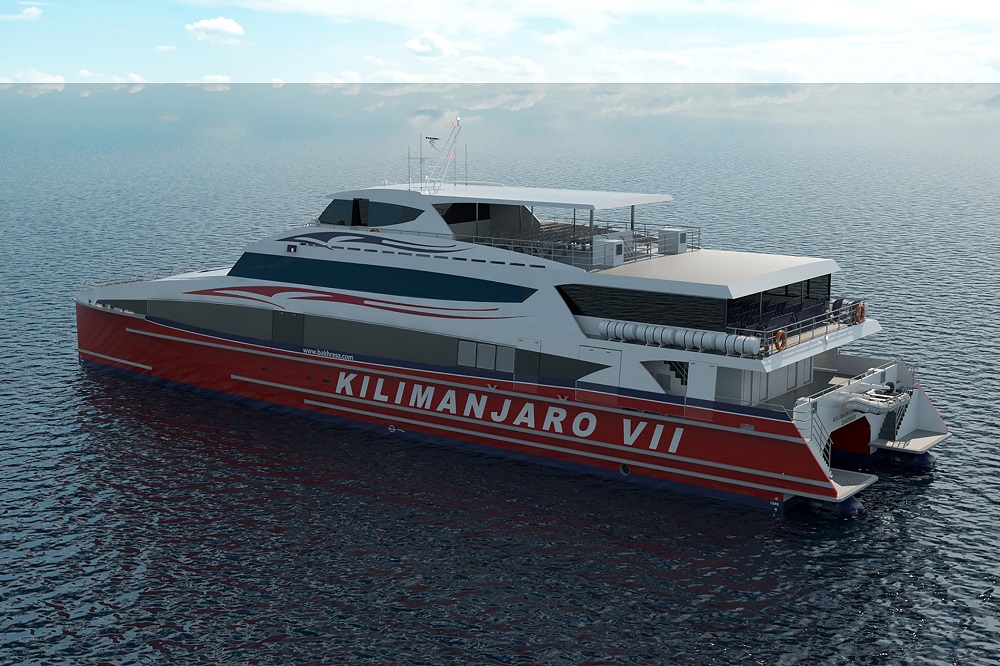
This commitment naturally has led to Incat-Crowther design, Australian boat building and Cummins Power. Most recently, in early 2016, they took delivery of a 32-knot, 566-passenger, 39 by 11-meter, aluminum catamaran from Tasmania’s Richardson Devine Marine shipyard. Named Kilimanjaro VI, this prop-driven boat, the sixth from the yard to this owner, has proven itself with a pair of Cummins 1715 kW QSK60 engines. This vessel also has two Cummins-powered 170 kVA electrical generators.
In 2018 construction begins on a still larger and faster catamaran to be named Kilimanjaro VII. The new boat, also being built at Richardson Devine Marine to an Incat-Crowther design, will, at 45 by 11.5-meters be slightly larger. It will also be much more powerful with a pair of Cummins Marine’s QSK95 engines each delivering a hefty 2684 kW (3600 HP) at 1700 RPM through ZF marine gears to Kamewa 80-S4 waterjets. This will give the larger and heavier boat a 35-knot design speed.
These 95-liter Cummins engines are the same models that were installed in two large Incat-Crowther designed crew/supply boats built in Spain in 2016/17. They have proven themselves in extensive global operations.
The new catamaran’s interior design, together with a crew of ten, will give emphasis to passenger luxury in all classes for the voyage. Company literature explains, “Kilimanjaro VII(7) offers an extravagant level of comfort and luxury. Her “Royal Class” area is of a similar standard to an Emirates Airlines First Class cabin and even the economy passengers on the main deck luxuriate in their comfortable seats. Stewards will serve passengers from airline style food and beverage trolleys. The mid-deck Royal and First Class passengers also get the benefit of their own entertainment monitor.”
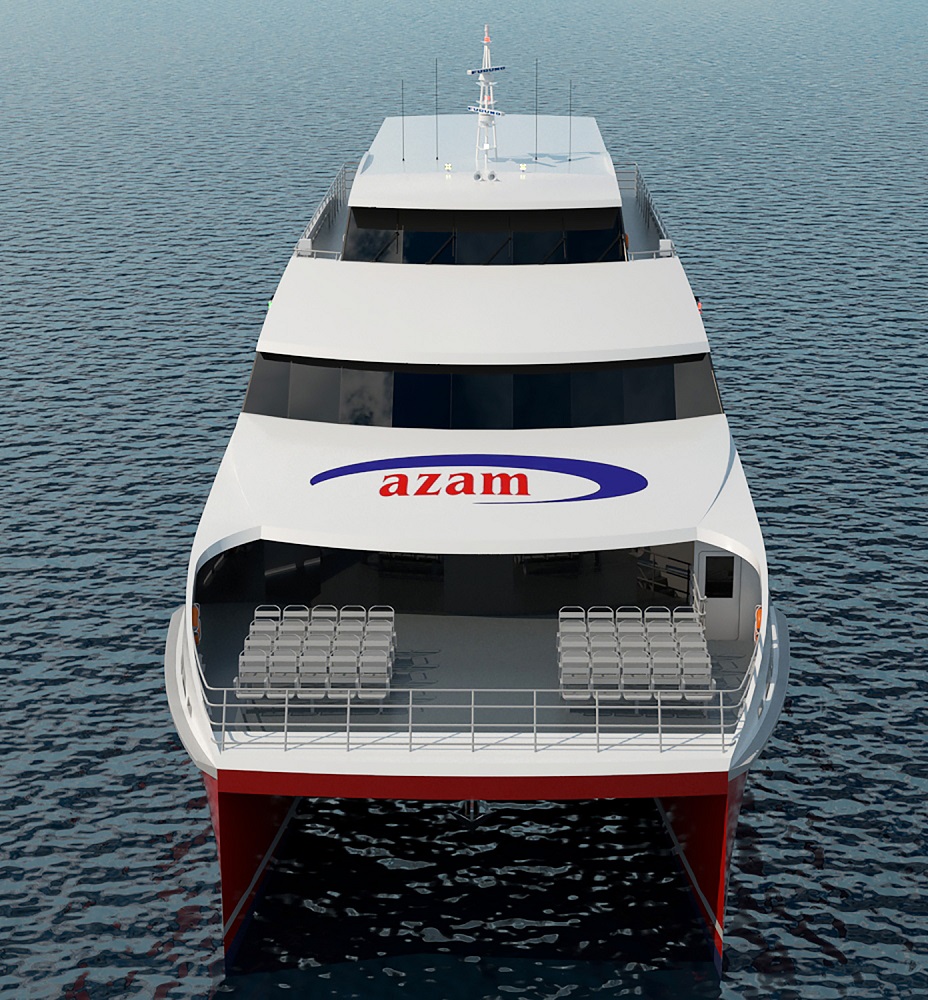
For ease in boarding and disembarkation of up to 500 passengers on three decks, the vessel is equipped with three hinged boarding ramps. An additional ramp will be used by the crew to discharge passenger baggage, from a separate onboard baggage room, for pick-up in the terminal.
A pair of Cummins 6CTA-powered 136 kWE generators will meet the Kilimanjaro VII’s electrical needs. Tankage for fuel is provided in two 7500-liter fuel tanks and two 2000-liter day tanks. Additional tankage is provided for 1500 liters of water.
Early voyagers brought maritime technology to the island of Zanzibar on trading dhows. Today state-of-the-art maritime technology, in the Kilimanjaro fleet, is bringing international visitors and tourists to the stunning beaches and culture of these islands off Tanzania.
Renderings courtesy of Incat Crowther
For further information:
Sam Jones
Sales Executive – Industrial, Marine and Automotive
Cummins Engines,
191-195 Boundary Road
Laverton North
Victoria 3026
Australia
Phone: 61 3 8368 0800
Fax: 61 3 8368 0888
Mobile: 61 417 574 144
E-mail: samuel.jones@cummins.com
Azam Marine
P.O.Box 2517
Dar Es Salaam
Tanzania
Phone: 255 22 2123324
Richardson Devine Marine
20-22 Negara Cres,
Goodwood TAS 7010
Australia
INCAT CROWTHER
Unit 15/9 Narabang Way,
Belrose NSW 2085
Australia
chongchung
JF-Expert Member
- Jun 23, 2013
- 14,740
- 46,079
Naivas with 7 retailers aipite TBL manufacturer? Mbona wakundustan mnakuaga na mavi kichwani badala ya ubongo, na hii inamaanisha nini? Au mna naivas ngapi?Naivas rrevenue is Ksh96B, TBL revenue is Ksh48B. Hiyo hesabu ndio huelewi ama?
Teargass
JF-Expert Member
- Apr 23, 2018
- 31,652
- 34,273
Bro, chukua kampuni zote under Azam uzicombine revenue yao ndio at least utafikia revenue ya Azam.Its net profit is 2 billion Kenya money. A money to buy a single home in Fumba uptown living. 🤣🤣🤣🤣 this is joke.
Teargass
JF-Expert Member
- Apr 23, 2018
- 31,652
- 34,273
Naivas has 110 branches and it’s revenue ni same na ya Azam group😂😂😂👇👇Naivas with 7 retailers aipite TBL manufacturer? Mbona wakundustan mnakuaga na mavi kichwani badala ya ubongo, na hii inamaanisha nini? Au mna naivas ngapi? View attachment 3309313
Hakuna kampuni Tanzania with more branches than Naivas.
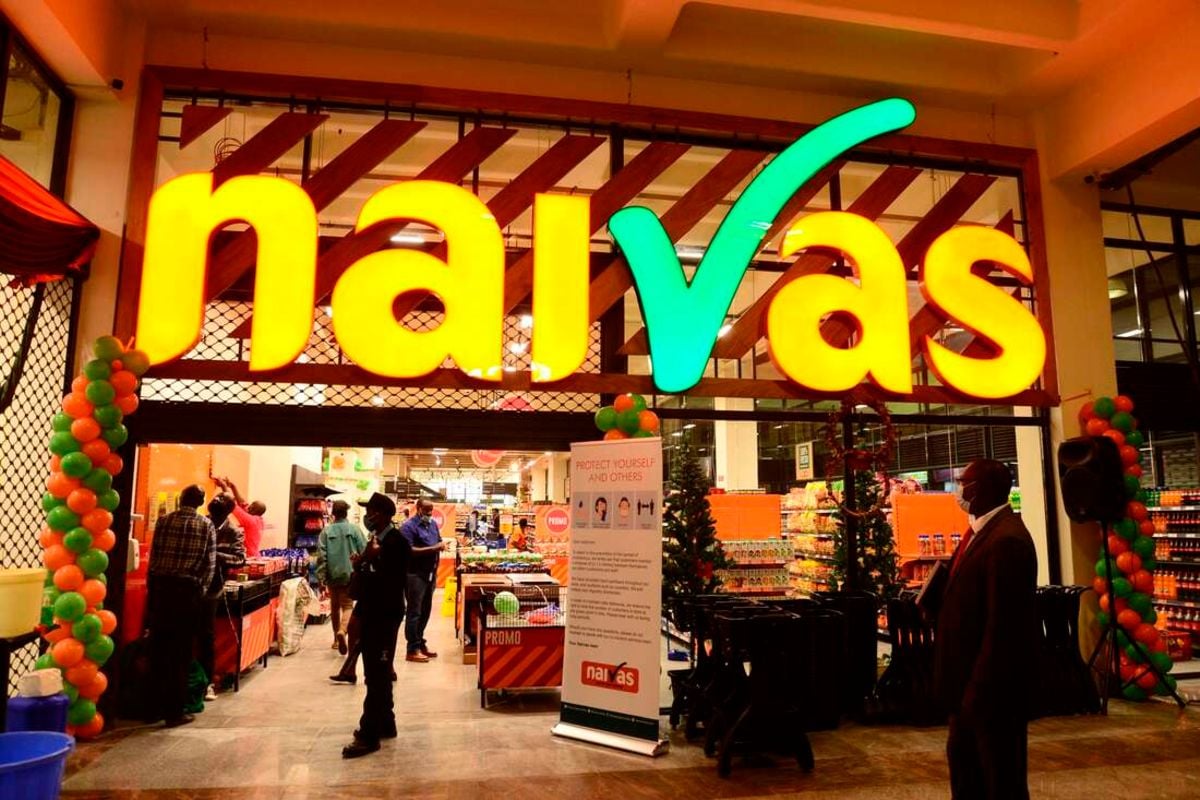
Naivas Supermarket opens 110th store in Tatu City
Naivas Supermarket has opened its 110th store at Tatu City in a bid to continue expanding its market share and base across the country.
 www.tv47.digital
chongchung
JF-Expert Member
- Jun 23, 2013
- 14,740
- 46,079
Hata wangekua na kiosks 1000 hawawezi kupata profit zaidi ya 2 billion, si ulisema wamedouble TBL au sio wewe?Naivas has 110 branches and it’s revenue ni same na ya Azam group😂😂😂👇👇
Hakuna kampuni Tanzania with more branches than Naivas.
Naivas Supermarket opens 110th store in Tatu City
Naivas Supermarket has opened its 110th store at Tatu City in a bid to continue expanding its market share and base across the country.
President of China
JF-Expert Member
- Dec 6, 2018
- 34,615
- 94,204
Hii haba ni idadi ya TV Decoders zinazotuika mpaka last month hapa TZ. Ngoja tupige mahesabu kuhusu Azam pekeeNaivas rrevenue is Ksh96B, TBL revenue is Ksh48B. Hiyo hesabu ndio huelewi ama?
Average Subscription fee per month ni Tsh 20,000
Total Active decoders for 3 Months is 1,290,048
Revenue per Month = 1,290,048 x 20,000 = Tsh 25,800,960,000, Ksh 1,243,836,238.10
Kwa mwaka = Ksh: 14,926,034,857.2
This just one product.
President of China
JF-Expert Member
- Dec 6, 2018
- 34,615
- 94,204
Gemin Again 🤣 🤣 🤣 🤣The leading company in Tanzania by Revenue had less than $500M. nairobae hukudanganya kusema kwamba ukipekeka Naivas Tanzania it will be top company with most revenue 😂😂👇👇
View attachment 3309322
chongchung
JF-Expert Member
- Jun 23, 2013
- 14,740
- 46,079
Naivas revenues ziidouble 2nd largest company in EA, (N. B without considering our mining companies) wewe govi sio mzimaNaivas rrevenue is Ksh96B, TBL revenue is Ksh48B. Hiyo hesabu ndio huelewi ama?
Similar Discussions
-
 Tanzania’s Dar es Salaam port surges ahead of Kenya’s Mombasa in global efficiency ranking
- Started by Zack Abdul
- Replies: 0
-
Kuchagua POS Bora kwa Maduka jijini Dar es Salaam
- Started by BIASHARABORA
- Replies: 2
-
-
 Need Someone in Dar es Salaam to Handle Tasks for You? (On-Ground Support in Tanzania)
- Started by Powell Gonzalez
- Replies: 1
-
Need Someone in Dar es Salaam to Handle Tasks for You? (On-Ground Support in Tanzania)
- Started by Powell Gonzalez
- Replies: 0