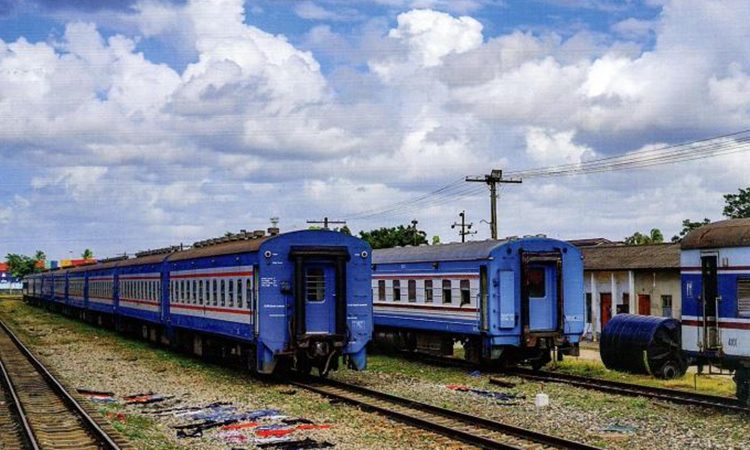
TAZARA: A test case for China’s capacity to modernise and adapt to evolving global demands
article
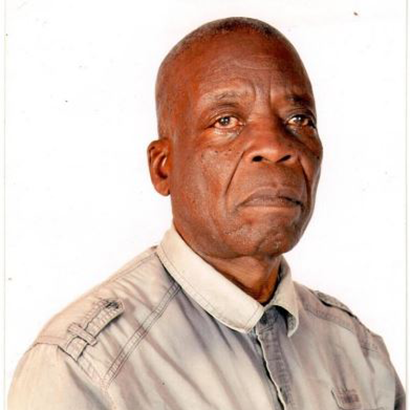
Katutu Sayila, Zambian-based freelance writer, provides insight into how TAZARA’s revitalisation under Chinese investment could serve as a pivotal model for infrastructure development in Africa, reflecting both the challenges and opportunities of international partnerships.
Credit: Katutu Sayila
After almost three decades of operating below its designed capacity of five million metric tonnes of cargo and five million passengers annually due to several operational problems, including limited capital injection, the famous “Uhuru’ transnational rail line of the
Tanzania-Zambia Railway Authority (TAZARA) is on the way to recovery as China prepares to pump in US$1 billion before the end of 2024.
Built in the 1970s with scant funding and technology to address a political crisis Zambia faced after attaining its independence from Britain in 1964 – when the white racist regime of Rhodesia (now Zimbabwe) closed off its only route to the seaports of South Africa – TAZARA has had a long and rough ride, operating at less than half of its capacity and failing to reach its breakeven target.
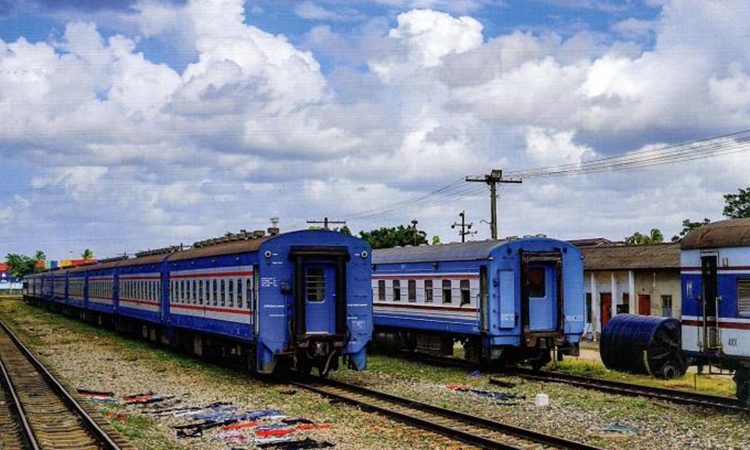
Now, TAZARA is a test case for China to innovate and modernise to meet changing global business demands. Having fallen into a terrible state of disrepair which has badly affected its freight, parcels and passenger traffic on the 1,860km rail stretch from the inland terminus of New KapiriMposhi in Zambia to the seaport of Dar-es-Salaam in Tanzania.
China’s investment and commitment
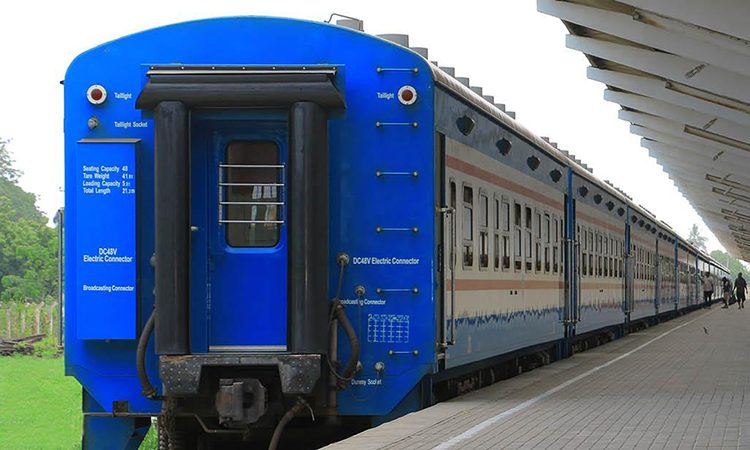
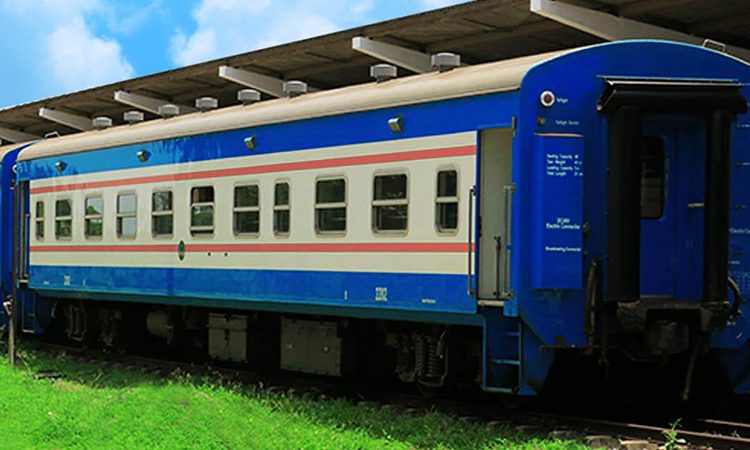
Speaking recently on the state of affairs of the railway company, TAZARA Managing Director and Chief Executive Officer Bruno Ching’andu, an engineer, said that the rail line has bogged down due to limited capital injection despite posting a record growth of almost 20% over the past seven years. He stated that there is urgent need to work on the technical sector of the railway more especially the workshops, track, signalling and telecommunications equipment. Wagons, coaches, as well as other machinery and equipment also need replenishment.
“There is urgent need to renew, refurbish and beef up the entire rolling stock including the human resource aspect,” said Ching’andu, stating that some things on the rail line require total substitution and replacement. Two years ago, TAZARA needed 23 more locomotives from the 13 it had and 400 wagons to reach the 1,300 target. However, nothing has been delivered.
Due to insufficient rolling stock, currently TAZARA only runs three express, ordinary and parcel trains in each direction every week, while vessel delays at the Dar-es-Salaam port due to arduous custom formalities continue to affect business on the rail line. However, despite these bottlenecks the engineering services of the railway company has helped to keep operations afloat.
Inaugurated in 1976, the two workshops at Mpika in Zambia and Dar-es-Salaam in Tanzania have massive technical know-how and capacity to design and manufacture any engineering component for use by the railway company. “We have the infrastructure as well as the experienced workforce and all we lack is capital,” admitted Zambian Minister of Transport Frank Tayali after his recent tour of the two workshops. He said TAZARA has the capacity to take over the entire haulage business from the more than 2,000 trucks that traverse the region daily.
China has since offered to revitalise and modernise the rail line, but the governments of Tanzania and Zambia must agree to partial privatisation programme for 20-25 years. During this time, Chinese investors will own, operate and transfer the rail line back to them. In 2023, the CCECC engaged the Joint Technical Committee of the two African governments to negotiate a concession to operate the railway company on private-public-partnership (PPP) basis like the Ethiopia-Djibouti Railway. This has been agreed upon in principle and now what is remaining is signing of the memorandum of understanding (MoU) in September 2024.
Credit: TAZARA
In 2016, two meetings held in Tanzania and China failed to reach an agreement on the financing issue as the two African governments were not happy with China’s pre-conditions that aimed at totally controlling the railway company. It is only in March 2023 that the two upheld the changed position of the Chinese investors, leading the 64th Council of Ministers to direct the Joint Technical Committee to speed up the negotiations.
At the 122nd meeting recently held in Zambia, the TAZARA Board of Directors went ahead and approved increased freight and passenger traffic for the 2024/2025 financial year. The board put a target of 350,000 metric tonnes of freight and 3,430,000 passengers to bring in an estimated income of $55.19 million.
The performance of TAZARA in the first half of the 2022/2023 financial year was 40.09% of the planned tonnage, representing a 31.2% decrease compared to the same period in the 2021/2022 fiscal year. During this period, the railway transported 96,342 metric tonnes, achieving only 40.09% of the target. This performance marked a 31.2% decline compared to the corresponding period in the previous year (July-December 2021), when 140,094 metric tonnes were hauled.
In 2020/2021, TAZARA increased its freight volume by 19% , hauling 105,222 metric tonnes compared to 88,350 metric tonnes for the 2019/2020 period at the height of the COVID-19 pandemic. Passenger numbers reached 1,478,032, falling short of the target of 1,784,906. This represented a 4.3% decrease from the 1,544,068 passengers in the 2019/2020 financial year.
In terms of passengers, the rail line transported 329,982 travellers, exceeding the target of 281,004 by 17.4%. This performance was 15.7% higher than the 285,151 travellers that were transported in the same period from July to December in 2021. This was attributed to lower fares compared to those charged by road transporters.
Private-public partnerships and Western interests
China is unwilling to involve Western investors, expertise and technology in its revitalisation and modernisation programme for TAZARA. This follows the interest shown by the U.S. and the European Union (EU) in October 2023 to fund the railway revitalisation project as a way of securing access to strategic minerals vital for manufacturing batteries and advanced electronics, which are currently being exported to China for processing.
This is not the first time that Western investment to TAZARA has been blushed on. In 1995, proposals were made to commercialise the operations of the railway for it to compete effectively in the changed market situation, but the governments of Tanzania and Zambia declined! Some Western donor countries and agencies, including the World Bank, had suggested that TAZARA be regionalised and sold off in portions for it to operate profitably, with foreign investors made to bear the risks.
Credit: TAZARA
After all, Western countries refused to construct the rail line, yet today TAZARA stands as a political model that challenges the negative imperialist propaganda of the 1970s, which dismissed Chinese technology as being inferior and predicted that the low business in Southern Africa would make it a white elephant. However, it is the same technology that has stood the test of time as businesses continue to grow in the African region.
Now, after half a century, Southern Africa has become a major business hub attracting global interest while TAZARA, true to its bi-national colour, stands as a blue elephant in the path of Western countries efforts to try and regain foothold on a people and region that they had ignored. TAZARA will forever epitomise the nationalist vision and legacy of its late founding leaders – the late Mao-tse Tung of China, Julius Mwalimu Nyerere of Tanzania and Kenneth David Kaunda of Zambia
“There is a need to protect the global reputation of
TAZARA, as the best illustration of a bi-national railway model that has always been in Africa and perhaps the only one of its kind and stature anywhere,’’ Ching’andu said as he expressed the nationalistic feelings of the two African governments and the people that own the railway company.
The China Civil Engineering Construction Corporation (CCECC), which is a subsidiary of the China Railway Construction Corporation, has since completed studying the technical report of the 11-member team it had dispatched sometime back to assess the technical needs of the rail line from Zambia to Tanzania. The team was led by Mr Peng Danyang, Managing Director of the Ethiopia-Djibouti Railway.
Chinese investors have made it clear in their previous negotiations with the governments of Tanzania and Zambia that TAZARA should no longer be seen as an aid project but as a commercially viable venture, even if the governments want to maintain the railway as a political flagship in the mineral-rich Southern African region where it runs huge investments.
China stepped in to construct the mammoth rail line at a time when it also faced serious financial problems and yet committed about $140.5 million in soft loan, part of which has been written off. More than 50,000 Chinese workers were recruited for the project, which ran from 1970 and 1975. Today, TAZARA is the biggest Chinese project on the entire African continent and is much more than an economic partnership of the three countries!
Katutu Sayila is a freelance journalist in Southern Africa based in Lusaka, Zambia whose work features in several international publications in Europe and America. Some of his work on the transport and railway sectors have appeared in such publications as the Railway Journal, New African, African Review published in London.
Katutu Sayila provides insight into how TAZARA's revitalisation could serve as a pivotal model for infrastructure development in Africa.

www.globalrailwayreview.com