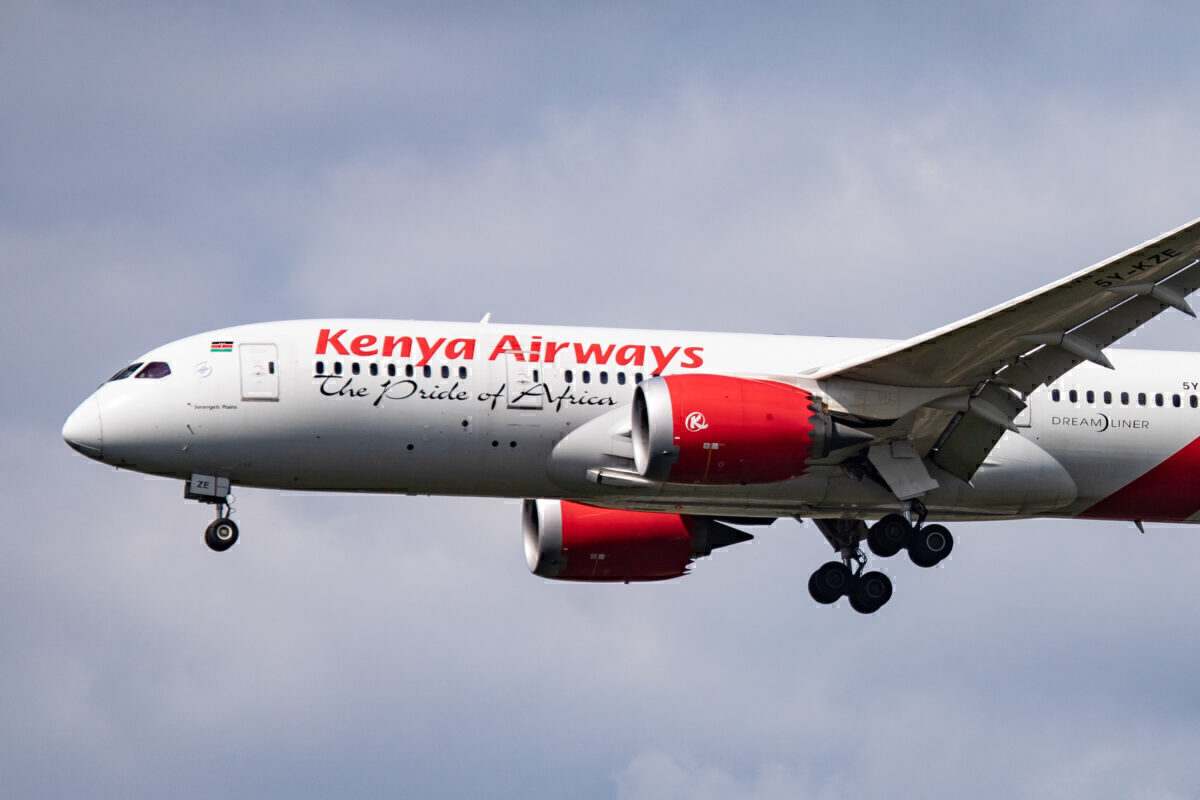
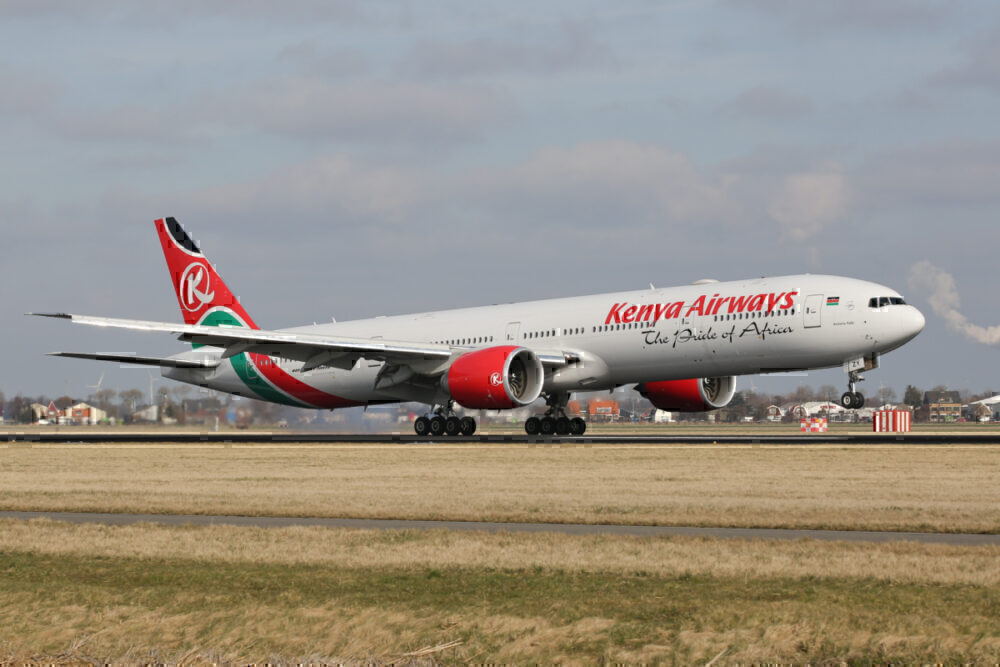
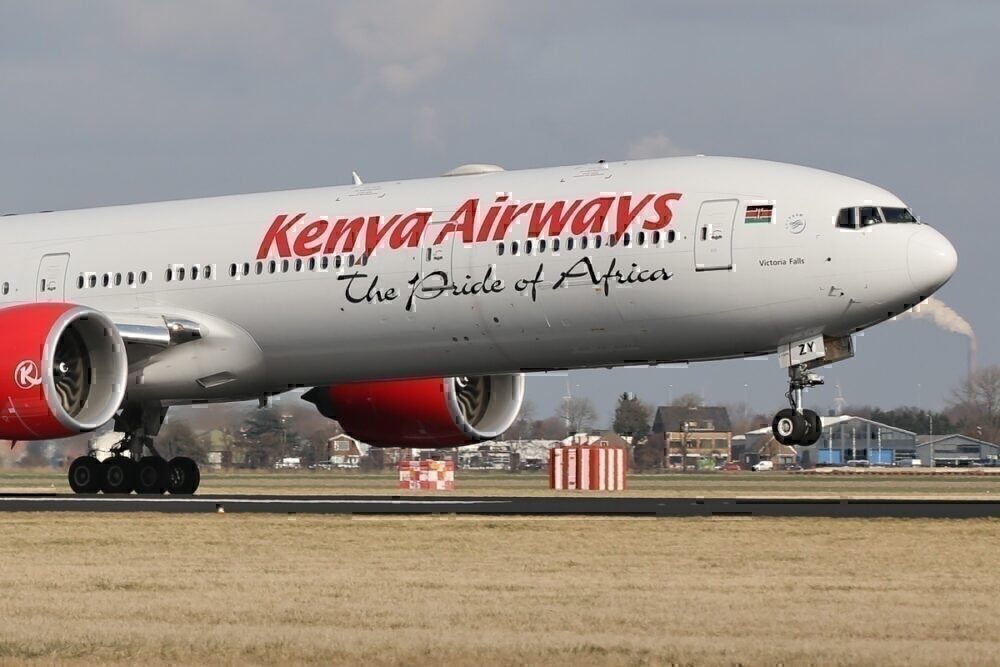
Aawapi KQ ina-operate less than 30 aircraft! Ati 40? na zilizokodishwa DRC na Oman ama?
Kenya Airways spending $142m annually on leasing aircraft, report shows
Saturday April 13 2019
Transport Principal Secretary Esther Koimet (left) and KQ CEO Sebastian Mikosz at a meeting on the proposed plan to manage Kenya Airports Authority on February 26, 2019. PHOTO | DIANA NGILA | NMG
Summary
- The servicing loans accounts for up to 11 per cent of the airline’s operating costs—way above the global average of five per cent.
- KQ also told parliament that $53 million of the total amount covers aircraft depreciation costs, leaving $89 million for actual servicing of the leasing costs.
- KQ has in the past two years revealed that it spent $170 million to clear its tax obligations with Kenya Revenue Authority.
By ALLAN OLINGO
More by this Author
Troubled national carrier Kenya Airways spends a whopping $142 million annually to service the onerous leasing contracts it signed with financiers to acquire 20 aircraft, a new report shows.
The confidential report, which was submitted to the Transport committee of the Kenyan parliament, means servicing loans accounts for up to 11 per cent of the airline’s operating costs — way above the global average of five per cent.
Kenya Airways, which is struggling to rise from the depths of historic corporate loss-making, also told parliament that $53 million of the total amount covers aircraft depreciation costs, leaving $89 million for actual servicing of the leasing costs.
For the first time last week, Kenya Airways revealed that 11 firms including Bank of China Aviation, China Development Bank Leasing, Nordic Aviation Capital, GE Capital Aviation Services and Aviation Capital Group bankrolled the carrier’s leasing of 20 aircraft, which is half its fleet.
KQ, as the Kenyan carrier is popularly known, also named individuals behind its controversial ownership of Boeing 787, 737-800 and Embraer 190 aircraft through two privately-owned entities Tsavo and Samburu.
The carrier’s chief executive Sebastian Mikosz, said Samburu is owned by Karen Karita Ellerbe, Jonathan David Herrick, Evert Brunekreef and Christopher Bryan, while Tsavo Aircraft Financing LLC is owned by the Wilmington Trust Company registered in the US.
And in a revelation meant to anchor its role as the key tenant at Nairobi’s Jomo Kenyatta International Airport, KQ disclosed that it pays $650 million annually to the Kenya Airports Authority—for use of the airport as its hub.
Landing fees
That amount does not include the $160 million it pays KAA in annual landing fees, $4 million in building and utilities rents and $2 million in concession fees.
“Furthermore, KQ pays KAA the Airport Pax Service Charge [APSC] that is dependent on the number of passengers departing from Kenya with the airline.
“In KQ’s case, that fee amounts to $430 million annually, accounting for approximately 50 per cent of JKIA’s total revenue from APSC per year,” the airline says in its report to parliament.
KQ has partly argued that should its proposal to run JKIA stand, travellers would see a drop in ticket costs in line with the reduction in the service charge, making it competitive in its operating hub.
But the revelation also means that KQ accounts for half of JKIA revenues, and KAA would be the biggest casualty should the heavy debt burden bring the airline down.
KQ has in the past two years revealed that it spent $170 million to clear its tax obligations with Kenya Revenue Authority, but carries security guarantees from Exim bank for six of its Boeing 787 Dreamliner’s, one Boeing 77-300 aircraft and one GEnx Engine.
Airport management
The airline has argued that KAA is currently running the airport on a faulty traditional aeronautical to non-traditional revenue structure of 81:19 compared with well-managed international airports whose revenues are split at a ratio of 60:40.
Landing fees, Airport Pax Service Charge and others make the traditional aeronautical revenues while duty-free shops, concessions paid by airport operators, ground handlers and fuel providers constitute non-aeronautical revenues.
This means that under the JKIA revenue structure, 81 per cent of KAA revenues come from aeronautical services including landing charges, air passenger charges, parking charges, airlift fees, fuelling revenue and fuelling up-lift fee—partly contributing to Kenya Airways’ high cost base.
“It is crucial to grow non-aeronautical revenue in order to balance the revenue streams and cut the cost of core aeronautical services, making the airport more competitive to attract more traffic,” said Kenya Airways.
KQ told parliament that it expects to start reaping the benefits of fuel hedging this month, as the fuel curve projections point to an increase in prices.
The carrier also said that it wholly owned the other half of its fleet, but only three Boeing 737-300s have been fully paid for.
Kenya Airways documents show that six Boeing 787 Dreamliner aircraft and one Boeing 777-300 financed by Citi Bank, Cairo headquartered Afrexim Bank and JP Morgan banks are still on loan.
Another 10 Embraer 190 financed by Standard Chartered Bank International and Afrexim Bank are also still on loan.
Kenya Airways also revealed that its captains are paid some of the highest salaries at Ksh1.6 million a month, while its First Officers take home Ksh900,000 ($9,000) a month.
The airline pays flight operators Ksh225,000 ($2,250) while ground service crew, technical, commercial and cargo employees take home Ksh150,000 ($1,500).
“A KQ captain earns on average 11 times more than the average employee in other high salary sectors, and 29 times more than the private sector average....While significant salaries of the pilots are not unusual in the industry due to influential trade unions and political pressure on national careers, remuneration of the Kenya Airways’ pilots is substantial even in comparison with their peers from wealthy economies,” the airline notes.
But despite KQ’s spirited effort to defend its proposed takeover of JKIA management, Kenya’s Transport ministry officials appeared to beat a retreat.
“Following concerns that have been raised by the public, we are now exploring other options of delivering the objectives of the government to consolidate our aviation sector.
“Once an agreed option has been identified we will submit the same to the Cabinet for approval,” Kenya’s transport cabinet secretary James Macharia said.
Servicing loans takes up to 11pc of operating costs, against a global average of 5pc.

www.theeastafrican.co.ke
Kenya Airways’ Fleet In 2021
June 13, 2021
Founded in 1977, following the dissolution of East African Airways, Kenya Airways is the national flag carrier of the East African nation of Kenya. The airline is headquartered in the central Nairobi business district of Embakasi and has its main operating hub at Nairobi’s Jomo Kenyatta International Airport (NBO).
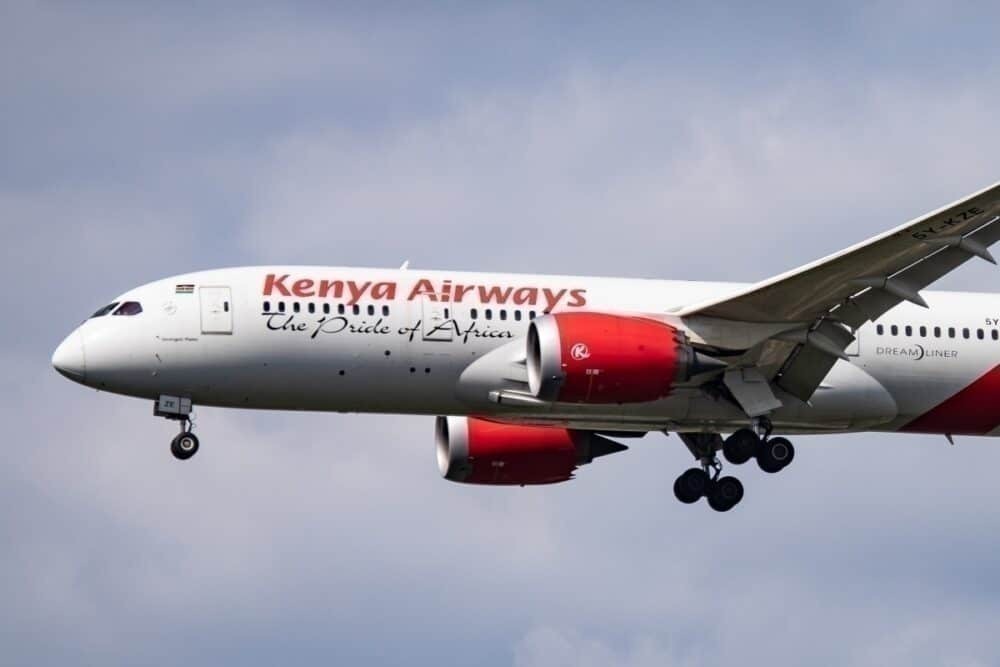
Kenya Airways has nine Boeing 787s. Photo: Getty Images
Until 1996, Kenya Airways was wholly owned by the government of Kenya before becoming the first African flag carrier to privatize successfully. Despite being listed on the Nairobi Stock Exchange, the Dar es Salaam Stock Exchange, and the Uganda Securities Exchange, the Kenyan government still maintains a 48.9% stake.
A consortium of banks owns 38.1%, and KLM Royal Dutch Airlines has a 7.8% stake in the airline. Private individuals own the outstanding shares. Kenya Airways joined several other national flag carriers when it became a member of the SkyTeam alliance in 2010.
Kenya Airways has 36 planes
Historically, Kenya Airways operated a mixed fleet of Airbus, Boeing, McDonnell Douglas, Fokker, Embraer, and ATR aircraft. Today the East African Airline operates a slimmed-down fleet of 36 aircraft made up of planes from Boeing and Embraer. According to the aviation data and statistics website,
ch-aviation, Air Kenya’s fleet is comprised of the following aircraft:
- 2 x Boeing 737-300 freighters
- 2 x Boeing 737-700s
- 8 x Boeing 737-800s
- 9 x Boeing 787 Dreamliners
- 15 x ERJ 190-100ARs
Of these aircraft, Kenya Airways owns 19 planes and leases the other 17 from lessors that include Nordic Aviation Capital and GECAS. With its aircraft, Kenya Airways serves 41 destinations in Africa and 13 destinations further afield, utilizing its flagship Boeing 787 Dreamliners. Kenya Airways operates one of the youngest fleets of aircraft in Africa, with an average age of 9.6 years. Before the COVID-19 pandemic dramatically affected air travel, Kenya Airways flew over four million passengers per year.
Leadership wants consolidation
Before the global medical emergency decimated the airline industry, Kenya Airways was looking to expand its fleet to better compete with African powerhouse Ethiopian Airlines. Today that is the last thing on Kenya Airways CEO Allan Kilavuka’s mind.
Kenya Airways CEO Allan Kilavuka. Photo: Kenya Airways
As things stand in a post-COVID-19 world, there will not be enough passenger demand to support the number of airlines currently operating on the African continent. The fact is that recovery to 2019 passenger numbers could take years to return, and many airlines do not have the financial backing to weather the storm.
For this reason, Kilavuka believes that consolidation will be essential when moving forward. When speaking in a webinar with other African airline bosses during the height of the pandemic, the website
How We Made It In Africa quotes Mr. Kilavuka saying the following:
“It will be important for us to consolidate both within the country and also across the various African countries so that we can be able to utilize our assets more effectively. So, I personally believe we need to do that.”
Kenya Airways lost 36.57 billion shillings ($333 million) in 2020 and has asked its biggest shareholder, the Kenyan government, to help it survive. Kenya Airways’ current joint venture with
Air France-KLM is due to expire in September and has CEO Kilavuka thinking about a possible merger. When speaking about Kenya Airways situation earlier this year with newswire service
Reuters, the former Jambojet boss said:
“We can get by now, but we will have to consolidate at some point.”
Recent partnerships
Last month Kenya Airways signed an
interline agreement with South Africa’s Airlink to allow passengers to connect on either airline throughout Africa. This will allow Kenya Airways passengers to fly to Southern African destinations via Airlink hubs at Johannesburg and Cape Town. Likewise, Airlink passengers can transfer to East African destinations via Nairobi and Mombassa.
Stay informed: Sign up for our daily and weekly aviation news digests.
Surprisingly, the agreement does not allow Airlink customers to fly on Kenya Airways destinations in Asia, Europe, and North America. This may mean that Kenya Airways is open to working with a large international carrier.
Kenya Airways has used its 787 converted Dreamliner to transport Kenyan flowers. Photo: Kenya Airways
Before the pandemic, Kenya Airways was looking to use its Dreamliners to bring tourists to Africa from around the world. Now that this market is suppressed, Kenya Airways could convert another of its 787 Dreamliner into a
temporary freighter. No matter what happens, Kenya Airways will find the going tough without support over the next couple of years.
What do you think the future holds for Kenya Airlines? Please tell us your thoughts in the comments.

Journalist - Mark is an experienced travel journalist having published work in the industry for more than seven years. His enthusiasm for aviation news and wealth of experience lends itself to some excellent insight, with his work cited in Forbes amongst other publications. Based in Alicante, Spain.

simpleflying.com
MY TAKE
Before Congo Airways lease!
Then there is this
Kenya Airways Looking To Return Some Leased Aircraft Early
September 6, 2020
Due to the drop in passenger numbers, Kenya Airways (KQ) has decided to send back some of its planes earlier than its stipulated return date. At the same time, the East African carrier is in the process of transforming some of its Boeing 787s into freighters.
KQ is planning to return planes early to reduce money spent on plane maintenance. Photo: Getty Images
The airline has
resumed flying domestically and internationally for over a month now. Unfortunately, passenger numbers are nothing like it was pre-pandemic.
According to
Business Daily Africa, KQ is filling 37% of the airline’s seat capacity on average.
As such,
Kenya Airways has already started discussing with leasing firms for the early return of some aircraft. This is to downsize its current fleet and reduce costs in terms of maintenance and operations for the planes.
Reducing its fleet
KQ’s decision to reduce its number of planes comes as the airline acknowledges a sharp decrease in passenger demand even as flights resume. Once flights restarted in August, the carrier was still operating to only 30 destinations as compared to its usual 56.
According to Chief Executive Officer Allan Kilavuka in Business Daily Africa,
Thus, the airline is opting for a leaner fleet, a move that will save costs for the airline as well.
At the moment, there is no news on which aircraft KQ hopes to return, but the airline is set on converting a couple of its Dreamliners to freighters. The airline has almost 40 planes in its fleet currently according to
Planespotters.net, and nine of them are Dreamliners.
Increasing cargo flights
Allan Kilavuka stated that removing seats off of Boeing 787s would allow the carrier to use these planes for cargo flights. These flights include long-haul services between Africa and other continents. He said,
“We are currently in negotiations with leasers so that we can return some of their aircraft early and in some cases to convert some into cargo aircraft by removing seats.”
Kenya Airways is changing some Boeing 787s into cargo planes. Photo: Getty Images
The airline has been converting its planes since the early months of the pandemic. In April,
Simple Flying reported that KQ transported over 40 tons of fresh fruit, vegetables, and horticulture products to London, in a converted Boeing 787 Dreamliner. In turn, it brought back pharmaceuticals, mining equipment, and other courier items.
As of August 2nd, KQ had flown
more than 10,000 tons of cargo. With more aircraft taking on a new life as freighters, the airline will undoubtedly be able to transport more cargo.
Trend News Agency reported that KQ is increasing its weekly cargo flights to China. Starting next month, the airline will be sending cargo to China twice a week.
Furthermore, Cargo Commercial Manager Peter Musola hinted that KQ might be seeking more freighters. Specifically, Musola said the airline wants to acquire three widebody freighters in 2021 to increase cargo revenues.
Downsizing now for a better future
In an official press statement dated August 28th, KQ’s revenue reduced by 48% for the six months ended July 2020. There was also a 55.5% decrease in passenger numbers compared to the same period last year. This half-year loss is larger than the airline’s annual losses for the last three years.
The African airline is complete cost-cutting exercises by September 30th. Photo: Getty Images
Allan Kilavuka believes that to ensure the durability of the airline, cost-cutting decisions need to happen quickly. According to Kilavuka,
As such, the airline is undergoing an organization-wide rightsizing. This includes reducing fleet and staff. All decisions will be carried out by the end of this month.
What do you make of KQ downsizing its fleet? Do you think it’s a good idea to convert passenger planes to freighters? Let us know in the comments.

Journalist - Since joining Simple Flying, Haneesa has put her joint obsessions of travel and writing to good use, building on her three years of professional experience including working for the South China Morning Post. She is particularly interested in the intersection of aviation with other social issues, including its impact on the tourism industry. Based in Singapore.
https://simpleflying.com/kenya-airways-looking-to-return-some-leased-aircraft-ear
[/U