Battle: Dar es Salaam vs Nairobi

Battle: Dar es Salaam vs Nairobi

Uganda, Total sign key oil pipeline agreement
By Vision Reporter
Added 12th September 2020 06:18 AM
It represents significant progress towards achieving the Final Investment Decision which is expected by the end of this year.
Uganda, Total sign key oil pipeline agreement

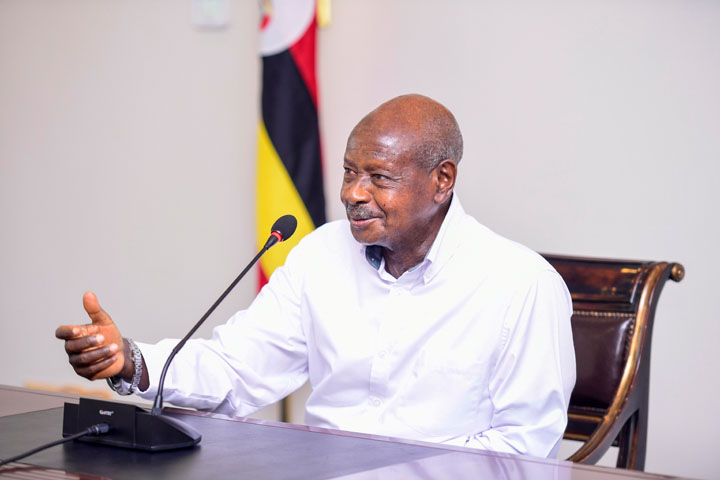
President Museveni chatting with his guests before a photo moment at State House Entebbe

UGANDA | BUSINESS |OIL & GAS
ENTEBBE - The Government of Uganda and Total have concluded and signed the Host Government Agreement (HGA) for the East Africa Crude Oil Pipeline (EACOP) project.

The ceremony took place on Friday (September 10, 2020) afternoon at State House Entebbe and was presided over by President Museveni, and witnessed by Mr. Patrick Pouyanne, the Chairman and Chief Executive Officer of Total.

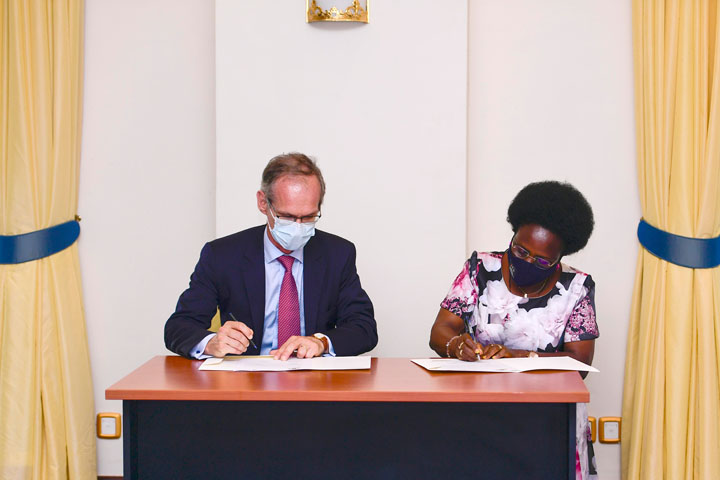
The Minister of Energy and Mineral Development, Mary-Gorett Kitutu, signed on behalf of the Uganda while Nicolas Terraz, the Total Exploration and Production President for Africa, signed on behalf of his employer.

Signing Ceremony - The Host Government Agreement For The East African Crude Oil Pipeline being signed by Kitutu and Terraz


The Signing of the HGA signifies that the oil companies (represented by Total) and Government have reached agreement on the commercial framework for the Lake Albert Development Project.

It also represents significant progress towards achieving the Final Investment Decision which is expected by the end of this year.

Speaking shortly after the signing ceremony, President Museveni said Uganda is a very peaceful and attractive investment destination.

He said proceeds from oil will be used to further develop the country's other important sectors like infrastructure, education and health.

"Our oil will be used to develop our infrastructure, and ICT to enhance durable capacity of our country," President Museveni said.

"I am glad that Total and other companies licenced in the country are taking bold steps to quickly commence the production of petroleum," President Museveni said.

Mr. Museveni reassured Total of the Government's support during their work.

"It has taken long, but it was a deliberate move, I can assure you Ugandans," said the President, adding that Uganda is a rich country with oil as a small fraction of this natural wealth.

fbee4b6a-103b-4d0f-a10b-a885993a8eda.jpg


He pointed out that other potential lies in Agriculture, Tourism, Services, and Human Resource among others.

The President promised to get in touch with his Tanzanian counterpart, John Pombe Magufuli, to resolve other pending issues, especially concluding the Host Government Agreement in Tanzania.

"I congratulate Total and our Ugandan team on this milestone. We have been slow but steady and sure," the President said.

Minister Kitutu said once the final investment decision is made by the oil companies, the opportunities for investment in the country will grow exponentially and give a boost to the economy.

She later said local companies should take advantage of this agreement to tap into opportunities in the oil sector.

Total CEO Pouyanne said this is a great achievement between the Total and the Government of Uganda.


Signing-ceremony-The-Host-Gov-t-Agreement-for-the-East-African-Crude-oil-Pipeline-with-Total-4-720x480.jpg


"It was a bumpy road but I am glad we have overcome the challenges. I thank the teams from both sides that have worked tirelessly," he said.

He commended President Museveni for his leadership and promised that the project would be executed successfully.

Today's ceremony follows a series of high-level discussions between President Museveni and Mr. Pouyanne which were aimed at addressing the commercial bottlenecks in the achievement of a Final Investment Decision (FID) for Uganda's upstream and EACOP projects.

The function was attended by among others the Attorney General, Mr. William Byaruhanga.


ALSO SIGNED TODAY:
The government and Total also agreed on the following agreements in relation to the Uganda National Oil Company:

1. The deed of assignment in relation to the Block 1 Production Sharing Agreement & Block 1 Production Licences in respect of exploration Areas 1,2 and 3A

2. The deed of novation and amendment with Uganda National Oil Company in relation to the Joint Operating Agreement in respect of Exploration Areas 1,2 and 3A.

ABOUT EACOP
The oil pipeline will start in Buseruka sub-county, Hoima District, and run for 1,445km to the Tanzania port city of Tanga. When complete, it will be the world's longest heated oil pipeline.

Uganda, Total sign key oil pipeline agreement


I see JPM name all over, what does that mean?


wale waliotu-ban kuingia kwao watuambie?
[emoji122][emoji122][emoji1241][emoji1241][emoji1254][emoji1254]
 
Uganda, Total reach agreement bringing crude pipeline construction closer
Uganda discovered crude oil reserves about 14 years ago but commercial production has been delayed partly because of a lack of infrastructure, such as an export pipeline
Reuters
September 12, 2020, 06:57 IST

Uganda, Total reach agreement bringing crude pipeline construction closer


Uganda and France's Total have reached an agreement that will bring the oil firm and its partners closer to starting construction of a crude pipeline to neighbouring Tanzania, the company's local unit said on Friday.

Uganda discovered crude oil reserves about 14 years ago but commercial production has been delayed partly because of a lack of infrastructure, such as an export pipeline.

The 1,445-km (900-mile) East African Crude Oil Pipeline, costing $3.5 billion, would pass through neighbouring Tanzania to the Indian Ocean port of Tanga.


Accelerating Shifts in Power Generation & Transmission
18 September 2020 @ 12:30 PM
Join us at etcio.com to find answers to shifts taking place in the power generation and transmission utilities and how the power industry can create a strategy for the future in such dynamic circumstances.

Total said it had reached an agreement with Uganda protecting its rights and obligations in the pipeline's construction and operation - known as the host government agreement.

"We have today reached major milestones which pave the way to the Final Investment Decision in the coming months," Pierre Jessua, Managing Director of Total E&P Uganda, said in a statement.

"We now look forward to concluding a similar HGA (host government agreement) with the Government of Tanzania and to completing the tendering process for all major engineering, procurement and construction contracts."

Total said a meeting between President Yoweri Museveni and its Chief Executive Officer Patrick Pouyanne also agreed to conditions allowing Uganda National Oil Company to join the project.

Total is the major shareholder in Uganda's oil fields after agreeing in April to buy Tullow Oil's entire stake in jointly-held onshore fields in Uganda for $575 million.

Tullow said this week it was confident of finalising the sale in fourth quarter of this year.

The other partner in the 230,000 barrel-per-day project is China's CNOOC.

The government said last year once pipeline construction begins, it would take 2-1/2 to three years to complete.


Uganda discovered crude oil reserves estimated at 6 billion barrels in the Albertine rift basin near the border with the Democratic Republic of Congo in 2006.
Follow and connect with us on Twitter, Facebook, Linkedin

Uganda, Total reach agreement bringing crude pipeline construction closer - ET EnergyWorld
habari njema,,,,,,,hakika mambo yameiva
 
1017_MappaUgandaPipeline-EN.png


EACOP, a 1,500 km pipeline for the energy future
Marco Malvestuto
Share
From 2020, the East African Crude Oil Pipeline will enable Uganda to export crude from its vast reserves in the Lake Albert Basin, starting from the refinery based in Hoima to reach the terminal on the coast of Tanzania. This project is of major strategic importance and will secure greater independence for Uganda's domestic market as well as a reduction in its oil import

The 1,443 km East African Crude Oil Pipeline (EACOP) will be the longest oil pipeline ever built in East Africa, connecting the town of Hoima, in the western region of Uganda, with the port of Tanga, on the Tanzanian coast of the Indian Ocean. The project, conceived in 2016 and rolled out in August 2017, is due to be completed over the next two years with a total cost budgeted at USD3.5-4bn. The project’s shareholding companies are the Uganda National Oil Company (UNOC), the Tanzania Petroleum Development Corporation (TPDC), the China National Offshore Oil Corporation (CNOOC), France’s Total and the United Kingdom’s Tullow Oil. The contract to design the oil pipeline that will transport crude oil produced in Uganda's Lake Albert basin was awarded to the American company Gulf Interstate Engineering. The deadline for submission of tender documents for the consultancy services relating to the feasibility studies for the project was August 24, 2018. Once fully operational, the pipeline is expected to have an export flow rate of 216,000 barrels a day.

1017_MappaUgandaPipeline-EN.png


The design phase has met with several challenges, resulting in changes in the initially planned route. The project originally involved the construction of an oil pipeline linking Hoima to the port of Lamu in Kenya. However, Ugandan authorities subsequently opted for an alternative route due to the presence of Al-Shabaab jihadi militias in Kenya, mainly operating in Somalia but who in recent years have intensified their incursions inside Kenyan territory. Besides security issues, a further cause for concern was the cost of the project and, based on Ugandan government assessments, crude oil transport via Tanzania is cheaper than via Kenya.

A key infrastructure for East Africa

The new infrastructure project meets Uganda’s economic and energy needs. The project will enable Uganda to have a direct link to the Indian Ocean and to export its considerable crude oil reserves in Lake Albert at the lowest possible cost. The official announcement of the pipeline route was made during the summit of Heads of State and government leaders of the East African Community (EAC) held in Arusha in March 2016, causing a reaction among Kenyan officials, who expected the pipeline to go through Kenyan territory and thereby bring economic benefits to the country from its substantial oil reserves. Accordingly, the Nairobi government decided it would build its own oil pipeline in the country’s north-eastern region, connecting the Lokichar region to Lamu County. The EACOP oil pipeline, on which construction has yet to begin, will be East Africa’s first trans-border pipeline and is designed to meet the economic and energy needs of both countries. Uganda aims to export at the lowest possible price its crude reserves, estimated at 6.5 billion barrels but as yet unexploited since Uganda’s is a landlocked country. Tanzania, for its part, has vast offshore natural gas reserves but needs Ugandan crude oil. The oil pipeline will provide the opportunity to tap into the operating and potential natural gas deposits of Tanzania, which shares with Northern Mozambique one of the largest natural gas fields discovered on the planet in recent years.

The strategic function of the new refinery in Hoima

Uganda aims to start production by 2020, although the date is expected to be delayed until 2021-2022 since the executive design phase of the Hoima refinery is only just beginning, and the final investment decision (FID), initially set for 2017, is now expected to be reached by the end of 2018, or in early 2019 at the latest. The contract for the construction of the 60,000-barrel-a-day facility was awarded to a group led by the American company General Electric (which will own a 60 percent stake). The project partners include the Italian company Saipem, which was awarded a new contract for Front End Engineering Design (Feed) by the Albertine Graben Refinery Consortium on August 3, 2018. The refinery will be a hub for refined products intended for the East African market, thereby contributing to the region’s economic growth. The facility, due to start production in 2020, aims to provide greater independence to Uganda’s domestic market and the reduction of its imports of oil and refined products from other countries, with a view to gradually securing infrastructure integration between East African countries.


About Energy | EACOP, a 1,500 km pipeline for the energy future


MY TAKE
Look at Juba and DRC lake Albert oil region, they r next to join this pipeline!
 
Hapa mnaweza kuona kwanini JPM kaanza kujenga Mwanza-Isaka SGR, believe me during launching Museveni atakuwapo achuje mbivu na mbichi!

As million of dollars zinaenda Chongoleani kujenga crude oil terminal, ironically it is pretty obvious Uganda's economy is oriented to Chongoleani aside the fact a refinery n an international airport at Hoima mean a new economic hub at Western Uganda that can easily be linked up with a SGR to Kigali at Keza in Tanzania via Mtukula border running parallel to EACOP to Hoima a distance of less than 400 km.
Hilo ndilo litakalotokea hata wakenya wachache wenye akili wameshajua hivyo
 
Hapa mnaweza kuona kwanini JPM kaanza kujenga Mwanza-Isaka SGR, believe me during launching Museveni atakuwapo achuje mbivu na mbichi!

As million of dollars zinaenda Chongoleani kujenga crude oil terminal, ironically it is pretty obvious Uganda's economy is oriented to Chongoleani aside the fact a refinery n an international airport at Hoima mean a new economic hub at Western Uganda that can easily be linked up with a SGR to Kigali at Keza in Tanzania via Mtukula border running parallel to EACOP to Hoima a distance of less than 400 km.
Inaelekea kuna watu wana weledi wa kutosha nyuma ya huu mpango. Hapa inaonesha watu wa utafiti wamesikilizwa sana . Utafiti ukipewa nafasi zaidi uchumi utakua zaidi
 
Hapa mnaweza kuona kwanini JPM kaanza kujenga Mwanza-Isaka SGR, believe me during launching Museveni atakuwapo achuje mbivu na mbichi!

As million of dollars zinaenda Chongoleani kujenga crude oil terminal, ironically it is pretty obvious Uganda's economy is oriented to Chongoleani aside the fact a refinery n an international airport at Hoima mean a new economic hub at Western Uganda that can easily be linked up with a SGR to Kigali at Keza in Tanzania via Mtukula border running parallel to EACOP to Hoima a distance of less than 400 km.
Mzee amejua kusukuma kete vizur....mzee alish usoma mchezo kuwa kuna upinzani mkubwa kati y rwand na Uganda lkn kweny hii sgr walikuw hawana chaguo jingine zaid kujiunga na kunya kupitia Uganda( rwanda hakupenda lkn alikosa chaguo) mzee akajiongeza ni jinsi gani atautumia huu mzoz kuwa faida kwetu na kumshusha nyumbu kunya....mzee akageuza meza akaja n kitu chenye uwezo zaid n speed zaid...game ikabak ni kuwa mpole na kusubir huku akionyesha yuko serious sn na huu mradi...kitu kilich mvuta rwanda fasta...uyu m7 akaon apan hawez kwenda kweny mzoga wa porini pia hawez kujionyesha waziwazi...ndio mana mpka nw yupo kweny shadow lkn lazim aingie inbord
 
1017_MappaUgandaPipeline-EN.png


EACOP, a 1,500 km pipeline for the energy future
Marco Malvestuto
Share
From 2020, the East African Crude Oil Pipeline will enable Uganda to export crude from its vast reserves in the Lake Albert Basin, starting from the refinery based in Hoima to reach the terminal on the coast of Tanzania. This project is of major strategic importance and will secure greater independence for Uganda's domestic market as well as a reduction in its oil import

The 1,443 km East African Crude Oil Pipeline (EACOP) will be the longest oil pipeline ever built in East Africa, connecting the town of Hoima, in the western region of Uganda, with the port of Tanga, on the Tanzanian coast of the Indian Ocean. The project, conceived in 2016 and rolled out in August 2017, is due to be completed over the next two years with a total cost budgeted at USD3.5-4bn. The project’s shareholding companies are the Uganda National Oil Company (UNOC), the Tanzania Petroleum Development Corporation (TPDC), the China National Offshore Oil Corporation (CNOOC), France’s Total and the United Kingdom’s Tullow Oil. The contract to design the oil pipeline that will transport crude oil produced in Uganda's Lake Albert basin was awarded to the American company Gulf Interstate Engineering. The deadline for submission of tender documents for the consultancy services relating to the feasibility studies for the project was August 24, 2018. Once fully operational, the pipeline is expected to have an export flow rate of 216,000 barrels a day.

1017_MappaUgandaPipeline-EN.png


The design phase has met with several challenges, resulting in changes in the initially planned route. The project originally involved the construction of an oil pipeline linking Hoima to the port of Lamu in Kenya. However, Ugandan authorities subsequently opted for an alternative route due to the presence of Al-Shabaab jihadi militias in Kenya, mainly operating in Somalia but who in recent years have intensified their incursions inside Kenyan territory. Besides security issues, a further cause for concern was the cost of the project and, based on Ugandan government assessments, crude oil transport via Tanzania is cheaper than via Kenya.

A key infrastructure for East Africa

The new infrastructure project meets Uganda’s economic and energy needs. The project will enable Uganda to have a direct link to the Indian Ocean and to export its considerable crude oil reserves in Lake Albert at the lowest possible cost. The official announcement of the pipeline route was made during the summit of Heads of State and government leaders of the East African Community (EAC) held in Arusha in March 2016, causing a reaction among Kenyan officials, who expected the pipeline to go through Kenyan territory and thereby bring economic benefits to the country from its substantial oil reserves. Accordingly, the Nairobi government decided it would build its own oil pipeline in the country’s north-eastern region, connecting the Lokichar region to Lamu County. The EACOP oil pipeline, on which construction has yet to begin, will be East Africa’s first trans-border pipeline and is designed to meet the economic and energy needs of both countries. Uganda aims to export at the lowest possible price its crude reserves, estimated at 6.5 billion barrels but as yet unexploited since Uganda’s is a landlocked country. Tanzania, for its part, has vast offshore natural gas reserves but needs Ugandan crude oil. The oil pipeline will provide the opportunity to tap into the operating and potential natural gas deposits of Tanzania, which shares with Northern Mozambique one of the largest natural gas fields discovered on the planet in recent years.

The strategic function of the new refinery in Hoima

Uganda aims to start production by 2020, although the date is expected to be delayed until 2021-2022 since the executive design phase of the Hoima refinery is only just beginning, and the final investment decision (FID), initially set for 2017, is now expected to be reached by the end of 2018, or in early 2019 at the latest. The contract for the construction of the 60,000-barrel-a-day facility was awarded to a group led by the American company General Electric (which will own a 60 percent stake). The project partners include the Italian company Saipem, which was awarded a new contract for Front End Engineering Design (Feed) by the Albertine Graben Refinery Consortium on August 3, 2018. The refinery will be a hub for refined products intended for the East African market, thereby contributing to the region’s economic growth. The facility, due to start production in 2020, aims to provide greater independence to Uganda’s domestic market and the reduction of its imports of oil and refined products from other countries, with a view to gradually securing infrastructure integration between East African countries.


About Energy | EACOP, a 1,500 km pipeline for the energy future


MY TAKE
Look at Juba and DRC lake Albert oil region, they r next to join this pipeline!
Huu mradi ni game changer kweny oil in EA
 
Mzee amejua kusukuma kete vizur....mzee alish usoma mchezo kuwa kuna upinzani mkubwa kati y rwand na Uganda lkn kweny hii sgr walikuw hawana chaguo jingine zaid kujiunga na kunya kupitia Uganda( rwanda hakupenda lkn alikosa chaguo) mzee akajiongeza ni jinsi gani atautumia huu mzoz kuwa faida kwetu na kumshusha nyumbu kunya....mzee akageuza meza akaja n kitu chenye uwezo zaid n speed zaid...game ikabak ni kuwa mpole na kusubir huku akionyesha yuko serious sn na huu mradi...kitu kilich mvuta rwanda fasta...uyu m7 akaon apan hawez kwenda kweny mzoga wa porini pia hawez kujionyesha waziwazi...ndio mana mpka nw yupo kweny shadow lkn lazim aingie inbord
Museveni knows that ndo maana ana buy time ku-commit kwa Kisumu-Malaba-Kampala SGR anajua the story of the town is Western Uganda as new economic hub for Uganda and it makes more sense if the new SGR is to follow the same path as that of ECOP while connecting Kampala via Masaka or via lake Victoria from Mwanza port !

Just like JPM that understands the geo-economic forces of the region out of strategic regions he has chosen to commit at central corridor while serious negotiations on Mtwara gas is underway! Both Mtwara gas and central corridor r very important as far as propelling the economy of Tanzania is concerned.
 
Museveni knows that ndo maana ana buy time ku-commit kwa Kisumu-Malaba-Kampala SGR anajua the story of the town is Western Uganda as new economic hub for Uganda and it makes more sense if the new SGR is to follow the same path as that of ECOP while connecting Kampala via Masaka or via lake Victoria from Mwanza port !
Its a matter of time...kama unavy sema hili eneo litakuwa hub of Ug economy ,means SGR is inevitable to ug
 
Huu mradi ni game changer kweny oil in EA


Aiports along ECOP in Tanzania
Bukoba Airport
Chato Airport (currently U/C)
Mwanza international Airport
Tabora Airport (currently under expansion)
Kahama Airstrip
Shinyanga Airport (currently under expansion)
upcoming Msalato Airport
Dodoma Airport (currently under expansion)
Ngerengere Airforce Airport
Kilimanjaro International Airport
Tanga airport (currently under expansion)

Ports along the EACOP in Tanzania
Mwanza port
Tanga port (currently under expansion)

Railways along the EACOP in Tanzania
Dar-Isaka MGR (over 99% revamped)
Tanga-Ruvu-Isaka MGR (over 99% revamped)
Dar-Mwanza electrical SGR (Dar-Morogoro over 90%, Morogoro-Dodoma-makutupora over 40%, Mwanza-Isaka about to be launched)
Tanga-Moshi-Arusha-Mara MGR(Tanga-Moshi-Arusha 100 revamped, Arusha-Mara MGR (in planning stages))
 
Back
Top Bottom