FMES: Tuwakumbuke Wanamichezo Africa!

FMES: Tuwakumbuke Wanamichezo Africa!

Maestro Papa Wemba.


pwemba_1.jpg


With his dynamic vocals and flamboyant personality, Papa Wemba (born Jules Shungu Wembadio Pene Kikumba) played an essential role in the evolution of Central African music. Respectfully known as "the King of Rhumba," Wemba successfully fused African traditions with Western pop and rock influences. A co-founder of Zaiko Langa Langa in 1970, he went on to international attention as the leader of Isife Lokole in 1974, and Viva La Musica since 1976.

According to publicity materials for the Womadelaide festival, Wemba "creates wonderfully infectious music, combining the sophistication of a Paris nightclub with the vibe of an African open-air concert." While www.fyiucalgary.com proclaimed that "his voice is gold and his music makes you want to dance," www.afropop.com declared that he offered "just the right balance between traditional African music and Western pop."

Born in the Kinshasa region of what was then the Belgian Congo and now the Democratic Republic of the Congo, Wemba was taught that he was descended from a long line of BaTetela warrior chieftains. His mother, a professional mourner who sang at funeral wakes, had a profound influence on his singing. He recalled in a late-'90s interview, "If mother was still alive, I would be rich in words and rich in melodies. She was my first teacher and my first audience."

Wemba didn't begin singing until joining the choir of a Roman Catholic Church after the death of his father, a chief of customs, in 1966. The experience sharpened his abilities to sing in minor keys. Helping to form Zaiko Langa Langa in 1969, Wemba remained with the group for four years. During that time, the group went from playing American R&B to focusing on traditional Zairian dance music. Their hits included several Wemba-penned tunes, such as "Pauline," "C'est la Vérité," "Chouchouna," and "Liwa Ya Somo."

Leaving Zaiko Langa Langa in 1974, Wemba formed the first bands of his own, Isife Lokole and Yoka Lokole.
Both groups used the lokole, a hollow tree trunk played with two sticks, as a rhythmic foundation. Moving to the village of Molokai in the center of Kinshasa's Matonge district in 1977, Wemba formed his most successful group, Viva la Musica.

Their music continued to reflect an authenticity campaign launched by President Mobutu. Wemba appeared frequently on state-sponsored television, talking about the influence of traditional Zairian music and the importance of the authenticity campaign. From the beginning, Viva La Musica's reputation was built as much on their passion for designer clothes as their music. www.afropop.org described the band's garb as "baggy, pleated trousers, hemmed above shiny brogues, and hair clipped close at the sides."

Fans inspired by the band's style of dress began dressing similarly and were known as "La Sape," taken from the expression, "La Société des Ambienceus et ces Personnes D'Élégance." Viva la Musica was extremely popular among the Congo's youth. Their first year climaxed with the Kinshasa newspaper Elima naming the band best orchestra, Wemba best singer, and their single, "Mère Supérieure," best song. Over the next three years, the group continued to record hit singles, including "Moku Nyon Nyon," "Nyekesse Migue'l," and "Cou Cou Dindon."

Determined to capture a European following, Wemba and Viva La Musica vocalist Rigo Star took a six-month sabbatical from the band in 1979 to join Tabu Ley Rochereau's group, Afrisa International. Relocating to Paris in the early '80s, Wemba formed a second version of Viva la Musica. While this group took a more Westernized approach, the original band continued to perform indigenous-based music.

Wemba explained, "My original group is there for me Zairian fans who come to hear typical African sounds but when I decided to be a singer with an international name, I formed another group to appeal to a different public." Wemba appeared in the late-'80s musical revue Africa Oye!, and toured as the opening act for Peter Gabriel's Secret World tour in 1993.

He received a best artist Kora award at the first All-African music awards ceremony three years later. Wemba has continued to fuse the musical traditions of his homeland and Western pop. His 1995 album Emotion was produced by Stephen Hague of Pet Shop Boys, Erasure, and New Order fame.

Respect.


FMEs!
 
Vata Mombasa "Jujuman": Orch. Lipwa Lipwa.

lipua_lipua_photo_.jpg


Vata Mombasa & Verkys.

Wakulu wapenzi wa muziki, hii ni the best picha ya Vata Mombasa "jujuman", aliyekuwa mpigaji mahiri sana wa gitaa la Rythm katika enzi zile za bendi ya Orch. Lipwa Lipwa.

- Mnazikumbuka zile nyimbo kama 'Mbondo" "Temperature" na "Lemba lemba" na his best of all ni ule wimbo wa "Yanini' alioupiga akishirkiana na Verkys yaani Orch. Veve.


FMEs!


Vata+Mombasa.jpg
 
Verkys
Born: 1944, Kisantu, Congo


webreadypixVerkys_Le-Veve.jpg


5073631.jpg


Original Orch. Veve.


After starting out early in music, he grew to become one of the most admired musician-cum-businessman. His songs cost him a severe warning from the Catholic Church. Georges Kiamwangana Verkys' musical career started as a youth playing sax in a church fanfare band.

Born in the province of Low-Congo, Kisantu, on May 19, 1944, Verkys
grew to appreciate the way King Curtis honked out his style of American soul and R&B. After doing rounds in many other groups, Verkys formed part of the musical group of Gerard Kazembe. At the age of 20, he was recruited to Luambo Makiadi Franco's OK Jazz to play second sax to Isaac Musekiwa and soon became Franco's right-hand man. He arrived here with a trumpet player Christophe Djali, singer Henriette Boranzima and Dele Pedro. The year was 1963.

For the next few years he brought some raucous excitement to the OK Jazz repertoire with his modern interpretation of Kongo folklore rhythms and provided visual entertainment with his hippie style of clothing and frenetic dance routines. In 1968, Verkys and Youlou Mabiala realized with some musicians in O.K Jazz they could record separately and move on. So while Franco was away touring Europe, Verkys took the core of the band into the studio and cut several of his own records.

Upon his arrival from his tours, Franco demanded some percentage forcing Verkys to go solo and set up his own Orchestre Veve. He unvailed the Orchestra Veve on April 5, 1969 in Kinshasa. The group quickly climbed the ladder with hit after hit. Joining the group were the likes of Saak Saakul, Marcel Loko Massengo who originated from Congo Brazzaville, Djeskain, Mario Matadidi among others.

In 1972, Sinatra, Djeskain and Mario left Veve. They formed the Sosoliso Orchestra. Accordingly, they called themselves trio My-dje-if, the initials of Mario-Djeskain-Sinatra. They later headed to Brazzaville, and recorded in Socodi. This proved an expensive programme on the part of Verkys. He was forced to recruit other musicians and launched the song Fifi and Kelly launched Ndona, which became very successesful.

When he launched Nakomitunaka in 1972, he required the voice of youngster Pepe Kalle to sing alongside Jose Bebe. This song raised the question of why all the saints were white and was clearly influenced by the wave of the authenticity. The song cost Kiamwangana Verkys a severe warning from the Catholic Church. After forming his record company, Veve Editions, the beginning was difficult for this 25 year old young man, but determination saw him conquer. He equipped his studio with musical equipments. With the rise of many orchestras in the 70s, Verkys helped produce their music.

At one time when James Brown toured Kinshasa he admitted that Verkys was "Mister Dynamite."

In 1974, the Veve Editions established several groups like Zaïko Langa Langa. Zaiko helped in the building of Veve Centre, which became a sanctuary of several upcoming groups like Grand Zaïko Wa Wa, Langa Langa Stars, Victoria Eleison, Mbonda Africa, Afro International and Wenge Musica.

The year 1978 saw Verkys recording, producing and distributing Sango ndambu, Asso, Samba-Samba, Synza, Anibo of Koffi Olomide. In 1980, Veve Editions become EVVI (Editions Veve International) and continued to support several groups, such as Zaïko Langa Langa, Koffi Olomide, Empire Bakuba, Afrisa, O.K Jazz, Taz Bolingo the all female orchestra, Tiers-Monde, Grand Zaïko Wa Wa, Langa Langa Stars, Mbonda Africa, and Afro International, among others.

With help from Roger Izeidi, young Georges, only 25, established a studio on Avenue Eyala, in Kasa-Vubu, Kinshasa. Vercky's early 70s recordings were collected on some LPs on the Sonodisc label, and his mid-career output as a producer appeared in a great 9-volume series Les Grands Succès des Editions Vévé on the Sonafric label, which featured many of the hits produced in his studio by Vévé and other bands such as Lipua Lipua, Les Kamale, Orchestre Kiam, and Zaiko Langa Langa.


In 1972 he recruited Pepe Kalle and Nyboma, two youngsters from Bella Bella, to sing "Sola," "Mbuta" and "Kamale." He started orchestres Baya Baya, Lipua Lipua and Kiam, named for himself. Their first hits were "Yoyowe" and "Masumi." He rented equipment to Nyboma and Lipua Lipua who recorded "Amba," "Mombasa" and "Niki bue," . On his visit to Kinshasa James Brown dubbed him "Mister Dynamite"! He founded Editions Vévé in 1974. In 1976 he changed the name of his label to ZADIS (for "Zaire disc").


That year he issued "Papy Baluti" & "Muana Mburu" written by Francis Bitsoumani a.k.a. Celi Bitsou. The line-up at this time was Tino Muinkwa, Djo Roy, Nejos Tusevo, Pepitho Fukiau on vocals, Lambion on solo guitar, Aladji Baba on rhythm guitar, Ndolo & Celi Bitsou on bass, Bayard on drums, Ponta Vickys on congas, himself, Dibuidi and Sax Matalanza on saxes and Makamba on trombone. But after the success of "Muana Mburu," Celi Bitsou quit to go solo.


Verckys retired from performing to concentrate on his nightclub, his shop ZADIS on Place Victoire, his label, and promotion. His Vévé Center became the hot spot for Grand Zaiko Wa Wa, Langa Langa Stars, Victoria Eleison, Mbonda Africa, Afro International, Wenge Musica and other groups.


In 1978 he recorded young sensation Koffi Olomide. In 1980 Verckys came out of retirement to release some new albums on the Vévé International label in Paris with his backing band also renamed Vévé International. Vocalist Diatho Lukoki was supported by Sonama, Michel Sax, along with Djo Mpoyi and Dizzy Mandjeku, formerly of OK Jazz (who quit to return to Franco). Luciana quit Viva la Musica to replace Djo Mpoy for three months. Later members included Elba Kuluma, Serge Lemvo, Asi Kapela, Rochesi and Lawi. Verckys was elected president of the Congolese Musicians Union in 1988. In 2008 Verckys was in hospital in Brussels for leg operations soon after completing a new album COUP DE MARTEAU.


FMEs!

 
Dr. Nico
2472565418_afd8af62f3.jpg


Dr. Nico (Born: Nicolas Kasanda) was one of the guitar heroes of the music emanating from the Democratic Republic of the Congo (now known as Zaire) during the early-1960s. Accompanied by his band, L'Africa Fiesta Sukisa, Dr. Nico sparked dancing in the region's youth with his firery playing. According to influential soukous guitarist Diblo Dibala, Dr. Nico was "the school of Zairean guitar".

Launching his career while still a youngster, Dr. Nico initially attracted attention as a member of Joseph "Le Grand Kalle" Kabasele's band. His reputation continued to grow after forming his own group. Although he fell into obscurity in the late-1960s and '70s, Dr. Nico recorded his final tracks shirtly before he died in a Brussels hospital in 1985.


FMEs!
 
Mafumu Bilali: "Bombenga"


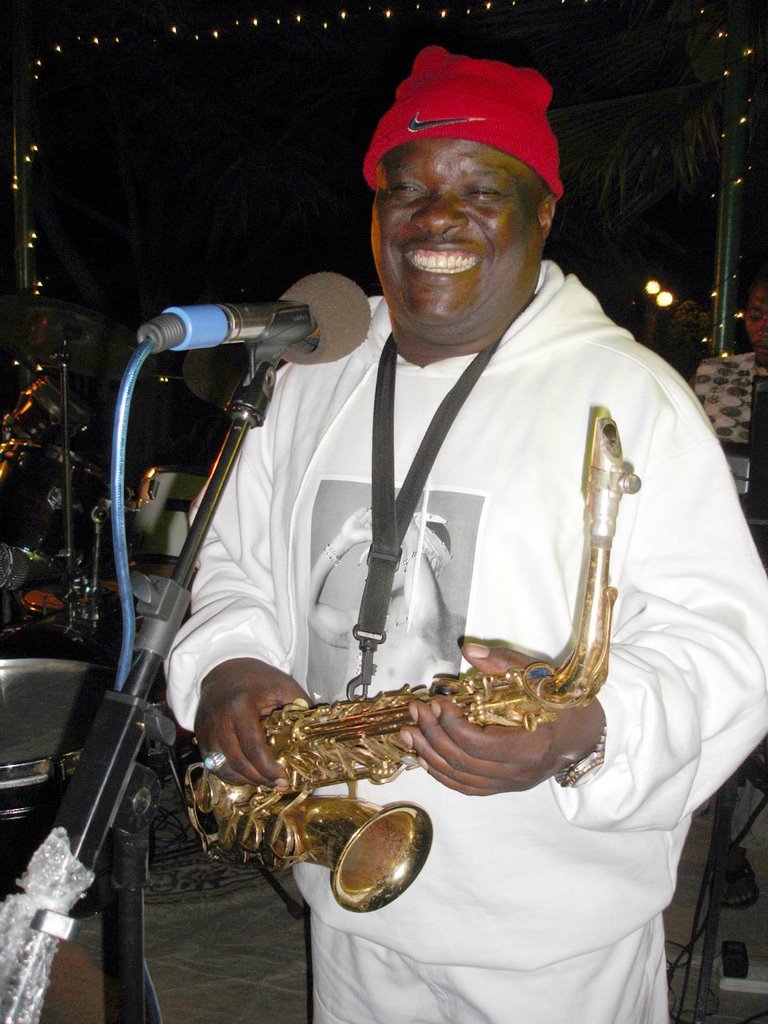
mpuliza saxi mashuhuri mafumu bilali bombenga 'supa sax' bado anatesa na bendi yake ya african bits kila alhamisi pale slipway. huyu ndiye aliyepiga mdomo wa bata kwenye nyimbo zote za dar intaneshno ya marijani rajabu.

- Wakuu mtamkubuka huyu Mafumu, kwenye nyimbo za Marijan kama 'Magreth", "Nyerere Baba Mlezi" na "Biligita". Baadaye alihamia Marquis kwenye vibao kama "Kiyongo" na "maiga"

FMEs!
 
diblo2t.gif


Diblo Dibala: Mwana Diblo!

diblodibalawcmf04.jpg


Diblo Dibala began playing the guitar as a 12-year-old. When he was 15 he entered a competition alongside Franco, one of Congolese music's biggest stars in the 1960s and 1970s.Diblo's impressive efforts resulted in his securing a job in Franco's band. This was the beginning of a career as a studio musician and arranger.Diblo collaborated on a number of disks with other artists. In 1979 Kanda

Bongo Man managed to convince Dibala to join his band and when Bongoman went to Paris Dibala contributed strongly to his success. In 1988 he left the band to form Loketo, together with the singer Aurlus Mabele. Since the splitting up of Loketo in 1991, Diblo Dibala performed with his own group, Matchatcha, which has released several albums.


Respect.

FMEs!
 
Wapi Tshala Muana, Abeti Masikini, Faya Tess and Mbilia Bell?

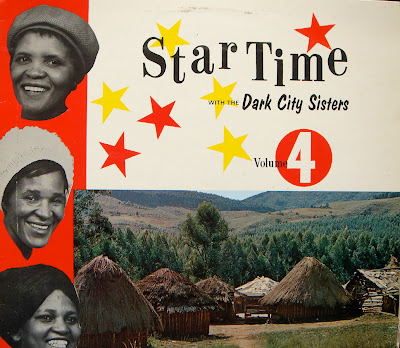
Wapi Dark City Sisters and Doroth Masuka?
 
Dally Kimoko


pq_dallykimoko.jpg


Soukous Stars's pictures: soukous


<small style="font-size: 10px; font-weight: normal;">
</small>
Soukous+Stars+soukous.jpg


Shimmita & Nyiboma.


Lokassa Ya Mbongo, Ballou Canta and Shimita El Diego formed the Soukous Stars with master guitarist Dally Kimoko in 1990 as an outgrowth of their experiences playing together in Les Quatre Etoiles in the 80s. This picture shows Shimita on the left and Nyboma on the right and Chico Mowatu in the background.

Dally+Kimoko+1.jpg


Respect.


FMEs!
 
Le Commandate' Josky Kiambukuta.

10374639.jpg
113958173.jpg


The Afrikafestival, Herme, began 20 years ago in 1989, in the same year that Africa lost one of its greatest musicians, Franco Luambo Makiadi. His band T.P.O.K. Jazz carried on for a while under the leadership of "le poète" Lutumba Simaro, but it wasn't long before the enormous orchestra broke up into various groups. Bana OK (the children of OK Jazz) stayed in Kinshasa and a group centred around Dizzy Mandjeku established itself in Brussels.

Over the years, several groups originating from Franco's legendary orchestra, have performed in Hertme. As early as 1992 one of Franco's lead singers, Ntesa Dalienst, appeared with his group Le Maquisard. Three years later Les Champions de Zaire under the leadership of Dizzy Mandjeku appeared, again with Ntesa Dalienst as one of the leading singers. One year later Ntesa Dalienst died.

In 2005, the group was again invited, but now under the name Odemba OK Rumba All Stars in which Madilu, one of Franco's greatest singers was invited to join the singers. Madilu died in 2007.

This year, 2009, 20 years after Franco's death, it is time to invite the other descendants from T.P.O.K. Jazz, Bana OK. A part of the group are still living in Kinshasa, the rest with Josky Kiambukuta in Paris. Josky is coming with a large orchestra, a large group of front singers and some female dancers.

Respect.

FMEs!
 
19242969.jpg


Les Wanyika was a prominent band with Kenyan and Tanzanian members and was based in Kenya. It was formed in 1978 when guitarist Omar Shabani, bassist Tom Malanga and two other members left Simba Wanyika. They were joined by John Ngereza and Issa Juma. Les Wanyika made many popular recordings, but are best remembered for their 1979 classic Sina Makosa and Paulina. Vocalist Issa Juma left the band soon afterwards to concentrate on other musical projects. The group continued until Omar Shabani's death in 1998. John Ngereza died two years later.

In 1971, two brothers from the coastal region of Tanga, Tanzania, Wilson and George Kinyonga formed a band they would call Simba Wanyika, a Swahili for Savannah Lions. Due to unsteady economic conditions in in the 70s which strained the music industry, most of the artists of that time migrated to Kenya and other neighbouring countries in search of greener environments. It's no wonder that some of these artists became citizens of those countries. During that time, travelling between the two countries was made easy by the East African community, a tripartite agreement of understanding among Kenya, Uganda and Tanzania.

After the collapse of the community in 1977, border crossings were made difficult, hence the eventual establishment of permanent base in Kenya by the group. With its development and growth, the band created several offshoots, but most notable was/is Les Wanyika. It's one thing for an artist to migrate in search of career betterment and quite another when a country falsely claims ownership of certain artists who belongs to another country for the sole purpose of looking good and seeking prominence.


"Les Wanyika" is just one of the Wanyika bands that centers around Omar Shabani, Issa Juma and John Ngereza whom along with Peter and George Kinyonga make up the Kinyonga brothers. Some of you may have already made an aquintance with John Ngereza from one of my first post rhumba posts a couple of weeks ago.


Some history first: Peter and George Kinyonga were originally footsoldiers in the Jamuhuri Jazz/Arusha Jazz in the 1950/1960s before they decided to make a run on their own. They moved to Nairobi which they then made their stomping grounds. They eventually formed the very well known - at least in Kenya - Wanyika band popularly known as "Simba Wanyika.


Les. Wanyika was an eventual offshoot from Simba Wanyika. Another off-shoot - "Super Wanyika" - have been credited with the kiiller track "Shillingi" that I also posted a while back. There have been more than 8 Wanyika bands.

Some of these include:

- Jamhuri Jazz Band was founded in Tanganyika in the late 1950s.
- Arusha Jazz Band was founded in Arusha, Tanzania in 1970.
- Simba Wanyika derived from the Arusha Jazz Band in 1971 by Wilson & George Kinyonga.
- Les Wanyika that was formed by disgruntled Simba Wanyika members - at one point, they called themselves Les Moto-Moto.
- George Kinyonga quit Les. Wanyika in 1978 (I think) to form Orchestra Jobiso. He reconciled with the group and rejoined them shortly afterwards.
- The Super Wanyika Stars was formed by the members of Orchestra Jobiso who were left behind when George Kinyonga rejoined Les Wanyika.

Apart from these groups, at various times, the Kinyonga brothers and other original members of Simba Wanyika including guitarist Abu Omar and vocalist Juma Issa have been in various Wanyika derived groups including "Simba Wanyika Original", "MAS System", "Mavalo Kings" and "the Everest Kings".
<strike>
</strike><strike>
</strike>

Respect.

FMEs!
 
Mbilia Bel

Mbilia_Bel_Nairobi_Nakei.jpg


Mbilia Bel was Africa's first female trans continental diva. She became the first female musician from Africa who could claim popularity all over the entire continent and beyond. In fact one could argue that there has not been any female musician from Africa who has captured the imagination of music fans across the continent as much as Mbilia Bel did in the eighties.

With a combination of stunning beauty , an angelic soprano voice, and tremendous agility on stage, Mbilia Bel stole the hearts of music fans all over the continent. Her heavenly voice moved those who listened to her slow jams in tears of joy. Her exceptional dancing skills left audicences roaring with delight, and lit up Tabu Ley's already famous stage show.

She begun her performing career at the tender age of seventeen singing backup for Abeti Masikini and later with Sam Mangwana. She burst into the music scene when she joined Tabu ley's Afrisa International in 1981. The duo of Tabu ley and Mbilia Bel was an instant hit. The combination of Tabu Ley's composing genius and Mbilia Bel's heavenly voice resulted in Afrisa records literally flying off the shelves.


Her first song with Afrisa released in early 1982 was Mpeve Ya Longo, which means Holy Spirit in Kikongo.It was a moving song about spousal abuse. In the song, Mbilia plays the part of a woman who has been abandoned by her husband and has to raise the children by herself. The song received rave reviews especially among women in Zaire.
Her first album released in 1983 was the extremely popular Eswi yo wapi, which roughly translates to where did it hurt you ?, composed by both Tabu Ley and Mbilia Bel.


The song won the award for the best song of 1983 in Zaire, and Mbilia Bel won the award for best new performer. Mbilia Bel was to feature on several other songs that year including Tabu Ley's Lisanga ya Bambanda and Faux pas and Dino Vangu's Quelle Mechante. Thanks to Mbilia Bel, the popularity of Afrisa International was soaring. Even songs that did not feature Mbilia Bel were receiving more exposure. The strangelehold that Franco's TP OK Jazz was holding in the music scene was now being loosened, as Afrisa could now match TP OK Jazz in popularity and record sales, thanks to the arrival of this new sensation who was now being referred to as the African tigress. Here was one singer that Franco could not poach from Afrisa
Concerts of Afrisa were now a huge draw.


Mbilia Bel was always the main attraction , and when she made an appearance , the crowds often went into a frenzy. Mbilia Bel was a talented stage performer. She often tantalized crowds with her exceptional dancing ability, when she joined the Rocherreautes (dancers) in their dance routine. Tabu Ley who had revolutionized stage show when he introduced the Rocherreauttes in the early eighties, was now the undisputed king of stage show.


By the mid eighties, Mbilia bel had officially married Tabu Ley and was now a refined and mature performer. Her songs continued to dominate the scene. Among them was Mobali na ngai wana , which roughly translates to "this husband of mine". The song was composed by Tabu Ley and Roger Izeidi, and is an adaptation of a Kikongo traditional song. In the song, Mbilia Bel praises her husband as being handsome and succesful and stresses the fact that even though he has the opportunity to choose from any of Kinshasa'a beautiful women, he chose her. Other songs which blazed the charts during that period include Balle a terre and Bameli soy. Afrisa continued to go from strength to strength.


In 1987 Tabu Ley recruited another female artiste to accompany Mbilia Bel. Kishila Ngoyi was here real name , but she was known by her artistic name, Faya Tess. It was against this backdrop that Afrisa embarked on a tour of East Africa that took in Kenya, Tanzania and Rwanda, culminating in the album Nadina, which had Lingala and Kisawahili versions of the song. The tour was well recived by frenzied crowds. Mbilia Bel took centre stage , overshadowing other Afrisa artistes including Ndombe Opetum who had returned from TP OK Jazz.


Upon their return to Kinshasa, rumours started surfacing about a rift between Tabu ley and Mbilia Bel. Apparently Mbilia Bel was not too happy about the emergence of Faya Tess, who seemed ready to steal here thunder. Both publicly denied having any problems, but by this time the writing was on the wall.


Mbilia bel quit the band late in 1987 to embark on a solo career. She briefly joined with a Gabonese producer in Libreville, before leaving for Paris where she joined with guitarist Rigo "starr" Bamundele. Her first album with Rigo Starr was entitled Phenomene and was a huge success in Kinshasa as well as abroad. Subsequent releases such as Yalowa, Desole and Exploration have met with limited success.


Following the departure of Mbilia Bel, the popularity of Afrisa International as a band plumetted substantially. Tabu ley himself seemed to loose inspiration for composing as is evidenced by the substantial reduction in the number of albums released. With the exception of her debut album, Phenomene, Mbilia Bel's career also took on a downward spiral when she left Afrisa.


Respect.


Fmes!
 
Tusimsahau na Siti binti Sadi ambae ni mwimbaji wa kwanza mwanamke kutoka Afrika ya Mashariki na nyimbo zake kurekodiwa kwenye santuri "His Master's voice".

Katika kipindi kile alikuwa anapiga tour mpaka India na Uarabuni kwenda kurekodi.

Mwanamke huyu jasiri ambae ametoka katika familia maskini kabisa aliweza kuitumia vyema sauti yake na kumpatia hadhi ya hali ya juu. Lakini kuna wengine hawakupenda kwa hivo wakamuimba:
Siti biti Sadi umekuwa mtu lini
Umetoka kwenu na kaniki mbili chini
Kama si sauti ungekula nini

Na yeye alijibu:
Si hoja uzuri na sura jamali
Wala utajiri na jadi kubeli
Ubaya wa mtu kukosa akili

Marehemu Shaaban Robert aliandika kitabu kinachoitwa WASIFU WA SITI BINTI SADI
 

Similar Discussions

Back
Top Bottom