Manchester United (Red Devils) | Special Thread
You are using an out of date browser. It may not display this or other websites correctly.
You should upgrade or use an alternative browser.
You should upgrade or use an alternative browser.
Manchester United (Red Devils) | Special Thread
- Thread starter Idimi
- Start date
-
- Tags
- manchester united


D A E M U S H I N

JF-Expert Member
- Dec 15, 2015
- 22,662
- 121,092
manchester united imeshacheza mechi 30 na mechi 11 kati ya hizo ni mzunguko wa pili, ni timu tatu pekee ndizo zilizofungwa mechi zote mbili na manchester united. Timu hizo ni leeds united, west ham united na tottenham hotspurs.

Mervin
JF-Expert Member
- Sep 28, 2021
- 1,919
- 2,645
Nilimanisha kipindi Cha hivi karibuni,Sikumanisha ki historia.Definitely a young tv viewer with no history of epl

Pain killer
JF-Expert Member
- Aug 15, 2017
- 14,365
- 21,745
Hadi top six hili timu halipo [emoji23][emoji23][emoji23][emoji23]

D A E M U S H I N
JF-Expert Member
- Dec 15, 2015
- 22,662
- 121,092
ralf rangnick amemwaga mboga na ugali.
Amependekeza mambo manne ya msingi yanayopaswa kufanywa ili kuweza kuirudisha tena manchester united kwenye soka la ushindani. Waswahili wanasema "akutukanaye hakuchagulii tusi".
Amependekeza mambo manne ya msingi yanayopaswa kufanywa ili kuweza kuirudisha tena manchester united kwenye soka la ushindani. Waswahili wanasema "akutukanaye hakuchagulii tusi".

Bagabeach
JF-Expert Member
- Jun 30, 2021
- 1,469
- 3,109
Oyaa kaka anasemaje huyu mzeeralf rangnick amemwaga mboga na ugali.
Amependekeza mambo manne ya msingi yanayopaswa kufanywa ili kuweza kuirudisha tena manchester united kwenye soka la ushindani. Waswahili wanasema "akutukanaye hakuchagulii tusi".
D A E M U S H I N
JF-Expert Member
- Dec 15, 2015
- 22,662
- 121,092
nitayaweka muda wowote, nivumilie tafadhaliOyaa kaka anasemaje huyu mzee

allypipi
JF-Expert Member
- May 10, 2020
- 3,339
- 11,014
Ni bora kutocheza mashindano yoyote kuliko kwenda ueropa au takataka ueropa conference.Sasa nimeamia mtaa wa saba [emoji445][emoji445][emoji445]View attachment 2174710


Tafuta Hela
JF-Expert Member
- Mar 15, 2022
- 1,544
- 3,001
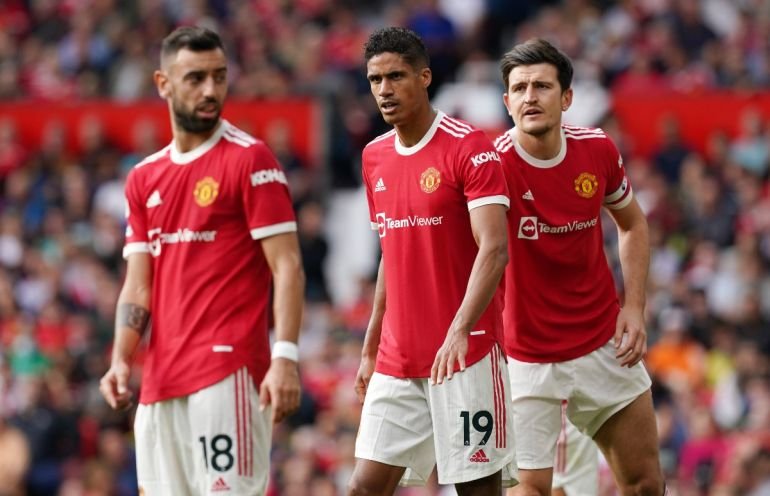
Hary Maguire


Belo
JF-Expert Member
- Jun 11, 2007
- 12,914
- 10,274

Search For A Manager: Mauricio Pochettino
by Hrishikesh Dabir | Apr 4, 2022Following a disappointing and a rather frustrating exit against Atletico Madrid in the Champions League RO16, Manchester United have shifted their focus towards appointing a new permanent manager for the 2022-23 season. The new manager will be replacing the outgoing Ralf Rangnick, who will be moving to a new consultancy role. According to various sources, Manchester United have narrowed down the role to four candidates – Erik ten Hag, Luis Enrique, Julen Lopetegui and Mauricio Pochettino. However, it has also been widely reported that the Spanish duo from the shortlist are considered outsiders for the job as Enrique is preparing himself for the World Cup with Spain and Lopetegui is reluctant to leave Sevilla.
So, it ultimately comes down to two – Erik ten Hag and Mauricio Pochettino. United have held talks with both of the candidates and are now expected to conduct further talks with both of them. We have already covered the Dutchman in this series (Here) so today, we will turn our focus to the Argentine, Mauricio Pochettino.
Background
Pochettino began his managerial career in January 2010 with Espanyol in Spain, where he was a player for many years during his playing career. He was their third manager of the 2009-10 season and took over when the team was last in the league table. The Argentinean had no prior coaching experience and had only recently completed his UEFA pro license when he became the manager of Espanyol.

His first game was against the high-flying FC Barcelona led by Pep Guardiola in the Copa del Rey. A difficult test but one which Pochettino passed with flying colours and pulled off an unexpected 0-0 draw showing a great intent to press and play an attractive style of play despite only being able to take 2 training sessions before the game. Espanyol finished that season comfortably in mid-table under Pochettino and that was the trend that continued till the end of his Espanyol tenure.
Indeed, The Argentinean manager started the way he intended to continue. Espanyol quickly developed a reputation for playing a high-pressing, attractive style of football. Pochettino earned plaudits for his style of play from the media and fans in Spain. The 50 year old also received praise for his extensive use of the academy and the way he developed young players. He showed very little signs of changing his approach to management when he came to England in 2013 to replace Nigel Adkins at St.Mary’s stadium.

Pochettino guided Southampton to 8th in his first season, their best finish in PL history (Bettered by Koeman the following season), getting wins over Liverpool and defending champions, Manchester City. Pochettino’s good work at Southampton earned him a job in London as the manager of Tottenham Hotspur.
We all know about his work at Spurs, finishing 5th, 3rd, 2nd (highest points tally in Spurs history), 3rd, 4th during his 5 year spell at the club and a Champions League final. Taking them from a club constantly chopping and changing with 0 stability to Champions League football mainstays. Many regard Pochettino’s spell at Spurs as an overachievement as he was always working on a budget and had very less spending capabilities compared to the other ‘big 6’ PL clubs.

Pochettino made some big calls during his tenure at the club which worked out very well for him, such as dropping the Spaniard Roberto Soldado in favour of young Englishman, Harry Kane. I don’t need to elaborate more on this but it was definitely a gamble at the time. So was playing Dele Alli, straight from League One into the PL. He may not be living upto the promise he showed earlier in his career but we all know just how good Dele was when he first came onto the scene and Pochettino was a big part of that. He also earned praise for playing some of the most attractive football in Europe whilst continuing with his high-pressing philosophy.
His great work at Spurs earned him a job at PSG, replacing the German Thomas Tuchel in 2020. It is a bit tricky to judge Pochettino’s time in the French capital as they have underperformed under him in the Champions League and even in the league when Christoph Galtier’s Lille pipped them to the title in 2021. PSG have been dominant in the league this season but went out of the Champions League RO16 at the expense of Carlo Ancelotti’s Real Madrid – a massive underachievement as many people would have had them as one of the favourites looking at the transfer window they had where they signed Gianluigi Donnarumma, Achraf Hakimi, Sergio Ramos, Giorgino Wijnaldum and a certain Lionel Messi. PSG’s internal politics make it difficult to judge a manager but even then, PSG’s performances this season have often been underwhelming and contrary to Spurs, one can definitely make a case that Mauricio Pochettino is somewhat underachieving at PSG.

Style of Play
Now, let’s get down to Pochettino’s style of play. As mentioned previously and is very widely known, Pochettino likes to play a high pressing, attacking, attractive style of football. Today, we will be looking at the 2016-17 Tottenham Hotspur team as that was the peak of Pochettino’s spell at White Hart Lane and his stint at PSG so far to understand what we can expect if he becomes the next Manchester United manager
Mauricio Pochettino used 2 main formations at Tottenham during his 5 year spell with the club, namely 4-2-3-1 and a 3-4-2-1. During the 16/17 season he mainly used these formations to implement his style of play and with the help of Eric Dier, who was capable of playing in the midfield and at Centre-Back, Pochettino was able to switch between these formations during games as well.

Spurs mainly lined up like this in a 4-2-3-1. During buildup, Eric Dier used to drop into the backline creating a 3-4-2-1 formation with the fullbacks pushing up the field and Eriksen dropping in centrally from the RW leaving Son, Dele and Harry Kane as the narrow front 3. Something like this:

Pochettino emphasizes on his teams to build patiently from the back and Dier or Wanyama acting like a halfback allowed Spurs to have a numerical advantage while building up play from the back. Fullbacks used to push forward and provide width allowing Spurs to retain their main attacking threats centrally and closer to goal. All Spurs fullbacks during that time(Rose, Walker, Trippier, Davies) were comfortable at having the ball at their feet and progressing the ball, so Pochettino could easily trust them to do the job if Spurs were shut out centrally.
The main creative outlets during buildup were the makeshift midfield duo of Christian Eriksen and Mousa Dembele. Dembele, arguably the best ball carrier in the PL at that time coupled with the intelligence and elegance of Eriksen made it very difficult for the opposition to stop Spurs from centrally progressing the ball. Due to their flexible team shape and Eriksen’s positional intelligence, Spurs used to form a 3-2-5 shape during buildup.

As you can see over here, Spurs used to form a 5-man block centrally with Son and Dele occupying the half spaces which allowed them to overload the opposition midfield at times and play through centrally. Eriksen, being one of the best playmakers in the league, used to find spaces in the right-half channel and was able to dictate play and create chances thanks to the midfield superiority Spurs used to gain due to their flexible tactical shape. He scored 12 goals and assisted 21 in all competitions that season. Eriksen was, no pun intended, the heartbeat of this team.
All their attackers were equally capable of playing in between the lines and behind the lines. Dele was the perfect Shadow Striker to complement Kane with his late runs into the box and his ability to find spaces in the final third made him one of the standout players for Tottenham that campaign. He scored 22 goals and assisted a further 10 in all competitions that season. Indeed, one of the most influential players in the Spurs squad at that time.
And of course, who can forget the record breaking duo of Harry Kane and Heung-Min Son. Kane scored 35 goals in all competitions that season with Son scoring 24. Thanks to the positional rotations between the front 3 of Kane, Son and Dele, Spurs were able to develop a fluid trio up front. As mentioned previously, all of them were equally capable of dropping in behind and making runs in behind allowing Spurs to have plenty of goalscoring options even if some of them were to be nullified by the opposition.

Pochettino was able to turn the Spurs team into a talented, well-drilled and an exciting team to watch. They scored the most goals and conceded the least in the PL in 2016-17. Their campaign of 86 points was only bettered by the then record-breaking Antonio Conte’s Chelsea. One could make a strong case that the 16-17 Spurs were one of the best PL teams to not win the title.
At PSG, Pochettino has faced a different challenge with a team of superstars at his disposal. He has used a 4-3-3 and a 4-2-3-1 at PSG with the same principles as his Spurs side – Numerical advantages, quick attacking transitions, fullbacks providing width and wide players moving inside the half spaces. Neymar and Messi join the attack from the right and left and are given freedom to do what they do best. Mbappe is often the leader of the front 3 with him constantly making runs and playing on the shoulder of the defenders and looking for through balls from Messi and Neymar. Hakimi and Mendes, both can be considered as attacking fullbacks and are good going forward and providing width to the team shape. Verratti, if fit, one of the best midfielders in Europe, adds press-resistance and deep progression to the team making this an excellent team on paper.

Now, let’s talk about the major weakness Manchester United can face if they hire Pochettino and that is – Pressing. Being a disciple of Marcelo Bielsa, it is easy to see why Pochettino is so press-oriented in his approach to the team. But, this can prove to be a potential weakness in teams whose attackers do not like to press.
Pochettino’s teams usually press in a 4-4-1-1 with the wide players occupying the opposition fullbacks and they press heavily in wide areas and in areas which would force the opposition to go back or play to an isolated player on the flanks. The striker, winger and the fullback all converge on the opposition wide player at the same time, while one of the midfielders drops deeper to cover the fullback. This is what mainly Pochettino’s style of pressing is, gaining numerical advantages by certain pressing triggers and creating a swarm of players around the opposition players. The Argentinean, however, doesn’t like to create pressing traps or even a structured pressing pattern.
This worked well at Spurs where he had willing pressers of the ball in Son, Alli, Eriksen and even Kane but this is also why it hasn’t worked that well at PSG. And it could prove the same at Old Trafford since we can draw many similarities between PSG and Manchester United. Both teams have less-than willing pressers in the attack, both teams look heavily undercoached and both have assembled a squad of superstars who don’t necessarily fit well with each other.
Pochettino’s suitability with Manchester United
Predicting how Pochettino may line-up at Manchester United is dependent on a lot of factors currently, of which, we don’t know the outcome to such as Pogba’s contract, Ronaldo’s future, Rashford’s future and the new signings that will be joining the club in the summer.
But, we can at least get an idea of what he needs to implement his style of play if we draw a parallel between his best Spurs team and current United team. He would need good ball-playing centre backs which I think Manchester United have got it covered. Fullbacks pushing high and wide, probably would need an upgrade on Wan-Bissaka but Shaw, Dalot and Telles can do that for him (Although, the Brazilian left back shouldn’t for completely different reasons). He needs a deeper-lying midfielder to provide balance between defence and attack, not necessarily do the half back role as Dier or Wanyama but stay behind while the attackers do their thing. Basically, a DM and if you follow Manchester United in any capacity, you would know that they have been crying out for a DM since eternity. A creative midfielder and a B2B – Bruno and Fred are the most suited to this role. And versatile attackers where Manchester United may need a ST and possibly a RW.

So, a RW, ST, DM and a RB if we assume Rashford and Ronaldo both stay at the club. A transfer window which is definitely not unachievable.
From a broader perspective, Pochettino seems like a perfect manager for Manchester United. He likes to develop young players and use the youth academy extensively which falls in place with United’s philosophy. He likes to play front-foot attack-oriented football while using quick transitions which again is in line with how they have played historically. He is a ruthless man-manager, if players don’t show him loyalty then he does not hesitate to kick them out which is, once again, something we have always seen a Scotsman do at Manchester United.
But, Manchester United’s biggest problem with this squad is that they look heavily undercoached. Almost all players bar Fred and DDG having poor seasons has not helped either. This is a situation which is similar to Pochettino’s PSG and while they are dominating their domestic leagues, they falter at the big stage as they look a bit raw compared to other top teams and that’s what makes the difference in the big moments. The Argentinian’s style of swarm-pressing may prove to be the difference in big moments as the current crop of players at Manchester United aren’t the best pressers of the ball.
All in all, Mauricio Pochettino will not be a bad appointment at all. He checks 4/5 boxes and is in accordance with the high-pressing philosophy Manchester United want to supposedly develop considering their appointment of Rangnick. While parts of his tactical ideologies may prove to be a hindrance, there is no doubt that Pochettino will be able to develop an identity to Manchester United’s style of play, and lift these players up who look bereft of confidence currently.
Mauricio Pochettino will have his work cut out for him if he joins Manchester United, but so did he have it at Spurs and he was able to successfully build a long-lasting legacy over there. Here is hoping that he does something similar if he does get the job of becoming the next Manchester United manager.
Search For A Manager: Mauricio Pochettino
[et_pb_section fb_built=1 admin_label=section _builder_version=3.22][et_pb_row admin_label=row _builder_version=3.25 background_size=initial background_position=top_left background_repeat=repeat][et_pb_column type=4_4 _builder_version=3.25 custom_padding=||| custom_padding__hover=|||][et_pb_text...
 thedevilsdna.com
Belo
JF-Expert Member
- Jun 11, 2007
- 12,914
- 10,274

Search for a Manager: Erik ten Hag
by Pratyush | Mar 22, 2022Another summer, another daily soap drama at FC Hollywood (or FC Miami Vice in this case). This time, the daily soap drama is revolving around the new manager who can start the “Rebuild”. If Netflix gets the rights to the drama going on at Manchester United, they can make a multi-million grossing series. This is an idea which the bosses at Manchester United unironically can get behind because of PR, media interactions and quick profit: the reason they leveraged a buy-out 17 years back.
With the script of Rebuild Season 5 under consideration, Manchester United is in the hunting mode to cast the lead role for the new season with famous German casting director Ralf Rangnick assisting from the outside. Argentine Mauricio Pochettino from French Drama Company Paris St. Germain and talented Erik ten Hag from leading Dutch Production House Ajax Amsterdam are seen as potential candidates to take the lead role.
Banter aside, now it’s time to do some serious talking. Ole Gunnar Solskjaer’s sacking prompted Manchester United to move in for the German Ralf Rangnick to take over as interim manager and then take over as an “External Consultant” for two years once his stint as interim manager will be over. In the grey area role as External Consultant, Rangnick (ideally) will advise the club over player recruitment and also pitch in towards finding a suitable manager to take over from him at the end of 2021-2022 season.
It is becoming difficult for Manchester United to poach Mauricio Pochettino from PSG (apparently thanks to a higher release clause) so they have turned their eyes to Erik ten Hag. Despite majority fans not watching more than a handful of Ajax matches (courtesy of a recent poll run by one of the sanest and well-versed analysts covering Manchester United: United Arena; twitter @utdarena), they have a weird notion around him. I don’t want to generalize the perception of the entire fanbase with a twitter poll but in general people (not just Manchester United supporters) have an assumption that the Dutchman Erik ten Hag is all about possession and is like the second coming of Johan Cruyff or have labelled him as the next Louis Van Gaal due to Ajax Amsterdam roots; because their favourite “football content creators” said so who are just peddling their agendas to monetize social media interactions and have complete deficiency when it comes to the topic.
I will try my level best to break this notion about Erik ten Hag and talk about his tactics, managerial philosophy and possible (and realistic) scenarios of how he can manage Manchester United if he really is appointed as next manager. We will dive into where he can flourish, where he can falter (either due to his own shortcomings or the structural issues at United).
So, buckle up and get ready for a bumpy ride.
Erik ten Hag: Managerial Profile
The 52-year-old Dutchman has taken the footballing world by storm with his Ajax side steamrolling oppositions not only in his native Netherlands but even in Europe. Erik is himself an ex-player, having modest success as a centre back. The highlight of his playing career has to be winning the KNVB Cup with FC Twente in the 2000-01 season, his third stint with the Enschede side. Post that, the 31-year-old was considering retirement but eventually played for one more season before hanging his boots at the end of 2001-02 season.
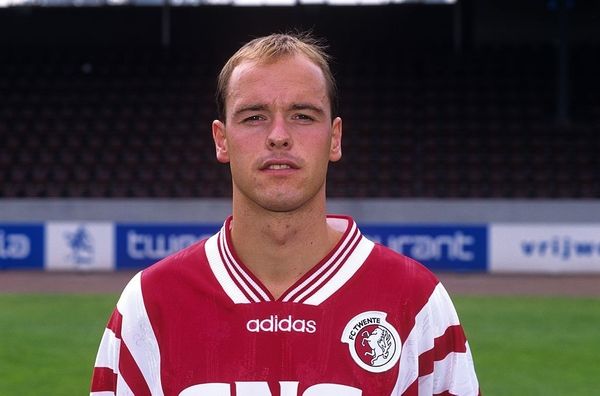
He was immediately appointed as head of youth development at FC Twente, a position which he went on to hold for 4 years. Then, the tragedy struck. The parent company which was financing the running of the club went bankrupt. The club was facing the risk of getting liquidated. An ambitious businessman, Joop Munsterman decided to intervene and save the club. For a while, the club had to look at the academy and make shrewd signings to rebuild the squad. Erik’s work at the academy was praised by his colleagues. The highlight from his 4-year stint as HoYD, working closely with the academy was the promotion of Wout Brama to the senior team (still playing for FC Twente in present day, picking up titles with them and International appearances with Oranje). In 2006, Ten Hag was appointed as the Assistant Manager of FC Twente. In this period, the team saw an upward rise in the table. From reaching yet another KNVB Cup final in 2004, the club eventually finished at 4th place in the 2006-07 season. Yet another 4th place finish in 2007-08 followed. But this time, the club won the European place play-off against Ajax Amsterdam to pick a place in UEFA Champions League qualification rounds. Ten Hag’s work on the side lines as Assistant Manager earned him a new contract and he was then paired with the Englishman Steve McLaren for the start of 2008-09 season.
The era of late 2000s was a period of transition for the big 3 of Netherlands: Ajax, Feyenoord and PSV. Ajax was underperforming due to mismanagement of resources, PSV in turn had a free run at the top in Eredivisie but they were failing at European stage after the highs of 2005 UCL run where they were moments away from a historic final (yes THAT UCL final). Feyenoord also had underlying financial issues which escalated a few years later. It was a time where teams from outside the big 3 tried to claim bragging rights. AZ Alkmaar and FC Twente rose to the challenge with their ambitious projects. AZ had brought in Louis Van Gaal, while FC Twente continued with Steve McLaren and a budding Erik ten Hag as his assistant manager. FC Twente, unseeded in the qualification rounds, eventually navigated their way to the final qualification round. But they were pitted against Arsenal where they ended up losing 6-0 on aggregate. They earned a place in the first round of the UEFA Cup. At domestic level, they earned 2nd place – 11 points adrift of Louis Van Gaal’s AZ Alkmaar. Ten Hag’s work with Twente earned him a move to PSV Eindhoven where he was appointed as Assistant Manager.
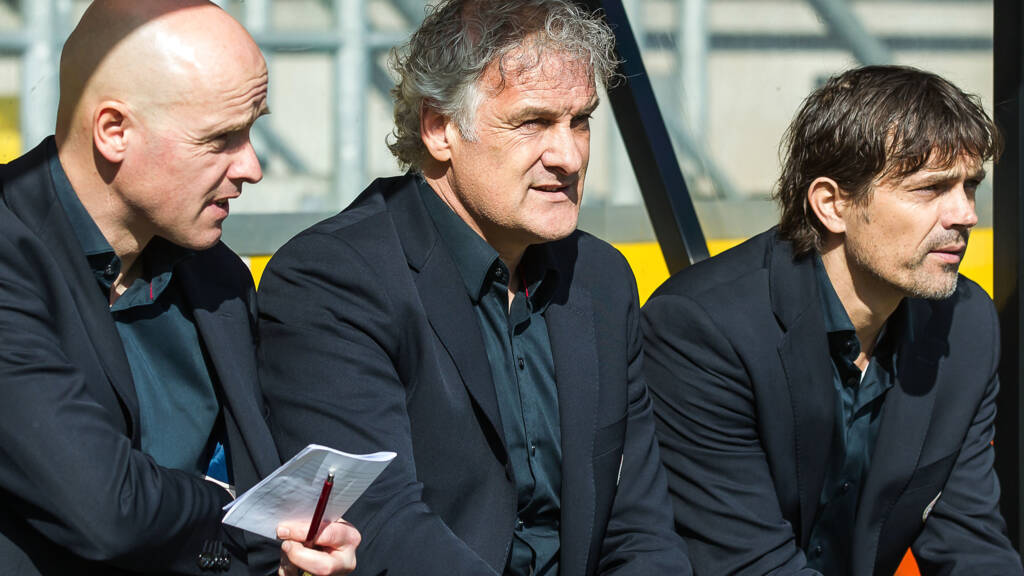
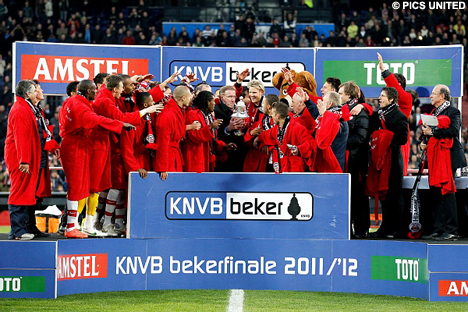
In Eindhoven, he was paired with Fred Rutten. PSV improved a lot under the managerial duo, finishing 3rd in the table, 8 points off eventual champions, FC Twente. They reached the Round of 32 of the inaugural UEFA Europa League, while managing a quarter final appearance in the domestic cup. In 2010-11, they again managed 3rd place in Eredivisie but did better in cup competitions – quarter final appearances in both the Europa League and KNVB Cup. It was the 2011-12 season where PSV Eindhoven finally enjoyed success, winning the domestic cup and managing a 3rd place in the league. At the end of the season, the club didn’t extend the contracts of Rutten and Ten Hag.
The side was praised for having a balanced output – sound in both attacking and defending department while patiently building the game from the wings – reasons why players like Balázs Dzsudzsák, Dries Mertens, Ola Toivonen exploded and ended up as top scorers under the managerial duo while coaching the likes of Georginio Wijnadlum, Kevin Strootman and a young Memphis Depay.
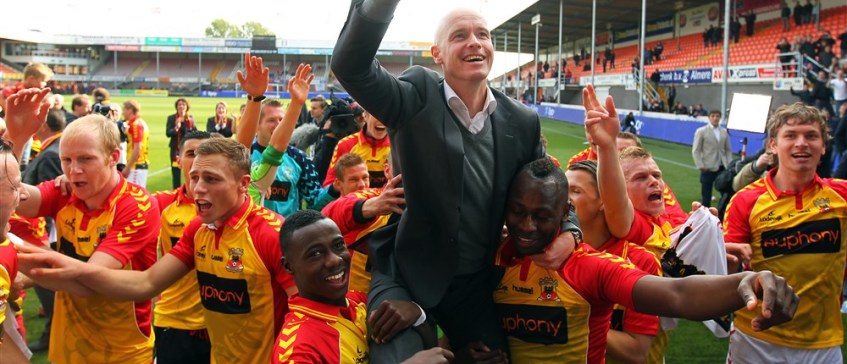
Ten Hag decided to kick start his career as a manager when he took up a job as first team manager at Deventer based side, Go Ahead Eagles, in Eerste Divisie (Dutch 2nd division). He was persuaded to join the side by Marc Overmars, who started his management career as a Technical Director at the club. Erik’s stay at the club lasted for only 1 year but he made it a memorable one. Under him, Go Ahead Eagles earned a promotion back to Eredivisie after a wait of 17 years. Go Ahead Eagles earned praises and attracted attention not only in his native country, but even from abroad.
Matthias Sammer, then sporting director of FC Bayern Munchen, convinced the young manager to move across the border and join the reserves side as manager. With Pep Guardiola at the helm as first team manager, the plan to appoint Erik ten Hag as manager of the reserves side was to keep a continuum between the philosophy of football at all levels of the club so that youngsters who were knocking on the door of the first team shouldn’t find difficulty adapting to the tactical instructions. Ten Hag’s Bayern II competed in Regionalliga Bayern, the regional league for Bavaria, one division below the 3. Liga, the third division in the German football pyramid. Ten Hag’s side fought to win the promotion to third division but always ended up missing it with narrow margins. Ten Hag left Germany after 2 years, returning back to the Netherlands. He took up the role of first team manager cum Sporting Director at Eredivisie side FC Utrecht.
Utrecht was on the verge of bankruptcy multiple times in the 2000s and had to be saved from liquidation at the very last moment by financial injection from potential investors. Even in such conditions, Ten Hag’s side finished 5th in Eredivisie in the 2017-18 season, the club’s highest position in the table since 1981 and they also reached the final of KNVB Cup, losing 2-1 to Feyenoord Rotterdam. Next season was even better for FC Utrecht in the league, as they clinched 4th place and won the European Play off final against AZ Alkmaar in dramatic style.
Ten Hag extended his contract with the club for one more season, but Ajax paid a hefty compensation to appoint him as manager on 23th December, 2017 after sacking Marcel Keizer. Marcel had taken over from Peter Bosz after coming through the ranks at Jong Ajax but was relieved from his duties due to poor results. A penalty loss to FC Twente in the Domestic Cup prompted Ajax’s technical director, Marc Overmars, to pull the plug. It was Overmars yet again who initiated the reunification with Erik ten Hag.
What happened next is a story which everyone knows.
According to Ten Hag, Coaching is all about experience. You gain more insights if you have an open mindset. His experience as a Head of Youth Development helped him learn how to integrate youth players at senior level once they are of the right age. His experience under Steve McLaren helped him learn the art of managing emotions and delivering results with respect to raising expectations. His experience under Fred Rutten taught him about “balance”.
All of these elements which he picked up helped him mature. Erik not only learned from his colleagues but learned from his surroundings. His time in Germany was very fruitful and he learned a lot from the ‘German game’, inculcating various tactical and managerial instructions in his coaching. Now, with experience he has almost perfected himself at Utrecht and Ajax.
In the above clipping, Erik ten Hag has shed light on the realism which he expects from people and how it takes time to perfect things and that you require timing to perfect the things. The excerpt has been taken from Ajax’s Youtube video where Erik goes through 5 game play sequences under him and explains his coaching philopshy and how it is reflected in those game play sequences.
Tactical Analysis
Attacking Set-up
At FC Utrecht, Ten Hag used a number of formations, 3-4-3, 3-5-2, 4-3-3, 4-2-3-1 but his preferred formation was that of 4-4-2 diamond. His front line was led by a certain French-Ivorian with whom he re-united in 2021, Sebastian Haller. Haller was the primary forward and he was supported by one of Nacer Barazite or Bart Ramselaar as number 10 with Ruud Boymans, Patrick Joosten and later on Richario Zivkovic joining in as the secondary striker with Haller up top. When Barazite started as number 10, Ramselaar started as the wide midfielder in the diamond, on the right side- covering the space vacated by the marauding right back, shuttling horizontally to cover up space in the centre and right half wing. This ensured that the width was provided by fullbacks who had to be positionally aware, both in attacking and defensive phases. Ten Hag’s structure allowed for multiple rotations. The single pivot at the base of the diamond often dropped into the back line, with centre backs going wide to avoid getting pressed by opposition’s attackers, forming a back 3. This helped a lot with the build-up. It also encouraged the full-backs to push even further forward and stretch the defence of opposition. The number 10 often rotated with the number eights on either side of the diamond while the second forward dropping deep in areas to create a +1 in midfield helped to create overloads and short passing options in central areas.
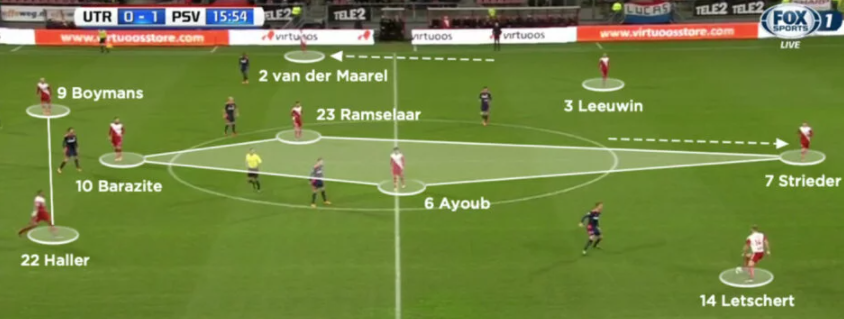
In the 2015/16 season, Utrecht ranked 2nd in the Eredivisie for progressive passes. They also had the 2nd least PPDA score, which suggested that their sides pressed aggressively from the front. Ten Hag’s desire to have multiple options at 10, using rotations and movement to create passing options between the lines, was key to this. It has been a central theme throughout his coaching career. Ten Hag has always emphasized on off the ball movement of the players, trying to coach them and perfect this ability since these off the ball movements are the key to create so many passing options. Players are drilled hard to create space for others to pass. All of this has to work in tandem. You have to be technically sound on the ball and positionally aware off-the-ball. Even the Goalkeepers have to be proactive in Ten Hag’s set-up, not just rooted to the line but provide an option to start the play from the back and be positionally aware to cover the space behind the high defensive line. Ten Hag believes that you don’t have to keep possession just for the sake of it. According to him, Possession is just a means to an end. You should control the game and try to control the situation of the game in the crucial moments instead of just controlling possession of the ball. After taking the Ajax job in December 2017, Ten Hag converted the fluid 4-3-3 used by his predecessors and converted into a 4-2-3-1 with a fluid front 4. This formation allowed them to be explosive when players eventually bought the philosophy of the coach. While PSV Eindhoven won the Eredivisie, Ajax was playing the long-term game with Ten Hag. Recruitments of veteran Daley Blind and Dusan Tadic provided much needed experience and added 2 players in their peak years in a squad built with younger talents. In the 2018-19 season, Ten Hag’s Ajax steamrolled the opposition. Their run in Europe was the best club experienced in more than 20 years. From the 2nd qualification round of UEFA Champions League to semi-finals, Ajax bested teams which came in their way. Historic victories at Santiago Bernabeu and Allianz Arena, Turin followed with an away victory at newly built Tottenham Hotspurs Stadium in the semi-finals. The Amsterdam side even took a 2-0 lead at Amsterdam Arena. But a hattrick by Lucas Moura in 2nd half knocked out Ajax with Moura’s last goal coming as the last kick of the match. A historic UCL final was so close, yet so far.
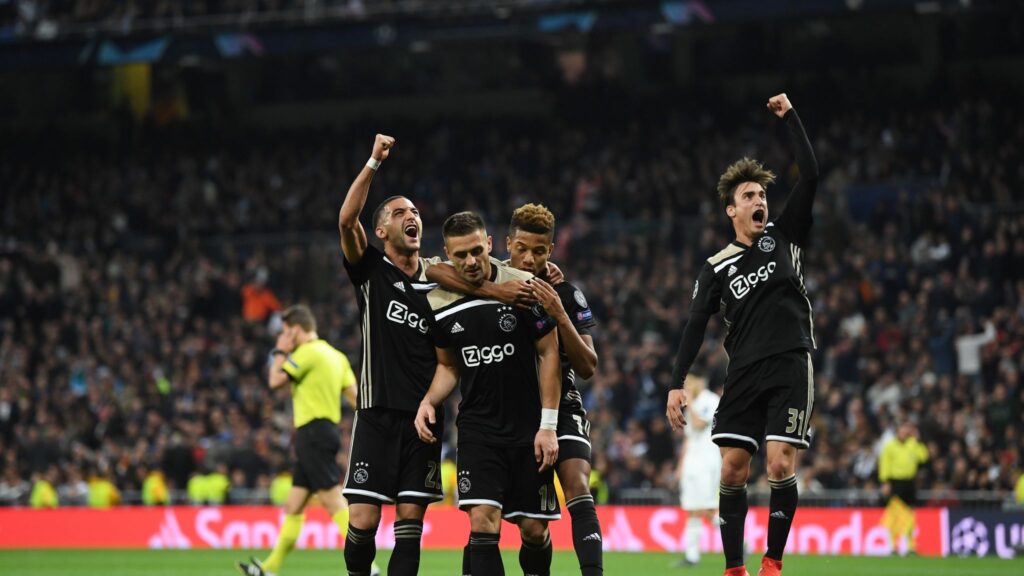
The double pivot of Frenkie De Jong and veteran Lasse Schone sat in front of their front 4. De Jong’s ability to carry the ball was very effective in progressing the ball from defensive areas to attacking zones. Dusan Tadic was most regularly used as the central forward in that remarkable Champions League run. Ziyech, Van de Beek and Neres then formed the line of three behind him. Domestically, Tadic often operated from the left, with either Kasper Dolberg or Klaas-Jan Huntelaar starting as the nine. On the right, Ziyech looked to cut back inside on his stronger left foot and shoot, cross or connect with the team’s central attackers. Right-back Noussair Mazraoui provided delayed attacking support while still offering a link to the back line or double pivot by inverting in-field depending on the opposition’s defensive set-up.
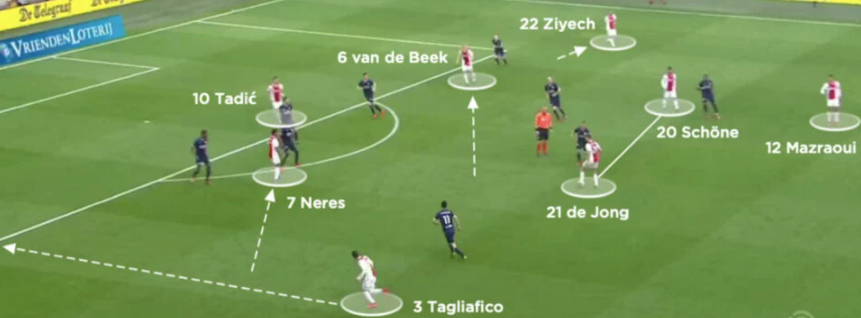
On the left, either Neres or Tadic moved inside much earlier, with the latter often operating more as a second centre-forward when he started there. This created significant room for left-back Nicolás Tagliafico to overlap and provide crosses from deeper areas of the field. The double pivot helped cover underneath Tagliafico’s marauding runs up-field. One of them could drop into the back line to support centre-backs Matthijs de Ligt and Daley Blind whenever required. Frenkie De Jong’s ability to beat the opposition’s press effectively helped a lot in building up play in this manner.
As the number 10, Van de Beek moved intelligently between the lines – but he was most effective from the right inside channel. His movement off the ball in the right half space complemented the width provided by Ziyech, in turn creating room for Tadic to exploit when he attacked from the left or for the central striker to drop into, thereby vacating more space for either the winger or full-back on left side to exploit this vacated space and create numerical superiority.
That glorious run in the Champions League started a fire sale: De Ligt, De Jong, Van de Beek Ziyech, Dolberg, Neres, Kristensen, Veltman, Sinkgraven, Promes all went to pastures anew. Huntelaar, Schone were phased out. The trio of Ten Hag, Technical Director Marc Overmars and Managing Director Edwin van Der Sar replaced these ongoing very well. Recruiting talented young players with high resale value from abroad and promoting youngsters from reserve and youth sides while also bringing experienced players who made their name in domestic league but struggled abroad. This overhaul prompted Ten Hag to change his tactical set-up. 4-2-3-1 shape paved the way for 4-3-3.
Ryan Gravenberch, Devyne Rensch, Jurrien Timber, Per Schuurs (technically not from youth setup but he was bought to be played in Jong Ajax team-reserves initially) were promoted and integrated into the first team; Lisandro Martinez came from Argentina, Edson Alvarez came from Mexico, Antony came from Brazil, Mohammed Kudus came from FC Nordsjaelland, Mohamed Daramy came from FC Kobenhavn, Ray Gorter came from Go Ahead Eagles. Experienced players like Davy Klaasen came from Werder Bremen, Steven Berghuis came from Feyenoord (the transfer completely nullified Berghuis’ status as a cult figure among Feyenoord fans given the rivalry between 2 clubs), Sean Klaiber came from FC Utrecht, Sebastian Haller came from West Ham, Remko Pasveer came from Vitesse to cover for Andre Onana who had to battle a 9-month suspension over the consumption of banned drug. Klaiber and Haller were re-united with Ten Hag after their time at FC Utrecht was fairly successful (although Klaiber suffered a serious knee injury and he has been on the sideline for a long time now).
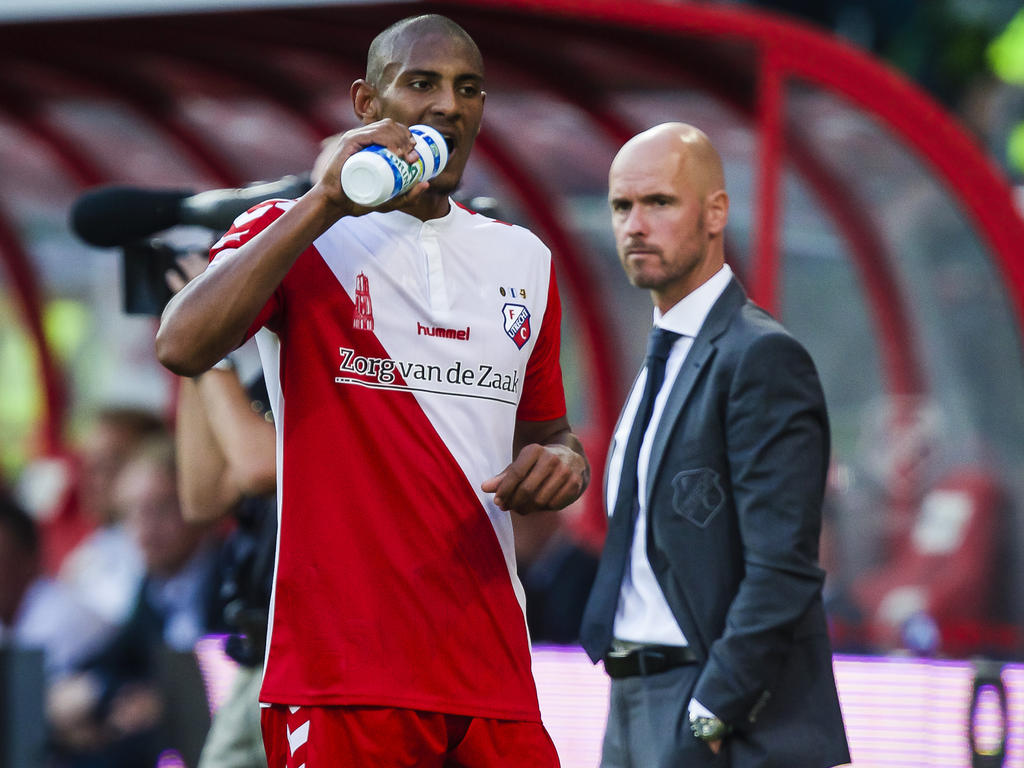
Haller is the primary striker while Tadic remains on the left, from where he continues to drift inside. Here he is supported by Blind – another survivor from that Champions League team– who has moved to left-back. Blind’s experience at centre-back allows Ajax to build with a back three. Mazraoui then pushes further forward. The width that Tadic maintains on the left enables the midfielders to push further ahead and make supporting runs around Haller, particularly from Gravenberch on the left. Blind offers cover behind but can also invert while Mazaroui also has the same ability to provide more passing options alongside defensive midfielder Edson Álvarez.
Ajax have also showcased an ability to be flexible in the way they progressed the ball. They can pass their way around the opposition in vertical manner and play a direct brand of football but they also use Haller as a target for longer passes at times as well as using long switches to isolate their devastating wide players.
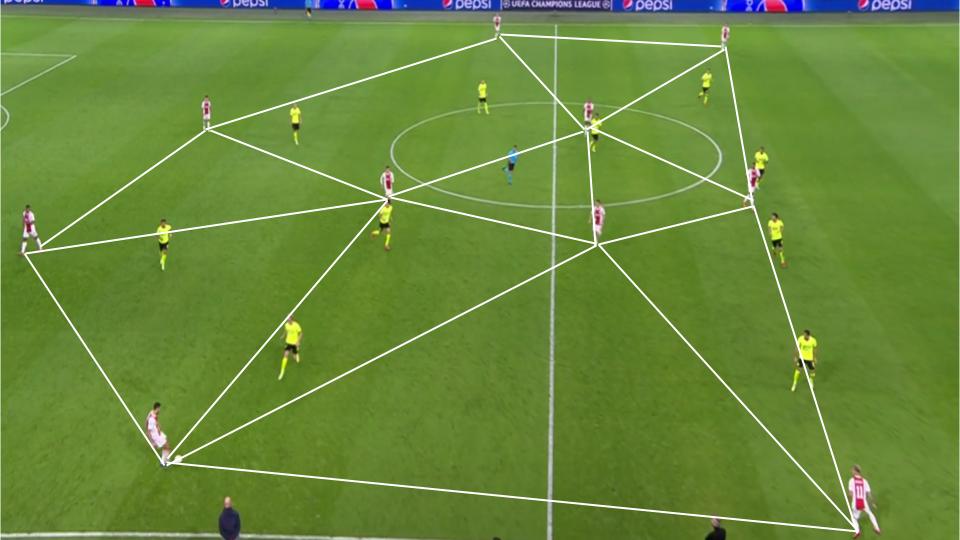
Defensive Set-up
Without the ball, Ten Hag’s Utrecht mostly dropped into a 4-3-3 shape. The central forwards would defend on the outsides of the front line, around which opponents often looked to build. They could then target the space between centre-back and the aggressive press of the full-backs. The number eights would cover the inside channels, but if the distances were too great or the back line failed to slide over enough, opponents could exploit the spaces and penetrate through these channels.
Ten Hag’s switch to a 4-3-3 with Ajax has led to a different defensive approach. The striker, mostly Haller (or on loan striker Brian Brobbey who left Ajax for RB Leipzig), stays high rather than dropping deep to cover the opposing team’s pivot. The wingers track runs from opposition’s full-backs/wingers into wide areas, especially if the full-back has aggressively pressed in the inside channels. The number eights cover the inside channels aggressively, too. They will individually jump forward to support the press between the centre-forward and winger. With the wingers supporting back, the central midfield can focus more on the areas ahead of the two centre-backs. The theme around Ten Hag’s defensive approach is that of individual jumping and pressing out of line. Whether that’s a centre-back pushing out to deal with a dropping attacker, or a number eight pushing forward to press a dropping pivot, Ten Hag wants his players to work forward on to the ball – even if it means assertively leaving the line of defence. This puts constant pressure on the ball and, from a compact mid-block, forces the opposition back and away from goal.
This man-oriented pressing can become a blessing and a burden. And this has been a major issue with Ten Hag’s side. Despite conceding least goals in Eredivisie this season, Ajax have been unable to handle the opposition’s counter attacking players if their counter-press is broken, leaving them completely open on transitions and this is where Ajax doesn’t defend well. While there is a very big gap between the resources available at Ajax and other clubs in the Netherlands and quality of players is miles better, these weaknesses may go under the radar at domestic level but at European level, it has bugged them. Tottenham Hotspurs in 2018-19 UCL campaign, Getafe in 2019-20 UEL, AS Roma in 2020-21 UEL and recently Benfica in 2021-22 UCL Campaign have nullified Ajax’s strengths in attack with their vulnerability in defensive transitions. This is one area where Ten Hag can improve by tweaking a thing or two.
To summarize, the basic principles of Ten Hag’s coaching philosophy are:
- Create +1 in possession
- Changing positions
- Don’t over-use the width of the pitch
- Always make off the ball runs and play passes forward and in behind
- Make sure that the defence is organized
- Immediate pressure on the ball
- Get back in shape after a failed pressing trigger
- Lure the opponents to the flanks
- Manipulate the “space”
- Defend the “space”: zonal marking
- Immediately play the ball towards the goal
As we have seen, Erik ten Hag is a manager who is very flexible in his approach and has learned many things from his colleagues and surroundings over the years. He is a proactive coach and his best comes in a surrounding tailor-made for him, where HE IS THE MAIN MAN. While he is at a stage in his career where he has outgrown the Eredivisie, there still are some shortcomings in his tactical set-up which he has to cut out because those will be amplified in top 5 leagues, with better quality of players, coaches and managers in the opposition teams. In this section, I want to present my personal views on the realistic scenario which can pan out if Ten Hag is actually appointed as Manchester United manager in near future. Now, the selling point to bring Ten Hag to Manchester United will obviously be:
- Manchester United: the brand
- Premier League
- Big Transfer Budget and freedom to change squad according to his suitability
- A sound person in a technical role to assist him in recruitment and contract extensions.
Ten Hag will have to drastically change his instructions given the squad he may inherit. Many players in the squad have poor positional awareness, especially the full-backs and wingers which are the positions where Ten Hag actually rely on using width and in turn create space. First choice goalkeeper although picked up his main selling point of shot stopping after 3 years of underperformance (in the same period, also becoming the highest player on the planet after penning down to a new contract- expiring in check notes 2023), his inability to develop other facets of the game- sweeping, coming off the line to claim crosses, passing will be a big hindrance to Ten Hag implementing his principles of building the game from the back. Manchester United lack a lot of profiles in that midfield, a defensive midfielder to screen the defence, a midfielder who can control the pace of the game- when to go up-tempo, when to lower the intensity at which game has to be played and especially someone who helps the team to progress the ball from defence to attack. There is no reliable goal scorer in the squad either. Yes, Manchester United have Cristiano Ronaldo but he is a human being at the end of the day, he can’t beat the concept of time and ageing (and law too). For a long-term project which Manchester United want to work hard on, they have many players who are on the wrong side of the 30 or are losing their value, not only monetary but value in terms of game play too despite their young age. Only the centre back department looks settled but even here, fans have a lot of dislike for a certain someone and that certain someone has the skillset which Ten Hag usually wants in his centre backs.
The player recruitment is a big grey area. No one knows in principle how Ralf Rangnick will function in a technical role. Given he will have a say, but it will most probably be from the outside as an external consultant (because that’s what his work title will be). Actual power will eventually sit with Richard Arnold (who has worked all these years with Ed Woodward- has zero idea about football and its business side), John Murtough (responsible behind the running of Women’s team- whose running has been abysmal despite the ladies performing well on the pitch for a newly formed team- showcasing that this team is also run as a PR show) and Darren Fletcher promoted way above his ability over many qualified people at the club (a certain Nicky Butt just left days after the reshuffle was announced, it just can’t be a coincidence right?).
If Ten Hag will inherit such a broken squad at a club where there is no pre-defined hierarchy and no clear means of action then he is also set up to fail just like his predecessors.
When clubs are in a period of transition, they have to think of the long-term goals first and then in the short term. Opposite happens at Manchester United. A year or two isn’t enough to overhaul the squad when you appoint a methodical coach and director to assist him and don’t efficiently back them and automatically lose patience as your dwindling mood dictates your decision making. And this has happened with all the previous managers at the club, even if they were good enough to manage the squad or not.
The people at administration level in Manchester United are very cunning at selling dreams, and fan’s inability to hurt those responsible for this mismanagement because they also want “more”, More this, more that. This is why the owners eventually escape all the flak while fans, media despite knowing the actual people at fault always end up picking their obvious baits, overrating the newcomers to the extent that they raise the expectations way above the actual reality and when reality shows them the mirror, they can’t accept the truth and resort to tribalism and usual toxic, masculine, macho behaviour of many in the fanbase comes out where they stoop down to new lows just to show their anger because “Fans”. And don’t get started with the minority thing, Manchester United has a massive fanbase all over the world, “minority” of this fanbase will still number in hundreds of thousands or even millions- and this isn’t a small number at all.
STOP. RELAX. GO OUT AND TOUCH SOME GRASS.
Everyone has to take a breather, sit back and look at how they actually want to achieve this “more”. Transparency, which is one thing which both Ten Hag and Rangnick emphasize on, has to be kept at all times; with the board, with the fans, with the players and their entourage. This is a 2-way process. You don’t clap with just one hand after all. And this isn’t with just Ten Hag, Rangnick, Pochettino or any other candidate who will take the seat opposite to Sir Alex Ferguson Stand at Old Trafford. Transparency is very underrated and an important trait to have in general life as well.
You can’t just go on and assume that things will get fine in a jiffy because “club is massive and biggest in the world”. It is, but in size. Not footballing stature, at least not in the present day. And that is the bitter truth which fans need to accept. A certain someone once said “Facts don’t care about your feelings”.
Mismanagement can happen with even the biggest of clubs. If you are talking about “Rebuild”, then it has to be completely transparent. No favouritism, no emotion driven decisions. Complete reset- a clean slate. Manchester United needs a clean slate first. If that isn’t achieved then the fans who are getting excited with the news of Ten Hag- consuming the ill-informed content related to him will only get disappointed when he ends up failing (may it be 2 or 3 or 4 or whatever years) and everyone in anger will start dis-crediting his work of the past, achievements for which he had to work his bottoms off.
I’ll love to be proven wrong over my thoughts but my pragmatic self just can’t fathom that a club which hasn’t learned from its past mistakes in these 17 years, out of a sudden, will fix itself and appoint Ten Hag, who will then wave a wand like Voldemort and destroy any team in front of him. “Avada Kedavra” and Manchester United are the champions yayy!
But are they the champions? Are they looking like a team which will become the champion in near future? Are they working towards becoming a club which will become the champion in near future? Are they the club which was once hailed to be loving, caring and welcoming in the present day?
Are they?
Search for a Manager: Erik ten Hag
[et_pb_section fb_built=1 admin_label=section _builder_version=3.22][et_pb_row admin_label=row _builder_version=3.25 background_size=initial background_position=top_left background_repeat=repeat][et_pb_column type=4_4 _builder_version=3.25 custom_padding=||| custom_padding__hover=|||][et_pb_text...
thedevilsdna.com
kmmke 2 bila sahivi halftime uje utupe matokea mechi ikiisha sisi tumeishia halftimeBeating Leicester at home isn’t for everyone… we’ll definitely take that result! Bring on Monday…
View attachment 2173330
Arsenal kala 3 hukooo [emoji23][emoji23][emoji23]kmmke 2 bila sahivi halftime uje utupe matokea mechi ikiisha sisi tumeishia halftime

3 malayaJumatatu hata kama kuacha mguu uwanjani, lazima mtu apigwe for us to be safer
3 bilaAnother brilliant result for Arsenal. We can’t let this opportunity slip on Monday.
Binafsi sina imani sana na Erik Ten Hag kama anaweza kutoboa kwa aina ya mfumo wa kiungozi uliopo MU. Huyu jamaa ni fundi ila mpole mpole sana.I’ll love to be proven wrong over my thoughts but my pragmatic self just can’t fathom that a club which hasn’t learned from its past mistakes in these 17 years, out of a sudden, will fix itself and appoint Ten Hag, who will then wave a wand like Voldemort and destroy any team in front of him. “Avada Kedavra” and Manchester United are the champions yayy!
But are they the champions? Are they looking like a team which will become the champion in near future? Are they working towards becoming a club which will become the champion in near future? Are they the club which was once hailed to be loving, caring and welcoming in the present day?
Are they?
Search for a Manager: Erik ten Hag
[et_pb_section fb_built=1 admin_label=section _builder_version=3.22][et_pb_row admin_label=row _builder_version=3.25 background_size=initial background_position=top_left background_repeat=repeat][et_pb_column type=4_4 _builder_version=3.25 custom_padding=||| custom_padding__hover=|||][et_pb_text...
Ralf aongozewe miezi 6 mingine kama kocha wa mpito kumsubiri Luis Enrique mpaka mwezi wa 12. Tunahitaji kocha mwenye kiburi na fundi pia.
Hatuna haja ya kuwa na haraka kuleta kocha kwa timu ilipofikia kwa sasa tunahitaji kuanza upya from square one. Itatuchukua misimu angalau miwili/mitatu kurejea.
D A E M U S H I N
JF-Expert Member
- Dec 15, 2015
- 22,662
- 121,092
The proposed compensation packages for Erik ten Hag and Mauricio Pochettino are described as being on a similar level.
ameandika laurie whitwell.
tier 1 kwa taarifa za manchester united
ameandika laurie whitwell.
tier 1 kwa taarifa za manchester united
Similar Discussions
-
 Manchester United chaliii yapigwa Fainali, Tottenham yatwaa kombe
- Started by DogoWaNjombe
- Replies: 6
-
 Manchester United yamfukuza kazi Kocha Amorim kwa kuwasema ‘mabosi’ vibaya
- Started by DonDonald
- Replies: 20
-

-
Shabiki wa Man united: Red flags hizi za INEOS zifanya nisiwe na imani nao
- Started by mtechnical
- Replies: 2
-
Kobbie Mainoo ameijulisha Manchester United kuwa anataka kuondoka kwa mkopo
- Started by DogoWaNjombe
- Replies: 3