China sio nchi iliyoendelea

China sio nchi iliyoendelea

Bloomberg

Subscribe


Opinion
Mihir Sharma, Columnist

Is China a Developing Nation? I Don’t Think So​

It should be treated like the dominant economic power it now is.
September 4, 2023 at 12:00 AM GMT+3
By Mihir Sharma
Mihir Sharma is a Bloomberg Opinion columnist. A senior fellow at the Observer Research Foundation in New Delhi, he is author of “Restart: The Last Chance for the Indian Economy.”
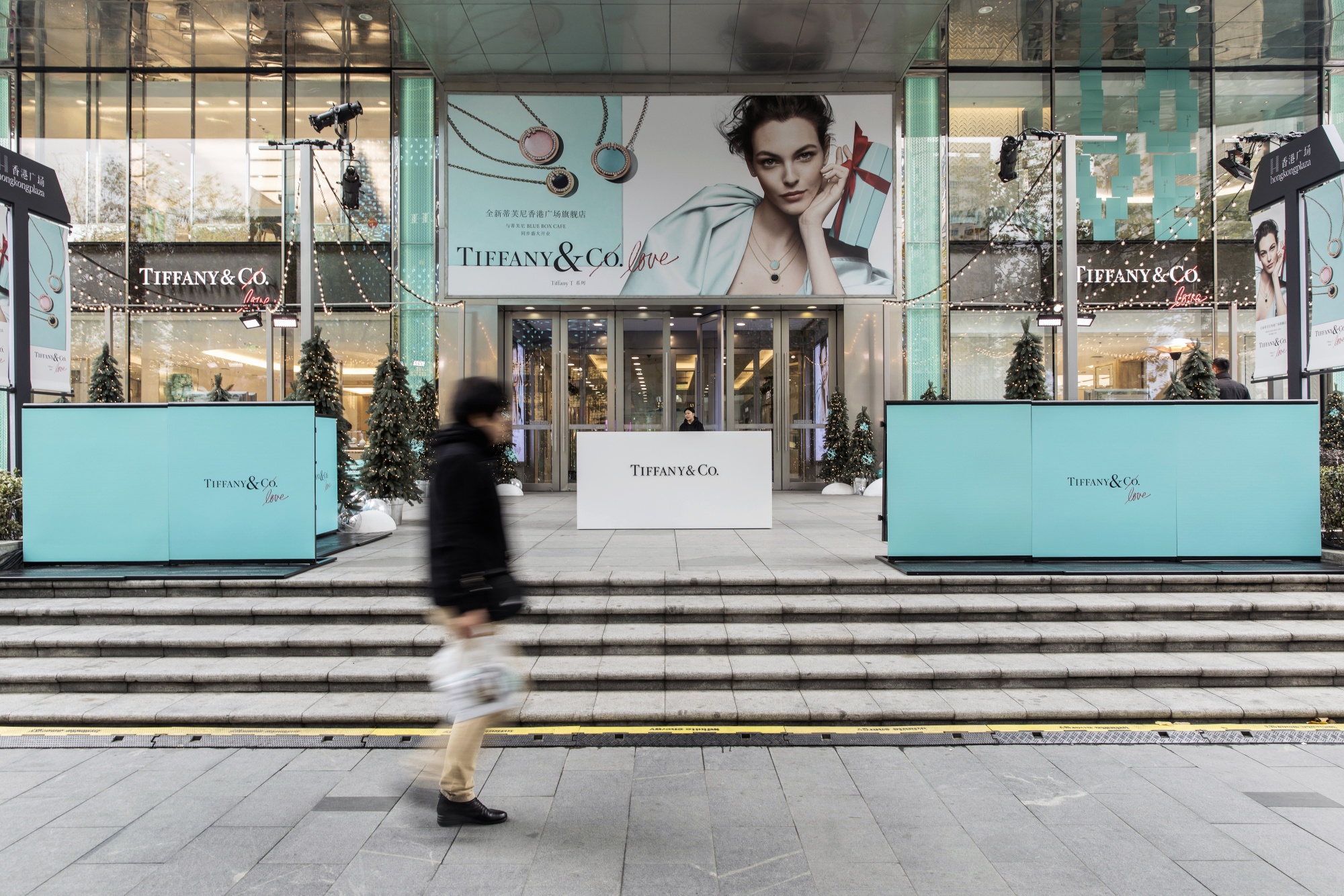

What’s in a name?

What’s in a name?
Photographer: Qilai Shen/Bloomberg
Save

4:38

Can a rich country still be a “developing country?” Objectively, if the term is to have any meaning, the answer may soon be no. But President Xi Jinping is powerful enough to redefine objective reality, and did so at the BRICS summit recently: “China has been and will always remain a member of developing countries,” he insisted.
This led to much hilarity online, where China watchers asked each other if this was Xi’s way of publicly noting that his nation’s period of high growth had come to an end. But it was clear, from the way the phrase was subsequently highlighted by the foreign ministry and others in the state media, that something important was concealed in the words, beyond a simple statement of solidarity with others at the summit.
BloombergOpinionECB Needs To Confront Rate Reality Sooner, Not LaterIs It Time to Break Up Luxury Behemoth LVMH?Why the S&P's New Record May Not Mean a Bull MarketThis Neat UBS Trick Could Kickstart European Bank Deals
And there was. China’s self-determination of its developing-country status provides it with both tangible and intangible benefits that it is loath to give up. In order to enter the World Trade Organization in 2001 it relinquished some, but not all, of these special benefits. Last year’s WTO negotiations over fisheries subsidies, for example, wound up with a less ambitious agreement because the natural way to manage overfishing — stricter rules for rich countries with large and modern fleets, more relaxed ones for poorer ones with small-scale, artisanal fishing communities — was ruled out. That’s because China’s huge and aggressive trawler fleet was one of the main problems any agreement needed to address, and attempts to control subsidies to these vessels responsible for overfishing would also require much poorer countries to end support to their subsistence fishermen.

Unsurprisingly, a lot of people are dissatisfied with this state of affairs. The bluntest complaints have come — again, this is not a surprise — from the US Congress. Earlier this year, Senator Mitt Romney introduced a bill ordering the State Department to “advocate” for mechanisms to change China’s status to a developed country. Fortunately, there are other slightly more realistic efforts afoot. The top trade officials of Japan, the US, and the European Union agreed three years ago to at least ensure that “advanced WTO members claiming developed country status” would take on the commitments associated with developing countries in any future negotiations. They wanted “advanced” developing countries — in particular, China — to be treated like the rich world. This would, in turn, allow poorer economies to retain the special treatment they deserve.
There has, however, been no attempt to create a broader coalition around the question of China’s status. That’s a pity — it plays right into Xi’s hands. It isn’t just the US, EU and Japan that need to reset relations with Beijing. All of us, especially in real developing countries, need to recognize that China no longer needs any developing-nation exceptions and privileges, but should be treated like the dominant economic power it now is. Piecemeal efforts by the EU and the US to first confront and then pacify Beijing — visible in Commerce Secretary Gina Raimondo’s recent visit – need to be better organized. And they need to find allies in the developing world.
This is precisely what Xi fears, and is trying to forestall. When he says “China will always be a developing country” regardless of how rich it gets, he is trying to turn the phrase from a formal categorization into an identity. If he succeeds, the intangible benefits kick in: it locks in support, permanently, from the Global South. Beijing will then forever speak as the representative of the vast majority of the world’s population — even when its actual words are meant only to advance its own narrow interests.

It is the Global South that suffers the most from this, as it means no international negotiations leave place for their special needs if one of the world’s dominant economies can also access them. Some in emerging markets are waking up to how dangerous this dynamic is. India may be one of those places. In the past, such as when the two countries together torpedoed a climate agreement in Copenhagen in 2009, New Delhi allowed itself to be bracketed with China in the world’s eyes. But India suffers, both in terms of image and in practical terms, by pretending it has the same interests as a country five times richer, and that emits four times as much carbon per capita. Perhaps that’s why, at China’s last WTO trade policy review, the Indian delegates for the first time asked how a country that the World Bank says is “upper-middle income” can still claim developing status.

China’s development story has been one of the world’s greatest economic miracles. Success comes with responsibilities, however. Among them is the willingness to accept you can no longer claim to lead or represent those who are still struggling upward.
 
Kiranga unatumia vigezo gani kusema China bado ni developing country ?
Kwa sababu China ina watu masikini wengi sana ambao bado hawajapiga hatua ya kuuaga umasikini na kuishi maisha ya watu ambao wanatakiwa kuwa considered kuwa wanaishi katika a develooed country.

Watu wanaposema China ni develooed country wanaangalia sehemu ya China iliyoendelea, miji, teknolojia etc. Hawaangalii sehemu kubwa ya China ambayo bado haijaendelea na ipo jatika kuendelea.

GDP per capita tu ya China ya 2021 iko chini ya GDP capita ya Seychelles.

Yani tunasema China ni nchi iliyoendelea kwa GDP per capita ya $12,500 kweli?
 
Kwa sababu China ina watu masikini wengi sana ambao bado hawajapiga hatua ya kuuaga umasikini na kuishi maisha ya watu ambao wanatakiwa kuwa considered kuwa wanaishi katika a develooed country.
Hao masikini wengi ni wangapi katika population yao ? Na katika hayo mataifa mengine hakuna masikini wengi ?
 
Watu wanaposema China ni develooed country wanaangalia sehemu ya China iliyoendelea, miji, teknolojia etc. Hawaangalii sehemu kubwa ya China ambayo bado haijaendelea na ipo jatika kuendelea.
Nimekuuliza wewe unatazama nini kutoa huo mtazamo wako kuwa China bado ni developing country na sio hao watu wengine ?
 
Kwa sababu China ina watu masikini wengi sana ambao bado hawajapiga hatua ya kuuaga umasikini na kuishi maisha ya watu ambao wanatakiwa kuwa considered kuwa wanaishi katika a develooed country.

Watu wanaposema China ni develooed country wanaangalia sehemu ya China iliyoendelea, miji, teknolojia etc. Hawaangalii sehemu kubwa ya China ambayo bado haijaendelea na ipo jatika kuendelea.

GDP per capita tu ya China ya 2021 iko chini ya GDP capita ya Seychelles.

Yani tunasema China ni nchi iliyoendelea kwa GDP per capita ya $12,500 kweli?

Wenzio wanaenda kutoa umaskini kabisa miaka kadhaa mbele ,nyie majiji makubwa mnalala kweny mitaro ,wengine kama vichaa huko Marekani.

Lich ya china kuendelea sana jamii kubwa wanaishi maisha ya local ,sababu moja ni kupunguza magonjwa hii ni pamoja na kutumia milo ya asilia ...Nyie mnasema ni umaskini😃
Screenshot_20240106-135151.png
 
GDP per capita tu ya China ya 2021 iko chini ya GDP capita ya Seychelles.
GDP per capita ndio kipimo chako pekee ? Unafahamu mataifa mengi madogo yameziacha mbali hizo nchi developed katika GDP per capita ?
 
GDP per capita ndio kipimo chako pekee ? Unafahamu mataifa mengi madogo yameziacha mbali hizo nchi developed katika GDP per capita ?
Akitumia hivyo hata Marekani Kumi bora atashika mkiani ...Maana nchi kama Brunei zitakuwa kileleni.
 
Yani tunasema China ni nchi iliyoendelea kwa GDP per capita ya $12,500 kweli?
Ulitaka iwe na GDP per Capita ngapi ? Na hiyo GDP per Capita ndio criteria pekee inayo tumika kwa nchi kuitwa developed ?
 
Hao masikini wengi ni wangapi katika population yao ? Na katika hayo mataifa mengine hakuna masikini wengi ?
200 million angalau, kwingine kwenye mataifa yaliyoendelea si kwa kiwango hicho.

Hapa tunaweza kubishana mpaka subuhi, kwa sababu, hakuna definition rasmi ya nchi iliyoendelea iko vipi na inayoendelea iko vipi.

Wachumi wenyewe hawakubaliani, na suala hili lina siasa nyingi.

Hivyo, linabaki kuwa suala la mtazamo.

  • FP-Live-podcast-logo-3000x3000

magazine cover image

Foreign Policy


ANALYSIS

China Is Developing and Developed at the Same Time​

The world’s second-largest economy has a historically unique economic status.​

By Philippe Benoit, an adjunct senior research scholar at Columbia University’s Center on Global Energy Policy.
A woman sleeps beneath a billboard promoting new urban development in Beijing.
A woman sleeps beneath a billboard promoting new urban development in Beijing on Aug. 21, 2003. FREDERIC J. BROWN/AFP VIA GETTY IMAGES
My FP: Follow topics and authors to get straight to what you like. Exclusively for FP subscribers. Subscribe Now | Log In
MAY 23, 2023, 9:58 AM
The U.S. House of Representatives recently voted unanimously that China should no longer be considered a “developing country.” A major motivation is to deny China the preferential treatment it receives as a developing country under the World Trade Organization, the U.N. climate framework, and other international arrangements. Indeed, from Africa to Latin America and even Europe, China is very much adopting the role of a rich global power.
And yet, China continues to exhibit many traits of a developing country, including in energy and other areas, and particularly outside the major urban centers most visible to foreigners. The truth about China’s status as a developing country is far more complex.
China has transformed itself from a low-income country in the 1990s into the world’s second-largest economy, with many attributes of a rich global power projecting its economic and diplomatic influence abroad. Earlier this year, French President Emmanuel Macron became another in a line of European leaders to visit China, soliciting closer business ties, while also hoping to encourage Beijing to exercise its influence on Moscow regarding the invasion of Ukraine. China is projecting itself increasingly in international affairs, with the largest number of foreign postings (surpassing the United States) and repeatedly mobilizations of its military (third behind the U.S. and Russia) to the disquiet of its neighbors and others. Indeed, China is acting very much like a wealthy global power.
But China also still exhibits various characteristics of a developing country, including a population of more than 200 million people without access to clean cooking technologies; widespread pollution; and a ranking under the Human Development Index—which focuses on health and education outcomes—of 79th out of 191 countries (scoring below, for example, Sri Lanka and Iran). Even its continuing heavy reliance on coal, a cheap but dirty fuel, is arguably a developing country trait that contrasts with the substantially lower shares achieved by advanced economies such as those of the European Union and the United States.
China is expected soon to graduate from “middle income” into “high income” under the World Bank country classification system—which arguably is part of the reasoning underlying the U.S. House vote—but this change won’t immediately erase its developing country aspects. For example, the International Energy Agency (IEA) has estimated that it will take China until 2030 to provide basic clean cooking access to all. Moreover, China is still, in U.S. dollar terms, far from the income levels enjoyed in developed Organization for Economic Cooperation and Development economies; notably, its GDP per capita is currently half that of Portugal and equates to the average income of the world population across all developed and developing countries.


Similarly, while only 2 percent of Portugal’s population lived below the poverty threshold of $6.85 a day in 2019, the corresponding figure for China was more than 10 times bigger, at 25 percent. Achieving the levels of Portugal and other advanced economies will require not only time, but continued success in maintaining robust growth.
In assessing China, it is important to recognize that it presents a unique situation: a country combining developed and developing country traits with global clout. It is the world’s lone “hybrid superpower.”
Energy is an area that illustrates this dynamic. Consistent with its income level, China is still at a development stage where it relies on increasing energy use to power further economic growth. The IEA projects that China, already the world’s largest energy user, will need to procure nearly 20 percent more by 2040. This contrasts with advanced economies, such asthe United States., Japan, and the European Union, where energy consumption is projected to fall.
Securing these larger amounts of energy is and will remain a major concern for Beijing’s decision-makers. Notwithstanding its extensive domestic resources (such as coal, oil, and renewables), much of China’s energy will need to be imported, which in turn will affect its approach to the Middle East and other energy exporters, including Russia. Beijing’s recent diplomatic efforts toward Saudi Arabia and brokering a rapprochement between Saudi Arabia and Iran arguably reflect its interest in enhancing the stability of its oil imports from the region.
Domestic poverty will also affect China’s strategies. While it showcases the skyline of Shanghai and other advancements (such as its high-speed rail system), poverty remains a reality for millions of Chinese households. In addition to the 200 million without access to clean cooking, many others rely on coal to heat their homes. Similarly, while Beijing enjoys GDP per capita levels resembling Europe, households in China’s poorest region face levels similar to Peru. China has succeeded in eliminating the extreme poverty burdening most developing countries, and it is now home to a burgeoning middle class, but many families still lack quality standards of living, particularly in rural areas. Addressing these issues will require Beijing’s attention and resources.
This duality of China’s hybrid development status can arguably be seen in the “near-peer” descriptor used by the U.S. national intelligence community in its 2021 annual threat assessment report. As Director of National Intelligence Avril Haines explained to Congress at the time: “While China poses an increasingly formidable challenge to the U.S. role in global affairs, it is worth noting that its economic, environmental and demographic vulnerabilities all threaten to complicate its ability to manage the transition to the dominant role it aspires to in the decades ahead.” Some of those constraints flow from its developing country traits.
 
I will just point out the logical fallacy in this line of argument.

The logical fallacy here is "argument from authority".
Provide a strong opposing argument, point out what is wrong with my argument, sio kusema tu ni logical fallacy, just explain why it's a weak argument, nahisi unakimbia debate kijanja.
 
200 million angalau, kwingine kwenye mataifa yaliyoendelea si kwa kiwango hicho.

SIGN IN
SUBSCRIBE
ANALYSIS:China Is Developing and Developed at the Same Time
View Comments (1)SHARE

SAVE


magazine cover image

Foreign Policy


ANALYSIS

China Is Developing and Developed at the Same Time​

The world’s second-largest economy has a historically unique economic status.​

By Philippe Benoit, an adjunct senior research scholar at Columbia University’s Center on Global Energy Policy.
A woman sleeps beneath a billboard promoting new urban development in Beijing.
A woman sleeps beneath a billboard promoting new urban development in Beijing on Aug. 21, 2003. FREDERIC J. BROWN/AFP VIA GETTY IMAGES
My FP: Follow topics and authors to get straight to what you like. Exclusively for FP subscribers. Subscribe Now | Log In
MAY 23, 2023, 9:58 AM
The U.S. House of Representatives recently voted unanimously that China should no longer be considered a “developing country.” A major motivation is to deny China the preferential treatment it receives as a developing country under the World Trade Organization, the U.N. climate framework, and other international arrangements. Indeed, from Africa to Latin America and even Europe, China is very much adopting the role of a rich global power.
And yet, China continues to exhibit many traits of a developing country, including in energy and other areas, and particularly outside the major urban centers most visible to foreigners. The truth about China’s status as a developing country is far more complex.
China has transformed itself from a low-income country in the 1990s into the world’s second-largest economy, with many attributes of a rich global power projecting its economic and diplomatic influence abroad. Earlier this year, French President Emmanuel Macron became another in a line of European leaders to visit China, soliciting closer business ties, while also hoping to encourage Beijing to exercise its influence on Moscow regarding the invasion of Ukraine. China is projecting itself increasingly in international affairs, with the largest number of foreign postings (surpassing the United States) and repeatedly mobilizations of its military (third behind the U.S. and Russia) to the disquiet of its neighbors and others. Indeed, China is acting very much like a wealthy global power.
But China also still exhibits various characteristics of a developing country, including a population of more than 200 million people without access to clean cooking technologies; widespread pollution; and a ranking under the Human Development Index—which focuses on health and education outcomes—of 79th out of 191 countries (scoring below, for example, Sri Lanka and Iran). Even its continuing heavy reliance on coal, a cheap but dirty fuel, is arguably a developing country trait that contrasts with the substantially lower shares achieved by advanced economies such as those of the European Union and the United States.
China is expected soon to graduate from “middle income” into “high income” under the World Bank country classification system—which arguably is part of the reasoning underlying the U.S. House vote—but this change won’t immediately erase its developing country aspects. For example, the International Energy Agency (IEA) has estimated that it will take China until 2030 to provide basic clean cooking access to all. Moreover, China is still, in U.S. dollar terms, far from the income levels enjoyed in developed Organization for Economic Cooperation and Development economies; notably, its GDP per capita is currently half that of Portugal and equates to the average income of the world population across all developed and developing countries.


Similarly, while only 2 percent of Portugal’s population lived below the poverty threshold of $6.85 a day in 2019, the corresponding figure for China was more than 10 times bigger, at 25 percent. Achieving the levels of Portugal and other advanced economies will require not only time, but continued success in maintaining robust growth.
In assessing China, it is important to recognize that it presents a unique situation: a country combining developed and developing country traits with global clout. It is the world’s lone “hybrid superpower.”
Energy is an area that illustrates this dynamic. Consistent with its income level, China is still at a development stage where it relies on increasing energy use to power further economic growth. The IEA projects that China, already the world’s largest energy user, will need to procure nearly 20 percent more by 2040. This contrasts with advanced economies, such asthe United States., Japan, and the European Union, where energy consumption is projected to fall.
Securing these larger amounts of energy is and will remain a major concern for Beijing’s decision-makers. Notwithstanding its extensive domestic resources (such as coal, oil, and renewables), much of China’s energy will need to be imported, which in turn will affect its approach to the Middle East and other energy exporters, including Russia. Beijing’s recent diplomatic efforts toward Saudi Arabia and brokering a rapprochement between Saudi Arabia and Iran arguably reflect its interest in enhancing the stability of its oil imports from the region.
Domestic poverty will also affect China’s strategies. While it showcases the skyline of Shanghai and other advancements (such as its high-speed rail system), poverty remains a reality for millions of Chinese households. In addition to the 200 million without access to clean cooking, many others rely on coal to heat their homes. Similarly, while Beijing enjoys GDP per capita levels resembling Europe, households in China’s poorest region face levels similar to Peru. China has succeeded in eliminating the extreme poverty burdening most developing countries, and it is now home to a burgeoning middle class, but many families still lack quality standards of living, particularly in rural areas. Addressing these issues will require Beijing’s attention and resources.
This duality of China’s hybrid development status can arguably be seen in the “near-peer” descriptor used by the U.S. national intelligence community in its 2021 annual threat assessment report. As Director of National Intelligence Avril Haines explained to Congress at the time: “While China poses an increasingly formidable challenge to the U.S. role in global affairs, it is worth noting that its economic, environmental and demographic vulnerabilities all threaten to complicate its ability to manage the transition to the dominant role it aspires to in the decades ahead.” Some of those constraints flow from its developing country traits.
Bro maelezo mengi, hao homeless unaweka picha US hawapo?
 
Hapa tunaweza kubishana mpaka asubuhi, kwa sababu, hakuna definition rasmi ya nchi iliyoendelea iko vipi na inayoendelea iko vipi.

Nchi nyingi huwa zinaachiwa kujiamulia zenyewe kusema kama zinataka kuitwa zimeendelea au zinaendelea.

Wachumi wenyewe hawakubaliani, na suala hili lina siasa nyingi.

Hivyo, linabaki kuwa suala la mtazamo.
 
Bro maelezo mengi, hao homeless unaweka picha US hawapo?
Hapa tunaweza kubishana mpaka subuhi, kwa sababu, hakuna definition rasmi ya nchi iliyoendelea iko vipi na inayoendelea iko vipi.

Wachumi wenyewe hawakubaliani, na suala hili lina siasa nyingi.

Na nchi nyingi huachiwa zenyewe ziamue zinataka kuitwa zinaendelea au zimeendelea.

Hivyo, linabaki kuwa suala la mtazamo.
 
Huyu jamaa Kiranga hoja hana zaidi ni kutuchanganya na mi pdf mireeefu, atoe hoja nzito zenye kueleweka kwenye hio mi pdf atafute hoja zenye mashiko za kujadili.
 
Back
Top Bottom