African Satellite World and Sat Gear
You are using an out of date browser. It may not display this or other websites correctly.
You should upgrade or use an alternative browser.
You should upgrade or use an alternative browser.
African Satellite World and Sat Gear
- Thread starter kungu1
- Start date

Mnyash
JF-Expert Member
- Feb 9, 2013
- 1,076
- 408
Hi guys I will give you a much technical info on 'ka' band the best info is that we will use a much smaller dish size as compared to what we are using on both C and Ku band now, Ka-band is the next frequency band that the satellite industry is currently moving to as the availability of spectrum at C-band and Ku-band diminishes and nears
saturation. Ka-band is expected to transform satellite communications, in much the
same way that Ku-band completely changed the original C-band industry some two
decades ago.
The adoption of Ku-band in the 1980s and 90s provided more capacity and
bandwidth, but it did much more than that. it introduced the concept of regional
beams, signalling the rise of regional satellite operators such as Eutelsat, Arabsat
and others. The use of Ku-band, together with a US ‘open skies' policy, opened
the door to the widespread use of smaller end-user antennas/VSATs (Very Small
Aperture Terminals), enabling the deployment of more cost-effective customer
networks.
Ka-band will trigger a similar step-change in the satellite communications industry,
but the impact will be much bigger, presenting challenges for some existing
operators, yet at the same time creating new opportunities and business models for
others. Ka-band is the logical successor to Ku-band and will evolve into the delivery
mechanism of choice for emerging markets and high-demand regions throughout
the world.The use of Ka-band for a range of satellite
communications applications provides
customers with large amounts of "new"
capacity, higher speeds and smaller
VSATs to enable more cost-effective
network deployments. Ka-band is well
suited to support the next generation of
communication applications which require
large amounts of high-throughput capacity
which cannot be met using C- and Ku-band
frequency allocations alone.
In addition to Ka-band's much needed
"new" capacity to support high-throughput
applications, user terminal equipment
prices are also decreasing. This is driven by
the rapidly growing, large scale consumer
services such as WildBlue, ViaSat and the
soon-to-launch Global Xpress system from
Inmarsat. This applies not only to fixed
terminals but also to mobile terminals
for land, maritime and airborne use. The
deployment of the Ka-band Wideband Global
Satcom (WGS) military system and the US Air Force's AEHF satellite network
is further fuelling the availability of a large volume of fixed and mobile Ka-band
terminals at attractive prices. There are a number of different suppliers of Kaband
terminals in the market, from different countries, which makes for a healthy,
competitive supply situation.What we can do is to encourage merchandisers to import ka lnb so that we can get them.
........and that is why we're here, to assist each other; learn and share what we know with the whole family. Viva brotherhood, long live FTA!

msondaa
JF-Expert Member
- Feb 23, 2013
- 336
- 149
TopTV is dead. Long live StarSat!
On Digital Media has rebranded its
satellite pay TV service
On Digital Media (ODM) announced
at a media briefing on Thursday, 31
October 2013, that it will relaunch its
pay TV satellite offering as StarSat.
Previously called TopTV, subscribers
reported that the broadcaster has
been testing the new StarSat
branding for weeks.
ODM said that it is in the process of
concluding the implementation of its
business rescue plan. According to
ODM, the plan was voted on and
adopted by its creditors and
shareholders on 30 April 2013.
This is a legally binding process that
allows for the company to continue to
operate in the normal cause of
business and to be restructured
within the protective bubble of
business rescue as per Chapter 6 of
the Companies Act, ODM said in a
press statement issued at the
launch.
StarSat will introduce a range of new
packages, channels, and pricing
structures which will be available to
subscribers from 1 December 2013,
ODM promised.
On Digital Media has rebranded its
satellite pay TV service
On Digital Media (ODM) announced
at a media briefing on Thursday, 31
October 2013, that it will relaunch its
pay TV satellite offering as StarSat.
Previously called TopTV, subscribers
reported that the broadcaster has
been testing the new StarSat
branding for weeks.
ODM said that it is in the process of
concluding the implementation of its
business rescue plan. According to
ODM, the plan was voted on and
adopted by its creditors and
shareholders on 30 April 2013.
This is a legally binding process that
allows for the company to continue to
operate in the normal cause of
business and to be restructured
within the protective bubble of
business rescue as per Chapter 6 of
the Companies Act, ODM said in a
press statement issued at the
launch.
StarSat will introduce a range of new
packages, channels, and pricing
structures which will be available to
subscribers from 1 December 2013,
ODM promised.
Attachments

Mnyash
JF-Expert Member
- Feb 9, 2013
- 1,076
- 408
Hi satmates, after installing a 120 cm that they sell as 130 cm prime focus dish, there is no much difference from the 90 cm one because the signal improved by a mere 5% on Nilesat frequencies. I used the same fuji lnb. I wanted to nail the elusive JSC +1 to +5 but as Mwangi has said that the coverage ends somewhere in Ethiopia. However, we used to receive it sometimes using a 90 cm dish.
Hi Lagat, an offset dish of the same diameter with a prime focus one will always be ahead in matters gain related and pricing too. A 120cm offset dish is pegged to have a gain nearly equal to a 180cm prime focus dish or there about.....
Hi Lagat, an offset dish of the same diameter with a prime focus one will always be ahead in matters gain related and pricing too. A 120cm offset dish is pegged to have a gain nearly equal to a 180cm prime focus dish or there about.....
Munyaga,
can we say then 130cm offset dish has got more signal reception than 1.8m prime focus
Good Morning,
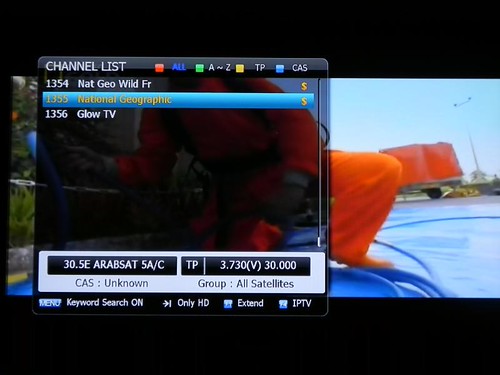
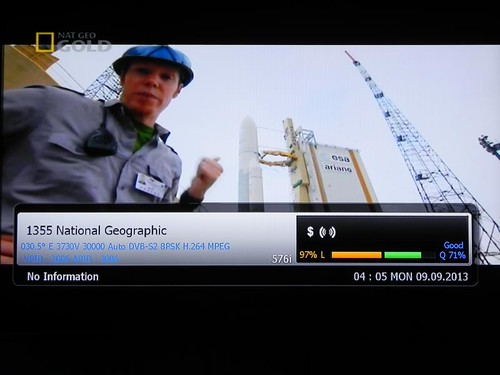
The biss key is working on the said channel on frequency 3730 V DVB-S2 8psk 30000 Africasat 1a at 46.0°E C Band>>>>Nat Geo Gold biss key - Biss key
Thanks for this wonderful illustration I will try it and see.
you need a bigger dish, 130cm/prime focus for that any way can you post the pics we see pliz
90cm is enough to nail both ses5 and w3a 7°E, make sure that TV zimbo frequency is 70% . you will to forfeit those channels of w3a Europe B beam. Viva fta
Good Morning,
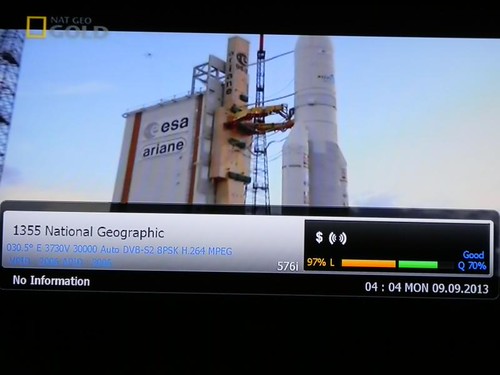
The biss key is working on the said channel on frequency 3730 V DVB-S2 8psk 30000 Africasat 1a at 46.0°E C Band>>>>Nat Geo Gold biss key - Biss key
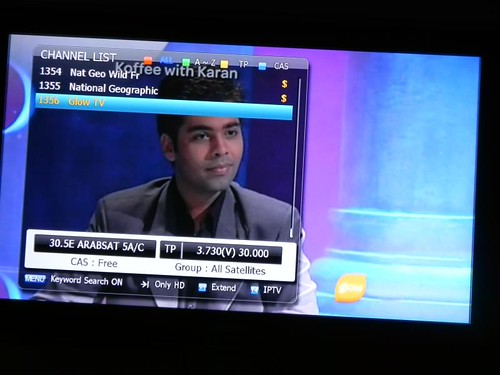
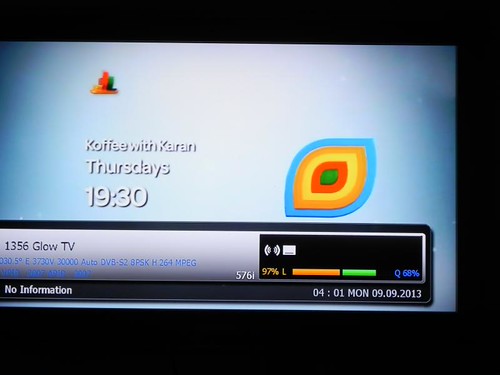
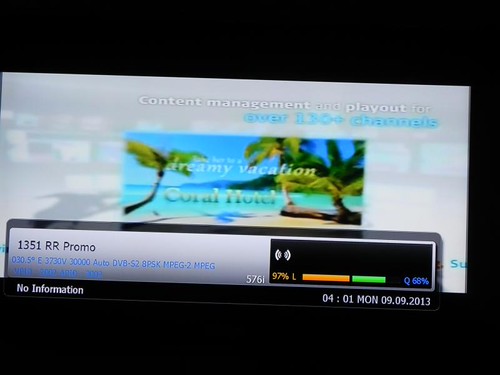
Also on the same frequency, Glow Tv from South Africa which is currently on OpenView HD platform on SES 5>>
1.8 meter prime focus dish sufficient to lock on Africasat 1a at 46.0°E C Band in most parts of Africa
AzerSpace 1 / Africasat-1A C-band Africa and Europe

SO MUCH MORE FOR FREE!!!!!!!!
which direction can place my dish to recieve this sat?

CHIEF SOITA
Senior Member
- Feb 3, 2013
- 153
- 54
Munyaga,
can we say then 130cm offset dish has got more signal reception than 1.8m prime focus
In essence an offset dish performs better than a prime focus. For example a forum member said he had installed for a client nss12 on a 1.8m prime focus and got 75% quality on the ktn transponder. I did some fine tuning on my 90cm and getting 76% quality on the ktn transponder and 70% on the k24 one. Also getting Tbc cln feed at 70. Interesting to watch the debates on the floor of the Tanzanian parliament.
CHIEF SOITA
Senior Member
- Feb 3, 2013
- 153
- 54
More channels on frequency 12603 v 30000, w3a 7° ntv live and kicking
@ monkey13 sent you a pm some time back never responded. I have sent you another.
mah-mah123
JF-Expert Member
- Apr 8, 2013
- 250
- 22
More channels on frequency 12603 v 30000, w3a 7° ntv live and kicking
r u sure #i still hav no pic or sound

kungu1
JF-Expert Member
- Jul 23, 2012
- 443
- 588
- Thread starter
- #2,773
Eutelsat 25B / Es'hail-1 @ 25.5° East fired up this week.
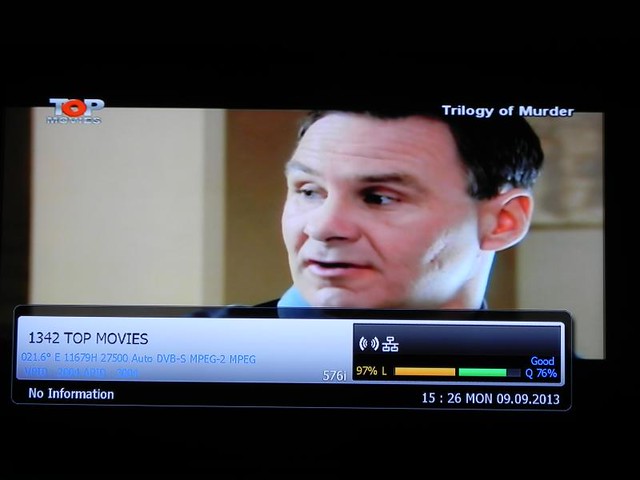
From tests carried on a 120cm offset dish, I can get the 2 frequencies currently on the Mena footprint.
Eutelsat 25B Ku-band MENA

Frequency 11665 V DVB-S SR 27500
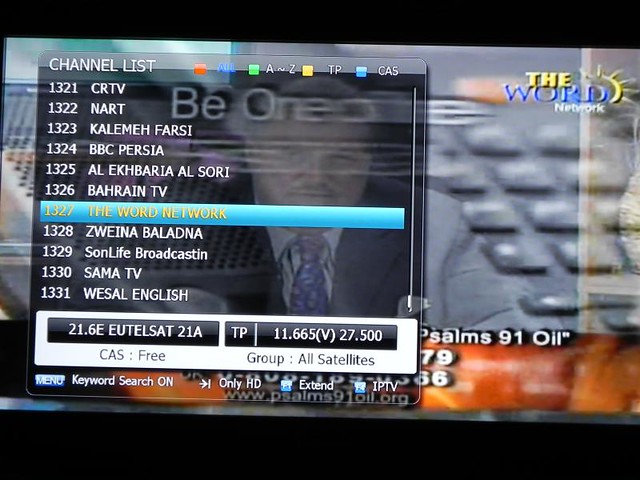

and Frequency 11679 H DVB-S SR 27500
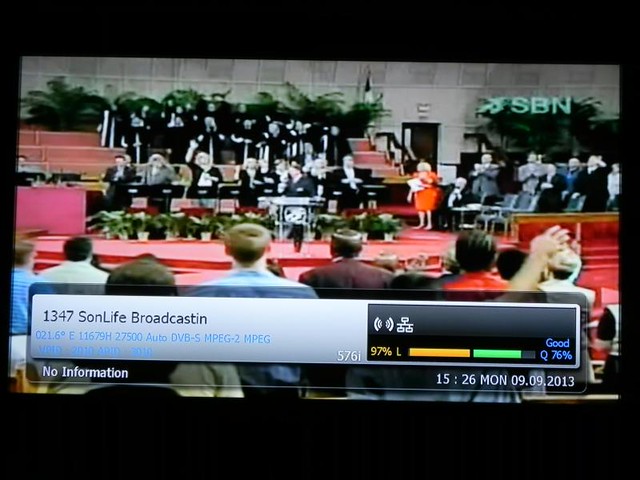
Eutelsat 25B ([SIZE=+1]@ 25.5° East) [/SIZE] is close to Badr ([SIZE=+1]@ 26° East) [/SIZE] with less than 0.5 degree difference thus you can hit both birds with one lnb.
Yet to test on 90cm offset dish.
Eutelsat 25B signal strength is higher than badr's
Another footprint of interest on Eutelsat 25B/Es'hail-1 is the East Beam>>> Eutelsat 25B Ku-band East

From the above snapshot, East beam covers part of East Africa
The East Beam frequencies are yet to be fired up.
The Eutelsat 25B/Es'hail 1 satellite, a joint venture satellite of Eutelsat & Qatar Satellite Company, launched on August 29, went into commercial service on the morning of October 29, at 25.5 degrees East.
Expect Channels from Qatar the likes of Al jazeera sports & news package on the bird as Al jazeera is Qatar owned.
Keep you posted on the skies
Happy Hunting.
From tests carried on a 120cm offset dish, I can get the 2 frequencies currently on the Mena footprint.
Eutelsat 25B Ku-band MENA
Frequency 11665 V DVB-S SR 27500
and Frequency 11679 H DVB-S SR 27500
Eutelsat 25B ([SIZE=+1]@ 25.5° East) [/SIZE] is close to Badr ([SIZE=+1]@ 26° East) [/SIZE] with less than 0.5 degree difference thus you can hit both birds with one lnb.
Yet to test on 90cm offset dish.
Eutelsat 25B signal strength is higher than badr's
Another footprint of interest on Eutelsat 25B/Es'hail-1 is the East Beam>>> Eutelsat 25B Ku-band East
From the above snapshot, East beam covers part of East Africa
The East Beam frequencies are yet to be fired up.
The Eutelsat 25B/Es'hail 1 satellite, a joint venture satellite of Eutelsat & Qatar Satellite Company, launched on August 29, went into commercial service on the morning of October 29, at 25.5 degrees East.
Expect Channels from Qatar the likes of Al jazeera sports & news package on the bird as Al jazeera is Qatar owned.
Keep you posted on the skies
Happy Hunting.

drandonzero
JF-Expert Member
- Jun 3, 2013
- 214
- 86
Good Evening,
To the east.
Use NSS 12 satellite as your start point for tracking Africasat 1a at 46.0°E C Band.
Happy Hunting.
I have an 8 feet that am currently using on arabsat 5c, can i use to nail NSS 12 mainly to recieve channels like DUHOK? A fan of football...
thanks
i thought 4950h was cheaper than 4922.
i now think 4922a is the best buy
do you specifically want the 4950H, ama any strong? Am told 4950M at Coast is 3k, can u confirm? If software/patch is same for the different models, then, the decoders are almost same then, shida ni bei ya receiver. I like the interface ya 4950, would trade my 4922 for it :banplease::A S 39:
TING package has left DSTV position at 36E now on Amos 5 @17E tp 12418V30000 and more channels added.The most interesting to me is UBC which was giving me more headache on Intelsat 906.Enjoy while they last.
Confirmed

kungu1
JF-Expert Member
- Jul 23, 2012
- 443
- 588
- Thread starter
- #2,780
More channels on frequency 12603 v 30000, w3a 7° ntv live and kicking

Good Morning,
The channels on Eutelsat 7 East are part of Azam Pay Tv package from Tanzania.
More Channels to be added soon include>>>>
Movies:
Sinema Zetu
MGM Movies
African Movie Channel
Zee Cinema
Star Gold
Entertainment:
Azam 1
Azam 2
Fox Entertainment
FX
e.tv
ZOOM
Star Plus
Zing
Colours
Euro Channel
Sports:
Setanta Africa
Kombat Sports
MCS Compact
MCS Extreme
Music:
MTV BASE
MTV India
Box TV
Educational:
Nat Geo
Discovery Investigation
Discovery Science
Lifestyle:
Fine Living
Outdoor
Landscape
News:
BBC News
Al-Jazeera - English
Al-Jazeera - Arabic
ENCA
Times Now
Kids:
Kids Co
Nickelodeon
Al-Jazeera - Kids
Local Channels:
TBC
Clouds TV
ZBC
Channel 10
Mlimani TV
KBC
Citizen
K24
KTN
Azam TV offerings:
1. Best quality for reasonable/affordable price2. High volume, low margin
3. Tanzanian Company for Tanzanians
4. Pan - African service based in Tanzania
5. Single bouquet - No rich , poor man packages
6. Facility to record what your watching
7. Electronic programme guide
9. Azam One - African contents, mostly in Swahili
10.Azam Two - International channels from around the world, some will be dubbed in Swahili
11. Sinema Zetu - 24 hours Swahili movies
12. Sporting and non sporting opportunities for live and recorded contents
13. Tabata site - 2 studios by January 2014 for indoor shows/talk show
14.Country wide installers/distributors from cities to small towns
15.Full installation (Dish, decoder & installation fee) for TZS 95,000/= only - This is promotion launch price.
16. 50+- channels for TZS 12,500/= only
17. East African FTA (Free to A air) channels always available, even if you forget to pay subscription.
18. Open door/switch on signal by mid November for 35+ channels for free
19. Official launch before end of November
Similar Discussions
-
What are the main differences between GB WhatsApp and official WhatsApp?
- Started by faraz ahmad khan
- Replies: 1
-
-
How Modern Smartphones Outperform Apollo 11 Computers and What’s Next in Tech
- Started by neveryohana
- Replies: 1
-
 UCC Targets 90% Nationwide 4G Coverage as Satellite Internet Expansion Continues
- Started by Eronda
- Replies: 0
-