top 10 most advanced warplane in the world
10- J-10
The J-10 adopts a tailless delta-canard aerodynamic layout, which was originally developed for the cancelled J-9 fighter. The aircraft has the horizontal control surfaces moved forward to become a canard in front of the wing. When the aircraft pitches up, instead of forcing the tail down decreasing overall lift, the canard lifts the nose, increasing the overall lift. Because the canard is picking up the fresh air stream instead of the wake behind the main wing, the aircraft can achieve better control authority with a smaller-size control surface, thus resulting in less drag and less weight.
The aircraft employs an adjustable, chin-mounted air intake that supplies air to the single Lyulka-Saturn AL-31FN afterburning turbofan jet engine. The upper portion of the air intake is incorporated with an intake ramp designed to generate a rearward leaning oblique shock wave to aid the inlet compression process. The ramp sits at an acute angle to deflect the intake air stream from the longitudinal direction. This design created a gap between the air intake and the forward fuselage, and requires six small beams to enhance the structure for high-speed flight. This air intake design was reportedly replaced by a diffuser supersonic inlet (DSI) on the latest J-10B variant.
The tailless delta-canard configuration is inherently aerodynamically unstable, which provides a high level of agility, particularly at supersonic speeds. However, this requires a sophisticated computerised control system, or fly-by-wire (FBW), to provide artificial stabilisation and gust elevation to give good control characteristics throughout the flight envelope. The J-10 uses a digital quadruplex (four-channel FBW system developed by the 611 Institute. The software for the FBW system was developed by the 611 Institute using ADA language.
The pilot sits in the cockpit located above the air intake and in front of the canard. The two-piece bubble canopy gives the pilot great vision at all directions, a vital feature during air-to-air combat. The onboard digital flight control computer flies the aircraft for the pilot, providing automatic flight coordination and keeping the aircraft from entering potentially dangerous situations such as unintentional slops or skids. This therefore frees the pilot to concentrate on his intended tasks during the combat.
The two-seater J-10S fighter-trainer is identical to the single-seater variant in performance and avionic configuration, but has its forward fuselage stretched to accommodate a second pilot seat. Two pilots sit in tandem in the two-seat cockpit with one single large bubble canopy. An enlarged dorsal spine accommodates additional avionic for the second pilot. The aircraft can be used for pilot training or as a standard fighter.
Crew: One (J-10); Two (J-10S)
Powerplant: 1X Russian Salyut AL-31FN turbofan
Thrust (dry): 76.2kN (7,770kg, 17,130 lb)
Thrust (afterburning): 122.55kN (12,500kg, 27,557 lb)
In-flight refuelling: Yes
Weapon: 23mm single-barrel cannon
External Hardpoints: 11 (five under the fuselage centerline; six under the wings)
"J-10 is still to have see lot of action and its fighter plane from china so its hard to say about the future prospect of this plane right now."
Based on the MiG-29M OTV,
MiG-35 (Nato reporting name Fulcrum F), is equipped with advanced avionic suite comprising of a modern glass cockpit designed with three 6x8 inch flat-panel LCDs and full HOTAS controls, digital map, helmet-mounted sight. The latest Zhuk-AE active electronically scanning array (AESA) radar is mounted on this aircraft. This radar was developed with modular approach, enabling upgrading existing Zhuk ME/MSE radars, into the phased array equipped MFE/MSFE standard, deployed in MiG-29/Su-27 platforms.
MiG-35 uses an integral aerial refuelling probe, which is required as 'must have' for the Indian MRCA program.The MiG-35 is fitted with western standard Mil-1553 bus and advanced Russian made weaponry. Reliability and serviceability have been improved, reducing operating cost and improving serviceability by 2.5 times (compared to older MiG-29s). MiG-35 is The MiG-35 has a 'glass cockpit' based on Russian avionics or western systems (mostly French).equipped with an optronic target tracker, identical to the system used on the
Su-30MKI. For precision air-to-ground attack missions, the aircraft can be equipped with a conformal electro-optical targeting module, installed under the right air intake. The aircraft is equipped with radar warning, electro-optical missile launch warning and laser warning sensors, and integral active self protection (jamming, chaff and flare) as part of the integral self-defense system. The aircraft has four additional hardpoints and can haul an external payload in excess of six tons.
Phazotron Zhuk AE AESA radar is installed in the production version of MiG-35Most of the systems introduced in the MiG-35 can be applied to older MiG-29s through upgrading programs.
The aircraft is powered by two RD-33 MK engines digitally controlled smokeless engines, producing 9000kgf of thrust each. This type is an improved and uprated version of the standard RD33 engine. The engine was developed to power the carrier based MiG-29K and modernized version MiG-29M/M2. The prototype demonstrated in Bangalore did not have thrust vector exhausts, but, according to the manufacturer, these can be installed in production aircraft.
"MIG 35 another plane in the series of MIG lineup and because of there reputation they have worked hard and made changes according to western standards but still have to play action role in the coming future."
The cockpit (available in single- or twin-seat configurations) is situated forward in the fuselage design, aft of the radar-housing nose cone assembly. The pilot(s) sit (s) under a two-piece canopy offering up excellent views from within the cockpit. The canopy consists of the forward fixed windscreen and the main component which, itself, is hinged at the rear. The contoured fuselage sports small side-mounted strakes near the cockpit and all-moving canard foreplanes. The strakes serve to move stagnant air generated by the canard foreplanes. As the Typhoon is an inherently unstable platform (her center of gravity is located aft of center itself), the canards play a crucial role in various aerodynamic aspects of the aircrafts flight envelope including pitch control. Canard foreplanes allow for improved turning and can improved total drag/lift during landing and take-off while providing greater agility at speed. Their forward position in the design also allows them to be of reduced drag as opposed to rear-mounted tail planes found in traditional fighter designs.
The main wing assemblies are of a delta wing design featuring extensive sweep along the leading edge and little to no sweep along the straight trailing edge. Construction includes carbon-fiber composite rib and spars with metal only used along the weapon hardpoints. Up to 70% of the Typhoon's construction revolves around use of carbon-fiber composites, titanium and aluminum-lithium. Control surfaces are fitted to both the leading and trailing edges. Control is aided by trailing edge flaperons which accomplish the combined tasks of conventional flaps, elevators and ailerons and are further aided by the canard foreplanes. An airbrake is fitted to the ventral side while leading-edge flaps help in landing. The delta wing design approach also allows for multiple external underwing and underfuselage hardpoints and number thirteen in the Typhoon. Jammer pods are ingeniously contained at the clipped wingtips so no ordnance is used at those areas. The Typhoon makes use of basic stealth design features including implementation of a small radar cross section. Some areas of the aircraft are coated over in special materials to absorb incoming radar waves. The radar system itself diffuses its own signals to an extent.
Intakes are mounted directly beneath the fuselage and are split at their center, allowing each duct to aspirate their respective engine and further break up incoming radar signals from reaching the engine. Each intake opening is rectangular in shape and slightly angled down towards the fuselage centerline. The intake sports a hinged lower "lip" and the center splitter plate ensures proper, uninterrupted airflow to each engine. Its low fuselage placement is also deemed optimal for this particular aircraft design layout. The empennage is dominated by a single, large-area vertical tail fin (similar to the one as found on the Panavia Tornado but of a smaller overall size) mounted between the two engine compartments. The engines exhaust through conventional nozzle rings at the rear and base of the vertical tail fin though there has always been talk of replacing these with vectoring nozzles in the future. There is a small noticeable intake at the trailing edge base of the fin. As a delta wing design, the Typhoon makes no use of traditional horizontal tail planes and instead uses the canard foreplanes and wing-mounted surfaces for basic flight functions (aided by computers).
Her undercarriage is conventional, sporting two single-wheeled main landing gear legs and a single-wheeled nose landing gear leg. The main legs retract inwards towards centerline under each wingroot while the nose leg retracts backwards under the split intake system. Each leg is fitted with carbon-carbon brakes that are cooled by a fan system and furthermore controlled by an automated computer function. The undercarriage as a whole is designed to withstand a good deal of stress, allowing them to stay exposed at constant Angle-of-Attack (AOA) during landings. This affords the Typhoon a relatively short landing run of just 2,300 feet.
"Eurofighter have western avionics with smart bombs and weapon system aboard but still need to see the action in war but lacks the vector thrust like Russians have so hard to say in close counter fights."
7 - Gripen NG
The JAS 39 Gripen is a fourth-generation fighter manufactured by Swedish company Saab. Designed as a swing-role type capable of performing multiple missions, the Gripen entered service with the Swedish air force in 1995, replacing its Saab Drakens and Viggens.
Powered by a single Volvo Aero RM12 afterburning turbofan based on the General Electric F404, the Gripen is capable of speeds of up to Mach 2 and has a maximum range of 2,800km (1,510nm).
Weapon options include a 27mm Mauser internal cannon, Raytheon AIM-9 Sidewinder and AIM-120 AMRAAM air-to-air missiles and Raytheon Paveway II laser-guided bombs. The aircraft is also being used to support the development of MBDA's Meteor beyond visual-range air-to-air missile.
To date 236 Gripens have been ordered, with the Swedish air force to receive the vast majority, at 204 aircraft. Export customers are the Czech Republic (14), Hungary (14), South Africa (26) and Thailand (12), with some of their aircraft being remanufactured Swedish JAS 39s. The UKs Empire Test Pilots' School also uses the Gripen for undergraduate training under an arrangement with Saab.
Next Generation
An upgraded, two-seat variant dubbed the Gripen Demo first flew in April 2008, with this to de-risk technologies for a planned Gripen NG (Next Generation) production aircraft. The demonstrator is powered by a GE F414G which will enable the type to sustain a supercruise performance of M1.1 without using its afterburner.
Compared to the D-model aircraft, the Gripen Demo has an increased maximum take-off weight of 16,000kg (35,200lb), 40% more internal fuel capacity and offers a range of up to 4,070km.
Crew: 1 (2 for JAS 39B/D)
Powerplant: 1× Volvo Aero RM12 afterburning turbofan
# 1 × 27 mm Mauser BK-27 cannon 120 rounds
# 6 × Rb.74 (AIM-9) or Rb 98 (IRIS-T)
# 1 × 27 mm Mauser BK-27 cannon 120 rounds
# 4 × Rb.99 (AIM-120) or MICA
# 4 x Rb.71 (Skyflash) or Meteor
# 4 x Rb.75
# 2 x KEPD.350
# 4 x GBU-12 Paveway II laser-guided bomb
# 4 x rocket pods 13.5 cm rockets
# 2 x Rbs.15F anti-ship missile
# 2 x Bk.90 cluster bomb
# 8 x Mark 82 bombs
# 1 x ALQ-TLS ECM pod
"Recent reports have came up that new Gripen NG will have lots of new upgrades far better than its counterparts and along with this it is participating in MMRCA , undergoing trail runs in India , one of the factor to decided to find out best."
Rafale is a twin-jet combat aircraft capable of carrying out a wide range of short and long-range missions, including ground and sea attack, air defence and air superiority, reconnaissance, and high-accuracy strike or nuclear strike deterrence.
The aircraft has been developed for the French Air Force and Navy. 61 aircraft were ordered (36 for the air force and 25 for the navy).
The Rafale M entered service in 2001, and ten aircraft are operational on the Charles de Gaulle aircraft carrier.
Rafale B and C entered service with the French Air Force in June 2006, when the first squadron was established. The second air force squadron was set up in 2008.
Navy Rafale F1 standard fighters have air-to-air capability. Deliveries to the navy of the F2 standard, with air-to-ground missiles, began in May 2006 and 17 were delivered in May 2008. F1 aircraft are to be upgraded.
A 3.1bn ($3.89bn) contract to develop the fully capable F3 standard aircraft was awarded to Dassault Aviation (1.5bn), Snecma (600mn), Thales (500mn) and other French defence contractors by French Ministry of Defence in February 2004. An order for 59 F3 aircraft, 47 for the air force (11 two-seat and 36 single-seat) and 12 (single-seat) for the navy, was placed in December 2004. The Rafale F3 was certified in July 2008 and will be delivered from 2009. The first squadron of 20 aircraft will be in service by the end of 2009. The contract also includes the upgrade of Rafale F2 aircraft.
As of July 2008, 120 Rafales have been ordered (82 for the French Air Force and 38 for French Navy), with 35 delivered to the air force and 23 to the navy.
In March 2007, three French Air Force and three Navy Rafale fighters began deployment in Tajikistan in support of the Nato International Security Assistance Force (ISAF) in Afghanistan.
" Rafale is semi stealth fighter plane with twin engine to support high speed performance including french avionics which makes it better to place at this position ".
, night, combined fighter and attack aircraft and can be refueled in flight. The F/A-18 multi-mission aircraft can operate from either aircraft carriers or land bases. The F/A-18 fills a variety of roles: air superiority, fighter escort, suppression of enemy air defenses, reconnaissance, forward air control, close and deep air support, and day and night strike missions. The F/A-18 Hornet replaced the F-4 Phantom II fighter and A-7 Corsair II light attack jet, and also replaced the A-6 Intruder as these aircraft were retired during the 1990s.
The combat-proven F/A-18 Hornet is the first tactical aircraft designed from its inception to carry out both air-to-air and air-to-ground missions. The F/A-18, (models A, B, C and D), can deliver conventional air-to-air, air-to-ground decoy expendables, and can carry airborne control pods for various missions. The combination of excellent thrust-to-weight ratio, and maneuverability an unmatched combat capability.
The A and C models have AN/APG-65 radars and the B and D models have AN/APG-73 radars. The AN/APG-65 and AN/APG-73 airborne radars provide excellent long-range, all-weather, lookup and lookdown capability over land or over sea. Communications for all four models include dual UHF/VHF radios, one KY-58 secure radio, and a two-way Link 4 capability. These F/A-18 aircraft also have Forward Looking Infrared (FLIR) capabilities for passive detection and ranging. Later model aircraft can actively and specifically interrogate other aircraft identification beacons.
The F/A-18 is in service with the U.S. Navy, U.S. Marine Corps and the air forces of Canada, Australia, Spain, Kuwait, Finland, Switzerland, and Malaysia. As of May 1999 Hornet pilots had accumulated more than 3.7 million flight hours and, in the process, are establishing new records daily in safety, reliability, maintainability and mission performance.
A key aspect of the Hornet's popularity with pilots is the ease with which the aircraft can be converted from fighter to strike mode and back again; it's as easy as flipping a switch. During Operation Desert Storm, F/A-18s routinely performed fighter and strike missions on the same sortie. Fulfilling a variety of roles-air superiority, fighter escort, suppression of enemy air defenses, reconnaissance, forward air control, close air support, and day and night strike missions-the F/A-18 has proven to be the most versatile combat aircraft in service.
The Hornet was designed to be reliable and easily maintainable. These factors result in significantly lower operating and maintenance costs for the F/A-18 compared to other U.S. Navy fighter and attack aircraft; and life cycle costs comparable to other modern multi-role aircraft. Survivability is another key feature of the Hornet. The F/A-18 uses a variety of systems and technologies to increase its likelihood of reaching a target undetected, of escaping unhurt if detected, and of returning its crew safely if it is hit.
The F/A-18 has a digital control-by-wire flight control system which provides excellent handling qualities, and allows pilots to learn to fly the airplane with relative ease. At the same time, this system provides exceptional maneuverability and allows the pilot to concentrate on operating the weapons system. A solid thrust-to-weight ratio and superior turn characteristics combined with energy sustainability, enable the F/A-18 to hold its own against any adversary. The power to maintain evasive action is what many pilots consider the Hornet's finest trait. In addition, the F/A-18 was also the Navy's first tactical jet aircraft to incorporate a digital, MUX bus architecture for the entire system's avionics suite. The benefit of this design feature is that the F/A-18 has been relatively easy to upgrade on a regular, affordable basis.
The F/A-18 has proven to be an ideal component of the carrier based tactical aviation equation over nearly two decades of operational experience. The only F/A-18 characteristic found to be marginally adequate by battle group commanders, outside experts, and even the men who fly the Hornet, is its range when flown on certain strike mission profiles. However, the inadequacy is managed well with organic and joint tanking assets.
During the initial hours of Desert Storm, 89 Navy and 72 Marine Corps F/A-18C's conducted both defense suppression and strike missions against Iraqi targets. the Navy Hornets flew 4,449 sorties and the Marine Corps' F/A-18C's flew 4,936 sorties resulting in a combined total of 4,551 strikes against targets during Operation Desert Storm. A total of 174 American Hornets (90 Navy; 84 Marines) participated in the war; 26 Canadian models, known as the CF-18, also participated in Desert Storm. Only three Hornets were lost during the war, one of them in a noncombat accident.
The F/A-18 has been upgraded regularly since entering service in 1983. In November 1989, the first F/A-18s equipped with night strike capability were delivered. Since 1991, F/A-18s have been delivered with F404-GE-402 enhanced performance engines that produce up to 20 percent more thrust than previous F404 engines. The Hornet's two engines deliver about 36,000 pounds combined thrust and a top speed of more than Mach 1.8.
Since May 1994, the Hornet has been equipped with upgraded radar - the APG-73 -, which substantially increases the speed and memory capacity of the radar's processors. In addition, today's Hornets have a laser target designator/ranger, housed within the targeting forward-looking infrared sensor that enables the aircraft to deliver precision laser-guided bombs with pinpoint accuracy.
" F-18 no doubt one the greatest fighter , seen lots of action with superior avionics from Boeing brings it to this spot but lacks vector thrust compared to Russian counterparts , and in one the dog fight display in US with Sukhoi , it was out gunned. "
The Sukhoi Su-30M is a multi-role two-seater fighter, broadly comparable to the American F-15E. The Su-30MK is the export version of the aircraft. The fighter is a development of the Su-27 (Flanker) family, designed by the Sukhoi Design Bureau of Moscow and is manufactured by the Irkut Corporation.
The aircraft is equipped with similar avionics and thrust vectoring as the Su-37, for superior combat agility and manoeuvrability. The aircraft is armed with precision anti-surface missiles and has a stand-off launch range of 120km.
The Indian Air Force ordered 40 aircraft in 1996 and an additional ten aircraft in 1998. 18 Su-30K have been delivered which will be upgraded to MKI standard, starting in 2006.
"The Sukhoi Su-30M is a multi-role two-seater fighter, broadly comparable to the American
F-15E."
First deliveries of ten Su-30MKI full specification aircraft with thrust vectoring and phased array radar took place in September 2002 and deliveries were completed in December 2004.
Hindustani Aeronautics (HAL) is also contracted to build 140 aircraft in India between 2003 and 2017, under a licensed production agreement. The first indigenously assembled aircraft was delivered in November 2004.
38 Su-30MKK and 24 navalised Su-30MK2 aircraft, which do not have thrust vectoring capability, are in service with the Chinese Air Force.
In 2003, Malaysia ordered 18 Su-30MKM aircraft. The first two were delivered in May 2007. Four more were delivered in 2007 and four in March 2008 Deliveries are scheduled to conclude by the end of 2008. Also in 2003, Indonesia ordered two Su-30MKK aircraft. A further three Su-30MK2 aircraft were ordered in August 2007.
In March 2006, Algeria placed an order for 28 Su-30MKA aircraft. The first was delivered in December 2007. In July 2006, Venezuela placed a contract for 24 Su-30MKI aircraft. The first eight were delivered in May 2007 and deliveries concluded in August 2008. An order for 12 additional aircraft is planned.
"Sukhoi`s new and most admired series of planes with western avionics , super cruise speed , AWACS missile system and vector thrust can make it one of the best 4 th generation fighter plane in the List ".
The F-35 Lightning II joint strike fighter integrates advanced very low observable stealth into a supersonic, highly agile 5th generation fighter that provides the pilot with unprecedented situational awareness and unmatched lethality and survivability. With its host of next-generation technologies and unprecedented capabilities, the F-35 is the worlds most advanced multirole fighter.
*Performs as a first-day-of-the-war fighter
*Dominates all adversaries in the air or on the surface
*Has the ability to survive and prosecute the most formidable threats expected to emerge beyond 2020
*Conducts air-to-air and air-to-ground combat missions simultaneously
*Incorporates the most powerful and comprehensive sensor and mission avionics package ever to fly in a fighter
o F-35A conventional takeoff and landing (U.S. Air Force and the air forces of Italy, Netherlands, Turkey, Canada, Australia, Denmark, Norway)
o F-35B short takeoff/vertical landing (U.S. Marine Corps, U.K. Royal Air Force and Royal Navy, Italian Air Force and Navy)
" F-35 the Future plane of NATO , stealth , best avionics , vertical take off and 5 th generation fighter gives its 3rd Spot , what it lacks could be high cost of production thus cutting down the number of planes , single engine . "
Development of Russia's LFI (logkiy frontovoi istrebitel) lightweight tactical fighter has been dramatically accelerated after the Russian Air Force decided its priorities for the next 10 years. Revealed here exclusively as the I-2000 (Istrebitel {fighter} 2000) project, the aircraft is due to become operational in 2005 as Russia's basic front-line fighter. It is also likely to become the leading export product of the Russian aircraft industry. Available information on the I-2000 indicates that it will be closely comparable to the US Joint Strike Fighter, operating in both the air-to-air and air-to-surface roles.
The aircraft comes from a long line of Mikoyan lightweight fighters, such as the MiG-15 and MiG-21. It is about the same size as the MiG-21 (shorter by 1.3m but wider by 4.5m), but noticeably smaller than its immediate predecessor, the MiG-29. Take-off weight is estimated at around 12 tonnes; maximum take-off weight at about 16 tonnes.
In early 2002 Sukhoi was chosen as prime contractor for the planned Russian fifth-generation fighter is called the PAK FA [ Perspektivnyi Aviatsionnyi Kompleks Frontovoi Aviatsyi - Future Air Complex for Tactical Air Forces]. This intermediate class twin-engined fighter will be larger than a MiG-29 and smaller than a Su-27.
The aircraft will feature a long combat radius, supersonic cruise speed, low radar cross section, super maneuverability, and the ability to make short takeoffs and landings. In accordance with the technical requirements, the PAK FA will have a normal takeoff weight of 20 tons, which is close to the average normal takeoff weight of the two American airplanes, the F-35 JSF (17.2 tons) and the F-22 (24 tons). The new fighter (a medium version) will have a traditional wing form, though the experience gathered as a result of Berkut's test flights will be taken in consideration when designing the fighter. It is supposed that it will be created using the Stealth technology, and equipped with two AL-41F engines by the Saturn scientific and industrial enterprise, a radar system with an active phased array (to all appearances, it will be produced by the Fazatron-NIIR corporation), and high-precision weapons.
The government commission decided on 26 April 2002 to choose the Sukhoi holding company as the head company to develop and produce the fighter of the fifth generation. The prototype of the PAK FA would take-off in 2006 and that in 2010 the aircraft would be ready for series production. The first deliveries, both for Russian armed forces and for export, would be possible in 2011-12.
The new airplane is being proposed to be brought from the concept design to a prototype series in less than 9 years. Historically, fourth and fifth generation fighters have not been created in less than 15 years. The Russian government has promised to allocate 1.5 billion dollars for the PAK FA through 2010. But the Russian Air Force is receiving less than 200 million dollars a year during this period, and will spend it primarily on other needs.
The prices and sources of funding will determine the destiny of the whole program. To date officials agree that the program will cost $1.5 billion. However, $1.5 billion is the sum needed for creating a new generation of avionics for the fighter (considering the fact that pre-production models of the phased array have already been produced, and will soon be tested). Completion of the AL-41F engine (present readiness is 30 percent) will require, in the opinion of the boss of Rosaviakosmos, 600 - 800 million dollars. Saturn said that launching of production of the AL-41F engine would take $150 million. An improved version of the AL-31F will be used on the aircraft originally (though it is not clear how these heavy motors are reconciled with the concept of a 20-ton fighter). The upgrade of these engines will require expenditures of 1.2-1.5 billion dollars. And finally, designers will have to spend several hundred millions of dollars on creating a new airframe.
According to some reports, India and Russia have agreed to jointly develop this fifth-generation fighter, under a scheduled with enter into service in 2009. This would be the first such joint development venture between the two countries.
" T-50 Russia`s first 5th generation plane , twin super cruise engine , best avionics system , Sukhoi background and out performance in simulation by USAF brings to this spot though still need to be tested but west have acknowledged it. JSF and T-50 will be future competitors and list could change according that. "
The F-22A Raptor advanced tactical fighter entered service with the US Air Force in December 2005. The USAF requirement is for a fighter to replace the F-15, with emphasis on agility, stealth and range.
Developed at Aeronautical Systems Center, Wright-Patterson Air Force Base, Ohio, the F-22A Raptor is a supersonic, dual-engine fighter jet, which has won the 2006 Robert J Collier Trophy from the American National Aeronautic Association (NAA).
In April 2009, production of the F-22 fighter jet was officially terminated when Defense Secretary Robert Gates announced that the Pentagon would end the Lockheed-run F-22 programme and increase the production of the joint strike fighter. The availability of the cheaper and more-versatile F-35 fighter aircraft has resulted in production ceasing on the F-22 fighter jet.
F-22A development
By 1990 Lockheed Martin, teamed with Boeing and General Dynamics, had built and flown the demonstration prototype aircraft, designated YF-22. The first F-22 fighter aircraft was unveiled in April 1997 and was given the name Raptor.
"Carbon-fibre composites have been used for the F-22 fuselage frame."
In September 2002, the USAF decided to redesignate the aircraft F/A-22 to reflect its multi-mission capability in ground attack as well as air-to-air roles. The aircraft's designation was changed again to F-22A when it achieved initial operating capability (IOC) in December 2005.
The decision to proceed to low-rate initial production (LRIP) was authorised in August 2001 and Lockheed Martin delivered 49 aircraft under LRIP contracts.
Initial operational test and evaluation began in April 2004 and was successfully completed in February 2005.
A further 60 Raptors were ordered in July 2007, bringing the total ordered to 183, with production to 2011. In November 2008, $40m of funding for four additional raptors was approved by the Pentagon, increasing the total ordered jets to 187, with the buying scheduled in the second half of the fiscal year 2009. The USAF has a total requirement of 243 aircraft but funding was not made available for more than 187. By September 2009, approximately 145 aircraft had been delivered to the USAF. Holloman AFB is expected to deliver another 17 aircraft by the end of 2010.
The first operational wing of F-22A Raptors was Langley AFB in Virginia with a fleet of 40 aircraft. Elmendorff AFB, Alaska, became the second in August 2007 and Holloman AFB, New Mexico the third in June 2008. Operational Raptors will also be based at Hickam AFB Hawaii.
The F-22 achieved full operational capability in December 2007.
In February 2007, 12 F-22 aircraft began the first overseas deployment of the fighter at Kadena Air Base in Japan. The aircraft returned in May 2007. In January 2009, 12 F-22 jets were deployed at the Kadena Air Base from Langley Air Force Base in Japan for three months as a part of the 27th Fighter Squadron.
During flight tests, the F-22A has demonstrated the ability to 'supercruise', flying at sustained speeds of over Mach 1.5 without the use of afterburner.
Lockheed Martin has put forward proposals for a fighter-bomber version of the F-22, the FB-22, which will have larger delta wings, longer range and the ability to carry an external weapons payload of 4,500kg and total weapons


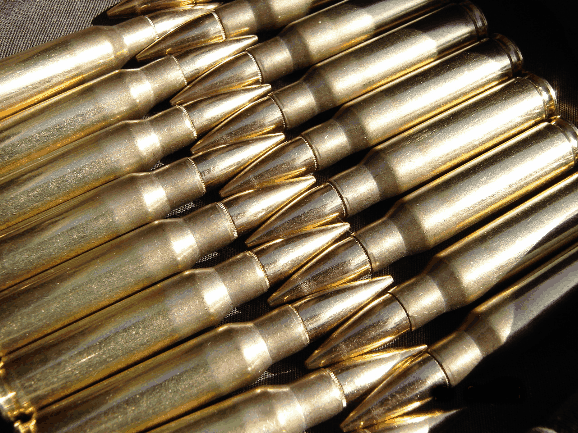
 Israel is the only country in the world that requires military service from both male and female citizens with few exceptions.
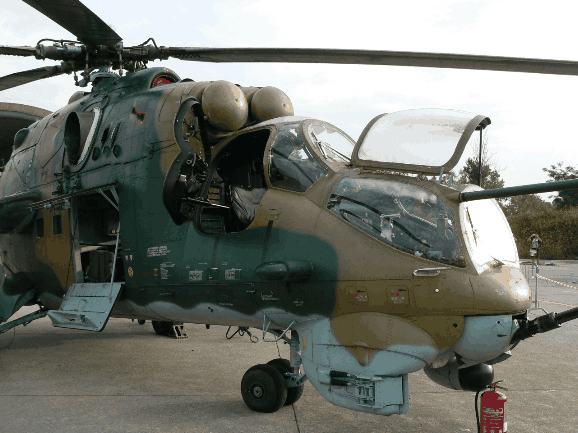 Russia has undergone numerous changes throughout its military history dating back to 863. The modern day army is known as the Russian Ground Force and was founded in 1992.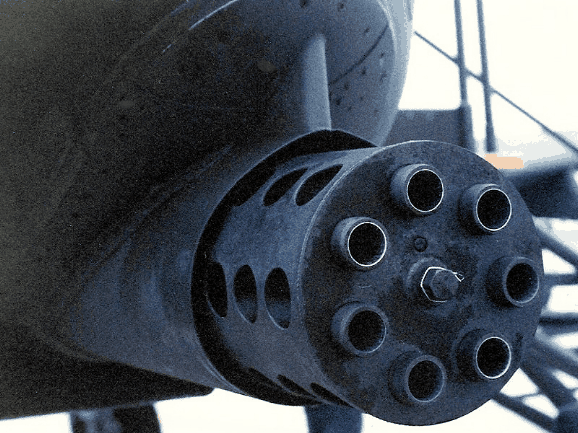
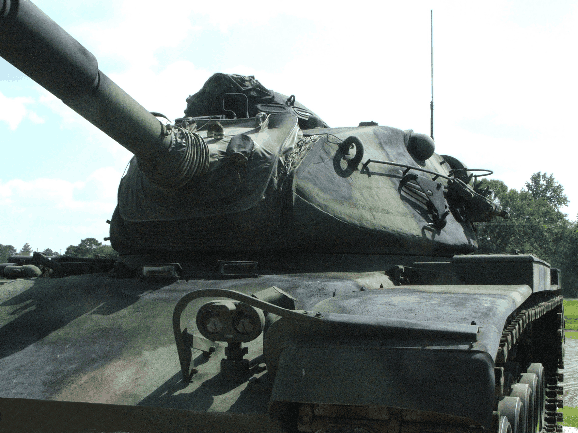 The North Korean Peoples Army was established in 1939 and has an impressive force of more than one million soldiers. When reserve unit numbers are counted in this total, estimates are more than seven million soldiers who could be activated if needed.
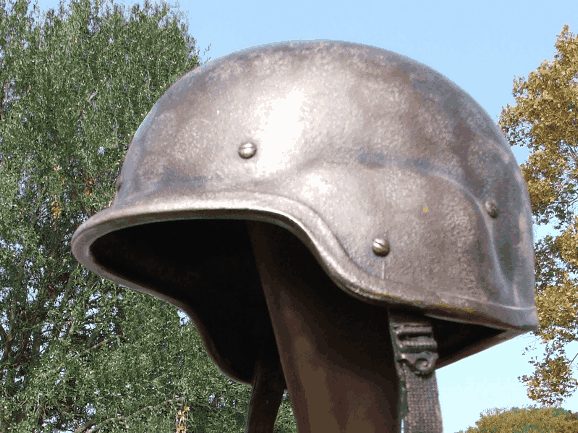 The German Army has one of the most notable histories with the rise of Hitler. The German Army was responsible for the start of World War II when it invaded Poland.
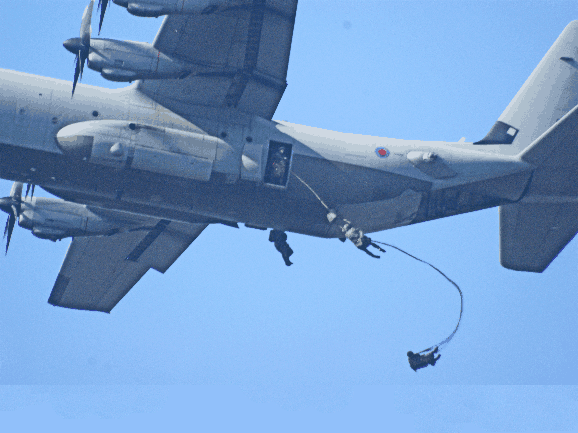 The Indian Army dates back to the Stone Age. Today, it is known as being the largest all volunteer ground force in the world with more than 1,000,000 active duty soldiers.
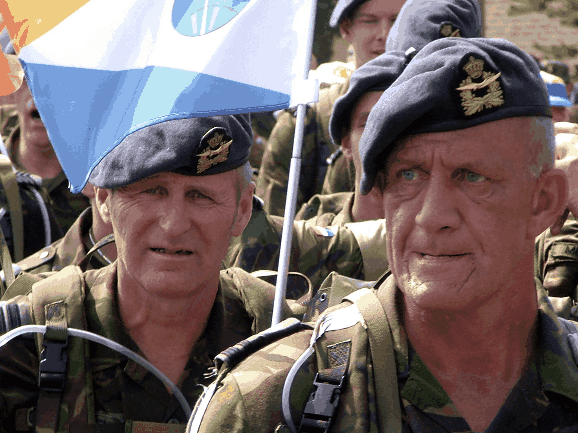 The British Army was organized in 1661 and has been involved in various conflicts including the Napoleonic Wars, Revolutionary War and both world wars.
 The Peoples Liberation Army of China is the largest in the world numbering over two million soldiers even after significant cuts in forces in recent years.
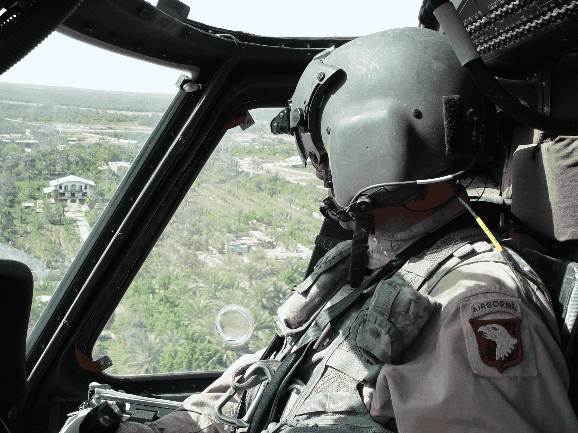 The United States Army dates back to 1775 when the Continental Army was created to fight in the Revolutionary War. The U.S. Army has participated in every major world war, the Korean War, Vietnam, the Gulf War and the Global War on Terrorism.The current active duty force for the U.S. Army numbers over 500,000 with a combined total of over one million with Reserve and National Guard soldiers.The modern day Army is an all volunteer force with permanent posts throughout the United States as well as Germany, Italy, Kosovo, Japan and Korea.


