Chanzo cha mto Nile kipo Tanzania?

Chanzo cha mto Nile kipo Tanzania?


Umenikumbusha mbali enzi za somo la Jiografia.

Ukitaka kujua chanzo cha mto Nile anza na tributaries zake kuu mbili, i.e. While Nine and Blue Nile.

Hizo tributaries zinatoa maji yake kutoka wapi?

Kwa wale wanaosema chanzo cha Nile ni Ziwa Victoria, kwani maji yaliyomo humo ziwani yanatokea humo humo or somewhere else?
 
The Boss nadhani ziwa victoria linamilikiwa na nchi tatu kwa kushirikiana kulitunza au kulinda uasilia wake, kama hivyo ndivyo kila kipande cha ziwa hilo kinaihusu nchi husika kutokana na mipaka ya nchi hiyo.

Kijiografia kipande kinachotoa maji ya ziwa hilo kutililisha mto Nile kipo eneo la Jinja Uganda hivyo kwa haraka haraka ni dhairi chanzo cha mto huo pamoja na kwamba ni ziwa Victoria lakini ni ndani ya mipaka ya nchi ya Uganda.
why hao wazungu ndo waje kutuambia kitu kiko pale miaka yote?
mbona hata kutangaza tu kwenye utalii hatutangazi?
huoni kuna mysteries hapo?

mbona hatugombani na uganga wanapotangaza wao chanzo chao cha Nile?
 
Umenikumbusha mbali enzi za somo la Jiografia.

Ukitaka kujua chanzo cha mto Nile anza na tributaries zake kuu mbili, i.e. While Nine and Blue Nile.

Hizo tributaries zinatoa maji yake kutoka wapi?

Kwa wale wanaosema chanzo cha Nile ni Ziwa Victoria, kwani maji yaliyomo humo ziwani yanatokea humo humo or somewhere else?


Mkuu EMT naomba uanze na kutazama kipindi cha TOP GEAR kiko you tube
tafuta 'the true source of river nile ' kuna mtu anaitwa James May kaja Tanzania mkoa wa Mara na kujitangaza kupata hiyo source....
 
Last edited by a moderator:
Mkuu EMT naomba uanze na kutazama kipindi cha TOP GEAR kiko you tube
tafuta 'the true source of river nile ' kuna mtu anaitwa James May kaja Tanzania mkoa wa Mara na kujitangaza kupata hiyo source....

Unless mwalimu wa wangu wa Jiographia alikuwa kilaza alitufundisha kuwa ni vigumu sana ku-define chanzo cha mto.

Today bado naweza kukubaliana na mtazamo wake.

Kuna mtu kaelezea hili in the light ya hicho kipindi cha Top Gear.

There is no one universally accepted definition for the source of a river. Common definitions include:

Also, depending on definition, the source can vary by season, and temporary flows are created and dry up.
So if they were clever with how they defined source, it is possible they could have found it. A source, not the source.

Mfano wa source kubadilika kulingana na majira ni source ya mto Rufiji.
 
Kwa nini hatulitangazi tupate watalii?

mbona hiko chanzo hakijulikana hata kwa local tourists stakeholders?

Swali zuri sana, Tanzania kwa utalii bado tupo nyuma sana. Licha ya hilo la chanzo cha Nile, kuna mengi sana tena sana yanayoweza kuvuta watalii kutoka sehemu mbali mbali za dunia ambayo hata hatuyafikirii.

Lakini bado, tutafika kidogokidogo ndiyo kwanza tunaanza kufunguwa macho. Sisi akili yetu watalii wanataka kuona wanyama tu. Bado hatujafunguka kujuwa kuwa kuna kila aina ya utalii duniani na si wa wanyama na beach pekee.

Nilikutana Dodoma na watalii kutoka Canada wamekuja Tanzania kuiona miti ya mibuyu tu ikoje. Fikiri.
 
Fafanua basi kama chanzo kipo Tanzania, ni wapi hasa kilipo hicho chanzo?

Kuna Mjapan mmoja alikuja Tanzania katika kutayarisha dissertation yake ya PhD kuhusu anthropology, ilikuwa akae miezi sita akakaa miaka 6. Aliporudi kwao akaulizwa, vipi Tanzania mbona umekaa sana? Akasema, Tanzania ni nchi ya ajabu sana, kwanini? akajibu nilipotoka Japan kwenda Tanzania nilikuwa siamini kama Mungu yupo, sasa naamini Mungu yupo tena yupo Tanzania...
 
search James May TOP GEAR uone na video kabisa..mkoa wa Mara

Hawana lolote hao, the source of River Nile is still disputable hata na wataalam wenyewe na wao cannot resolve that dispute.

Hii habari ya mwaka 2005

Ethiopia and Egypt dispute the Nile

A dispute is growing between Ethiopia and Egypt over access to the waters of the Nile. Ethiopia, the source of the Blue Nile, wants to take more water from it - claiming it could wean itself off food aid if it could irrigate from the river.

However, a 1929 agreement between Egypt and Britain - the regional power at that time - gives Egypt most of the Nile's water, and Egypt has said it cannot afford to give up this claim because of the needs of its own booming population.

"We generate about 85% of the total Nile waters - we have not utilised this resource at all so far," Misfinta Genny, Ethiopia's deputy minister of water, told the BBC World Service's Assignment programme.

"The amount we use so far is next to zero. So we must develop these resources, basically for the benefit of our people."

BBC NEWS | Science/Nature | Ethiopia and Egypt dispute the Nile

Kama Ethiopia wanadai wanagenerate 85% of the Nile water, then what is likely to be the most and true source of the river?
 
Nimewahi kuskia chanzo hasa ni mto kagera. Na wenyewe lazma una chanzo chake. Nacho pia kwa mfuatano huo.

Acha utafiti uendelee
 
Hawana lolote hao, the source of River Nile is still disputable hata na wataalam wenyewe na wao cannot resolve that dispute.

Hii habari ya mwaka 2005

Ethiopia and Egypt dispute the Nile

A dispute is growing between Ethiopia and Egypt over access to the waters of the Nile. Ethiopia, the source of the Blue Nile, wants to take more water from it - claiming it could wean itself off food aid if it could irrigate from the river.

However, a 1929 agreement between Egypt and Britain - the regional power at that time - gives Egypt most of the Nile's water, and Egypt has said it cannot afford to give up this claim because of the needs of its own booming population.

"We generate about 85% of the total Nile waters - we have not utilised this resource at all so far," Misfinta Genny, Ethiopia's deputy minister of water, told the BBC World Service's Assignment programme.

"The amount we use so far is next to zero. So we must develop these resources, basically for the benefit of our people."

BBC NEWS | Science/Nature | Ethiopia and Egypt dispute the Nile

Kama Ethiopia wanadai wanagenerate 85% of the Nile water, then what is likely to be the most and true source of the river?


Sasa hapa my point ni hii kama hiyo source ni disputable
na wapo wanaodai iko TZ including hao Waingereza
kwa nini sisi hatutumii hilo kujitangaza tupate watalii kama Uganda invyofanya?
 
Swali zuri sana, Tanzania kwa utalii bado tupo nyuma sana. Licha ya hilo la chanzo cha Nile, kuna mengi sana tena sana yanayoweza kuvuta watalii kutoka sehemu mbali mbali za dunia ambayo hata hatuyafikirii.

Lakini bado, tutafika kidogokidogo ndiyo kwanza tunaanza kufunguwa macho. Sisi akili yetu watalii wanataka kuona wanyama tu. Bado hatujafunguka kujuwa kuwa kuna kila aina ya utalii duniani na si wa wanyama na beach pekee.

Nilikutana Dodoma na watalii kutoka Canada wamekuja Tanzania kuiona miti ya mibuyu tu ikoje. Fikiri.


Hivi mibuyu haiko Europe wala North America?
 
Na huku Arusha nimewahi kuskia kuna mto mkubwa sana wa ardhini wa maji safi unaitwa mkondo wa mwanza. Huwa unaishia ziwa victoria.

Sehemu ya mto huo imepita moshono kwa tetesi nilizosikia
 
Na huku Arusha nimewahi kuskia kuna mto mkubwa sana wa ardhini wa maji safi unaitwa mkondo wa mwanza. Huwa unaishia ziwa victoria.

Sehemu ya mto huo imepita moshono kwa tetesi nilizosikia

hii nayo ni habari mpya aisee
 
Kuna Mjapan mmoja alikuja Tanzania katika kutayarisha thesis yake PhD kuhusu anthropology, ilikuwa akae miezi sita akakaa miaka 6. Aliporudi kwao akaulizwa, vipi Tanzania mbona umekaa sana? Akasema, Tanzania ni nchi ya ajabu sana, kwanini? akajibu nilipotoka Japan kwenda Tanzania nilikuwa siamini kama Mungu yupo, sasa naamini Mungu yupo tena yupo Tanzania...

Yani hilo ni sahihi kabisa. Kwa namna fulani Tz ina upendeleo mkubwa sana.

Kiutalii, ni ya pili duniani kwa vivutio vingi vya asili. Mbele yake ni Brazil pamoja na ukubwa wake wote ule.
 
tusaidie wengi define tofauti ya 'a source na the source'

A source is indefinite. The source is definite. Debate ya chanzo cha mto Nile kilishasababisha mpaka mtu kujiua enzi hizo kukimbia debate. Soma hii.

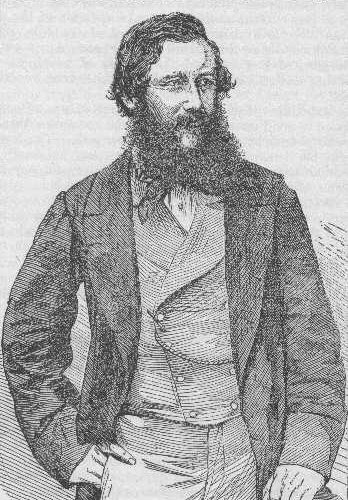
John Hanning Speke discovered the source of the Nile on August 3rd, 1858

John Hanning Speke, an army officer's son from the West Country, was commissioned into the army of the East India Company in 1844 at the age of seventeen. In 1854 he eagerly joined an expedition to east Africa under the command of Captain Richard Burton, who had returned from his sensational visit to Mecca disguised as an Arab pilgrim the year before.

The explorers came under a fierce attack by tribesmen at Berbera and both Speke and Burton were wounded, Speke almost fatally. Rightly or wrongly, Speke believed that Burton had questioned his courage in this incident. It rankled with him all his life and underlay a growing antipathy between the two men, who were in any case extremely unalike. Compared with the brilliant and wildly unconventional Burton, Jack Speke seemed a plodder.

Despite this, however, in 1856 Speke joined Burton on another expedition to east Africa, organized by the Royal Geographical Society. The purpose was supposedly to follow up rumours of a great lake in the interior, the so-called Sea of Ujiji, but in reality the search was on for the source of the Nile.

The expedition moved inland from the coast opposite Zanzibar and, in February 1858, it discovered Lake Tanganyika. After three months exploring the lake, both Burton and Speke were ill and the expedition started back towards the coast. However, they had heard tell of another huge lake to the north of Tanganyika. Speke, who had by now recovered, set off in command of a small party and in August came upon what he later described as ‘a vast expanse' of ‘the pale-blue waters' of the northern lake. He named it Lake Victoria and believed, correctly, that it was the source of the Nile.

Burton would not accept Speke's claim to have discovered the Nile's source, for which he felt there was no convincing evidence. He believed that the true source was more likely to be ‘his' Lake Tanganyika. But Speke got back to England in May 1859 before Burton, and announced that he had found the source of the Nile. Burton felt belittled and was infuriated by Speke's account of the expedition in Blackwood's Edinburgh Magazine. The breach between them was never healed.

The Royal Geographical Society sent Speke back to Africa to substantiate his Nile claims. The expedition left the coast in September 1860 but there were difficulties because its two interpreters quarrelled, which complicated the negotiations with the local rulers through whose territories the expedition had to pass and with the Arab traders from whom it needed supplies.

There were long delays before the explorers reached Gondokoro, 750 miles south of Khartoum, in February 1862. After much politicking and intrigue the powerful king of Buganda, Mutesa, allowed Speke to proceed to the point on Lake Victoria where the White Nile issues from the lake. He reached what he named Ripon Falls on July 28th 1862. He was thirty-five and this was the crowning point of his life.

Unfortunately, Speke did not follow the Nile stream northwards as closely as he might have, which enabled doubters to question whether ‘his' river really was the Nile. Speke got back to Gondokoro in February 1863 and by May was in Cairo where he announced to the waiting world that the question of the source of the Nile was now ‘settled'.

Returning to London to address a special meeting of the Royal Geographical Society, Speke was the hero of the hour. In December 1863 he published his book, The Journal of the Discovery of the Source of the Nile. Unfortunately for him, it had been badly edited and appeared both inaccurate and disagreeably boastful.

In 1864 he published What Led to the Discovery of the Source of the Nile about the earlier expedition, which also did his reputation no good. Burton was still refusing to admit that Speke had discovered the source of the Nile, the two men were completely at loggerheads and a debate between them was scheduled at the British Association for September 16th. Speke went shooting partridges in Wiltshire the day before, climbed over a wall with his gun cocked and shot himself.

His death was probably an accident, but word spread that he had committed suicide because he was too scared to face Burton in debate. Despite evidence that it was clearly an accident, Burton soon declared that Speke had committed suicide to avoid "the exposure of his misstatements in regard to the Nile sources".

Speke was thirty-seven when he died. It was not until years later that he was proved to have been right and that Lake Victoria Nyanza is the source of the White Nile (though the lake has several feeder rivers).


- See more at: The Nile’s Source Discovered | History Today

ST-Speke.jpg
 
hii nayo ni habari mpya aisee

Mkuu The Boss, inahitaji kuthibitishwa kitaalamu. Walonambia ni wachimba maji wakongwe wa kienyeji.

Sikuamini kiviile maana kuna site yao moja waliyodai wameupata 'mkondo wa Mwanza' ilikua inatoa maji balaa tupu ila kiangazi kikali ikakauka!!
 
Back
Top Bottom