Mjadala huu nimekuwa nikiufuatilia sana. Lakini kinachonisikiktisha ni namna baadhi yetu tunavyojitumbukiza katia propaganda za USA et al katika kum-'demonize' Putin. Vyombo vya habari vya nchi za magharibi siku zote huwa vinajaribu ku-personalize state matters. Huko Irak walikuwa wanaliweka tatizo la nchi hiyo kuwa ni Saddam Hussein. That is, every thing, nearly everything that was reported from Iraq ilikuwa ni Sadam, Sadam Sadam. Sadam kasema hiki na kile and so forth. Kule Libya nako walikuwa wanaaandika Gadaf, Gadaf na kadhalika. Yaani waliweka tatizo kuwa ni Gaddafi na wala siyo Libya. Serbia nako you could read 'War against Milosevic' etc. Sasa wamehamia Russia. What they are doing is just to demonise him (Putin). You can read and see from their propaganda machine: Putin has annexed Crimea, Putin's tank-Armatta etc. Uandishi huo ni mbinu ya Marekani na wajinga wenzake. Kwao hawaandiki kuwa Obama ameishambulia Libya bali the state department said this and that. Sasa basi watu wengine hata katia Jamii forums wanaimba wimbo wa Marekani na wenzake kadhalika. Ni aibu. Lakini nashukur kua Warusi wamesimama. Hawataki tena ujinga wa Unipolar world. Marekani iko njiani kusmbaratika kama ilivyokuwa kwa Roman Empire.
USA are not able to overcome S-300 air defense system
You are using an out of date browser. It may not display this or other websites correctly.
You should upgrade or use an alternative browser.
You should upgrade or use an alternative browser.
USA are not able to overcome S-300 air defense system
- Thread starter Bukyanagandi
- Start date


Nyani Ngabu

Platinum Member
- May 15, 2006
- 98,328
- 144,762
Mjadala huu nimekuwa nikiufuatilia sana. Lakini kinachonisikiktisha ni namna baadhi yetu tunavyojitumbukiza katia propaganda za USA et al katika kum-'demonize' Putin.
Na wanaopiga propaganda za Putin katika kum-demonize USA huwaoni? Au ndo mambo ya kunya anye kuku akinya bata kaharisha?
Manake humu propaganda dhidi ya US hazina kifani. Wangapi humu wako upande wa US zaidi ya mimi na labda mmoja tu mwingine?
Acha hizo wewe.
Vyombo vya habari vya nchi za magharibi siku zote huwa vinajaribu ku-personalize state matters.
Na vyombo vya habari vya Urusi vyenyewe hujikita ukweli tu eeh? Vyenyewe viko objective kwa asilimia 100 eeh?
Huko Irak walikuwa wanaliweka tatizo la nchi hiyo kuwa ni Saddam Hussein. That is, every thing, nearly everything that was reported from Iraq ilikuwa ni Sadam, Sadam Sadam. Sadam kasema hiki na kile and so forth.
Propaganda ni sehemu ya vita, sehemu ya mapambano. Mbona hujasema jinsi ambavyo vyombo vya habari vya Iraq vilivyokuwa vinaielezea Marekani?
Kule Libya nako walikuwa wanaaandika Gadaf, Gadaf na kadhalika.
Kama ambavyo Gadafi alivyokuwa akisema US, US, US.
Yaani waliweka tatizo kuwa ni Gaddafi na wala siyo Libya.
Hata Gadafi aliweka tatizo kuwa ni Marekani na si yeye na udikteta wake. Libya aliifanya kuwa ni mali yake binafsi kiasi cha kuwaandaa wanawe kumrithi uongozi.
Serbia nako you could read 'War against Milosevic' etc.
Huyo Milosevic wala hakuwa malaika. Hivi unayajua aliyoyafanya hadi kufikia kupelekwa The Hague?
Sasa wamehamia Russia.
Uongo huu. Nani wamehamia Russia?
What they are doing is just to demonise him (Putin).
Mbona Warusi nao wako racist towards Obama na husemi lolote juu ya hilo?
Soma hii Russians Mock Obama With Racist Projection On Former U.S. Embassy In Moscow
You can read and see from their propaganda machine: Putin has annexed Crimea, Putin's tank-Armatta etc.
Hebu weka basi na vichwa vya habari vya magazeti ya Urusi kuhusu Marekani.
Uandishi huo ni mbinu ya Marekani na wajinga wenzake.
Weka na uandishi wa Warusi tulinganishe.
Kwao hawaandiki kuwa Obama ameishambulia Libya bali the state department said this and that.
Lete ushahidi.
Sasa basi watu wengine hata katia Jamii forums wanaimba wimbo wa Marekani na wenzake kadhalika.
Na wanaoimba wimbo wa Russia huwaoni eeh?
Ni aibu.
Naam, ni aibu pale mtu anapoangalia upande mmoja kana kwamba huo upande ndo unafanya yote yaliyo 'mabaya'.
Lakini nashukur kua Warusi wamesimama. Hawataki tena ujinga wa Unipolar world.
Lazima uone hivyo kwa sababu una chuki na wivu dhidi ya Marekani, the world's only super power and greatest country on planet earth. Take that, take that:becky:
Marekani iko njiani kusmbaratika kama ilivyokuwa kwa Roman Empire.
If wishes were horses, beggars would ride!
Take that, take that!
Bukyanagandi
JF-Expert Member
- Jun 24, 2009
- 11,626
- 18,233
- Thread starter
- #524
Mjadala huu nimekuwa nikiufuatilia sana. Lakini kinachonisikiktisha ni namna baadhi yetu tunavyojitumbukiza katia propaganda za USA et al katika kum-'demonize' Putin. Vyombo vya habari vya nchi za magharibi siku zote huwa vinajaribu ku-personalize state matters. Huko Irak walikuwa wanaliweka tatizo la nchi hiyo kuwa ni Saddam Hussein. That is, every thing, nearly everything that was reported from Iraq ilikuwa ni Sadam, Sadam Sadam. Sadam kasema hiki na kile and so forth. Kule Libya nako walikuwa wanaaandika Gadaf, Gadaf na kadhalika. Yaani waliweka tatizo kuwa ni Gaddafi na wala siyo Libya. Serbia nako you could read 'War against Milosevic' etc. Sasa wamehamia Russia. What they are doing is just to demonise him (Putin). You can read and see from their propaganda machine: Putin has annexed Crimea, Putin's tank-Armatta etc. Uandishi huo ni mbinu ya Marekani na wajinga wenzake. Kwao hawaandiki kuwa Obama ameishambulia Libya bali the state department said this and that. Sasa basi watu wengine hata katia Jamii forums wanaimba wimbo wa Marekani na wenzake kadhalika. Ni aibu. Lakini nashukur kua Warusi wamesimama. Hawataki tena ujinga wa Unipolar world. Marekani iko njiani kusmbaratika kama ilivyokuwa kwa Roman Empire.
Mkuu hupo sahihi by 100% hapa chini ntakuwekea video clip na link ili usome in details jinsi CNN inavyo tumika vibaya kuchochea vita na kueneza disinformation Duniani kote, wana ku-doctor video clips na kufanya usanii wa kila aina. Kwenye video hiyo - Anchor wa CNN one Christiane Amanpour alishikwa pabaya na Anissa Naouai wa RT mpaka macho yakamtoka kama mjuzi aliye banwa mlango, walivyo wa ajabu muongoza kipindi waa CNN alikata sehemu ilikuwa inamu-expose deception zilizo kubuhu za mama huyu Christiane alizo kuwa anafanya over the years, baada ya mahojiano hayo mama huyo ali-edit akaondoa seheme ambayo ilikuwa ina expose disinformation ili Wamerika wasijue kilicho endelea, lakini RT ilifanikiwa kupata clip nzima na text mpaka CNN ikajikuta inakuwa ashamed.
CNN's Amanpour show edits out criticism by visiting RT host!!
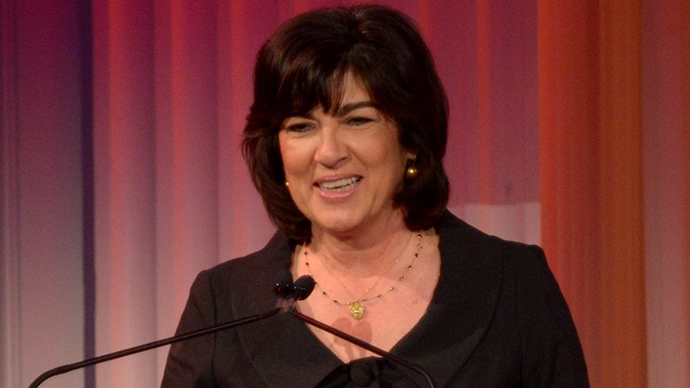
Photo:Christiane Amanpour
Merikani kitu ambacho inatakiwa ifanye ni ku-amend tabia zake mbaya za kupenda penda vita, kwenye post yangu # nilikuwa napasha moto baraza tu kwa kuwakumbusha members historia mbaya ya Amerikani ya kasikazini miaka ya nyuma -inahusu ukihukwaji mkubwa wa haki za binadamu(Wahindi wekundu na Black American) uporaji wa aridhi za watu and what have you - mbinu hizi za ubabe bado wanaziendeleza kwenye OLD LANDS kwa kutumia vyombo vyao vya habari kuchota watu akili na kujaribu ku-demonize viongozi wanao waona watawaweka spana katika ajenda zao za siri, lakini when the going gets tough basi wana resort kwenye gunboat diplomacy. Binafsi the more I read about America's involvement in other countries affairs, the more I wonder why are some JF members still going with all their lies and disinformation za Uncle SAM!
Nimalizie kwa kujihuliza: Is US/NATO likely to attack Russia - the answer is no, why? She knows that it will bring China into the fight and India might not participate or fight on China's side. Most of Asia is now in the Russian camp because they all want the profit from silk road trade. Which leaves the US a bit alone, without reliable allies in Asia. Instead of US attempting to fight it will try to destabilize both Russia and China - but that is really a pipe dream, as both of these NATIONS have trained and well equipped armies, Police and Commandos (Spetsnaz) to make short shrift with Militant. Simply put, a lot of the US moves are just posturing - because it really can't do anything anymore. Asia opted for CHINA, so did Europe - see how many signed up for AIIB. The truth of the matter now is: The economic Center will move EAST - US notwithstanding.
Wakuu hebu check video Clip inayo husu Malumbano kati ya Christiane Amanpour wa CNN anavyopewa vidonge na Anissa Naouai wa RT :
for FULL info including text please clik HERE alafu linganisha mahojiano ambayo hayakuwa edited na CNN , na mahojiano yaliyo katwa na CNN kwa ajili ya wasikilizaji wa Amerika CNN haitaki kuwajulisha raia wake ukweli.
CC: Nyama Ngabu DotWorld 2013 1954 MALCOM LUMUMBA Kadoda11
Last edited by a moderator:

Dotworld
JF-Expert Member
- Aug 10, 2011
- 4,035
- 3,784
The demonisation of Russia risks paving the way for warMjadala huu nimekuwa nikiufuatilia sana. Lakini kinachonisikiktisha ni namna baadhi yetu tunavyojitumbukiza katia propaganda za USA et al katika kum-'demonize' Putin. Vyombo vya habari vya nchi za magharibi siku zote huwa vinajaribu ku-personalize state matters. Huko Irak walikuwa wanaliweka tatizo la nchi hiyo kuwa ni Saddam Hussein.
That is, every thing, nearly everything that was reported from Iraq ilikuwa ni Sadam, Sadam Sadam. Sadam kasema hiki na kile and so forth. Kule Libya nako walikuwa wanaaandika Gadaf, Gadaf na kadhalika. Yaani waliweka tatizo kuwa ni Gaddafi na wala siyo Libya. Serbia nako you could read 'War against Milosevic' etc. Sasa wamehamia Russia.
What they are doing is just to demonise him (Putin). You can read and see from their propaganda machine: Putin has annexed Crimea, Putin's tank-Armatta etc. Uandishi huo ni mbinu ya Marekani na wajinga wenzake. Kwao hawaandiki kuwa Obama ameishambulia Libya bali the state department said this and that.
Sasa basi watu wengine hata katia Jamii forums wanaimba wimbo wa Marekani na wenzake kadhalika. Ni aibu. Lakini nashukur kua Warusi wamesimama. Hawataki tena ujinga wa Unipolar world. Marekani iko njiani kusmbaratika kama ilivyokuwa kwa Roman Empire.
A quarter of a century after the end of the cold war, the "Russian threat" is unmistakably back. Vladimir Putin, Britain's defence secretary Michael Fallon declares, is as great a danger to Europe as "Islamic State". There may be no ideological confrontation, and Russia may be a shadow of its Soviet predecessor, but the anti-Russian drumbeat has now reached fever pitch.
And much more than in Soviet times, the campaign is personal. It's all about Putin. The Russian president is an expansionist dictator who has launched a "shameless aggression". He is the epitome of "political depravity", "carving up" his neighbours as he crushes dissent at home, and routinely is compared to Hitler.
Putin has now become a cartoon villain and Russia the target of almost uniformly belligerent propaganda across the western media. Anyone who questions the dominant narrative on Ukraine – from last year's overthrow of the elected president and the role of Ukrainian far right to war crimes carried out by Kiev's forces – is dismissed as a Kremlin dupe.
That has been ratcheted up still further with the murder of the opposition politician Boris Nemtsov. The Russian president has, of course, been blamed for the killing, though that makes little sense. Nemtsov was a marginal figure whose role in the "catastroika" of the 1990s scarcely endeared him to ordinary Russians. Responsibility for an outrage that exposed the lack of security in the heart of Moscow and was certain to damage the president hardly seems likely to lie with Putin or his supporters.
But it's certainly grist to the mill of those pushing military confrontation with Russia. Hundreds of US troops have been arriving in Ukraine to bolster the Kiev regime's war with Russian-backed rebels in the east.
Not to be outdone, Britain is sending 75 military advisers of its own. As 20th-century history shows, the dispatch of military advisers is often how disastrous escalations start. They are also a direct violation of last month's Minsk agreement, negotiated with France and Germany, that has at least achieved a temporary ceasefire and some pull-back of heavy weapons. Article 10 requires the withdrawal of all foreign forces from Ukraine.
But Nato's hawks have got the bit between their teeth. Thousands of Nato troops have been sent to the Baltic states – the Atlantic alliance's new frontline – untroubled by their indulgence of neo-Nazi parades and denial of minority ethnic rights.
A string of American political leaders and generals are calling for the US to arm Kiev, from the chairman of the joint chiefs of staff, General Martin Dempsey, to the new defence secretary, Ashton Carter.
For the western military complex, the Ukraine conflict has the added attraction of creating new reasons to increase arms spending, as the US army's General Raymond Odierno made clear when he complained this week about British defence cuts in the face of the "Russian threat".
Putin's authoritarian conservatism may offer little for Russia's future, but this anti-Russian incitement is dangerous folly. There certainly has been military expansionism. But it has overwhelmingly come from Nato, not Moscow.
For 20 years, despite the commitments at the end of the cold war, Nato has marched relentlessly eastwards, taking in first former east European Warsaw Pact states, then republics of the former Soviet Union itself. As the academic Richard Sakwa puts it in his book Frontline Ukraine, Nato now "exists to manage the risks created by its existence".
Instead of creating a common European security system including Russia, the US-dominated alliance has expanded up to the Russian border – insisting that is merely the sovereign choice of the states concerned. It clearly isn't.
It's also the product of an alliance system designed to entrench American "leadership" on the European continent – laid out in Pentagon planning drawn up after the collapse of the Soviet Union to "prevent the re-emergence of a new rival".
Russia has now challenged that, and the consequences have been played out in Ukraine for the past year: starting with the western-backed ousting of the elected government, through the installation of a Ukrainian nationalist regime, the Russian takeover of Crimea and Moscow-backed uprising in the Donbass. On the ground, it has meant thousands of dead, hundreds of thousands of refugees, indiscriminate shelling of civilian areas and the rise of Ukrainian fascist militias such as the Azov battalion, supported by Kiev and its western sponsors, now preparing to "defend" Mariupol from its own people. For the bulk of the western media, that's dismissed as Kremlin propaganda.
Most Russians want Putin to take a tougher stand ‘because of their experience of the past 25 years'
Russian covert military support for the rebels, on the other hand, is denounced as aggression and "hybrid warfare" – by the same governments that have waged covert wars from Nicaragua to Syria, quite apart from outright aggressions and illegal campaigns in Kosovo, Libya and Iraq.
That doesn't justify less extreme Russian violations of international law, but it puts them in the context of Russian security. While Putin is portrayed in the west as a reckless land-grabber, in Russian terms he is a centrist. As the veteran Russian leftist Boris Kagarlitsky comments, most Russians want Putin to take a tougher stand against the west "not because of patriotic propaganda, but their experience of the past 25 years".
In the west, Ukraine – along with Isis – is being used to revive the doctrines of liberal interventionism and even neoconservatism, discredited on the killing fields of Iraq and Afghanistan. So far, Angela Merkel and François Hollande have resisted American pressure to arm Kiev. But when the latest Minsk ceasefire breaks down, as it surely will, there is a real risk that Ukraine's proxy conflict could turn into full-scale international war.
The alternative is a negotiated settlement which guarantees Ukraine's neutrality, pluralism and regional autonomy. It may well be too late for that. But there is certainly no military solution. Instead of escalating the war and fuelling nationalist extremism, western powers should be using their leverage to wind it down. If they don't, the consequences could be disastrous – far beyond Ukraine.
Read more: http://www.theguardian.com/commentisfree/2015/mar/04/demonisation-russia-risks-paving-way-for-war.
--
--.
cc: 1954 .
Last edited by a moderator:
Nyani Ngabu
Platinum Member
- May 15, 2006
- 98,328
- 144,762
The demonisation of Russia risks paving the way for war
A quarter of a century after the end of the cold war, the "Russian threat" is unmistakably back. Vladimir Putin, Britain's defence secretary Michael Fallon declares, is as great a danger to Europe as "Islamic State". There may be no ideological confrontation, and Russia may be a shadow of its Soviet predecessor, but the anti-Russian drumbeat has now reached fever pitch.
And much more than in Soviet times, the campaign is personal. It's all about Putin. The Russian president is an expansionist dictator who has launched a "shameless aggression". He is the epitome of "political depravity", "carving up" his neighbours as he crushes dissent at home, and routinely is compared to Hitler.
Putin has now become a cartoon villain and Russia the target of almost uniformly belligerent propaganda across the western media. Anyone who questions the dominant narrative on Ukraine – from last year's overthrow of the elected president and the role of Ukrainian far right to war crimes carried out by Kiev's forces – is dismissed as a Kremlin dupe.
That has been ratcheted up still further with the murder of the opposition politician Boris Nemtsov. The Russian president has, of course, been blamed for the killing, though that makes little sense. Nemtsov was a marginal figure whose role in the "catastroika" of the 1990s scarcely endeared him to ordinary Russians. Responsibility for an outrage that exposed the lack of security in the heart of Moscow and was certain to damage the president hardly seems likely to lie with Putin or his supporters.
But it's certainly grist to the mill of those pushing military confrontation with Russia. Hundreds of US troops have been arriving in Ukraine to bolster the Kiev regime's war with Russian-backed rebels in the east.
Not to be outdone, Britain is sending 75 military advisers of its own. As 20th-century history shows, the dispatch of military advisers is often how disastrous escalations start. They are also a direct violation of last month's Minsk agreement, negotiated with France and Germany, that has at least achieved a temporary ceasefire and some pull-back of heavy weapons. Article 10 requires the withdrawal of all foreign forces from Ukraine.
But Nato's hawks have got the bit between their teeth. Thousands of Nato troops have been sent to the Baltic states – the Atlantic alliance's new frontline – untroubled by their indulgence of neo-Nazi parades and denial of minority ethnic rights.
A string of American political leaders and generals are calling for the US to arm Kiev, from the chairman of the joint chiefs of staff, General Martin Dempsey, to the new defence secretary, Ashton Carter.
For the western military complex, the Ukraine conflict has the added attraction of creating new reasons to increase arms spending, as the US army's General Raymond Odierno made clear when he complained this week about British defence cuts in the face of the "Russian threat".
Putin's authoritarian conservatism may offer little for Russia's future, but this anti-Russian incitement is dangerous folly. There certainly has been military expansionism. But it has overwhelmingly come from Nato, not Moscow.
For 20 years, despite the commitments at the end of the cold war, Nato has marched relentlessly eastwards, taking in first former east European Warsaw Pact states, then republics of the former Soviet Union itself. As the academic Richard Sakwa puts it in his book Frontline Ukraine, Nato now "exists to manage the risks created by its existence".
Instead of creating a common European security system including Russia, the US-dominated alliance has expanded up to the Russian border – insisting that is merely the sovereign choice of the states concerned. It clearly isn't.
It's also the product of an alliance system designed to entrench American "leadership" on the European continent – laid out in Pentagon planning drawn up after the collapse of the Soviet Union to "prevent the re-emergence of a new rival".
Russia has now challenged that, and the consequences have been played out in Ukraine for the past year: starting with the western-backed ousting of the elected government, through the installation of a Ukrainian nationalist regime, the Russian takeover of Crimea and Moscow-backed uprising in the Donbass. On the ground, it has meant thousands of dead, hundreds of thousands of refugees, indiscriminate shelling of civilian areas and the rise of Ukrainian fascist militias such as the Azov battalion, supported by Kiev and its western sponsors, now preparing to "defend" Mariupol from its own people. For the bulk of the western media, that's dismissed as Kremlin propaganda.
Most Russians want Putin to take a tougher stand ‘because of their experience of the past 25 years'
Russian covert military support for the rebels, on the other hand, is denounced as aggression and "hybrid warfare" – by the same governments that have waged covert wars from Nicaragua to Syria, quite apart from outright aggressions and illegal campaigns in Kosovo, Libya and Iraq.
That doesn't justify less extreme Russian violations of international law, but it puts them in the context of Russian security. While Putin is portrayed in the west as a reckless land-grabber, in Russian terms he is a centrist. As the veteran Russian leftist Boris Kagarlitsky comments, most Russians want Putin to take a tougher stand against the west "not because of patriotic propaganda, but their experience of the past 25 years".
In the west, Ukraine – along with Isis – is being used to revive the doctrines of liberal interventionism and even neoconservatism, discredited on the killing fields of Iraq and Afghanistan. So far, Angela Merkel and François Hollande have resisted American pressure to arm Kiev. But when the latest Minsk ceasefire breaks down, as it surely will, there is a real risk that Ukraine's proxy conflict could turn into full-scale international war.
The alternative is a negotiated settlement which guarantees Ukraine's neutrality, pluralism and regional autonomy. It may well be too late for that. But there is certainly no military solution. Instead of escalating the war and fuelling nationalist extremism, western powers should be using their leverage to wind it down. If they don't, the consequences could be disastrous – far beyond Ukraine.
cc: 1954 .
Please credit the source. You didn't write it.

MALCOM LUMUMBA
JF-Expert Member
- Jul 26, 2012
- 21,775
- 71,882
Dotworld;Mkuu .Nyani Ngabu.. labda tu small correction!
KGB imekufa - ilishavunjwa!
siyo kufa tuu liligawanya kuwa FSB na SVR:Two different entities.
KGB imekufa - ilishavunjwa!
siyo kufa tuu liligawanya kuwa FSB na SVR:Two different entities.
Dotworld
JF-Expert Member
- Aug 10, 2011
- 4,035
- 3,784
Tamam!Oh, shukran jazeelan.
Hata sikujua kama hilo shirika lilishakufa kibudu.
Hivi lilikufa sawia na USSR?
Mkuu .Nyani Ngabu.
Bytheway, KGB lilikuwa ni kwa ajili ya USSR yote! - Kwa hiyo baada ya kuvunjika kila New Republic ikabidi ziunde upya mashirika yao ya Ujasusi au Intelligence Bureau.
Kwa upande wa Russia yeye akaunda hiyo FSB na nchi nyingine zikaunda za kwao.
The funny thing ni most New Rupublics za USSR affiliation offices almost completely duplicated the structural organization of the main KGB!
Sasa ushishangae ukaenda baadhi ya nchi ukasikia bado wanatumia jina KGB! - lakini kimsingi ni Independent! hawana mafungamano na Moscow though most ni wale wale waliokuwa maofisa wa KGB ya zamani wameendelea na mfumo ule ule!
Mfano:
- KGB of Belarus / KDB of Belarus
- KGB of Ukraine / KDB of Ukraine
- KGB of Moldova / CSS of Moldova
- KGB of Georgia
- KGB of Armenia
- KGB of Azerbaijan / DTK of Azerbaijan
- KGB of Kazakhstan
- KGB of Kyrgyzstan
- KGB of Uzbekistan
- KGB of Turkmenistan
- KGB of Tajikistan
Dotworld
JF-Expert Member
- Aug 10, 2011
- 4,035
- 3,784
Hivi kwa nini hii Project ya BURAN ilisitishwa gafla ingawa Wamerika wanakiri kwamba BURAN ilikuwa more advanced kuliko SPACE SHUTTLE zao na nasikia zilihundwa mbili tu - je tatizo lilitokana na kuvunjika iliyo kuwa SOVIET au Ukraine hawakutaka tena kuendelea kushirikiana na RF?
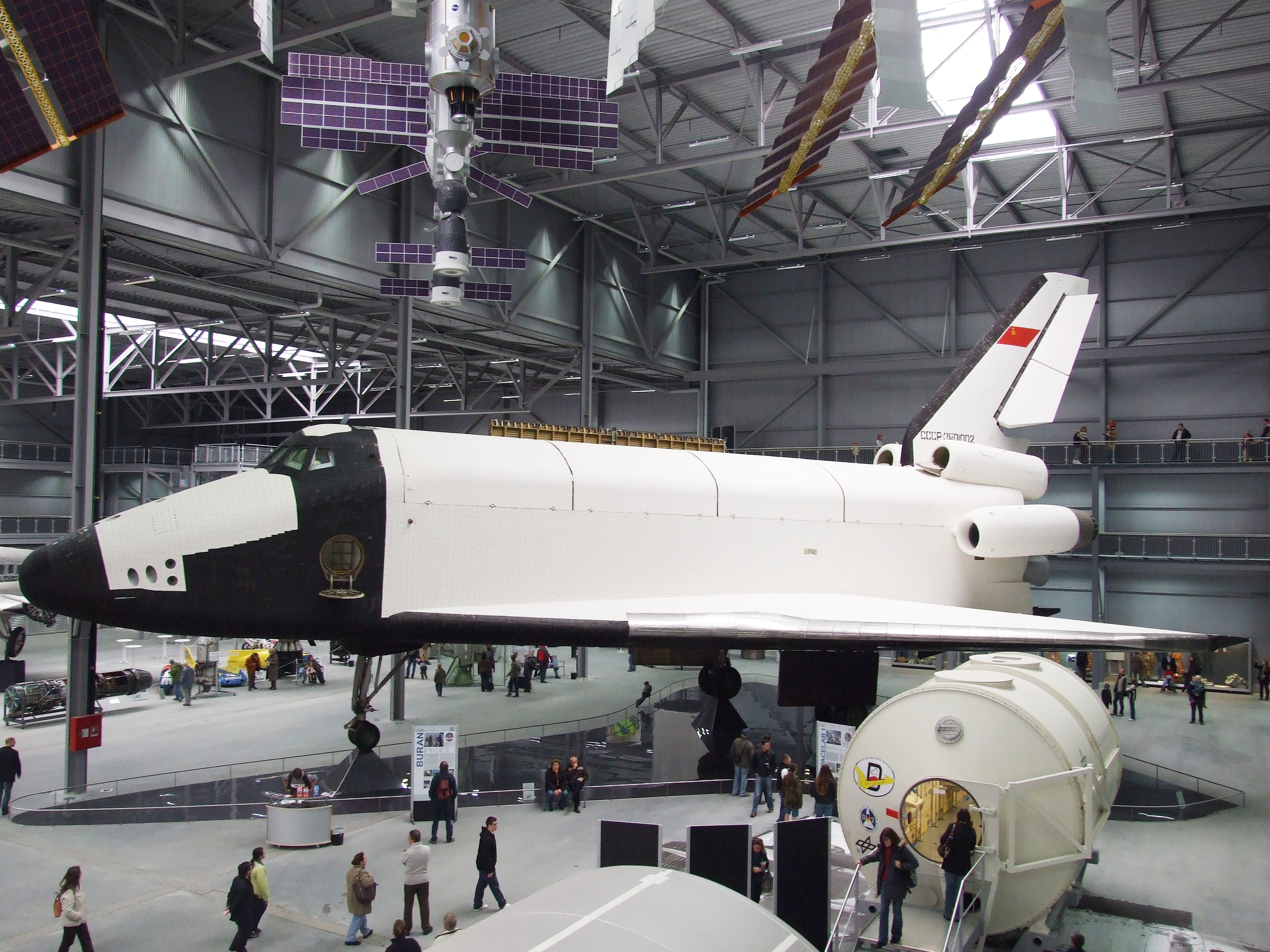
Mkuu baada ya hii Space Shuttle ya Russia kuruka mara ya kwanza ilipata mafanikio makubwa - kwani ilienda mpaka Space na kurudi kwa kutumia Automatic Computers bila intervation ya binadamu na pia kuna jinsi ilivyokuwa inajigeuza na ku-change course katika space ambayo imekuwa ni breakthrough katika technology duniani.
Hii project ilikuwa ni very expensive kwa wati ule kwa Russia.
Sasa wakati project imepamba moto ndio na USSR ilikuwa inapitia kwenye matatizo ya kiuchumi - sasa hakuna mtu aliekuwa na interest ya kutupa hela kuweka hela kwenye hii project wakati nchi inapita kwenye kipindi kigumu.
So Rais wa Russia wakati ule Yelstin akaamua ku-icancell the whole project! - hiyo ndio kifo chake ... wala haihusiani na mambo ya Ukraine.
US baada ya ku-simamisha Space Shuttle yao walikuwa wanataka ku-revive either jointly na Russia hii project as though kwa nje zinaonekana sawa na ya waMarekani - lakini zipo tofauti sana na zinatumia technology tofauti!
Hii ilikuwa ni National Pride wakati ule.
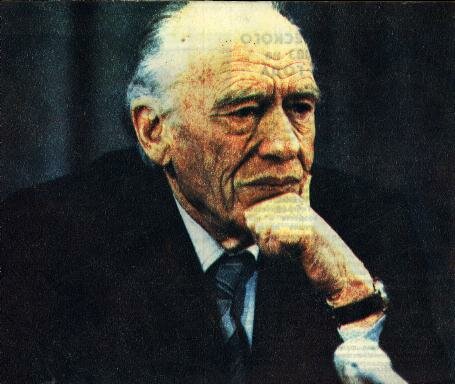
Gleb Lozino-Lozinski

Huyu mtaalamu alifariki mwaka 2001 nchini Russia - na unaona hata Kaburi lake wameweka picha ya Buran as He was the man.
Sasa, hii Buran ilikuwa ni very advanced sana ambapo kuna siri nyingi za anga iliweza kuzifahamu kwenye technologia ambapo US bado wanataka kushirikiana na Russia for the betterment of mankind.
.
.cc: .The mountain lion. kadoda11. Bukyanagandi .
Last edited by a moderator:
Dotworld
JF-Expert Member
- Aug 10, 2011
- 4,035
- 3,784
Yeah mimi nilibase tu kwenye activities za ndani na ndio maana sikutaja Foreign Intelligence Service (Russia) entity as ni vitu viwili tofauti - though moja ni ya ndani na nyingine ni ForeignDotworld;Mkuu .Nyani Ngabu.. labda tu small correction!
KGB imekufa - ilishavunjwa!
siyo kufa tuu liligawanya kuwa FSB na SVR:Two different entities.
Nyani Ngabu
Platinum Member
- May 15, 2006
- 98,328
- 144,762
The demonisation of Russia risks paving the way for war
A quarter of a century after the end of the cold war, the "Russian threat" is unmistakably back. Vladimir Putin, Britain's defence secretary Michael Fallon declares, is as great a danger to Europe as "Islamic State". There may be no ideological confrontation, and Russia may be a shadow of its Soviet predecessor, but the anti-Russian drumbeat has now reached fever pitch.
And much more than in Soviet times, the campaign is personal. It's all about Putin. The Russian president is an expansionist dictator who has launched a "shameless aggression". He is the epitome of "political depravity", "carving up" his neighbours as he crushes dissent at home, and routinely is compared to Hitler.
Putin has now become a cartoon villain and Russia the target of almost uniformly belligerent propaganda across the western media. Anyone who questions the dominant narrative on Ukraine – from last year's overthrow of the elected president and the role of Ukrainian far right to war crimes carried out by Kiev's forces – is dismissed as a Kremlin dupe.
That has been ratcheted up still further with the murder of the opposition politician Boris Nemtsov. The Russian president has, of course, been blamed for the killing, though that makes little sense. Nemtsov was a marginal figure whose role in the "catastroika" of the 1990s scarcely endeared him to ordinary Russians. Responsibility for an outrage that exposed the lack of security in the heart of Moscow and was certain to damage the president hardly seems likely to lie with Putin or his supporters.
But it's certainly grist to the mill of those pushing military confrontation with Russia. Hundreds of US troops have been arriving in Ukraine to bolster the Kiev regime's war with Russian-backed rebels in the east.
Not to be outdone, Britain is sending 75 military advisers of its own. As 20th-century history shows, the dispatch of military advisers is often how disastrous escalations start. They are also a direct violation of last month's Minsk agreement, negotiated with France and Germany, that has at least achieved a temporary ceasefire and some pull-back of heavy weapons. Article 10 requires the withdrawal of all foreign forces from Ukraine.
But Nato's hawks have got the bit between their teeth. Thousands of Nato troops have been sent to the Baltic states – the Atlantic alliance's new frontline – untroubled by their indulgence of neo-Nazi parades and denial of minority ethnic rights.
A string of American political leaders and generals are calling for the US to arm Kiev, from the chairman of the joint chiefs of staff, General Martin Dempsey, to the new defence secretary, Ashton Carter.
For the western military complex, the Ukraine conflict has the added attraction of creating new reasons to increase arms spending, as the US army's General Raymond Odierno made clear when he complained this week about British defence cuts in the face of the "Russian threat".
Putin's authoritarian conservatism may offer little for Russia's future, but this anti-Russian incitement is dangerous folly. There certainly has been military expansionism. But it has overwhelmingly come from Nato, not Moscow.
For 20 years, despite the commitments at the end of the cold war, Nato has marched relentlessly eastwards, taking in first former east European Warsaw Pact states, then republics of the former Soviet Union itself. As the academic Richard Sakwa puts it in his book Frontline Ukraine, Nato now "exists to manage the risks created by its existence".
Instead of creating a common European security system including Russia, the US-dominated alliance has expanded up to the Russian border – insisting that is merely the sovereign choice of the states concerned. It clearly isn't.
It's also the product of an alliance system designed to entrench American "leadership" on the European continent – laid out in Pentagon planning drawn up after the collapse of the Soviet Union to "prevent the re-emergence of a new rival".
Russia has now challenged that, and the consequences have been played out in Ukraine for the past year: starting with the western-backed ousting of the elected government, through the installation of a Ukrainian nationalist regime, the Russian takeover of Crimea and Moscow-backed uprising in the Donbass. On the ground, it has meant thousands of dead, hundreds of thousands of refugees, indiscriminate shelling of civilian areas and the rise of Ukrainian fascist militias such as the Azov battalion, supported by Kiev and its western sponsors, now preparing to "defend" Mariupol from its own people. For the bulk of the western media, that's dismissed as Kremlin propaganda.
Most Russians want Putin to take a tougher stand ‘because of their experience of the past 25 years'
Russian covert military support for the rebels, on the other hand, is denounced as aggression and "hybrid warfare" – by the same governments that have waged covert wars from Nicaragua to Syria, quite apart from outright aggressions and illegal campaigns in Kosovo, Libya and Iraq.
That doesn't justify less extreme Russian violations of international law, but it puts them in the context of Russian security. While Putin is portrayed in the west as a reckless land-grabber, in Russian terms he is a centrist. As the veteran Russian leftist Boris Kagarlitsky comments, most Russians want Putin to take a tougher stand against the west "not because of patriotic propaganda, but their experience of the past 25 years".
In the west, Ukraine – along with Isis – is being used to revive the doctrines of liberal interventionism and even neoconservatism, discredited on the killing fields of Iraq and Afghanistan. So far, Angela Merkel and François Hollande have resisted American pressure to arm Kiev. But when the latest Minsk ceasefire breaks down, as it surely will, there is a real risk that Ukraine's proxy conflict could turn into full-scale international war.
The alternative is a negotiated settlement which guarantees Ukraine's neutrality, pluralism and regional autonomy. It may well be too late for that. But there is certainly no military solution. Instead of escalating the war and fuelling nationalist extremism, western powers should be using their leverage to wind it down. If they don't, the consequences could be disastrous – far beyond Ukraine.
cc: 1954 .
You didn't write this piece.
You are not capable of writing it.
Please, credit the source otherwise you are committing plagiarism.
Dotworld
JF-Expert Member
- Aug 10, 2011
- 4,035
- 3,784
No nilikuwa najaribu kuongezea more related info on Demonisation of the guy - nilikuwa natafuta nafikiri clip kutoka kwa Kissinger - so nilikuwa sijamaliza nilikuwa nataka niweke na clip yake - habari zangu zote zina sourcePlease credit the source. You didn't write it.
Nyani Ngabu
Platinum Member
- May 15, 2006
- 98,328
- 144,762
No nilikuwa najaribu kuongezea more related info on Demonisation of the guy - nilikuwa natafuta nafikiri clip kutoka kwa Kissinger - so nilikuwa sijamaliza - habari zangu zote zina source
Ulivyoiacha vile kwa muda wote huo umetoa impression kuwa wewe ndo umeiandika hiyo makala.
Huna uwezo wa kuiandika hiyo makala kwa lugha ya Kiingereza.
Hivyo rudi urekebishe kwa kuweka chanzo cha ulipoitoa.
Siyo vizuri kunakili kazi za watu wengine bila kusema kuwa ni zao.
Dotworld
JF-Expert Member
- Aug 10, 2011
- 4,035
- 3,784
Kuna clip niliweka ya Kissinger baadae nikaona siyo yenyewe - so I errassed chini ile clip ili ni-update na nyingine so maybe naona ndo iliondoa na source I was not aware - anyway nilishaipata nikaiweka - there is one clip ambayo alikuwa anaongea exclusively about demonisation of Putin ndo nilifikiri niweiweka pale ila niliyoipata ana-mix na siasa za USUlivyoiacha vile kwa muda wote huo umetoa impression kuwa wewe ndo umeiandika hiyo makala.
Huna uwezo wa kuiandika hiyo makala kwa lugha ya Kiingereza.
Hivyo rudi urekebishe kwa kuweka chanzo cha ulipoitoa.
Siyo vizuri kunakili kazi za watu wengine bila kusema kuwa ni zao.
Kuna mmoja humu amesema Gadafi aliifanya Libya kuwa ni yake na kwamba alitaka kuwaachia wanae uongozi wa Libya. Nikakumbuka Mwandishi mmoja alipomuuliza Mugabe kuwa kwanini anangang'ania madaraka ya Zimbabwe huku akiwa na umri wa miaka zaidi ya 80 wakati huo. Jibu la Mugabe lilikuwa: Malkia Elizabeth ana umri gani? Mbona naye bado yuko madarakani? Mwandishi huyo uchwara akawa anapepesa macho kama mjusi aliyemkosa nzi..
Nyani Ngabu
Platinum Member
- May 15, 2006
- 98,328
- 144,762
Kuna mmoja humu amesema Gadafi aliifanya Libya kuwa ni yake na kwamba alitaka kuwaachia wanae uongozi wa Libya. Nikakumbuka Mwandishi mmoja alipomuuliza Mugabe kuwa kwanini anangang'ania madaraka ya Zimbabwe huku akiwa na umri wa miaka zaidi ya 80 wakati huo. Jibu la Mugabe lilikuwa: Malkia Elizabeth ana umri gani? Mbona naye bado yuko madarakani? Mwandishi huyo uchwara akawa anapepesa macho kama mjusi aliyemkosa nzi..
Apples to oranges.
Na juha tu anayeweza kulinganisha monarchy na urais wa kuchaguliwa.
Na sitegemei ujue tofauti yake.
Juha?!!!? Duh, . It is no wonder Kikwete amesaini ile sheria...... Halafu, katika stage hii kweli mtu asijue tofauti ya monarchy na urais wa kuchaguliwa?!!! Anyway, inawezekana ....... lakini kikubwa wote ni Head of States. As an afterthouht....ukiona katika debates au discussion kuna wengine wanaona kuwa wao wanafahamu zaidi na kuwaita wengine majuha basi ujue there is a very serious problem.....
Nyani Ngabu
Platinum Member
- May 15, 2006
- 98,328
- 144,762
Juha?!!!? Duh, . It is no wonder Kikwete amesaini ile sheria...... Halafu, katika stage hii kweli mtu asijue tofauti ya monarchy na urais wa kuchaguliwa?!!! Anyway, inawezekana ....... lakini kikubwa wote ni Head of States. As an afterthouht....ukiona katika debates au discussion kuna wengine wanaona kuwa wao wanafahamu zaidi na kuwaita wengine majuha basi ujue there is a very serious problem.....
Huwezi kulinganisha vitu ambavyo havifanani hata kidogo.
Mugabe kujilinganisha na Malkia Elizabeth maana yake ndo nini sasa?
Kwamba Mugabe siku hizi kwa monarch au?
I mean, it doesn't even make the slightest sense.
But it's even worse when there are people out there who think he was right to compare apples to oranges.
Obviously they don't know the difference.

Zamiluni Zamiluni
JF-Expert Member
- Feb 11, 2014
- 13,996
- 15,120
kila UONGO una mwanzo na mwisho wake!!!hii mpya imeibuka leo ;- MSN news....HERSH: The White House is lying about the killing of Osama bin Laden Business Insider efuchs@businessinsider.com (Erin Fuchs) 7 hrs ago SHARE TWEET PIN IT EMAIL  Afghan female Top Gun breaks gender barrier Houthi allies 'accept Saudi ceasefire proposal' in Yemen © Provided by Business Insider Pulitzer Prize-winning journalist Seymour Hersh has a startling new article claiming the White House fed the public lie after lie about how the US killed Osama bin Laden in May 2011.The article in the London Review of Books purports to be an "alternative history of the war on terror," and it relies largely on a single unnamed source to question President Barack Obama's narrative about the death of the man behind the 9/11 attacks.That narrative from the president claimed bin Laden was killed in a firefight with US officials and that Pakistani officials weren't told about the raid in advance. While Obama touted bin Laden's capture in a Pakistani compound as an "all-American affair," Hersh alleges US officials got assistance from upper-level Pakistani officials. Moreover, bin Laden wasn't "hiding" in Pakistan when Navy Seals found him like the US government claimed, according to Hersh.Rather, Pakistan's Inter-Services Intelligence (ISI) was holding bin Laden hostage, and a former senior Pakistani intelligence officer tipped the US off in exchange for $25 million, Hersh writes in his article, which has attracted wide attention in just a few hours.Hersh's reporting relies primarily on information from an unnamed senior intelligence official with knowledge about the raid that killed bin Laden. Hersh also says he got corroborating information from two longtime consultants to Special Operations Command, and that he spoke to sources "inside Pakistan." Here are the main takeaways: The White House's "most blatant" lie was that Pakistan's two most senior military officials were never informed of the mission, according to Hersh.While US officials say they found bin Laden by tracking bin Laden's trusted courier, in fact they discovered his whereabouts from a former Pakistani intelligence officer who wanted the $25 million reward the US was offering, according to Hersh. The government claimed bin Laden was hiding out, but the Pakistani intelligence agency had in fact been holding him captive since 2006 to use him as leverage against Taliban and al-Qaida activities in Pakistan and Afghanistan, according to Hersh.While the White House has said it would have taken bin Laden alive if it could have and that he was killed in a firefight, Hersh claims that wasn't the case. "There was no firefight as they moved into the compound; the ISI guards had gone," Hersh wrote.The article also takes issue with the White House's claim that bin Laden was buried at sea in a service that followed Islamic practices. "The remains, including his head, which had only a few bullet holes in it, were thrown into a body bag and, during the helicopter flight back to Jalalabad, some body parts were tossed out over the Hindu Kush mountains or so the Seals claimed," Hersh reported, citing his senior US intelligence official.Hersh says the White House did not respond to his requests for comment. His reporting should be viewed with skepticism as it relies primarily on a single anonymous source. Even with that caveat, though, the article is startling read.≥NOW WATCH: We went inside a secret basement under Grand Central that was one of the biggest World War II targets
Similar Discussions
-
Netanyahu kumpatia Trump ushahidi mzito mpango wa siri wa Iran kuendelea kutengeneza Silaha za Nyuklia
- Started by Uzalendo wa Kitanzania
- Replies: 12
-
 Ayatollah Khameneei alivyoeleza maana ya 'Death to America'
- Started by Kijakazi
- Replies: 38
-
 Air Zimbabwe’s Airbus A330 Arrives Ahead of Historic Harare-London Route Relaunch
- Started by Yesha
- Replies: 0
-
-
From Designer Bags to Black Plastic Bags: What Wicknell Chivayo’s Death Reveals About Zimbabwe
- Started by Yesha
- Replies: 1