Leta facts au data sio kuhisia mkuuNdio maana nakwambia wewe huna akili hizo hoja zako ni upuuzi tu.
Congo Wana eneo kubwa Sana kuliko Tanzania mbona uchumi wao ni hovyo. Hoja yako ya nchinkuwa Bora kuwa ni size ya eneo lake inaonesha ulivyo kichaa!!!
Rwanda inafanya makubwa
You are using an out of date browser. It may not display this or other websites correctly.
You should upgrade or use an alternative browser.
You should upgrade or use an alternative browser.
Kwahiyo wanazidi Tanzania maendeleo uganda au Kenya? Ile nchi bado masikini sana wana ishi below international poverty line......japo wanafanya propaganda nyingi kuficha udikiteta wa PK ile nchi masikini sana haina tofauti kubwa na Burundi na Malawi kiuchumi.Wapumbavu kama wewe wako wengi sana, watu wanaisifu Rwanda [emoji1206] kutokana na uwezo wake wakitumia rasilimali ndogo kujiletea maendeleo, hawana k'njaro, serengeti, ngorongoro wala bahari ila wanauwezo wa kuvutia mikutano mikubwa duniani, ardhi yao ni ndogo na idadi ya watu pia ila wanaitumia ipasavyo kuvutia wawekezaji


Congo
JF-Expert Member
- Mar 13, 2008
- 2,079
- 2,334
Wanasahau kitu kingine. Kama unakusanya raslimali kutoka sehemu yingine kuneemesha eneo dogo tu lazima uchumi uonekane unajua kwa kasi. Uchumi wa Rwanda unajua kama ukivyokua unajua wa Apartheid RSA. Rwanda unakusanya raslimali za Mashariki ya Congo zote inauza na kujenga miundo mbinu yake. Lazima uchumi ukue.Sijui watu wengine hamuelewi uchumi wa hizi nchi? $5m investment ni nini kwa Tz ? Huwezi ukalinganisha nchi ya GDP $ 61bn na nchi ya GDP $12bn, nchi yenye uchumi wa watu 65m na nchi yenye watu 11m.......nchi yenye ukubwa wa aridhi mara 12 na nchi ya Rwanda. ...... uchumi wa Rwanda bado sana japo wana tangaza sana kwenye media mimi ni meishi Kigali zaidi ya miaka miwili lakini bado sana ukilinganisha na Dar. Mjidanganye nyie msie tembea katika nchi hizi.

wilsonwizzy
JF-Expert Member
- May 24, 2018
- 627
- 2,731
acha ujinga wewe inamaana hujui wala hufatilii WB statisticsLete facts usilete hisia, ukisema uchumi wao unakua kwa kasi, tuambie kwa kiasi gani.
hebu nenda fatilia taasisi zote zinazohusiana na uchumi wa kimataifa ndo uje uchangie madudu yako hapa
Rwanda ni moja kati ya nchi tano ambazo uchumi wake unakua kwa kasi,Tanzania haipo hata kwenye nchi 10

Gavana
JF-Expert Member
- Jul 19, 2008
- 33,635
- 8,957
Hatuna majasusi wa uchumi.Hatuna dira ya kitaifa kwenye mambo yenye tija.Hongera sana kwao.Tutafika tukitumia wataalamu ila siyo wanasiasa.
Laana ya uvamizi wa Nyerere kwa Zanzibar na kuuwa watu kwa maelfu itaendelea kuwatafuna , mpaka mtakapoomba radhi na kuiwachia Zanzibar , vyenginevyo Karma itawanyoosha tu
Gavana
JF-Expert Member
- Jul 19, 2008
- 33,635
- 8,957
Gavana
JF-Expert Member
- Jul 19, 2008
- 33,635
- 8,957
Nchi yetu inaongozwa kike kike na machawa hata wanaume wamegeuka wake wake hivi!
Laana ya uvamizi uitwao muungano ndiyo hiyo , hata bado , itafika wakati mtaongozwa na Raisi Nabii Tito na Mfalme Zumaridi 😜 😜

Kim Jong Jr
JF-Expert Member
- Mar 15, 2014
- 11,988
- 22,298
Hiki jamaa ni lipunguani kabisa achana naloWapumbavu kama wewe wako wengi sana, watu wanaisifu Rwanda [emoji1206] kutokana na uwezo wake wakitumia rasilimali ndogo kujiletea maendeleo, hawana k'njaro, serengeti, ngorongoro wala bahari ila wanauwezo wa kuvutia mikutano mikubwa duniani, ardhi yao ni ndogo na idadi ya watu pia ila wanaitumia ipasavyo kuvutia wawekezaji

Lello199
JF-Expert Member
- Aug 26, 2016
- 1,389
- 3,562
[emoji3][emoji3]kama hizo ndizi zinaweza kututoa kiuchumi basi tujikite kwenye uo uharamia

Sharbel
JF-Expert Member
- Feb 20, 2020
- 1,699
- 3,280
Sasa kama tungetaka kufuatilia huko si tungeingia WB statistics, tungeona, na kusingekuwa na haja ya kujibizana hapa.acha ujinga wewe inamaana hujui wala hufatilii WB statistics
hebu nenda fatilia taasisi zote zinazohusiana na uchumi wa kimataifa ndo uje uchangie madudu yako hapa
Rwanda ni moja kati ya nchi tano ambazo uchumi wake unakua kwa kasi,Tanzania haipo hata kwenye nchi 10
Kama unaandika hoja zako, hakikisha ziwe na mashikio.
Wingi unaanzia na mbili lakini mbili na tatu ni tofauti. Unaposema unakua kwa kasi, lazima useme kwa kiasi gani?
wilsonwizzy
JF-Expert Member
- May 24, 2018
- 627
- 2,731
baki na ujuaji wakoSasa kama tungetaka kufuatilia huko si tungeingia WB statistics, tungeona, na kusingekuwa na haja ya kujibizana hapa.
Kama unaandika hoja zako, hakikisha ziwe na mashikio.
Wingi unaanzia na mbili lakini mbili na tatu ni tofauti. Unaposema unakua kwa kasi, lazima useme kwa kiasi gani?
kimbe ulikuwa unaleta ubishi kwenye kitu ulichokuwa hukijui!!!!
bitimkongwe
JF-Expert Member
- Oct 21, 2009
- 8,094
- 7,852
Linganisha size ya Ruanda na ya Tanzania, halafu piga mahesabu ya kilomita za barabara na infrastructure nyingine zinazohitajika kwa kila nchi, pamoja na opportunities za kufanya 'looting' kwa nchi jirani. Halafu uje na majibu tafadhali.Rwanda kwenye swala la maendeleo wanakimbia mchaka mchaka while Tanzania tumesimama na kujishika kiuno kwa kukata tamaa

MchunguZI
Platinum Member
- Jun 14, 2008
- 4,047
- 2,239
- Thread starter
- #95
Bhla!-Bhla! za kijamaa hizo! Rudi kwenye gdp per capita ya Rwanda na Tz, linganisha na %growth. Hapo utaona udaifu wa ufahamu wako. Ukitaka ujionee huruma linganisha na juhudi za nchi. Tunasafiri sana kuwafuata. Rwanda wanafuatwa!Sijui watu wengine hamuelewi uchumi wa hizi nchi? $5m investment ni nini kwa Tz ? Huwezi ukalinganisha nchi ya GDP $ 61bn na nchi ya GDP $12bn, nchi yenye uchumi wa watu 65m na nchi yenye watu 11m.......nchi yenye ukubwa wa aridhi mara 12 na nchi ya Rwanda. ...... uchumi wa Rwanda bado sana japo wana tangaza sana kwenye media mimi ni meishi Kigali zaidi ya miaka miwili lakini bado sana ukilinganisha na Dar. Mjidanganye nyie msie tembea katika nchi hizi.
Kwa nini huoni aibu? Rwanda imesha host mkutano wa Commonwealth, TZ mwanachama wa miaka tangu kuzaliwa kwake hakuna kitu! Talalila nyiiiingi kama hizi za kwako.

fyddell
JF-Expert Member
- Dec 19, 2011
- 12,945
- 24,669
Ndiomana nikasema sisi tumejishika kiuno meaning ukubwa wa nchi yetu with all infrastructures zinatufanya tuonekane tunachechemea wenzetu wanakimbia. Sikumaanisha kuwa hatupigi hatua hapanaLinganisha size ya Ruanda na ya Tanzania, halafu piga mahesabu ya kilomita za barabara na infrastructure nyingine zinazohitajika kwa kila nchi, pamoja na opportunities za kufanya 'looting' kwa nchi jirani. Halafu uje na majibu tafadhali.
saigilomagema
JF-Expert Member
- Jun 5, 2015
- 5,677
- 7,810
Kahamie hukoWale munaosema anafungua nchi, lengo ni nini? Jirani ni Rwanda na Kagame, mtu siriasi, hana safari za hovyohovyo na vitegauchumi vinamfuata. Dunia hii vitega uchumi havialikwi kama mkutano wa CCM. Vitega uchuni hufuata uongozi siriasi. Leo hii hata Ethiopia iko juu yetu, sisi tuko bize kushangilia mtu anayesafiri kama rubani.
View attachment 2554769
Unanikumbusha swali muhimu! Yule rafiki wa rais wetu actor aliyekuja kwa Royal tour naambiwa ni shoga. Ilikuwaje urafiki na rais wetu uwe mkubwa kiasi hicho?Tz
Watu wako buzzy kupinga ushoga, maendeleo sio kipaumbele chao.

Half american
JF-Expert Member
- Sep 21, 2018
- 46,242
- 114,441
Na tunalifanya hilo kwa weledi mkubwa sanaHapana mkuu tupo busy kumkomoa Hayati
wilsonwizzy
JF-Expert Member
- May 24, 2018
- 627
- 2,731
Sasa kama tungetaka kufuatilia huko si tungeingia WB statistics, tungeona, na kusingekuwa na haja ya kujibizana hapa.
Kama unaandika hoja zako, hakikisha ziwe na mashikio.
Wingi unaanzia na mbili lakini mbili na tatu ni tofauti. Unaposema unakua kwa kasi, lazima useme kwa kiasi gani?

THE IMF WORLD ECONOMIC OUTLOOK: WILL AFRICAN COUNTRIES SEE GROWTH IN 2023?
HOME / INFOGRAPHIC / THE IMF WORLD ECONOMIC OUTLOOK: WILL AFRICAN COUNTRIES SEE GROWTH IN 2023?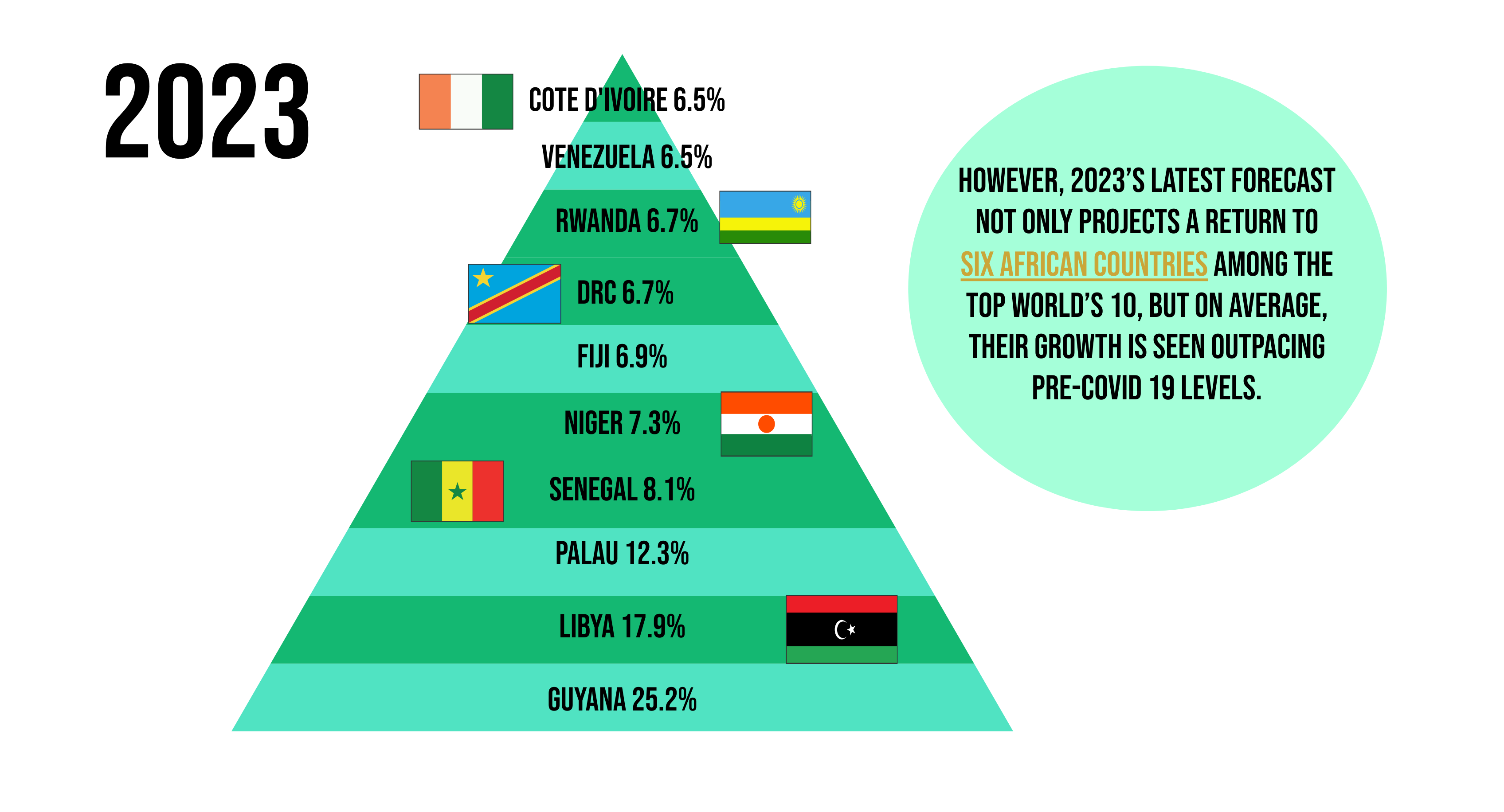
The IMF World Economic Outlook: Will African Countries See Growth in 2023?
By developmentreimaginedPosted January 4, 2023
In infographic
0
Over the past 4 years, the world has endured the economic fallout from the China-US trade war, the COVID-19 pandemic itself plus supply chain disruptions accompanied by inequitable vaccine access, the Russia-Ukraine War and, now, subsequent inflation crisis. Such events have left many countries across the world in a constrained financial position which is likely to continue well into 2023.
The latest IMF World Economic Outlook (WEO) therefore comes at a key point in the trajectory of the global economy. But what does the IMF WEO actually mean, especially as we jump from one economic shock to another? Is the global economy as “gloom and doom” as the IMF’s own press releases suggest, especially for Africa? Well, our infographic takes stock of the IMF’s WEO forecasts from 2019 – 2022 thus far and examines what the 2022 Outlook could mean for the continent. Here are four key takeaways.
First, it’s important to note that, aside from 2021, the IMF’s outlook for Africa as a region has been ahead of global forecasts. Indeed, whilst there was a decline in GDP growth by 1.5% in 2020 – falling by US$165 billion, before the COVID-19 outbreak – the IMF had forecasted that the region out to have a GDP of US$2.59 trillion!
Second, despite having a high growth rate pre-COVID-19, the region has been experiencing significant financial losses due to COVID-19 shocks, ranging from US$27.6 billion to US$47 billion in 2021. Yet, this is not surprising. African governments had tospend a significant proportion of their GDP to fund economic and social protection measures throughout COVID-19. Indeed, in January 2022 we estimated that we estimate that African countries have allocated $63 billion in their national budgets to COVID-19 in the 2020-2021 financial year alone, representing 2.3% of African GDP. Yet despite spending on proactive measures, many countries were hit with economic shocks. Taking Ghana as an example, the country lost an estimatedUS$1.3 billion following a 3-week urban partial lockdown, a staggering 27.9% GDP loss. That US$1.3 billion could be used to fund vital infrastructure projects.
Third, despite setbacks from vaccine inequity, African countries are once again ranked among the IMF’s fastest-growing economies. But how have African countries fared in IMF economic rankings in the past? Well, in 2019 four African countries were in the IMF’s fastest-growing economies – Rwanda (9.5% GDP growth), Ethiopia (9%), Uganda (7.8%) and Tanzania (7%). By 2020 this had jumped to six African countries forecasted to be in the fastest growing economies – with Ethiopia leading with 6% followed by Guinea (4.9%), Tanzania (4.8%) Benin (3.8%), Niger (3.6%) and Egypt (3.6%). However, with the onset of COVID-19, in 2021 Libya was the only African country forecast to see GDP growth at 28.3%. Indeed, it is a similar picture for 2022, with Seychelles as the only ranking African country with 10.9% GDP growth.
Yet, the 2023 forecast reveals a different story – one which is closer to 2019 and 2020 forecasts. In 2023, it is predicted six African countries will be in the top fast-growing economies, with Libya (17.9%), Senegal (8.1%), Niger (7.3%), DRC (6.7%), Rwanda (6.7%) and Cote d’Ivoire (6.5%). Further, 2023’s latest forecast not only projects a return to six African countries among the top world’s 10 but on average, their growth is seen outpacing pre-COVID-19 levels. As a region, the continent has been forecasted to grow by 3.7% – up by 0.1% from 2022.
Fourth, this does not necessarily mean that the continent’s post-pandemic recovery is well underway – as there are numerous constraints placed on African countries’ growth. Challenges to growth include ongoing inflation rates, increasing trade costs and interest rate hikes. However, most importantly, access to concessional financing to fund continued growth is limited – with the international financial system becoming more constrained whilst domestic resource mobilisation remains limited.
But why is more finance needed for the continent to continue growing? Especially with new “debt crisis” narratives popping up every day? The fact is that African countries still have huge infrastructure gaps to address to meet the SDGs and Agenda 2063 – and cheap, accessible and fair financing is key. However, due to the IMF and World Bank’s Debt Sustainability Analysis and its inherent bias, many countries are locked out of the system, and have to either go without funding or secure costly private sector loans with higher interest rates and shorter terms! Our own forecasting analysis from August 2022 shows that for Nigeria, Ghana, Senegal or Cote d’Ivoire to meet the SDGs, they would need to spend more than 15% of their GDP per annum.
In sum, whilst African countries and the region look to experience growth in 2023, more finance – including from the IMF – will be needed to ensure that growth can continue and accelerate to achieve long-term, sustainable development.
Similar Discussions
-
 Sababu vikosi vya SADC vilivyopo DRC kushidwa kukabiliana M23 wanaungwa mkono na Rwanda ni hii
- Started by Brigadier Isaac
- Replies: 46
-

-
 Somo Jingine Kutokana na Mauaji ya Rwanda, 1994: Mapanga, Majambia na Marungu, ni Silaha za Kivita Zilizo Mbadala wa Bunduki, Mabomu na Vifaru
- Started by Doctor Mama Amon
- Replies: 31
-
 Rais Kagame katupa taulo, shujaa wa Hotel Rwanda, Paul Rusesabagina kuachiliwa huru
- Started by HIMARS
- Replies: 47
