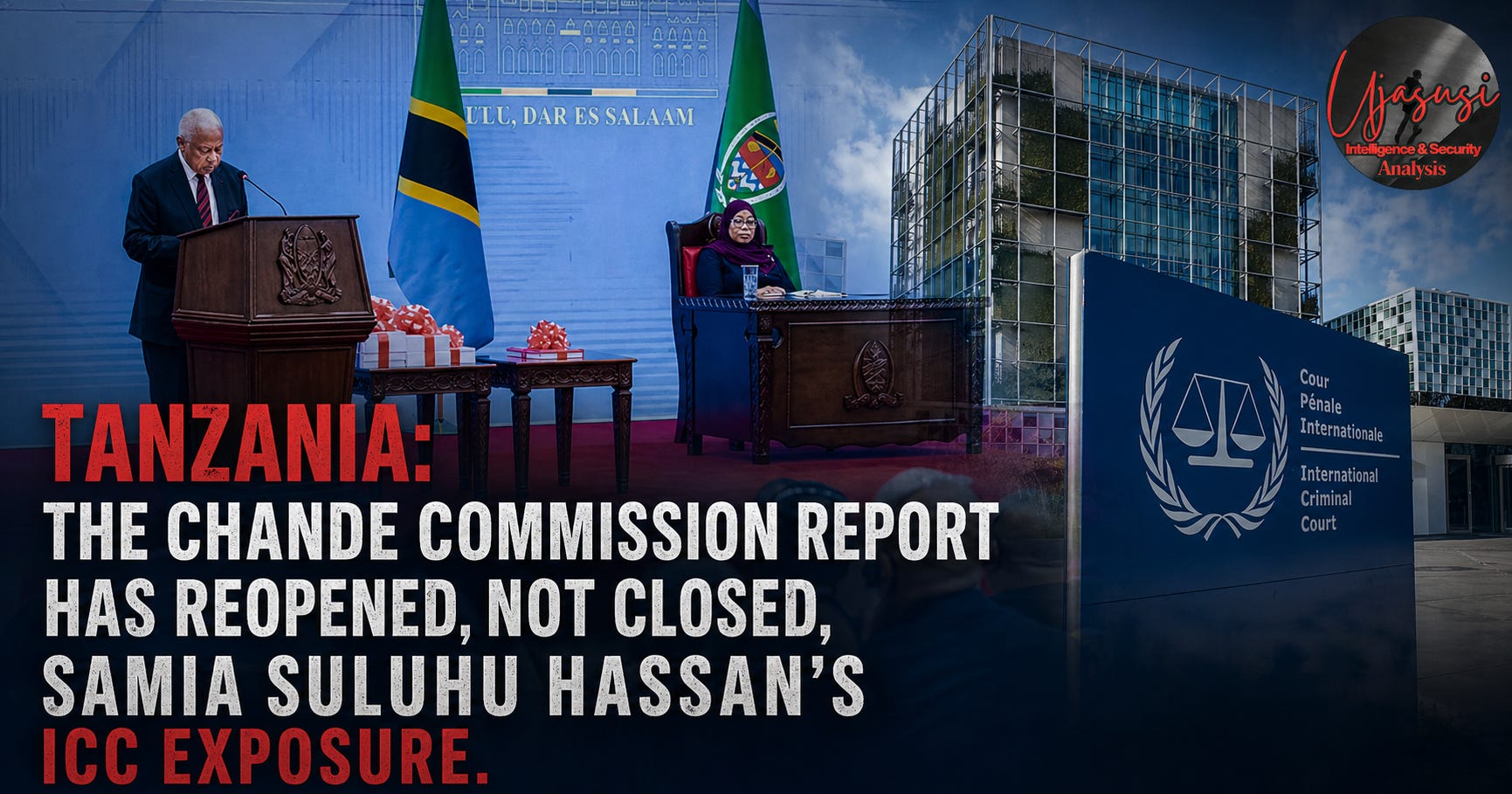
Maana yake kibano na mbinyo kutoka kila safu ulimwenguni tayari imeanza kukera mamlaka haramu zilizojiweka madarakani kwa damu ya raia wanaodai mabadiliko nchini Tanzania ambazo sasa zinashindwa kupata usingizi Ikulu
Impact Series
Findings of commission of inquiry into Tanzania election violence
Photo: Senior Advisor to President Samia Suluhu Hassanro, Lazaro Nyalandu
Joining CNBC Africa for more is the Senior Advisor to President Samia Suluhu Hassanro, Lazaro Nyalandu.
Fri, 24 Apr 2026 15:21:47 GMT
Speaking in a CNBC television interview, Lazaro Nyalandu, a senior adviser to President Samia Suluhu Hassan, said the inquiry led by Mohamed Chande Othman had carried out one of the most extensive investigations ever undertaken in the country, gathering testimony and evidence from a wide range of citizens and stakeholders.
According to Nyalandu, the commission’s findings confirmed the scale of the violence and the gravity of the national crisis that followed the election. He said President Samia was “absolutely abhorred” by the report and by the loss of life during the unrest.
“It is absolutely unfortunate ... that we lost 518 people, citizens of our country who unfortunately lost their lives during this chaos of post-election violence in Tanzania,” Nyalandu said.
The findings come at a pivotal moment for Tanzania, which is trying to balance demands for justice and political reform with a broader push to maintain macroeconomic stability and preserve its standing as a key investment destination in East Africa.
Nyalandu rejected claims by opposition figures that the commission was biased, saying opposition parties had been invited to participate in the process but declined to do so. He said the inquiry nevertheless received substantial evidence from victims and members of the public from “different walks of life,” which he said strengthened the credibility of the report.
In response to the commission’s findings, the government is now moving on several fronts. Nyalandu said President Samia had announced the creation of an investigative body tasked with examining the report further and preparing criminal referrals to determine who was responsible for the violence.
That step, he said, is intended to ensure accountability for those found to have played a role in the unrest.
At the same time, the president is setting up a reconciliation commission that will bring together political parties, religious leaders, civil society groups and parliamentarians for a national dialogue aimed at healing divisions and rebuilding unity.
Nyalandu framed the reconciliation process as central to stabilizing the country after the unrest, saying the government wants all political stakeholders and civic actors to have “a seat on the table” as Tanzania works through the aftermath of the crisis.
A constitutional review is also planned, in what could become one of the most significant political reform initiatives of President Samia’s administration. Nyalandu said the review would seek to address structural grievances and institutional shortcomings ahead of the country’s next cycle of elections, including civic polls in 2029 and general elections in 2030.
The aim, he said, is to produce a broadly shared constitutional framework that reflects the views of political parties, religious communities, civil society and ordinary citizens.
While the political fallout from the violence remains significant, Tanzanian officials are also eager to emphasize that the unrest has not derailed the country’s reform and growth agenda.
Nyalandu said Tanzania is projected to post 6.5% GDP growth this year, up from 6% previously, while inflation remains contained at 3.2%. He added that foreign direct investment continues to rise and is expected to exceed $1.7 billion before year-end.
Those figures, if sustained, would help support the government’s argument that the economy remains resilient despite the shock of the unrest. Nyalandu pointed to major infrastructure developments, including the standard gauge railway from Dar es Salaam to Dodoma and ongoing expansion phases backed by financing, as evidence that long-term investment plans remain on track.
He also highlighted the administration’s efforts to address youth unemployment, which has increasingly become an economic and political pressure point in many African economies. For the first time, he said, Tanzania has established a youth ministry and a Youth Development Fund worth 200 billion Tanzanian shillings to support young entrepreneurs and job creation.
The government official described the violence of Oct. 29 as a “well-planned” and “orchestrated” event rather than a spontaneous expression of democratic protest. He alleged that some participants were armed and involved in attacks on buildings and gas stations, contributing to broader panic and destruction.
Although those assertions are likely to remain politically sensitive, they underline the government’s determination to distinguish between legitimate political dissent and criminal activity as it shapes its response.
For investors, the administration’s message is that the unrest was severe but short-lived. Nyalandu said the violence was largely contained within a single day and that normal activity resumed quickly afterward, aided by security forces deployed to protect people and property.
He said Tanzania remains stable, open for business and committed to confronting the causes of the unrest directly rather than avoiding them.
The broader challenge for President Samia will be whether the government can convert that message into lasting trust, both domestically and internationally. The inquiry’s death toll is likely to intensify pressure for transparent prosecutions, credible reconciliation and a reform process that is seen as inclusive by opponents as well as supporters.
For now, Tanzanian officials are seeking to project a dual message: that the state is serious about accountability after a deadly political rupture, and that the country’s economic fundamentals, from low inflation to infrastructure spending and foreign investment, remain intact.
Whether that balancing act succeeds may shape Tanzania’s political trajectory heading into its next electoral cycle and determine how confidently investors view the country in the years ahead
CNBC Africa