Vikwazo vya uchumi tutakaothirika ni sisi na sio wasababishi na kabla ya vikwazo wazifungie familia na jamaa za wasababishi vikwazo vya kukanyaga ulaya na marekani yaani wasipewe viza Maisha yao yote yaani life ban ya kuingia ulaya waishie kuziona YouTube tu.
Jarida la The Economist ladai uchumi wa Tanzania unaporomoka, lahamasisha Rais Magufuli adhibitiwe kwa vikwazo kiuchumi
You are using an out of date browser. It may not display this or other websites correctly.
You should upgrade or use an alternative browser.
You should upgrade or use an alternative browser.
Jarida la The Economist ladai uchumi wa Tanzania unaporomoka, lahamasisha Rais Magufuli adhibitiwe kwa vikwazo kiuchumi
-
Thread starter
Pascal Mayalla

- Start date
Ulitaka huyo msaliti Eric asiandamwe kwa nini? Paschal alifanya la maana kuitetea nchi yake dhidi ya wasaliti na mabeberu. Na sasa anaogerea kwenye mahabusu na hakuna wa kumtetea. Nafikiri akitoka atakuwa amejifunza!Paskali Roho ya mama Verdiana Mujwahuzi itakuandama for the rest of your life; everyone knows ulimuandama sana mwanae Erick hapa Jf!
Karma is real, shameless penpusher!
Huyo msaliti anaathibiwa kwa usaliti na utakatishaji wa pesa haramu. Wangapi wana challenge uongozi lakini hawashughulikiwiMkuu sidhani kama nakuelewa hata kidogo walisema mficha ugonjwa huumbuliwa na kaburi..., kwahio unaona wewe kama kuna makosa yanafanyika na wale tuliowapa dhamana ya kutufanyia kazi sisi wananchi yasisemwe sababu sio vema kuonyesha mapungufu ya hao watumishi wetu ?
Pili kwa upeo wako unaona ni sawa mtu kuadhibiwa sababu ana mtizamo tofauti ?, hata kama alichokisema ni cha uongo basi apuuzwe au alichokisema kiweze kuchambuliwa ili tupate pumba na mchele na sio kumfunga mdomo..., ni kweli kabisa huku kufungana midomo tutajenga taifa la ndio mzee na sio critical thinkers au watu wenye mtizamo tofauti..., yaani taifa la watu wasiofikiri wenyewe bali wanaambiwa hata cha kufikiri...


Masanjaone
JF-Expert Member
- Nov 15, 2019
- 844
- 598
Hakuna haja! Unadhani mh rais hajui niayao? Watapata taabu sn.Msemaji Mkuu wa serikali anatakiwa afanye press conference na international media kujibu hizi tuhuma

The only
JF-Expert Member
- May 19, 2011
- 11,084
- 14,564
Ikiwemo kuteka na kukimbia uchaguzi
Sent using Jamii Forums mobile app
Mkuu.
Unaporekebisha nchi ambayo ilikuwa na uhovyo mwingi kwa kiasi tulichokuwa tumefikia, ni lazima maumivu yatatokea. Ndio maana Rais anasema tuvumilie lakini ni lazima tupitie kipindi hiki kama kweli tupo serious tunataka kupona kama nchi.
Sent using Jamii Forums mobile app

Holly Star
JF-Expert Member
- Aug 25, 2018
- 4,327
- 8,184
Hawa ni wapumbavu flani tu hivi waeneza propaganda za kibeberu wasio na akili hata kidogo
Sent using Jamii Forums mobile app
Sent using Jamii Forums mobile app
The only
JF-Expert Member
- May 19, 2011
- 11,084
- 14,564
We ni msomi safi mbagala huku uchumi mzuriUlitaka huyo msaliti Eric asiandamwe kwa nini? Paschal alifanya la maana kuitetea nchi yake dhidi ya wasaliti na mabeberu. Na sasa anaogerea kwenye mahabusu na hakuna wa kumtetea. Nafikiri akitoka atakuwa amejifunza!

MTK
JF-Expert Member
- Apr 19, 2012
- 8,920
- 6,858
Ulitaka huyo msaliti Eric asiandamwe kwa nini? Paschal alifanya la maana kuitetea nchi yake dhidi ya wasaliti na mabeberu. Na sasa anaogerea kwenye mahabusu na hakuna wa kumtetea. Nafikiri akitoka atakuwa amejifunza!
Flash back thru' the time tunnel! Paskali alianza lini kuitetea nchi yake? je ni kabla ya kuminywa na kamati ya bunge au baada? na kwa nini Bunge lililazimika kumdhibiti? "uzalendo" wa Paskali ulizaliwa lini?
Think, use your gray matter, think bro?!

Poa 2
JF-Expert Member
- Jul 7, 2019
- 1,327
- 1,347
Heri
Heri kuwa maskini mwenye demokrasia ndio naana tulipigania uhuru kaka kuwa tajiri chini ya udikteta unakuwa sawa na ng'ombe tusemeje jamani mtuelewe sisi watz? Na hakuna binadamu anayekubalia na hilo kokote ulimwenguniWanabodi.
Hii ni Makala toka jarida la The Economist, linamsakama sana Rais Magufuli, katika Makala hii, linahamasisha rais Magufuli adhibitiwe kwa kuwekewa vikwazo vikali kabisa kiuchumi.
How to save Tanzania
Wachumi wetu tusaidieni, ukiondoa hoja za udikiteta, jee kiuchumi rais Magufuli anafanya vizuri?. Kama rais Magufuli anajenga Tanzania yenye neema na ustawi kiuchumi, then tujiulize jee Watanzania tunataka nini?. Tunataka Tanzania masikini yenye demokrasia, au Tanzania tajiri yenye udikiteta?.
Democracy in Africa How to save Tanzania
Start by containing President John Magufuli

Print edition | Leaders
Mar 17th 2018
THE white beach of Dar es Salaam may seem enticing. Yet the bodies that have washed up on it, almost in sight of the city’s glistening offices and hotels, are a sign of Tanzania’s sickening lurch to despotism. Opposition politicians are being shot; activists and journalists are disappearing.
Until recently Tanzania’s political stability drew investors and donors, spurring one of the fastest sustained streaks of economic growth in Africa. But John Magufuli, an authoritarian and erratic president in his third year in office, threatens to undo much that Tanzania has achieved over the past few decades. The rest of Africa, and the world, should not keep quiet.
The Teacher’s flawed lessons
Tanzania matters, in part because of the aura of the late Julius Nyerere, its first prime minister, as a founding father of post-colonial Africa (he is still affectionately known as Mwalimu or “Teacher”). Like many other leaders of the time, he was an autocrat, instituting one-party rule on the ground that democracy was “an over-sophisticated pastime which we in Africa cannot afford”. He impoverished a generation through his “African socialism”. He nationalised companies and forced millions onto collective farms, burning their homes to stop them returning. The result was hunger and economic chaos.
Even so, he sought to unite his country in a region where many clung to power by stoking tribal tensions. He was, in general, less repressive than many of his peers. And by sending his troops into Uganda, he got rid of Idi Amin, one of the world’s nastiest dictators. More recently, with the restoration of multiparty democracy in 1994, Tanzania has been the darling of investors. Its output has grown on average by about 6.5% a year for the past decade. It has attracted foreign direct investment worth an average of 4% of GDP each year. Tanzanians are now about twice as rich as they were in 1990.
Yet this progress is imperilled by Mr Magufuli, who is transforming a stable, if flawed, democracy into a brutal dictatorship (see article). Officials have taken to making arbitrary demands for taxes. Businesses are shutting, exports are slumping, investors are fleeing and economic growth is forecast to slow.
Outsiders have been shamefully mealy-mouthed. Africa is almost silent. America and the European Union recently expressed concern about political violence, but did not criticise the government directly. Nor did they threaten to take action if the repression continues. Some diplomats argue that a part-suspension of American aid in 2016 was ineffective. Aid officials worry that further cuts would hurt mainly the poor.
They could and should be more forceful. Three years ago European countries temporarily withheld about $500m over corruption. The government soon fired and charged officials who were implicated. Tanzania is Africa’s third-largest recipient of Western aid (and the largest per person); 10-15% of its revenues come from Western countries as fungible “budget support”. Multilateral donors are still tripping over one another to give it cheap loans and grants. The World Bank, for instance, has increased its allocation to Tanzania by $500m, to $2.4bn.
For Western donors to look away as Tanzania descends into oppression would be to discard much of its progress in recent decades. Most of all, Tanzania’s neighbours need to act. Failing to stand up for the rule of law is to encourage other would-be despots to do their worst.
This article appeared in the Leaders section of the print edition under the headline "Tanzania’s sickening lurch"
Jee rais Magufuli amewakosea nini wazungu hawa hadi kumkamia namna hii?, wakati baadhi yetu tukitamani Katiba ibadilishwe, tumpatie rais Magufuli muda wa kutosha kuinyoosha nchi, hawa watu wanamuita John Magufuli, an authoritarian and erratic president who is transforming a stable, if flawed, democracy into a brutal dictatorship.
Ni haki kweli kumuita rais wetu, an authoritarian and erratic president na kumtuhumu kuwa ana transforming a stable, democracy into a brutal dictatorship?. Kuna ukweli wowote hapa?.
Paskali
Rejea.
Tusikubali udhalilishaji wa Jarida la The Economist, lamwita Rais wetu "Dinasauria wa Dodoma” na "bullheaded socialist"
Rais Magufuli ametukanwa tena na Jarida la Economist. Tukiendelea kunyamaza, itafika siku Uongo huu utageuka Ukweli!
Jarida la The Economist ladai uchumi wa Tanzania unaporomoka, lahamasisha Rais Magufuli adhibitiwe kwa vikwazo kiuchumi
Serikali yetu Kuitwa "Sinister" na "Authoritarian": Je, ni kweli? Kama si kweli, Tusiukubali Uongo huu, Tuukanushe!
Huku sio kudhalilishwa kwa Rais wetu na Media za Nje? Je, watanzania tukubali, Tukae kimya?
Serikali ikanushe uongo huu wa SABC kumsema vibaya Rais wetu Magufuli kuwa ni Dikteta!
Wanabodi.
Hii ni Makala toka jarida la The Economist, linamsakama sana Rais Magufuli, katika Makala hii, linahamasisha rais Magufuli adhibitiwe kwa kuwekewa vikwazo vikali kabisa kiuchumi.
How to save Tanzania
Wachumi wetu tusaidieni, ukiondoa hoja za udikiteta, jee kiuchumi rais Magufuli anafanya vizuri?. Kama rais Magufuli anajenga Tanzania yenye neema na ustawi kiuchumi, then tujiulize jee Watanzania tunataka nini?. Tunataka Tanzania masikini yenye demokrasia, au Tanzania tajiri yenye udikiteta?.
Democracy in Africa How to save Tanzania
Start by containing President John Magufuli
Print edition | Leaders
Mar 17th 2018
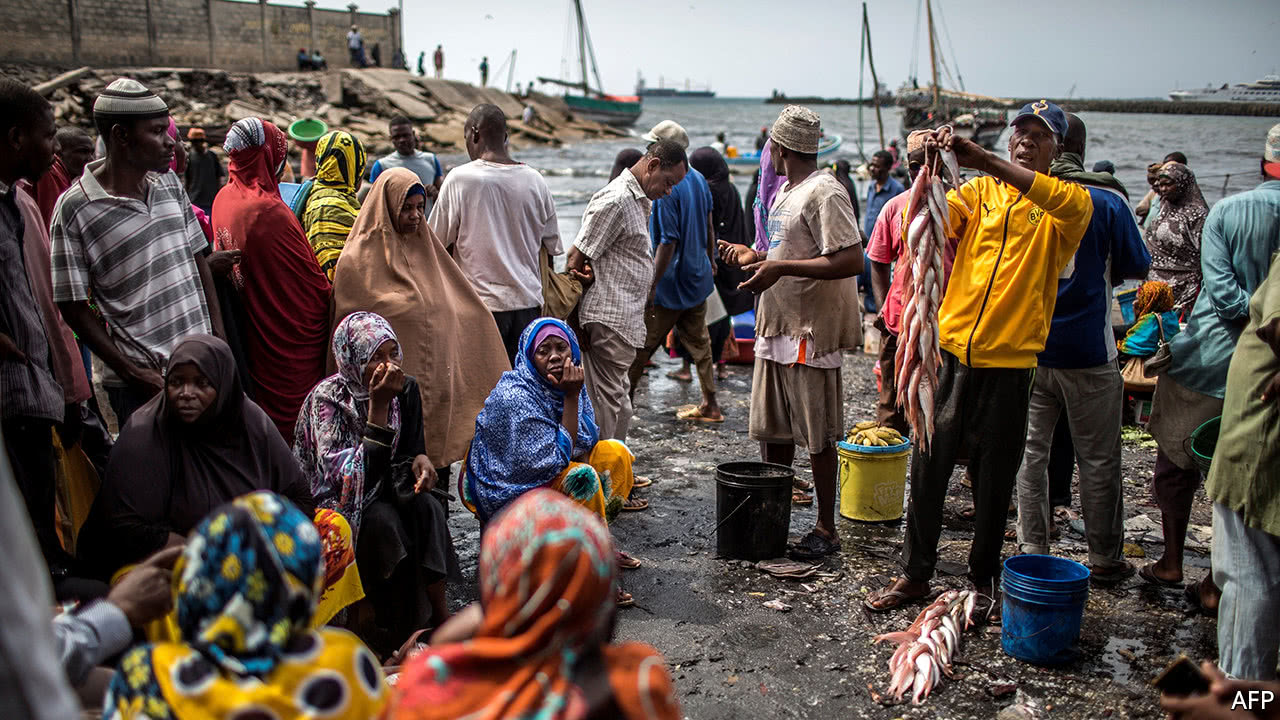
THE white beach of Dar es Salaam may seem enticing. Yet the bodies that have washed up on it, almost in sight of the city’s glistening offices and hotels, are a sign of Tanzania’s sickening lurch to despotism. Opposition politicians are being shot; activists and journalists are disappearing.
Until recently Tanzania’s political stability drew investors and donors, spurring one of the fastest sustained streaks of economic growth in Africa. But John Magufuli, an authoritarian and erratic president in his third year in office, threatens to undo much that Tanzania has achieved over the past few decades. The rest of Africa, and the world, should not keep quiet.
The Teacher’s flawed lessons
Tanzania matters, in part because of the aura of the late Julius Nyerere, its first prime minister, as a founding father of post-colonial Africa (he is still affectionately known as Mwalimu or “Teacher”). Like many other leaders of the time, he was an autocrat, instituting one-party rule on the ground that democracy was “an over-sophisticated pastime which we in Africa cannot afford”. He impoverished a generation through his “African socialism”. He nationalised companies and forced millions onto collective farms, burning their homes to stop them returning. The result was hunger and economic chaos.
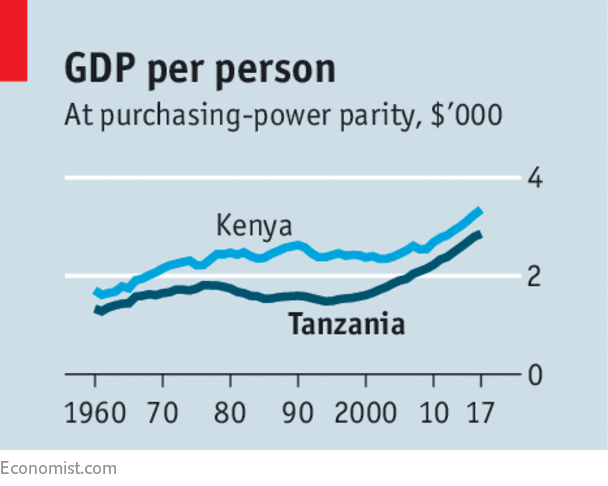
Even so, he sought to unite his country in a region where many clung to power by stoking tribal tensions. He was, in general, less repressive than many of his peers. And by sending his troops into Uganda, he got rid of Idi Amin, one of the world’s nastiest dictators. More recently, with the restoration of multiparty democracy in 1994, Tanzania has been the darling of investors. Its output has grown on average by about 6.5% a year for the past decade. It has attracted foreign direct investment worth an average of 4% of GDP each year. Tanzanians are now about twice as rich as they were in 1990.
Yet this progress is imperilled by Mr Magufuli, who is transforming a stable, if flawed, democracy into a brutal dictatorship (see article). Officials have taken to making arbitrary demands for taxes. Businesses are shutting, exports are slumping, investors are fleeing and economic growth is forecast to slow.
Outsiders have been shamefully mealy-mouthed. Africa is almost silent. America and the European Union recently expressed concern about political violence, but did not criticise the government directly. Nor did they threaten to take action if the repression continues. Some diplomats argue that a part-suspension of American aid in 2016 was ineffective. Aid officials worry that further cuts would hurt mainly the poor.
They could and should be more forceful. Three years ago European countries temporarily withheld about $500m over corruption. The government soon fired and charged officials who were implicated. Tanzania is Africa’s third-largest recipient of Western aid (and the largest per person); 10-15% of its revenues come from Western countries as fungible “budget support”. Multilateral donors are still tripping over one another to give it cheap loans and grants. The World Bank, for instance, has increased its allocation to Tanzania by $500m, to $2.4bn.
For Western donors to look away as Tanzania descends into oppression would be to discard much of its progress in recent decades. Most of all, Tanzania’s neighbours need to act. Failing to stand up for the rule of law is to encourage other would-be despots to do their worst.
This article appeared in the Leaders section of the print edition under the headline "Tanzania’s sickening lurch"
Jee rais Magufuli amewakosea nini wazungu hawa hadi kumkamia namna hii?, wakati baadhi yetu tukitamani Katiba ibadilishwe, tumpatie rais Magufuli muda wa kutosha kuinyoosha nchi, hawa watu wanamuita John Magufuli, an authoritarian and erratic president who is transforming a stable, if flawed, democracy into a brutal dictatorship.
Ni haki kweli kumuita rais wetu, an authoritarian and erratic president na kumtuhumu kuwa ana transforming a stable, democracy into a brutal dictatorship?. Kuna ukweli wowote hapa?.
Paskali
Rejea.
Tusikubali udhalilishaji wa Jarida la The Economist, lamwita Rais wetu "Dinasauria wa Dodoma” na "bullheaded socialist"
Rais Magufuli ametukanwa tena na Jarida la Economist. Tukiendelea kunyamaza, itafika siku Uongo huu utageuka Ukweli!
Jarida la The Economist ladai uchumi wa Tanzania unaporomoka, lahamasisha Rais Magufuli adhibitiwe kwa vikwazo kiuchumi
Serikali yetu Kuitwa "Sinister" na "Authoritarian": Je, ni kweli? Kama si kweli, Tusiukubali Uongo huu, Tuukanushe!
Huku sio kudhalilishwa kwa Rais wetu na Media za Nje? Je, watanzania tukubali, Tukae kimya?
Serikali ikanushe uongo huu wa SABC kumsema vibaya Rais wetu Magufuli kuwa ni Dikteta!
Lazima tukumbuke hii topic ni miaka miwili iliyopita. P mimi ni mtaalamu wa Finance 2018 ni kweli uchumi ulikuwa mbaya numbers hazikuwa nzuri lakini 2019 uchumi ulikuwa mzuri sana. Je nimeangalia nini
1. Kwenye mfumo wa bei ukiangalia historia mfumuko wa bei asilimia yake kila mwaka inaendana na thamani ya pesa ya Tsh vs Dollars. Ukiangalia utaona ni kweli mfumuko wa bei ukikuwa juu sana. Lakini sasa ni kweli umeshuka mpaka 3.5% hivi.
2. Kwa sasa uwekezaji kwenye ujenzi umesaidia sana uchumi. Ukiangalia report ya bank kuu ujenzi ndiyo umeongoza, lakini kizuri vilevile tumeanza kupeleka nje Gold na mazao ya vyakula.
Mwaka huu ni mgumu kwasababu za kisiasa. Wawekezaji wengi sana wataogopa kuwekeza kwenye mwaka wa uchaguzi hasa ukizingatia ni kote Kenya, Tanzania hata USA yaani miaka minne na mitano imekutana kwenye chaguzi mwaka huu. Kwasababu vilevile Magu na serikali inalalamikiwa na wasiwasi tusije kuwekewa sanctions kwasababu ya uchaguzi. Tujue USA ndiyo ina power sana kwenye sanctions kwasababu ya matumizi makubwa ya dollar kama pesa ya biashara Duniani. Hivyo kama Magu kweli anataka tusipate shida nashauri uchaguzi uwe wa haki tu ili kwa uwekezaji wa ujenzi atashinda.
Benny Haraba
JF-Expert Member
- Dec 7, 2012
- 15,656
- 14,615
Mayala hivi vile vipimo vya mikojo hakuna tena? wambie huku Tanzania tutawapima mkojo ili tujue km wanavinasaba vya uchochezi ama uhujumu uchumiWanabodi.
Hii ni Makala toka jarida la The Economist, linamsakama sana Rais Magufuli, katika Makala hii, linahamasisha rais Magufuli adhibitiwe kwa kuwekewa vikwazo vikali kabisa kiuchumi.
How to save Tanzania
Wachumi wetu tusaidieni, ukiondoa hoja za udikiteta, jee kiuchumi rais Magufuli anafanya vizuri?. Kama rais Magufuli anajenga Tanzania yenye neema na ustawi kiuchumi, then tujiulize jee Watanzania tunataka nini?. Tunataka Tanzania masikini yenye demokrasia, au Tanzania tajiri yenye udikiteta?.
Democracy in Africa How to save Tanzania
Start by containing President John Magufuli
Print edition | Leaders
Mar 17th 2018
THE white beach of Dar es Salaam may seem enticing. Yet the bodies that have washed up on it, almost in sight of the city’s glistening offices and hotels, are a sign of Tanzania’s sickening lurch to despotism. Opposition politicians are being shot; activists and journalists are disappearing.
Until recently Tanzania’s political stability drew investors and donors, spurring one of the fastest sustained streaks of economic growth in Africa. But John Magufuli, an authoritarian and erratic president in his third year in office, threatens to undo much that Tanzania has achieved over the past few decades. The rest of Africa, and the world, should not keep quiet.
The Teacher’s flawed lessons
Tanzania matters, in part because of the aura of the late Julius Nyerere, its first prime minister, as a founding father of post-colonial Africa (he is still affectionately known as Mwalimu or “Teacher”). Like many other leaders of the time, he was an autocrat, instituting one-party rule on the ground that democracy was “an over-sophisticated pastime which we in Africa cannot afford”. He impoverished a generation through his “African socialism”. He nationalised companies and forced millions onto collective farms, burning their homes to stop them returning. The result was hunger and economic chaos.
Even so, he sought to unite his country in a region where many clung to power by stoking tribal tensions. He was, in general, less repressive than many of his peers. And by sending his troops into Uganda, he got rid of Idi Amin, one of the world’s nastiest dictators. More recently, with the restoration of multiparty democracy in 1994, Tanzania has been the darling of investors. Its output has grown on average by about 6.5% a year for the past decade. It has attracted foreign direct investment worth an average of 4% of GDP each year. Tanzanians are now about twice as rich as they were in 1990.
Yet this progress is imperilled by Mr Magufuli, who is transforming a stable, if flawed, democracy into a brutal dictatorship (see article). Officials have taken to making arbitrary demands for taxes. Businesses are shutting, exports are slumping, investors are fleeing and economic growth is forecast to slow.
Outsiders have been shamefully mealy-mouthed. Africa is almost silent. America and the European Union recently expressed concern about political violence, but did not criticise the government directly. Nor did they threaten to take action if the repression continues. Some diplomats argue that a part-suspension of American aid in 2016 was ineffective. Aid officials worry that further cuts would hurt mainly the poor.
They could and should be more forceful. Three years ago European countries temporarily withheld about $500m over corruption. The government soon fired and charged officials who were implicated. Tanzania is Africa’s third-largest recipient of Western aid (and the largest per person); 10-15% of its revenues come from Western countries as fungible “budget support”. Multilateral donors are still tripping over one another to give it cheap loans and grants. The World Bank, for instance, has increased its allocation to Tanzania by $500m, to $2.4bn.
For Western donors to look away as Tanzania descends into oppression would be to discard much of its progress in recent decades. Most of all, Tanzania’s neighbours need to act. Failing to stand up for the rule of law is to encourage other would-be despots to do their worst.
This article appeared in the Leaders section of the print edition under the headline "Tanzania’s sickening lurch"
Jee rais Magufuli amewakosea nini wazungu hawa hadi kumkamia namna hii?, wakati baadhi yetu tukitamani Katiba ibadilishwe, tumpatie rais Magufuli muda wa kutosha kuinyoosha nchi, hawa watu wanamuita John Magufuli, an authoritarian and erratic president who is transforming a stable, if flawed, democracy into a brutal dictatorship.
Ni haki kweli kumuita rais wetu, an authoritarian and erratic president na kumtuhumu kuwa ana transforming a stable, democracy into a brutal dictatorship?. Kuna ukweli wowote hapa?.
Paskali
Rejea.
Tusikubali udhalilishaji wa Jarida la The Economist, lamwita Rais wetu "Dinasauria wa Dodoma” na "bullheaded socialist"
Rais Magufuli ametukanwa tena na Jarida la Economist. Tukiendelea kunyamaza, itafika siku Uongo huu utageuka Ukweli!
Jarida la The Economist ladai uchumi wa Tanzania unaporomoka, lahamasisha Rais Magufuli adhibitiwe kwa vikwazo kiuchumi
Serikali yetu Kuitwa "Sinister" na "Authoritarian": Je, ni kweli? Kama si kweli, Tusiukubali Uongo huu, Tuukanushe!
Huku sio kudhalilishwa kwa Rais wetu na Media za Nje? Je, watanzania tukubali, Tukae kimya?
Serikali ikanushe uongo huu wa SABC kumsema vibaya Rais wetu Magufuli kuwa ni Dikteta!

Chagu wa Malunde
JF-Expert Member
- Jul 11, 2015
- 8,744
- 5,769
Mnachotaka kusema aliku anaacha shughuli zake anaenda kuwaambia watu nyeti Kabendera ndio anaandika? Maana kumchongea mtu ni kwenda kumchoma. Mimi nadhani mnasingizia. Huyu jamaa alionyesha uzalendo kwa kutetea nchi yetu inavyosingiziwa. Aliweka wazi namna hili jarida halitaki miradi kama stiegler's gorge/ Nyerere hydroproject isifanyike

Pascal Mayalla
Platinum Member
- Sep 22, 2008
- 57,103
- 128,722
- Thread starter
- #574
Mwisho wa siku, jarida la The Economist litaishia kuaibika kuhusu Tanzania, maana sasa hata IMF wameanza kutukubali
Habari njema za uchumi wa Tanzania kimataifa: IMF yakubali Magufuli anapiga kazi nzuri, kumuunga mkono kwa kuimwagia mabilioni ya maendeleo mwezi Mei
P
Habari njema za uchumi wa Tanzania kimataifa: IMF yakubali Magufuli anapiga kazi nzuri, kumuunga mkono kwa kuimwagia mabilioni ya maendeleo mwezi Mei
P

donlucchese
JF-Expert Member
- Mar 23, 2011
- 17,258
- 22,129
Sikupingi mkuu, ila goba siku hizi huonekani
Sent using Jamii Forums mobile app
Mwisho wa siku, jarida la The Economist litaishia kuaibika kuhusu Tanzania, maana sasa hata IMF wameanza kutukubali
Habari njema za uchumi wa Tanzania kimataifa: IMF yakubali Magufuli anapiga kazi nzuri, kumuunga mkono kwa kuimwagia mabilioni ya maendeleo mwezi Mei
P
Sent using Jamii Forums mobile app

Vladimir Lenin
JF-Expert Member
- Jul 21, 2018
- 3,613
- 5,138
... Ata utape tape vipi mzee huwezi kuonekana tena ili ujiunge kwenye kundi la walao, kuitwa bungeni kuhojiwa kuliharibu taswira yako na haitakaa isafishike tena mbele ya dereva wetu,.Mwisho wa siku, jarida la The Economist litaishia kuaibika kuhusu Tanzania, maana sasa hata IMF wameanza kutukubali
Habari njema za uchumi wa Tanzania kimataifa: IMF yakubali Magufuli anapiga kazi nzuri, kumuunga mkono kwa kuimwagia mabilioni ya maendeleo mwezi Mei
P
Pascal Mayalla
Platinum Member
- Sep 22, 2008
- 57,103
- 128,722
- Thread starter
- #577
Kuna maeneo ukionekana unakuwa fresh, ukiona watu hawaonekani, usipime... vimekaza balaa!Sikupingi mkuu, ila goba siku hizi huonekani
Sent using Jamii Forums mobile app
P

Drone Camera
JF-Expert Member
- Jul 25, 2017
- 14,121
- 14,032
Hizi makala huwa zinaandikwa na wabongo.Mwisho wa siku, jarida la The Economist litaishia kuaibika kuhusu Tanzania, maana sasa hata IMF wameanza kutukubali
Habari njema za uchumi wa Tanzania kimataifa: IMF yakubali Magufuli anapiga kazi nzuri, kumuunga mkono kwa kuimwagia mabilioni ya maendeleo mwezi Mei
P

thetallest
JF-Expert Member
- Oct 21, 2017
- 8,271
- 9,114
Huyu alikuwaga Eric Kabendera,Deep state walikwisha mfanyia kazi

Wanabodi.
Hii ni Makala toka jarida la The Economist, linamsakama sana Rais Magufuli, katika Makala hii, linahamasisha rais Magufuli adhibitiwe kwa kuwekewa vikwazo vikali kabisa kiuchumi.
How to save Tanzania
Wachumi wetu tusaidieni, ukiondoa hoja za udikiteta, jee kiuchumi rais Magufuli anafanya vizuri?. Kama rais Magufuli anajenga Tanzania yenye neema na ustawi kiuchumi, then tujiulize jee Watanzania tunataka nini?. Tunataka Tanzania masikini yenye demokrasia, au Tanzania tajiri yenye udikiteta?.
Democracy in Africa How to save Tanzania
Start by containing President John Magufuli
Print edition | Leaders
Mar 17th 2018
THE white beach of Dar es Salaam may seem enticing. Yet the bodies that have washed up on it, almost in sight of the city’s glistening offices and hotels, are a sign of Tanzania’s sickening lurch to despotism. Opposition politicians are being shot; activists and journalists are disappearing.
Until recently Tanzania’s political stability drew investors and donors, spurring one of the fastest sustained streaks of economic growth in Africa. But John Magufuli, an authoritarian and erratic president in his third year in office, threatens to undo much that Tanzania has achieved over the past few decades. The rest of Africa, and the world, should not keep quiet.
The Teacher’s flawed lessons
Tanzania matters, in part because of the aura of the late Julius Nyerere, its first prime minister, as a founding father of post-colonial Africa (he is still affectionately known as Mwalimu or “Teacher”). Like many other leaders of the time, he was an autocrat, instituting one-party rule on the ground that democracy was “an over-sophisticated pastime which we in Africa cannot afford”. He impoverished a generation through his “African socialism”. He nationalised companies and forced millions onto collective farms, burning their homes to stop them returning. The result was hunger and economic chaos.
Even so, he sought to unite his country in a region where many clung to power by stoking tribal tensions. He was, in general, less repressive than many of his peers. And by sending his troops into Uganda, he got rid of Idi Amin, one of the world’s nastiest dictators. More recently, with the restoration of multiparty democracy in 1994, Tanzania has been the darling of investors. Its output has grown on average by about 6.5% a year for the past decade. It has attracted foreign direct investment worth an average of 4% of GDP each year. Tanzanians are now about twice as rich as they were in 1990.
Yet this progress is imperilled by Mr Magufuli, who is transforming a stable, if flawed, democracy into a brutal dictatorship (see article). Officials have taken to making arbitrary demands for taxes. Businesses are shutting, exports are slumping, investors are fleeing and economic growth is forecast to slow.
Outsiders have been shamefully mealy-mouthed. Africa is almost silent. America and the European Union recently expressed concern about political violence, but did not criticise the government directly. Nor did they threaten to take action if the repression continues. Some diplomats argue that a part-suspension of American aid in 2016 was ineffective. Aid officials worry that further cuts would hurt mainly the poor.
They could and should be more forceful. Three years ago European countries temporarily withheld about $500m over corruption. The government soon fired and charged officials who were implicated. Tanzania is Africa’s third-largest recipient of Western aid (and the largest per person); 10-15% of its revenues come from Western countries as fungible “budget support”. Multilateral donors are still tripping over one another to give it cheap loans and grants. The World Bank, for instance, has increased its allocation to Tanzania by $500m, to $2.4bn.
For Western donors to look away as Tanzania descends into oppression would be to discard much of its progress in recent decades. Most of all, Tanzania’s neighbours need to act. Failing to stand up for the rule of law is to encourage other would-be despots to do their worst.
This article appeared in the Leaders section of the print edition under the headline "Tanzania’s sickening lurch"
Jee rais Magufuli amewakosea nini wazungu hawa hadi kumkamia namna hii?, wakati baadhi yetu tukitamani Katiba ibadilishwe, tumpatie rais Magufuli muda wa kutosha kuinyoosha nchi, hawa watu wanamuita John Magufuli, an authoritarian and erratic president who is transforming a stable, if flawed, democracy into a brutal dictatorship.
Ni haki kweli kumuita rais wetu, an authoritarian and erratic president na kumtuhumu kuwa ana transforming a stable, democracy into a brutal dictatorship?. Kuna ukweli wowote hapa?.
Paskali
Rejea.
Tusikubali udhalilishaji wa Jarida la The Economist, lamwita Rais wetu "Dinasauria wa Dodoma” na "bullheaded socialist"
Rais Magufuli ametukanwa tena na Jarida la Economist. Tukiendelea kunyamaza, itafika siku Uongo huu utageuka Ukweli!
Jarida la The Economist ladai uchumi wa Tanzania unaporomoka, lahamasisha Rais Magufuli adhibitiwe kwa vikwazo kiuchumi
Serikali yetu Kuitwa "Sinister" na "Authoritarian": Je, ni kweli? Kama si kweli, Tusiukubali Uongo huu, Tuukanushe!
Huku sio kudhalilishwa kwa Rais wetu na Media za Nje? Je, watanzania tukubali, Tukae kimya?
Serikali ikanushe uongo huu wa SABC kumsema vibaya Rais wetu Magufuli kuwa ni Dikteta!
donlucchese
JF-Expert Member
- Mar 23, 2011
- 17,258
- 22,129
Hahah, pamoja kakaKuna maeneo ukionekana unakuwa fresh, ukiona watu hawaonekani, usipime... vimekaza balaa!
P
Sent using Jamii Forums mobile app
Similar Discussions
-

-
Salute: Costa Ricky Mahalu - Mtu wa maana sana huyu!
- Started by Makumbele
- Replies: 8
-
THE PRESIDENTIAL TAX REFORMS COMMISSION ‘A defining moment now awaiting POLITICAL WILL’
- Started by Respicius Mwijage
- Replies: 2
-
 Larry Madowo -A kenyan journalist with a smear campaign against Tanzania
- Started by funaku
- Replies: 27
