EACOP vs Lamu pipeline

EACOP vs Lamu pipeline

Uganda signs deal with UAE investment firm over oil refinery​

Monday, March 31, 2025 - 1 min read
refinery.jpg

A crude oil refinery. Uganda has been seeking funds to have its oil refinery up and running in 2027.

File | AFP
27. File | AFP
By Reuters
News agency
Thomson Reuters

Uganda on Saturday signed an oil refinery agreement with UAE-based Alpha MBM Investments for a 60 percent stake in crude oil refinery in Kabaale, Hoima District, President Yoweri Museveni’s office said in a statement.

The country’s state-run Uganda National Oil Company will retain the remaining 40 percent stake in the 60,000-barrel-per-day refinery, according to the statement.

Besides the refinery deal, Uganda and UAE investors also signed five other agreements in various sectors.

Earlier this year, Uganda’s energy minister said the country was in negotiations to develop a planned $4billion oil refinery with Alpha MBM Investments.

The UAE-based investment firm’s website says it is led by Sheikh Mohammed bin Maktoum, a member of Dubai's royal family.

Discussions on key commercial terms between the Ugandan government and Alpha MBM Investments began on January 16 and had been expected to conclude within three months, according to the Minister of Energy and Mineral Development Ruth Nankabirwa.

The 60,000-barrel-per-day refinery is a cornerstone of Uganda’s emerging hydrocarbons industry, playing a vital role in the country’s energy strategy.


Petredec launches landmark Tanga LPG Terminal to expand clean energy access across East Africa

May 20, 2025

1749816321222-jpeg.3366922

  • Full-scale construction of the terminal is scheduled to begin in the coming weeks, with commissioning expected by the end of 2027.
  • As Petredec and ASAS Group forge ahead with this transformative project, the Tanga LPG Terminal is poised to become a linchpin in East Africa’s journey toward cleaner, more equitable energy access.
In a milestone for East Africa’s energy infrastructure, Petredec, a global leader in the LPG value chain, has announced the launch of its ambitious Tanga LPG Terminal project.

Developed in partnership with Tanzania’s ASAS Group of Companies, the new facility is set to become the largest open-access LPG terminal in Tanzania and a pivotal energy gateway for the wider region.

Strategically positioned on a 26-hectare site in Chongoleani, Tanga Bay, the terminal will play a central role in supporting the Tanzanian government’s clean cooking goals, championed by President Samia Suluhu Hassan.
Once operational, the terminal will significantly improve access to affordable and reliable LPG, a cleaner energy alternative to biomass fuels that are still widely used across East Africa.

The first phase of the terminal includes cutting-edge infrastructure, such as six mounded LPG storage spheres with a combined capacity of 40,000 cubic metres, eight truck loading gantries, and a 2.8-kilometre subsea pipeline.

Crucially, the terminal will be able to accommodate Very Large Gas Carriers (VLGCs)—vessels that are currently unable to dock at Tanzanian ports—thus enhancing import capacity and reducing dependence on the congested Port of Dar es Salaam.

“History has proven that large-scale infrastructure is the indispensable key to the reliable and competitive supply of LPG,” said Jonathan Fancher, CEO of Petredec Global.

“We are proud to contribute once again to the region’s development. The Tanga LPG Terminal will not only support Tanzania’s clean energy ambitions but also establish the country as a key LPG distribution hub for East Africa.”

The ASAS Group, a Tanzanian business powerhouse with decades of experience in fuel and LPG transport, will bring essential local knowledge and logistical capabilities to the project.

With more than 1,000 trucks operating across East Africa, ASAS is well-positioned to extend the terminal’s impact beyond Tanzania’s borders.

“The Tanga LPG Terminal is a powerful example of how local and international strengths can be combined to deliver a project that will benefit millions,” said Naif Jaffer Abri, CEO of ASAS Group of Companies. “We are proud to help bring this vision to life and excited for the long-term benefits it will create for households and businesses alike.”

The initiative comes at a crucial time for the region, where clean cooking remains a pressing challenge.

In rural and off-grid areas, access to efficient energy sources is limited, and biomass remains the default option, contributing to deforestation and health risks from indoor air pollution.

“In line with our national objective to expand access to clean cooking, we welcome Petredec’s investment in this vital sector,” stated Hon. Dr. Doto Mashaka Biteko, Deputy Prime Minister and Minister for Energy.

“This terminal is a significant step forward in our drive to make LPG available and affordable for all Tanzanians.”
Construction of the access road has been completed, and the EPC contract has been awarded.

Full-scale construction of the terminal is scheduled to begin in the coming weeks, with commissioning expected by the end of 2027.

As Petredec and ASAS Group forge ahead with this transformative project, the Tanga LPG Terminal is poised to become a linchpin in East Africa’s journey toward cleaner, more equitable energy access.


VLGCs to dock in Tanzania for first time as Petredec launches new gas terminal project​

Gary Dixon
13. Juni 2025
cb34213de1680477309639a986a47b35


Privately held VLGC group Petredec has launched a project to develop a new gas terminal in Tanzania.

The Tanga LPG Terminal is billed by the shipowner as a landmark open-access facility set to enhance energy security and advance the country’s clean cooking goals, a priority of Tanzania President Samia Suluhu Hassan.


The facility will be the first of its kind in Tanzania. VLGCs will be able to berth there, also a first for the African nation.
The terminal will be developed in partnership with the domestic ASAS Group of Companies, a long-established conglomerate and leader in fuel and LPG transport.

Located on a 26-hectare site in Chongoleani in Tanga Bay, the terminal will feature state-of-the-art infrastructure, including six mounded LPG storage spheres capable of stowing 40,000 cbm in its first phase.

There will also be a 2.8-km underwater pipeline.

The idea is that the terminal will be “a major hub” for the region, improving affordability and reliability of LPG supply while reducing reliance on the port of Dar es Salaam, Petredec said.

The company views LPG as the most practical and immediate solution for enabling clean cooking, combating deforestation and bringing efficient energy to off-grid locations.

Jonathan Fancher, chief executive of Petredec Global, said: “History has proven that large-scale infrastructure is the indispensable key to the reliable and competitive supply of LPG.”

“We are once again proud to contribute to the region’s development and are confident that the Tanga LPG Terminal will be instrumental in helping establish Tanzania as a prominent clean energy hub in the wider East African region,” he added.


Full-scale construction of the Tanga LPG Terminal is expected to begin in the coming weeks, with completion targeted for the end of 2027.

Doto Mashaka Biteko, deputy prime minister and minister for energy, said the government is pleased to welcome Petredec as an investor.

“Accelerating the next phase of growth is vital for LPG to truly reach all parts of our country and beyond. Adding more import capacity is an important step towards realising our expansion plans for this energy solution,” the politician added.

Last year, Petredec said it was aiming to transform South Africa’s LPG industry with a new logistics project.

The company is teaming up with state-owned logistics infrastructure company Transnet to develop storage and rail solutions for gas distribution.

The “landmark” project will feature a dedicated train system and a new LPG hub and storage facility at Sentrarand in Gauteng.(Copyright)

Download the TradeWinds news app
The news app offers you more control over your TradeWinds reading experience than any other platform.
Download now

 
Tanzania Aims to Launch $42 Billion LNG Project by End of 2025
Amy Botha by Amy Botha May 7, 2025 Reading Time: 2 mins read

After nearly 15 years of delays, Tanzania is making a renewed push to launch its ambitious $42 billion liquefied natural gas (LNG) export project, with hopes to finalise agreements before the October 2025 presidential elections.

This long-anticipated project, supported by global energy giants Equinor, Shell, and ExxonMobil, represents a cornerstone of President Samia Suluhu Hassan’s foreign investment strategy.

Discovered more than a decade ago, Tanzania’s vast offshore gas reserves remain largely untapped. Previous administrations struggled to strike a balance between fiscal expectations and investor confidence, repeatedly stalling progress. A framework agreement was signed in 2022, raising hopes that development of the proposed 10 million tonnes per year (MMT/Y) LNG terminal in Lindi would finally begin. However, fresh delays emerged in 2023 following proposed changes to the project’s fiscal terms.

Also read: Tanzania Bans Use of Foreign Currency in Local Transactions
Energy Minister Doto Biteko confirmed that talks with international partners are now focused on resolving three remaining issues: Tanzania’s demand that 3% of the extracted gas be allocated for domestic use, mandatory commitments to local content, and the use of Tanzanian-registered insurance companies.

“If we conclude three outstanding issues, this agreement will be signed in 2025,” Biteko said, underlining President Hassan’s commitment to concluding the deal within her current term.

The project is seen as pivotal not only for Tanzania’s energy exports but also for regional energy security and economic growth. Once operational, the facility could make Tanzania a major LNG supplier to global markets, particularly as European and Asian nations diversify their energy sources.

As global competition for LNG intensifies, Tanzania’s ability to resolve outstanding concerns swiftly and transparently will be crucial to attracting final investment decisions and unlocking the project’s potential.

 
$42bn LNG project poised to transform Tanzania’s economy

THE BIZLENS REPORTER
4 WEEKS AGO
4 WEEKS AGO
0 COMMENTS
President Samia Suluhu Hassan has adopted a hands-on approach to the negotiations, as she has personally been guiding the process, intervening in critical moments, and providing strategic direction where bottlenecks emerge

Dar es Salaam. The Tanzanian government has registered significant progress in its negotiations with international energy companies to develop Tanzania’s first Liquefied Natural Gas (LNG) plant in Lindi Region, marking what could become one of the country’s most transformative industrial investments to date.

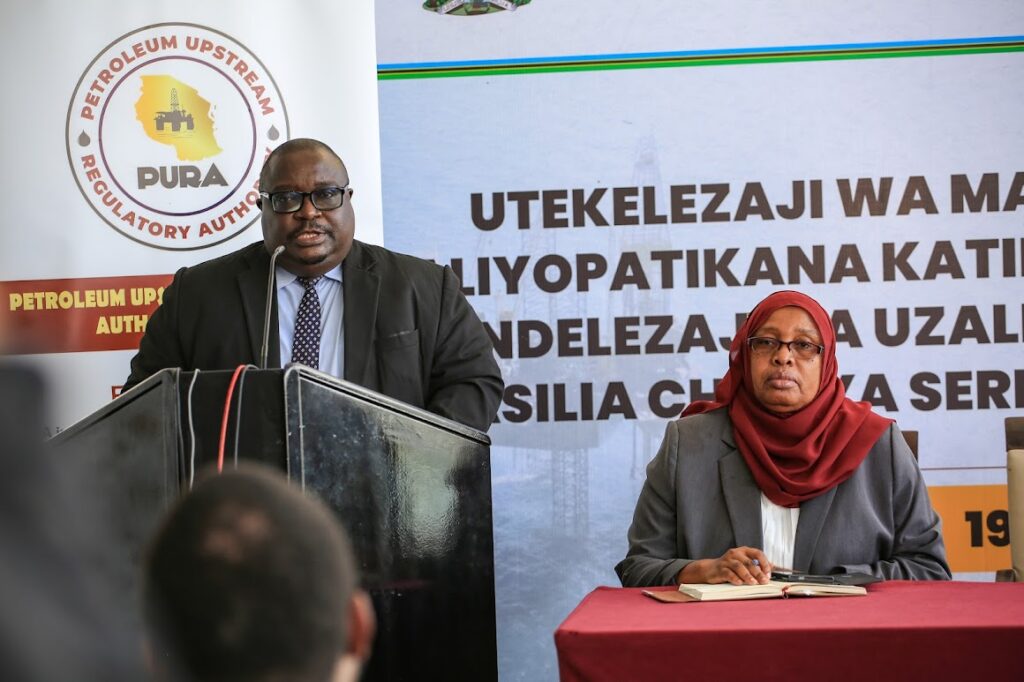
Speaking to reporters in Dar es Salaam on May 19, 2025 the director general of the Petroleum Upstream Regulatory Authority (PURA), Mr Charles Sangweni, said the administration under President Samia Suluhu Hassan has revitalised long-stalled discussions with multinational oil and gas giants, breathing new life into a project that had for years remained in limbo.

“Above all, I extend my deepest gratitude to the Sixth-Phase Government under the leadership of President Dr Samia Suluhu Hassan for enabling the successful continuation of negotiations for the implementation of the LNG project,” said Mr Sangweni.

He noted that the talks, which had previously faltered under earlier administrations, have now gained momentum thanks to direct presidential involvement.

He singled out the President’s hands-on approach to the negotiations, noting that apart from delegating responsibilities to government negotiators and the inter-ministerial Steering Committee, she has personally guided the process, intervened in critical moments, and provided strategic direction where bottlenecks emerged.

“All government’s eyes are on this projects, which will be one of the single most important investments in Tanzania’s economic future,” he noted.

A New Economic Frontier

The LNG facility, to be constructed in Lindi, is expected to process natural gas into liquefied form for export and domestic use.

The project’s projected cost now stands at a staggering $42 billion—more than double the earlier estimates—reflecting its growing scale and ambition.

Mr Sangweni explained that the final cost will be determined following the completion of Front-End Engineering Design (FEED) and Pre-FEED studies, which will lay the foundation for the Final Investment Decision (FID).

“The FEED process is critical to ensure all technical, environmental, and logistical elements are fully understood and factored in. Only then can the actual construction commence, which is estimated to take four to five years,” said Mr Sangweni.

He revealed that the government is encouraging investors to adopt a modular construction approach, whereby key components will be manufactured in locations that already possess the requisite machinery and expertise, and then transported to Tanzania for installation—rather than building every element entirely on-site.

This strategy is intended to reduce construction timelines and increase efficiency.

During the peak construction phase, the project is expected to generate approximately 15,000 jobs.

Post-construction, the workforce will drop to about 600 permanent employees.

However, Mr Sangweni was quick to note that additional employment opportunities will emerge through the establishment of downstream industries that will use domestically retained gas as feedstock.

To prepare for this, PURA is working with vocational training institutions in Lindi and Mtwara to develop specialised curricula aimed at equipping the local youth with skills necessary for employment in the energy and industrial sectors.

Unlocking Tanzania’s Vast Offshore Gas Reserves

According to Equinor—one of the lead developers alongside ExxonMobil—Tanzania has discovered over 20 trillion cubic feet (Tcf) of natural gas in Block 2, located approximately 100 kilometres off the coast of Lindi.

These reserves are spread across multiple deep-sea reservoirs, necessitating the use of advanced subsea wells to extract and transport gas via pipeline to the onshore LNG facility.

Equinor has already carried out extensive geological and technical surveys and concluded that the development is not only feasible but strategically advantageous.

The Norwegian energy giant plans to bring global experience from other LNG ventures to ensure the project’s success.

Once operational, the LNG plant is expected to produce 7.5 million tonnes per annum (MTPA) of liquefied gas, primarily for export to global markets in Asia, Europe, and South America.

However, a portion of the gas will be earmarked for Tanzania’s domestic consumption in line with provisions under the Production Sharing Agreements (PSAs).

“Domestic gas can play a critical role in achieving Vision 2025 by supporting electrification and industrialisation efforts, and by substituting costly imported heavy fuel oil,” Equinor stated in its latest Tanzania prospectus.

Government Revenues and Local Content

Estimates suggest that more than 60 percent of the value created by the project will remain in Tanzania—a figure that outpaces returns from similar projects globally.

This includes revenues from production volumes allocated to the government, Tanzania Petroleum Development Corporation (TPDC) participation, and taxation.

The project is also poised to catalyse extensive local economic development through procurement of goods and services, infrastructure upgrades, and knowledge transfer.

“Local content is a key area of focus,” said Mr Sangweni. “We are working with Equinor and TPDC to ensure Tanzanian businesses and workers benefit from every phase of the project.”

The ripple effects of the LNG plant are expected to be substantial, with indirect employment opportunities far outpacing those directly tied to construction and operations.

Skills developed during this process will also benefit the broader economy and civil service in the long term.

Host Government Agreement

Before construction begins, the government and project stakeholders must finalise the Host Government Agreement (HGA), which outlines the commercial, fiscal, and legal framework for the project.

This agreement is critical for unlocking the vast capital investment required for the development.

Environmental and geotechnical surveys are scheduled to begin once the HGA terms are signed.

These will inform the final design and preparation for construction activities at the designated site north of Lindi.

If successful, the Tanzania LNG Project will not only position the country as a major gas exporter in East Africa but will also lay the groundwork for an industrial renaissance that could shape the country’s economy for decades to come.

“Equinor has played a key role in shaping Norway’s oil and gas sector, and we are ready to help industrialise Tanzania,” reads a statement from the company.

As negotiations near conclusion and preparatory work intensifies, all eyes are on the anticipated signing of key agreements—events that could mark the beginning of Tanzania’s journey into the global LNG market and the next chapter in its economic transformation.
Shares:


Tanzanian, Ugandan regulators ink strategic oil, gas MoUs

Sauli Giliard
June 20, 2025
1750419322567.jpeg


ENTEBE, UGANDA: ThePetroleum Upstream Regulatory Authority (PURA, theZanzibar Petroleum Regulatory Authority (ZPRA), and the Petroleum Authority of Uganda (PAU) have signed a Memorandum of Understanding (MoU) aimed at enhancing exploration, development, and production activities in the oil and natural gas sector.

The MoU was signed recently in Entebbe, Uganda, during a ceremony attended by leaders and experts from the three regulators, including the Chairman of PURA’s Board of Directors, Mr Halfan Halfan, and the Chairperson of PAU’s Board of Directors, Ms Lynda Biribonwa.

Among the other dignitaries present were the Director General of PURA, Eng Charles Sangweni; the Executive Director of PAU, Eng Ernest Rubondo; and the Managing Director of ZPRA, Eng Muhammed Said.”

According to the signed agreement, PURA, PAU, and ZPRA have agreed to cooperate in areas such as oil and gas resource management, petroleum data management, and cost auditing.

Other areas of collaboration include community participation in oil and gas projects, health, safety, and environment (HSE), as well as the formulation of laws, regulations, and guidelines related to the exploration, development, and production of oil and natural gas.

Speaking at the signing ceremony, PURA Board Chairman Mr Halfan Halfan emphasized that exchanging experience and building institutional capacity among the three authorities is crucial for the growth of the oil and gas industry in Tanzania and Uganda.

“Through this agreement, it is evident that exploration, development, and production of oil and natural gas in our countries will be significantly strengthened,” said Halfan.

On her part, PAU Board Chairperson Ms Lynda Biribonwa underscored the importance of regulatory bodies working together to ensure the sustainable development of oil and gas resources in the East African region.

The signed deals mark a continuation of the strategic partnership between Tanzania and Uganda in the energy sector, as the two neighboring countries are currently implementing the East African Crude Oil Pipeline (EACOP) project.

1750419322608.jpeg
Director General of PURA, Eng Charles Sangweni (right), Executive Director of PAU, Eng. Ernest Rubondo (center), and Managing Director of ZPRA, Eng. Muhammed Said (left), pose for a souvenir photo shortly after the institutions signed a Memorandum of Understanding.

The pipeline will transport oil produced from Uganda’s Lake Albert oilfields to the port of Tanga in Tanzania where the oil will then be sold onwards to global markets.

The pipeline is buried and once topsoil and vegetation have been reinstated people and animals will be able to cross freely anywhere along its length.

EACOP runs 1,443km from Kabaale, Hoima district in Uganda to the Chongoleani Peninsula near Tanga Port in Tanzania. 80 percent of the pipeline is in Tanzania.

According to the EACOP website, the pipeline is a buried, thermally insulated 24-inch line, supported by six pumping stations—two in Uganda and four in Tanzania—culminating at the Tanga Port with a terminal and jetty.

EACOP is considered as a crucial infrastructure for Uganda to unlock value from its own natural resources and represents a significant inward investment of some $4 billion across both Uganda and Tanzania, thus value creation is also extended to Tanzania.

The new corridor linking the two countries will bring benefits including the development of new infrastructure, logistics, and technology transfer as well as improving the livelihoods of communities along the route.


Similar Discussions

Back
Top Bottom