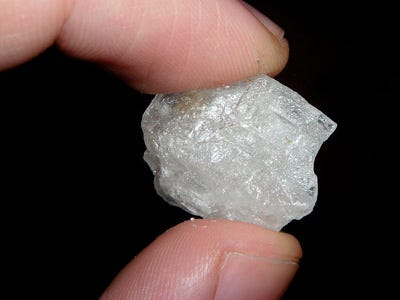
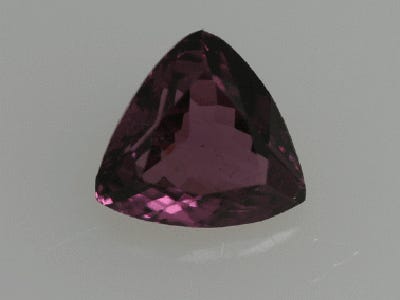
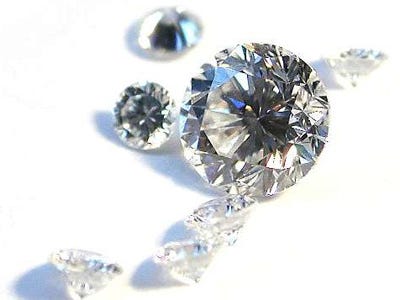
is thought to be more than a million times scarcer than diamonds. And while it's a
to use often in jewelry, if you're lucky enough to find one, don't let your hands off it.
From Wikipedia
[h=1]Taaffeite[/h] From Wikipedia, the free encyclopedia
[TABLE="class: infobox, width: 22"]
[TR]
[TH="bgcolor: #7da7d9, colspan: 2, align: center"]Taaffeite[/TH]
[/TR]
[TR]
[TD="colspan: 2, align: center"]

Magnesiotaaffeite-2N'2S (Mg[SUB]3[/SUB]Al[SUB]8[/SUB]BeO[SUB]16[/SUB])
[/TD]
[/TR]
[TR]
[TH="bgcolor: #7da7d9, colspan: 2, align: center"]General[/TH]
[/TR]
[TR]
[TH="align: left"]Category[/TH]
[TD]
Oxide minerals[/TD]
[/TR]
[TR]
[TH="align: left"]
Formula
(repeating unit)[/TH]
[TD]BeMgAl[SUB]4[/SUB]O[SUB]8[/SUB][/TD]
[/TR]
[TR]
[TH="align: left"]
Strunz classification[/TH]
[TD]04.FC.25[/TD]
[/TR]
[TR]
[TH="bgcolor: #7da7d9, colspan: 2, align: center"]Identification[/TH]
[/TR]
[TR]
[TH="align: left"]Color[/TH]
[TD]Colorless, greyish violet, violet red, red, greenish, light green, pink violet, mauve[/TD]
[/TR]
[TR]
[TH="align: left"]
Crystal habit[/TH]
[TD]Prismatic, alluvial grains[/TD]
[/TR]
[TR]
[TH="align: left"]
Crystal system[/TH]
[TD]Hexagonal, 6/mmm (6/m 2/m 2/m)[/TD]
[/TR]
[TR]
[TH="align: left"]
Twinning[/TH]
[TD]By reflection on (0001)?[/TD]
[/TR]
[TR]
[TH="align: left"]
Cleavage[/TH]
[TD]Imperfect/fair/absent[/TD]
[/TR]
[TR]
[TH="align: left"]
Fracture[/TH]
[TD]Conchoidal[/TD]
[/TR]
[TR]
[TH="align: left"]
Mohs scale hardness[/TH]
[TD]8-8.5[/TD]
[/TR]
[TR]
[TH="align: left"]
Luster[/TH]
[TD]Vitreous[/TD]
[/TR]
[TR]
[TH="align: left"]
Streak[/TH]
[TD]White[/TD]
[/TR]
[TR]
[TH="align: left"]
Diaphaneity[/TH]
[TD]Transparent to translucent[/TD]
[/TR]
[TR]
[TH="align: left"]
Specific gravity[/TH]
[TD]3.60–3.61[/TD]
[/TR]
[TR]
[TH="align: left"]Optical properties[/TH]
[TD]Uniaxial[/TD]
[/TR]
[TR]
[TH="align: left"]
Refractive index[/TH]
[TD]n[SUB]ω[/SUB] = 1.722, n[SUB]ε[/SUB] = 1.777[/TD]
[/TR]
[TR]
[TH="align: left"]
Birefringence[/TH]
[TD]δ = 0.055[/TD]
[/TR]
[TR]
[TH="align: left"]
Pleochroism[/TH]
[TD]Weak[/TD]
[/TR]
[TR]
[TH="align: left"]References[/TH]
[TD][SUP]
[1][/SUP][SUP]
[2][/SUP][/TD]
[/TR]
[/TABLE]
Taaffeite (
/ˈtɑːfaɪt/; BeMgAl[SUB]4[/SUB]O[SUB]8[/SUB]) is a mineral, named after its discoverer
Richard Taaffe (1898–1967) who found the first sample, a
cut and polished gem, in October 1945 in a jeweler's shop
[1] in
Dublin, Ireland.[SUP]
[3][/SUP] As such, it is the only gemstone to have been initially identified from a faceted stone. Most pieces of the gem, prior to Taaffe, had been misidentified as
spinel. For many years afterwards, it was known only in a few samples, and is still one of the rarest
gemstone minerals in the world.[SUP]
[4][/SUP]
Since 2002, the
International Mineralogical Association-approved name for taaffeite as a mineral is
magnesiotaaffeite-2N'2S.
[h=2]Contents[/h]
[h=2]Discovery[/h] Taaffe bought a number of
precious stones from a jeweller in October 1945. Upon noticing inconsistencies between the taaffeite and spinels, Taaffe sent some examples to B. W. Anderson of the Laboratory of the
London Chamber of Commerce for identification on 1 November 1945. When Anderson replied on 5 November 1945, he told Taaffe that they were unsure of whether it was a
spinel or something new; he also offered to write it up in
Gemmologist.[SUP]
[5][/SUP]

Specimen from
Ratnapura, Sri Lanka
[h=2]Properties[/h] In 1951, chemical and X-ray analysis confirmed the principal constituents of taaffeite as
beryllium,
magnesium and
aluminium,[SUP]
[6][/SUP] making taaffeite the first mineral to contain both beryllium and magnesium as essential components.[SUP]
[1][/SUP]
The confusion between spinel and taaffeite is understandable as certain structural features are identical in both. Anderson
et al.,[SUP]
[5][/SUP] classified taaffeite as an intermediate mineral between spinel and
chrysoberyl.[SUP]
[7][/SUP] Unlike spinel, taaffeite displays the property of
double refraction that allows distinction between these two minerals.
[h=2]Usage[/h] Because of its rarity, taaffeite is used only as a gemstone.[SUP]
[8][/SUP]
[h=2]Formation and occurrence[/h] Taaffeite occurs in
carbonate rocks alongside
fluorite,
mica, spinel and
tourmaline. This extremely rare mineral is increasingly found in alluvial deposits in Sri Lanka[SUP]
[9][/SUP] and southern Tanzania,[SUP]
[1][/SUP] as well as lower grade taffelite in limestone sediments in China.[SUP]
[7][/SUP]