
E=mcsquared
JF-Expert Member
- Apr 1, 2009
- 251
- 48
[h=1]We Are Not Alone In Universe, NASA Scientists Say[/h] The Huffington Post | By Sara Gates
Posted: 07/15/2014 4:56 pm EDT Updated: 07/15/2014 11:59 pm EDT
Print Article
It's highly unlikely we're alone in the universe, NASA experts are saying, and we may be close to finding alien life. In fact, it may happen in the next two decades.
NASA held a panel discussion at the agency's Washington headquarters on Monday, where space experts talked about the search for Earth-like planets that host life. Based on recent advancements in space telescope technology, scientists estimated that in the coming decades we'll confirm suspicions that we're not alone.
"I think in the next 20 years we will find out we are not alone in the universe," NASA astronomer Kevin Hand said in footage filmed at the discussion and posted on YouTube. Check it out in the video above.
NASA Administrator Charles Bolden echoed Hand's sentiment.
"It's highly improbable in the limitless vastness of the universe that we humans stand alone," he said.
Just this year, NASA's Kepler Space Telescope picked up on an Earth-like planet in the "habitable zone" of another star. At the time, the observation of the planet, Kepler-186f, was hailed as the first discovery of an Earth-size planet orbiting in the habitable zone of a star similar to our sun.
Scientists believe there are potentially many more Earth-like planets in the universe -- and some of them could be home to alien life.
"Astronomers think it is very likely that every single star in our Milky Way galaxy has at least one planet," Sara Seager, professor of planetary science and physics at Massachusetts Institute of Technology, said during the talk. "Sometime in the near future, people will be able to point to a star and say, 'that star has a planet like Earth.'"
With the expected launch of the James Webb Space Telescope in 2018, NASA's planet-hunting mission will get an extra boost. The new piece of equipment is designed to study infrared light, making it easier to spot extrasolar planets.
But NASA may need even larger and more powerful telescopes to discover alien life.
"To find evidence of actual life is going to take another generation of telescopes," Matt Mountain, director of the Space Telescope Science Institute, said at Monday's event. "And to do that, we're going to need new rockets, new approaches to getting into space, new approaches to large telescopes -- highly advanced optical systems."
Watch the full discussion about finding life beyond Earth, above.
[h=3]Also on HuffPost:
[/h] 
Artists' Conceptions Of Extrasolar Planets
1 of 8 

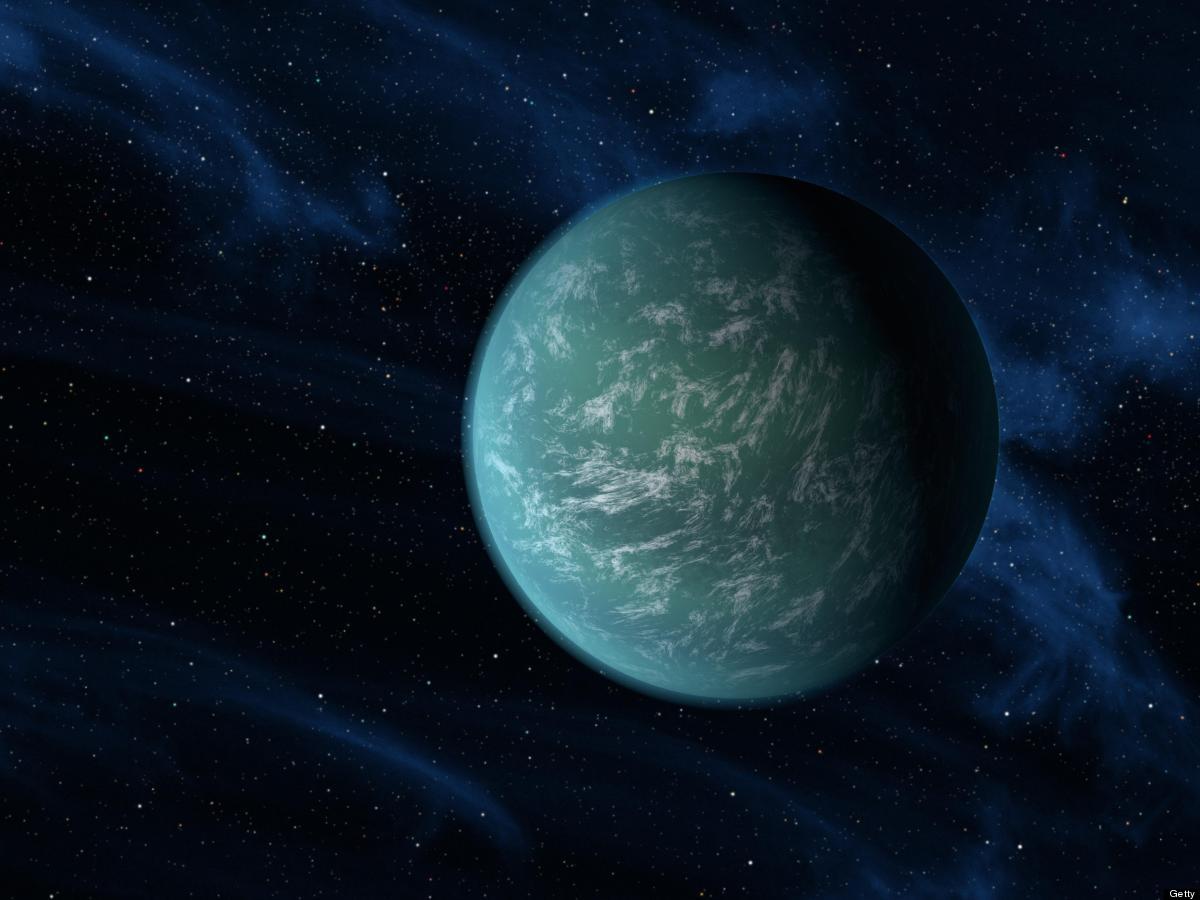 Getty
[h=2]More:[/h] NASA We Are Not Alone Nasa Habitable Planets Nasa Earth Like Planets We're Not Alone Nasa Habitable Planets Nasa Habitable Worlds Search for Life Alien Life Video Nasa We Are Not Alone We Are Not Alone in the Universe Nasa We're Not Alone Nasa Earthlike Planets Nasa Alien Life Search for E.T.
Source: We Are Not Alone In Universe, NASA Scientists Say
Posted: 07/15/2014 4:56 pm EDT Updated: 07/15/2014 11:59 pm EDT
Print Article
- Share 2724
- Tweet 151
- Email 34
- Comment 0

It's highly unlikely we're alone in the universe, NASA experts are saying, and we may be close to finding alien life. In fact, it may happen in the next two decades.
NASA held a panel discussion at the agency's Washington headquarters on Monday, where space experts talked about the search for Earth-like planets that host life. Based on recent advancements in space telescope technology, scientists estimated that in the coming decades we'll confirm suspicions that we're not alone.
"I think in the next 20 years we will find out we are not alone in the universe," NASA astronomer Kevin Hand said in footage filmed at the discussion and posted on YouTube. Check it out in the video above.
NASA Administrator Charles Bolden echoed Hand's sentiment.
"It's highly improbable in the limitless vastness of the universe that we humans stand alone," he said.
Just this year, NASA's Kepler Space Telescope picked up on an Earth-like planet in the "habitable zone" of another star. At the time, the observation of the planet, Kepler-186f, was hailed as the first discovery of an Earth-size planet orbiting in the habitable zone of a star similar to our sun.
Scientists believe there are potentially many more Earth-like planets in the universe -- and some of them could be home to alien life.
"Astronomers think it is very likely that every single star in our Milky Way galaxy has at least one planet," Sara Seager, professor of planetary science and physics at Massachusetts Institute of Technology, said during the talk. "Sometime in the near future, people will be able to point to a star and say, 'that star has a planet like Earth.'"
With the expected launch of the James Webb Space Telescope in 2018, NASA's planet-hunting mission will get an extra boost. The new piece of equipment is designed to study infrared light, making it easier to spot extrasolar planets.
But NASA may need even larger and more powerful telescopes to discover alien life.
"To find evidence of actual life is going to take another generation of telescopes," Matt Mountain, director of the Space Telescope Science Institute, said at Monday's event. "And to do that, we're going to need new rockets, new approaches to getting into space, new approaches to large telescopes -- highly advanced optical systems."
Watch the full discussion about finding life beyond Earth, above.
[h=3]Also on HuffPost:
[/h] 
Artists' Conceptions Of Extrasolar Planets
1 of 8 

-

-

-

-

-

-
-
- Next
[h=2]More:[/h] NASA We Are Not Alone Nasa Habitable Planets Nasa Earth Like Planets We're Not Alone Nasa Habitable Planets Nasa Habitable Worlds Search for Life Alien Life Video Nasa We Are Not Alone We Are Not Alone in the Universe Nasa We're Not Alone Nasa Earthlike Planets Nasa Alien Life Search for E.T.
Source: We Are Not Alone In Universe, NASA Scientists Say


