Maoni ya Juma Mwapachu kuhusu maslahi ya Tanzania katika EAC
You are using an out of date browser. It may not display this or other websites correctly.
You should upgrade or use an alternative browser.
You should upgrade or use an alternative browser.
Maoni ya Juma Mwapachu kuhusu maslahi ya Tanzania katika EAC
- Thread starter JokaKuu
- Start date
- Thread starter
- #82
Mawazo yako mazuri lakini hayana uhalisia, Kinachotufanya tusiimarishe miundombinu sasa hivi sio kwasababu hatuwezi kupata pesa ni kwasababu ya Poor governance na poor governance haiwezi kuwa solved na shirikisho. Halafu unasema miungano mingine ni ya kuunga unga ni sawa, lakini model ya EAC ni EU na kimsingi tumekopy na kupaste mfumo wa EU sasa ni kwanini unaamini kuwa shirikisho litakuwepo na litakuwa successiful kama hata hata model tuliyocopy EU ilianzishwa 1957 na mpaka sasa hawana mpango wa kitu kinaitwa federation? Tuna ubunifu gani wakati hata mkataba tu tumeshindwa kubuni wa kwetu badala yake tumekopy halafu tunatarajia sie tulioanza mwaka 2000 tutakua na shirikisho? Umesema security na miundombinu ndio viwe vipaumbele kitu ambacho ni sahihi kabisa lakini tukirudi kwenye uhalisia ni nchi gani ipo tayari kusacrifice mfumo wake halafu ianze kuadopt mfumo mwingine? mfano kama unasema tutakuwa na true federation inamaana sasa hata mwingiliano utakuwa mkubwa na lazima kitu kama land kiwe cha federation ili kuondoa migongano isiyo ya lazima je wakikuyu watakubali kupoteza ardhi walizomilikishwa baada ya uhuru ili tu umiliki uendane na sheria za Tanzania au ndio watategemea Tanzania ndio ifuate utaratibu wao? huo ni mfano tu lakini kuna mambo mengi ambayo ili yawekwe sawa inahitajika trust ya hali ya juu miongoni mwa partner states. Na ktk hali iliyopo sasa hakuna nchi hata moja inayomwamini mwenzake kwa asilimia 100. Ndio maana hata CoW wanasema wanataka kwenda mbio wao watatu kwasababu TZ inakataa protocols nyingi, sawa lakini wanachojadili sio protocols tulizokataa bali wanajadili infrastructure kitu ambacho sie hatujawahi kukataa. Wao walitakiwa kwasasa waendelee na Single tourist visa, free movement of labour, defence protocol na land hayo ndio tuliyoyakataa lakini sasa kwasababu wao wanajua wanachokitafuta ndio maana husikii wakiendelea mbele na mpango wa ardhi maana wamegundua bila TZ mpango huo hauna maana. Kwahiyo Tz hatuwezi kukubali mchezo wa Kenya wa kutusabotage kwa maslahi yake, na humu JF mjue kitu kimoja kuwa tutajadili sana kwa kuilaumu TZ na tutacheza sana ngoma ya wakenya lakini hatutakuja kuona kitu kinaitwa EA federation na TZ ikiwemo kama Kenya itaendelea na hidden agenda zake, sana sana watafanikiwa kuwatumia wale madikteta wawili lakini sio Tanzania
..umezungumza ya msingi sana.
..kwa mfano kwanini CoW hawashirikiani katika yale mambo ambayo Tz iliyakataa kwa mfano ARDHI, Jeshi la Pamoja, na Political Federation?
..Museveni alikwenda mbali mpaka kuteuwa mwenyekiti wa Tume ya Katiba ya Shirikisho la CoW. Baadaye wenzake wakamtolea nje, wamelirudisha Arusha kwenye EAC na nchi wanachama zimeomba muda zaidi ku-consult!!
..CoW wameunda visa ya pamoja ya utalii. So far inasemekana mpango huo haukatoa matunda yaliyotarajiwa.
..Lakini kuhusu visa ya pamoja ya utalii mimi nilikuwa naangalia ramani ya Serengeti na Maasai Mara. Kwanza, Serengeti is so much bigger than Maasai Mara. Pili, Tanzania ina vivutio vingi zaidi kuliko nchi zote wanachama wa EAC. Tatu, tunatengeneza pesa nyingi kutokana utalii kuliko wenzetu. What we r doing so far in our tourism is working; we only have to fine tune it and make it work even better. Binafsi sioni sababu za kushirikiana ktk utalii.
..Tukija kwenye jeshi la pamoja, kwanza najiuliza Amiri Jeshi Mkuu wa Jeshi hilo atakuwa nani? Je, kwa kuzingatia matatizo ya kiulinzi na usalama ya wenzetu ktk jumuiya, kuna busara ya kuunganisha majeshi yetu na ya kwao? Zaidi, tunakubalina na siasa za nje wenzetu?
cc msemakweli, Kimweri, Tokyo40
Last edited by a moderator:

Bavaria
JF-Expert Member
- Jun 14, 2011
- 53,109
- 53,631
Inawezekana Mwapachu aliona mbali ila hayupo sahihi hasa kwa hizi nchi za kiafrika ambazo nyingi zina matatizo ndani kwa ndani. Tukae tutatue matatizo ya ndani kwanza ndo tuanze kwenda mbele zaidi.
Kuja kwa Federation haitatusaidia chochote zaidi ya kutuongezea matatizo. Ajira haitakaa iongezeke kama tunavyodhani, uchumi hautakuja kukua kama tunavyoota, elimu haitakuja kuwa kama tunavyofikiri.
Kwanza tuanze kujenge chumi imara ndani kwa ndani ndo tuje tuangalie ya nje.
Na hata hivyo hatuna majirani tutakaosema tunawaamini. Wote ni wabinafsi.
November 19, 2013 12:13 pm
China reforms chip away at privileges of state-owned companies
At first glance, the one big missing piece from Chinas economic reform push is an assault on the power of state-owned companies.
Rather than cutting them down to size, as liberals had hoped, President Xi Jinping instead enshrined their position at the commanding heights of the Chinese economy. The public sector remains the important pillar of the economy, the Communist party said.
But that language is deceptive. Reforms in train in China amount to a significant, albeit indirect, challenge to state companies across a range of industries, chipping away at their privileges. The government does not want to eliminate them. Instead, it wants to make them more efficient and more profit-focused in short, more like private companies.
Sir, How many times are you going to make the same mistake over and over and expect we continue on this discussion?What kind of sick propaganda influenced you that only capitalistic companies have to be efficient and make profits?sasa ile idea ya kugawana mapato kwenye Ujamaa wa zamani kabisa ingepatikana wapi kama hakuna faida?utagawana vipi kisichozalishwa?
From banks facing stiff competition for deposits to industrial companies selling off assets after racking up losses, state-owned companies in China are far more exposed to market forces than a decade ago.
That is thanks in large part to the aggressive clean-up of state-owned enterprises launched in the 1990s by Zhu Rongji, Chinas then premier. Thousands of bankrupt SOEs were shuttered and 50m workers were laid off.
I will mention to china's Biggest banks, that i can still remember and they are all Public banks. ICBC, Bank of China, Agriculture Bank, Postal Bank, Bank of Communications, Communications Bank, Exim Bank. THERE is nothing such as stiff competition in banking industry in china from anything else. Do you know how big ICBC is?It is the biggest company in forbes frotune 500 list of 2013, with cash in hand of over $530B, that's more than what many wester countries have as foreign reserves.And has assets north of $3T dollars that's close to GDP of German. And that is just one state bank in china. If you take the top five banks you have an army of Banks so rich, Xi jinping can put china in outpilot for 10 years if he had similar mind to JK.
When you throw around figure like 50m you forget to conveniently mention that this is a nation with 1.3B people, this is why statistics are unreliable. SEOs in china are just fine, and if there is one economy in the world that can withstand financial pressures it's the Chinese economy, their only worry is internal and never external.
The government will allow state companies to introduce employee stock ownership plans, a way of encouraging managers to target profits. Bringing more private investors on board will also increase the portion of state companies in the hands of performance-minded shareholders, a disciplining force.
Even more important are the reforms that will change their operating environment. Shifts to market-based pricing for energy inputs and interest rates are, over time, undermining the advantages that state companies have over their private rivals.
SEO's competitors in China are not private companies and they never will be, you really need to understand how china runs internally. When you live in china you will realise that, whatever dreams of outside influences there might be ends the time you get in.There is NO SEO in china that has private investors. and even Private companies can not allow foreign ownership above a certain percent. And worse, for foreign companies and MNCs they let them get in, copy everything they do and kick them out, ask Google, FB, Twitter and the likes.
In a decades time when Mr Xi is expected to leave office, state companies are still likely to dominate strategic sectors from banking to telecommunications. But if his reforms are successful, they will more closely resemble private companies, with a sharper focus on profits.Source: Financial Times
You sir seems to read about china way too much from western media. There are only 3 Mobile companies in China. China Unicom, China Mobile and China Telecom. These are 100% owned by the Chinese Government.And they have been making way too much money for far too long.They did not start making money yesterday. How do you think China ended up with $4tr in foreign reserves? by having loss making SEOs?
Hapa tunaambiwa serikali ya Kichina wanataka makampuni ya serikali yaanze kuendeshwa kwa FAIDA.
Makampuni mengi ya umma yalifilisika kwa kuendeshwa ovyo bila ya kujali faida.
Sasa wanataka kuendesha makampuni kama katika sera za kibepari kwa kuwaleta wawekezaji binafsi kuwa shirka nao.
Hivi wewe nani amekuambia kuwa makampuni ya ki-socialist hayatengenezi faida?uchumi wa wapi huu?unajua kuwa Stratoil ni kampuni ya wa-norway ambao ni socialists?unajua foreign reserve ya norway?unafikiri hizo pesa wamezipata kwa kutengeneza hasara?
Sihitaji kumsona Karl Marx. Kuna ushahidi wa kutosha katika dunia ya leo kuwa sera za kijamaa zimeshindwa. Waliolala wasiamke!
Kama hujasoma Marxism, basi you are not really equiped to understand China or how it runs. Huna tofauti na mtu anayetaka kuwa astronout halafu hataki kujifunza fizikia wala hesabu.inawezekana kweli?
ndio maana todauti ya capitalism na socialism kwako ni utengenezaji wa faida. Usiwe kama chura aliye kisimani kudhani dunia ni upana wa kisima.
Sio kwa kuwa wajomba tanzania wameua mashirika ya umma wakati wa ujamaa basi akili ikawa na mtazamo kuwa socialism equals making no profits.
Unasema sera za kijamaa zimeshindwa wakati ajenda kuu ya raisi wa taifa kubwa na symbol ya ubepari ni National health service for all?aka Obama care?
Unasema Sera za Ujamaa zimeshindwa wakati top ten ya nchi zenye maisha bora kwa viwango vya UN, ni nchi zinazopractice socialist democracy?
Unasema Ujamaa umeshindwa wakati sehemu pekee ulikoshindwa ni pale ambapo Udikteta ulijichanganya na Ujamaa?
Unasema Ujamaa umeshindwa wakati Asilimia kubwa ya umaskini kuwahi kufutwa katika hisoria ya binadamu umetokea china nchi inayo practice socialism or some sort of market socialism? (china imetoa zaidi ya watu milioni mia nne kutoka kwenye ufukara kuanzia mwaka 1960).
Hii ni Tazara Enzi za Ujamaa

Hii ni Tazara Enzi za Ubepari.
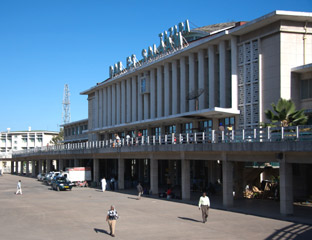
Sasa kama kupaka rangi tu kunawashinda hivi hawa watu wakifeli watasingizia Ujamaa?au upuuzi wao binafsi? Nyi watoto mliozaliwa juzi msidanganywe kuwa tanzania ilikuwa mbaya wakati wa Ujamaa. Wajomba zenu kina kimweri hatukuwahi lipa nauli ya treni, wala kukaa na njaa shule.Na Huduma za msingi zilikuwa bora kwa wote.Na hiyo tazara alipanda kila mtu, sio sasa hivi imegeuzwa ya wasanii kufanya usanii. kama trip za JK na genge lake.
Kufeli kwa ujamaa Tanzania, sio conlusion kuwa Ubepari ni Bora zaidi. Hiyo picha hapo ni mfano mdogo sana
Hii ni Tazara Enzi za Ubepari.
Sasa kama kupaka rangi tu kunawashinda hivi hawa watu wakifeli watasingizia Ujamaa?au upuuzi wao binafsi? Nyi watoto mliozaliwa juzi msidanganywe kuwa tanzania ilikuwa mbaya wakati wa Ujamaa. Wajomba zenu kina kimweri hatukuwahi lipa nauli ya treni, wala kukaa na njaa shule.Na Huduma za msingi zilikuwa bora kwa wote.Na hiyo tazara alipanda kila mtu, sio sasa hivi imegeuzwa ya wasanii kufanya usanii. kama trip za JK na genge lake.
Kufeli kwa ujamaa Tanzania, sio conlusion kuwa Ubepari ni Bora zaidi. Hiyo picha hapo ni mfano mdogo sana
July 15, 2014
China announces plan for reform of state-owned enterprises
China has identified six large state-owned enterprises (SOEs) for a pilot programme to attract private investment and improve corporate governance, as the government pushes ahead with reforms aimed at raising economic efficiency.
In a landmark blueprint for economic reform announced late last year, the ruling Communist party promised to push "mixed ownership" reform, a phrase understood to mean partial privatisation, while maintaining SOEs as the backbone of the economy.
Source: Financial Times
Hii hapa article inaonyesha Makampuni ya serikali ya Kichina hayaendeshwi kwa faida lakini bado yapo chini ya serikali kwa sababu ya siasa sio faida. Mengi yanaingia shirika na makampuni binafsi.
My stand is still the same:
Huwezi kuchanganya biashara na ujamaa sawa na kujaribu kuchanganya maji na mafuta.
Mashirika yanavuja wino mwekundu.
Usitegemee article iliyoandikwa na western media ikawa na uhalisia wa kinachoendelea China. Na aliyekuambia Chinese SEO's hazitengenezi fadia amekudanganya. Kuna makampuni ya kutoa Huduma, focus yao iko kwenye Huduma, na kuna makampuni ya kutengeneza pesa nyingi, focus yao iko hivyo. Usitegemee shirika la reli la china likawa na lengo la kupata faida maradufu.
Nitakupa mfano mdogo sana. beijing subway kwa miaka mingi imekuwa subsidised na municipal government of Beijing ili ku-discourage matumizi ya magari binafsi, Kutokana na hili Gharama za kwenda popote Beijing kwa subway zimekuwa 2 RMB kwa miaka zaidi ya 10. Hakuna subways system duniani yenye gharama nafuu kuliko hiyo.
Sasa ukimkuta mwandishi wa habari kishoka atakuambia kampuni ya uendeshaji subway Beijing inajiendesha kwa hasara kubwa sana, hivyo ikibinafsidwa italeta faida zaidi, Hajui kuwa ile ni setup imewekwa for greater good. kwa mtu asiyeelewa kinachoendelea au dynamics za china, hata ukimuelezea kinyakyusa au kikwao hatakuelewa.
Kwa hiyo Amazon ikijiendesha kwa hasara kwa miaka nenda rudi sio tatizo, nani aliyekudanganya mashirika yote ya kibepari yanajiendesha kwa faida?umeshasikia kuhusu lehman brothers?unasoma SEC returns za makampuni makubwa duniani?mangapi yako profitable.
Trust me, many companies would die to make 1% of what Chinese SEOs are making.
Ili tusiandiki mate tazama hiyo chart hapo ya fortune 2000 companies, nitajie top 3 Biggest companies ni kutoka nchi gani na zinamilikiwa na nani.
The Worldâs Biggest Public Companies List - Forbes
Watanzania ni waoga mno wa mabadiliko ya kisiasa na hawaoni mbele sana kutokana na fikra mgando.
Wananchi wanategemea serikali iwatoe kwenye umasikini wakati uzalishaji na upokeaji wa kodi ni mdogo. Watanzania wengi ni wavivu wa kazi na wakwepaji wa kodi. Starehe tumeiweka mbele. Kila siku tunazalisha aina mpya ya pombe badala ya kuzalisha kompyuta na madawa ya kujikinga na magonjwa.
Sisi bado tunasubiri kuonyeshwa na serikali jinsi ya kuzalisha kama wakati wa ujamaa. Kuna wengine hapa JF pia wanadai sera za Ujamaa ndio nzuri zaidi kwa Watanzania. Wameshasahau njaa na shida za ukosefu wa bidhaa chini ya siasa ya ujamaa na kujitegemea ya Nyerere. Tunasubiri kulishwa, kuvishwa, kuelimishwa na kutajirishwa na serikali yetu badala ya kujituma wenyewe.
Wakati wenzetu na nchi nyingine duniani wameruhusu Uraia pacha, sisi bado tunang'ang'ania eti itaathiri usalama wa taifa. Sababu kubwa ya kupinga sio usalama wa taifa bali ni kutoona mbele kutokana na fikra mgando. Upingangaji wa uraia pacha unaenda kinyume na mambo ya dunia ya kileo. Mbingu hazijashuka Kenya wala Uganda waliporuhusu uraia pacha!
Swala la ardhi ndio kabisa usilishike. Jamii ya Tanzania inategemea kuwa wakulima wadogo wadogo, masikini na wenye elimu duni ya kilimo ndio njia pekee ya kuilisha jamii. Kuna ardhi kubwa tunashindwa kuitumia kwa kuwa hatuna uwezo wa kulima kitalaamu kwa kutumia matrekta na mbegu za kisasa. Ndio maana mpaka leo tunanunua matunda nje badala ya kuzalisha nchini. Watanzania watailalamikia serikali kwa ujinga huu lakini ukweli ni kuwa hawako tayari kumpa bepari ardhi ili alime kwa wingi. Wako tayari kumlipa bepari mwingine anayoishi Afrika Kusini asiowapa ajira wala kodi, ili mradi asiiguse ardhi yao.
Tusifikiri ukubwa wa watu na ardhi, pamoja na rasilimali ndio itatuletea maendeleo zaidi ya wenzetu. Utajiri ni elimu bora, kwenda na wakati katika mambo ya Uzalishaji, utamaduni wa kuchapa kazi na siasa bora. Mfano hai: Singapore.
Mkuu, unaweza kuwa sahihi and wrong at the same time..
Keep it in your mind kuwa watanzania sio wavivu na hawana fikra mgando kama unavyofikiri, BUT watanzania ni wachapa kazi wanaoifanya Tanzania ifike hapa ilipo Leo. Kuna watu wachache ambao sio active kwenye ujenzi wa Taifa na hiyo inatokana na factors kibao ambazo i cant find space here to explain. Tanzania imezalisha wasomi kibao ambao wengi wao wako Botswana, Zimbabwe, South Africa, US na nchi nyingi tu Duniani. Wasomi hawa hawataki kurudi nyumbani kujenga Nchi na wamebaki hukohuko kwa sababu zao maalum, Ingawa naamini, bado wanabeba U-Tanzania wao mioyoni mwao. mkwa maana nyingine, kabla hauja-judge kuhusu TZ, angalia historical background yetu, Tulikotoka na Tulipo sasa, Tulijitolea kwa manufaa ya wengine (ukombozi wa nchi za Africa)..But what makes me sad, kuna watu humu cant give a credit after all we have gone through...
Pili, sikubaliani na mifano uliyotoa, eg. Uraia Pacha etc. Maendeleo hayaletwi na uraia pacha bali commitment ya serikali na watu wake kufikia malengo ya kweli yaliyokusudiwa on a given period of time. kama sijakosea, unatoka Tz, and if true, jiulize umeifanyia nini nchi yako? ndugu yangu, Nchi ulizotaja kama Kenya na Uganda in your dual citizenship references, hata hazijafika mbali kwa lolote. we dont need to be dragged around, polepole tutafika. God bless TZ

Tokyo40
JF-Expert Member
- Jun 16, 2013
- 2,065
- 1,926
The TAZARA railway was designed and constructed between 1968 and 1976. The 1,860 km long project was built with financial and technical assistance from China, amounting to well over US$400 mn, in the form of a long-term interest-free loan.
A " friend" exchanged his cash for a UN vote to kick out ROC.
The begging continued in 2012....
Tanzania and Zambia have received US$42mn from China for the upgrade of their joint Tazara railway.
Sigh..... When are we going to be the masters of our destiny?
A " friend" exchanged his cash for a UN vote to kick out ROC.
The begging continued in 2012....
Tanzania and Zambia have received US$42mn from China for the upgrade of their joint Tazara railway.
Sigh..... When are we going to be the masters of our destiny?

Kijakazi
Platinum Member
- Jun 26, 2007
- 10,823
- 18,775
compared to whom..
Kiwete oh namaanisha Kikwete!

simplemind
JF-Expert Member
- Apr 10, 2009
- 16,792
- 9,724
compared to whom..
Waziri wa EA cooperation. No doubt he would have managed EA affairs with flair and tact.

IAfrika
JF-Expert Member
- Oct 4, 2014
- 280
- 222
Investors think slightly different than a mere combination of population when investing, things like geopolitical stability and security for their investments is also important.
Fewer investor put their money in DRC even though they have more natural resources and higher population, BUT unstable politics.
So putting together numbers will not be the only thing that attracts investors, these have to be the correct numbers.Infrastructures can be improved without political integration. Current structure + more integrated financial and trade regulations systems is about right.
I gree on the peace and stability aspect it could be among the x factors drawing investors interest. On the correct numbers point, I presume you mean productive populations. One way to empower communities to be economically productive is to connect them to roads, water etc. You say current integration is just about right but fault the Ambassador for letting you down!?
What these people always conveniently leave behind is that 40-50% of Tanzanian Arable Land is of-limits due to conservation reasons. I am more for small utilized land with higher yield, than running through our entire land reserve just to make our statistics look good. So if you factor in many factors, Tanzania utilized more than 14% of the land it can actually use for agriculture. Anyone telling you otherwise is a politician massaging data.
I did not fact check that before posting it. He was quite specific, he mentioned a figure 14% of 40mill ha if am correct. Sijui kama ni entire TZ land our the one that is available for agriculture. The figure that I know on is that 1/3 of TZ is game and national parks.
Mafanikio ya TZ sio sababu ya EAC,na sidhani kama tungefeli tungeisingizia EAC pia.kinachotokea Tanzania ni responsibility ya watanzania. Period.
The assertion in the first sentence there was not in my post even though it is not 100% correct cause I am sure there is more than one Tanzanian that would show benefits derived from EAC. I gree on individual responsibility but that was a deflection of my question cause I am still without an answer.
Ukiyavulia maji nguo huna budi kuyaoga, hivyo kukubali soko huru na kukataa ubepari ni kuchanganya madawa.Ukwepaji wa kodi, lobbying, na maximization of profits ni moja ya nguzo za mabepari.
Ohh! I see The angle you are coming from with this one. My point was if citizens don't organize to counter the effects of capitalism, they will wake up one day and find themselves in a plutocracy rather than a democracy. Even though the process begun a long time ago, the word ujamaa has been removed from your proposed constitution, haya basi ndio sisi wote hao tuzame majini.
IAfrika
JF-Expert Member
- Oct 4, 2014
- 280
- 222
Mkuu IAfrika.
Bepari= capitalist
Bwenyenye= communist term for a Capitalist
Ubepari = soko huru
Capitalism= free market economy
There is no distinction between the two. Most countries have a free economy and a fair amount of "socialism" to help those in need such as welfare payments, free housing for the needy, unemployment insurance and free medical care.
About tax payments, I disagree that Bepari somewhat have a tendency to cheat more. By human nature, most humans are not willing to part with their hard earned money. They will use all kinds of tax loopholes to reduce their tax burden. You might call him a traitor but if you have a tax rate of 50% or more after certain amount, you and I will do the same. They say there are only two things you can't escape in life: death and taxes.
You are absolutely right about corporations and rich people bribing politicians but it happens in every country. In America, you can lawfully fund a politician's campaign as much as any politician can in Tanzania. They in turn, get policies which favour them in their businesses and have the ear of the politician. You have seen pictures of our rich Tanzanians summoned to Ikulu for a talk with the President and pictures of other businessmen signing a check the opposition.
Corporations answer to the shareholders in America. That's why they will do anything to maximize profits including selling you a mortgage you can't afford. It does not mean capitalism as a system has failed but it follows closely the human nature's need and greed.
That is why it's important to have strong regulations to control some of that greedy behaviour. And regulations can be fine tuned to suit the needs of the country. For example, until 2 years ago, it was illegal in capitalist Japan to campaign in the Internet like it is done in America. Some countries also prohibit campaign donations or limit to certain amount.
You do not want to be caught avoiding taxes in America. The jail terms are stiff, ask Wesley Snipes.
Americans must file tax report every year wherever they live. Foreign income is also taxed after certain amount. Due to this reason and stiff prison sentences if you don't comply, many filthy rich or American businessmen living overseas renounce their citizenships at a rate of over 1000 a year.
It is also harder to hide income in tax havens. Banks in Switzerland alone have been fined over a billion dollars for hiding assets of wealthy Americans. In fact, renouncing American citizenship was one of the ways banks advised in order to accept their deposits.
All in all, history has proven that capitalism, with all its imperfections, is the best way to increase productivity and bring prosperity to the human race.
Mkuu Tokyo40
Well you have put everything about the relationship between big corporations and politics they way I would have put it with the USA case study.
Free markets and capitalism are virtually the same, the distinction I was trying to draw here is in relation to taxes, regulations, price fixing, worker safety, minimum wages vs executive pay, barriers to entry, workers unions, consumer protection organizations and tax hevens. Others are government provided social security, free health care and education that means that capitalist won't be making money out of social security, education or health care and they don't like that. Capitalist desires include an end to taxes and regulations and u can guess what else they want done to the other issues and organizations I have listed there.
To the extreme capitalist are anti-government where they would prefer a military or the police run by corporations rather than government. They get tax loopholes where together with accounting tricks huge corporations like Google, apple, general electric big banks and big oil make multibillions in profits but end up paying 0 in taxes. I read somewhere that Zucks the Facebook CEO earns $1 in income meaning that he is so poor that he can't taxed but in real sense he is earning over $700,000 which they call his company compensation to him to avoid paying taxes. This simply means that rich continue to accumulate money from the working poor which is not being taxed to be circulated back into the economy resulting in great inequalities . The last number that I saw that the big business and individuals had put in tax havens $24trillion dollars.
If the citizenry is not watchful capitalism results a situation where the only medicine good for you is one that they give you, the only good education, books, news, food and politicians for you is one that they give you.
Capitalism has brought the USA economy to its knees twice 1st it was in the early 1900s and then the recent one that we witnessed in 2007/2008. In both cases you will see two things being exhibited and that is being relaxation of regulations and cutting of taxes for the rich and big corporations first under Hoover who was president then and under Bush in 2008 even though relaxation of financial regulations started under Clinton.
In the first great recession, Roosevelt came to save the situation with a number of social programs that included social security and taxing the rich people with incomes above middle class level being taxed at a whooping 90%. Many people won't believe it but USA was once one of the most equal societies on earth leave for the effects that racism had on black people. In that era it simply meant that when you have enough money to live a middle class life what did you need the rest of the money for? The goverment took it. It was a time when affirmative action was still white where Americans were being sent to schools and universities for free.
Another era of the rich and big corporations colluding with politicians begun with Kennedy's presidency that cut the top taxes from 90% to 70%. The rich and Big business continued to have undue advantage in politics for a long time until Clinton came on and said it is the economy stupid and cut taxes for the middle class and increased taxes for the rich which resulted in a great economic boom.
At the end of his term he started cutting sleazy deals with businesses that resulted in relaxation of financial regulations this laid the foundation for an economic crisis with the coming of Bush who cut taxes for the rich. With rich people with a lot of money to play around with and no or little financial regulations bad things started happening to the USA economy.
So what does this means, equality is possible under a free market economy if citizens don't let rich and big corporations buy elections and politicians and government takes deliberate measures to address those inequalities. Given that it is only through taxes that money can be re-circulated into the economy these revenues can be used to lift up the working poor through health care and education programs, social security and other employment creation initiatives.
That said Taxpayers can only bear so much as long as u are not taxing people only for that money to end up in corruption.
Everyone can live if citizenry can organize as much as the rich and big corporations organize to protect themselves.
Tokyo40
JF-Expert Member
- Jun 16, 2013
- 2,065
- 1,926
Hii ni Tazara Enzi za Ujamaa
Hii ni Tazara Enzi za Ubepari.
Sasa kama kupaka rangi tu kunawashinda hivi hawa watu wakifeli watasingizia Ujamaa?au upuuzi wao binafsi? Nyi watoto mliozaliwa juzi msidanganywe kuwa tanzania ilikuwa mbaya wakati wa Ujamaa. Wajomba zenu kina kimweri hatukuwahi lipa nauli ya treni, wala kukaa na njaa shule.Na Huduma za msingi zilikuwa bora kwa wote.Na hiyo tazara alipanda kila mtu, sio sasa hivi imegeuzwa ya wasanii kufanya usanii. kama trip za JK na genge lake.
Kufeli kwa ujamaa Tanzania, sio conlusion kuwa Ubepari ni Bora zaidi. Hiyo picha hapo ni mfano mdogo sana
Nyerere and Kaunda first approached Western donors and multilateral agencies for support in TAZARAs construction. But one donor after anotherincluding the United States, Great Britain, Japan, the World Bank, and the United Nationsturned them down, citing NEGATIVE evaluations by development economists. The Soviet Union was also uninterested, and the Chinese seized the opportunity.
Source: the Boston Review
Tokyo40
JF-Expert Member
- Jun 16, 2013
- 2,065
- 1,926
Mkuu Tokyo40
Well you have put everything about the relationship between big corporations and politics they way I would have put it with the USA case study.
Free markets and capitalism are virtually the same, the distinction I was trying to draw here is in relation to taxes, regulations, price fixing, worker safety, minimum wages vs executive pay, barriers to entry, workers unions, consumer protection organizations and tax hevens. Others are government provided social security, free health care and education that means that capitalist won't be making money out of social security, education or health care and they don't like that. Capitalist desires include an end to taxes and regulations and u can guess what else they want done to the other issues and organizations I have listed there.
To the extreme capitalist are anti-government where they would prefer a military or the police run by corporations rather than government. They get tax loopholes where together with accounting tricks huge corporations like Google, apple, general electric big banks and big oil make multibillions in profits but end up paying 0 in taxes. I read somewhere that Zucks the Facebook CEO earns $1 in income meaning that he is so poor that he can't taxed but in real sense he is earning over $700,000 which they call his company compensation to him to avoid paying taxes. This simply means that rich continue to accumulate money from the working poor which is not being taxed to be circulated back into the economy resulting in great inequalities . The last number that I saw that the big business and individuals had put in tax havens $24trillion dollars.
If the citizenry is not watchful capitalism results a situation where the only medicine good for you is one that they give you, the only good education, books, news, food and politicians for you is one that they give you.
Capitalism has brought the USA economy to its knees twice 1st it was in the early 1900s and then the recent one that we witnessed in 2007/2008. In both cases you will see two things being exhibited and that is being relaxation of regulations and cutting of taxes for the rich and big corporations first under Hoover who was president then and under Bush in 2008 even though relaxation of financial regulations started under Clinton.
In the first great recession, Roosevelt came to save the situation with a number of social programs that included social security and taxing the rich people with incomes above middle class level being taxed at a whooping 90%. Many people won't believe it but USA was once one of the most equal societies on earth leave for the effects that racism had on black people. In that era it simply meant that when you have enough money to live a middle class life what did you need the rest of the money for? The goverment took it. It was a time when affirmative action was still white where Americans were being sent to schools and universities for free.
Another era of the rich and big corporations colluding with politicians begun with Kennedy's presidency that cut the top taxes from 90% to 70%. The rich and Big business continued to have undue advantage in politics for a long time until Clinton came on and said it is the economy stupid and cut taxes for the middle class and increased taxes for the rich which resulted in a great economic boom.
At the end of his term he started cutting sleazy deals with businesses that resulted in relaxation of financial regulations this laid the foundation for an economic crisis with the coming of Bush who cut taxes for the rich. With rich people with a lot of money to play around with and no or little financial regulations bad things started happening to the USA economy.
So what does this means, equality is possible under a free market economy if citizens don't let rich and big corporations buy elections and politicians and government takes deliberate measures to address those inequalities. Given that it is only through taxes that money can be re-circulated into the economy these revenues can be used to lift up the working poor through health care and education programs, social security and other employment creation initiatives.
That said Taxpayers can only bear so much as long as u are not taxing people only for that money to end up in corruption.
Everyone can live if citizenry can organize as much as the rich and big corporations organize to protect themselves.
You have raised very solid points Mkuu.
As I mentioned many times, capitalism/ free market economy has its imperfections and strong regulations must be implemented in order to protect your average citizens from corrupt corporation.
Having said that, all in all, an open market system has proven to bring prosperity much faster than a closed/ state economy. There will always be people who will want to enrich themselves at any cost.
North Korea. The elites nearest to the regime have access to basic needs but the rest of the population are starving under the guidance and love of their Dear Leader, third generation.
They are the closest thing we have to a controlled population living under strict juche socialist principles with only the state doing business with the outside world (and dependent on China) and private enterprise is prohibited.
And if there is any better example to show the world which system worked best with all its imperfections, just look at North and South Korea.

eliakeem
JF-Expert Member
- May 29, 2009
- 17,807
- 16,477
Kwa navyofahamu Wa-south wamevuna madini karibu yote, halafu na nyie mmetafuna mengine yote kiufisadi maana kama kweli raslimali bado zipo hatungeona vijana wengi wenu wanakosa ajira hadi wameishia vituko tu, mara wamejaa jela za Uchina wanasubiri kunyongwa, wengine waliobaki wanatikisa mji eti panya road.
Ni kama tu demu ambaye katika ujana wake kila mwanaume anahangaika kumtongoza, lakini anapojiachia unakuta baadaye wote wanamsusia maana hamna jipya tena. Sasa hivi kuna ushindani mkubwa kati ya Wakenya, Wahindi, Wachina, Waingereza and Wa-south katika hilo shamba la bibi. Mchina gesi keshatoroka nayo, ila tunamfuata bila huruma.
Teh teh teh... that is a Wishful thinking...... Huwezi fananisha majeraha ya Kenya na Tanzania.... Nenda kajipange uje na hoja nyingine.....
Tokyo40
JF-Expert Member
- Jun 16, 2013
- 2,065
- 1,926
exactly but you have to know that the world is under sustained attack right now by the ruling class of various industries,which are determined to push as back to a time before those ideas of the era of enlightenment, in which people questioned the deeply entrenched power of the few over many.
While we're debating about this and that specific issue, we are perhaps forgetting that the causes of many modern problems are a direct result of the regression to pre-enlightened moral and economic philosophy. The identity of the benefactors of this regression is plainly obviously when you look at the increasingly upward distribution of wealth growth to the higher classes and the decreasing share held by the laboring majority despite increases in productivity and profitability.
So, what system of economy do you suggest we should follow to develop? I mean realistic ones, and which suits our particular needs and economic targets as well as securing the people against evil?

Kibona
JF-Expert Member
- Sep 16, 2010
- 1,023
- 652
Mkuu Msemakweli Mkataba wa EAC ni purely EU one, sasa hiyo proposed Federation ndio wamekopy structure ya US, lakini ukumbuke kuwa Model ya EAC kutoka EU haiandai mazingira ya Federation isipokuwa mazingira ya kibiashara. EAC ya kwanza ndio iliyokuwa na mwelekeo wa shirikisho na ndio maana ilifika mahali Wakenya walianza kudai wapewe dicision making power kubwa kuliko wengine maana walianza kuhisi wanabanwa na jumuiya na hapo ukawa ndio mwisho wa EAC ya kweli. Hii ya sasa ni siasa tu kama kungekuwa na lengo la federation basi kwanza tungehakikisha tunarudi pale tulipokuwepo mwanzo yaani shirika moja la reli, ndege, bandari. posta n.k halafu ndio tuanze kufikiri mambo mengine mapya. Lakini kwasasa haiwezekani tukawa tunajidili vitu ambavyo hata kwa macho ya kengeza inaoneka vimelenga kutatua matatizo ya nchi nyingine na kuiletea matatizo TZ. Single tuarist visa inafavour Kenya na wengine hawana cha kupoteza, land inafaidisha wengine, Tanzania anakuwa Victim, Defence ni burning issue kwa hao wengine sie tuna mfumo wetu unajitosheleza, Free movement of labour bado TZ ndio victims kwasababu hao watu kutoka nchi jirani sio advanced human resource kiasi cha kuhitaji waje kuna sector chache ndio tunawahitaji na sekta hizo tayari wamesharuhusiwa, sasa kwasababu majirani wanataka kuexport hata wapigadebe ndio wanapiga kelele. Wewe hujiulizi kwanini nchi hizo kama zinahitaji kweli human resource zisifurahi kwamba kukataa kwa Tz basi wao watapata wafanyakazi wa kutosha? Kama federation spirit ingekuwepo basi tungekuwa kwanza na mashirika muhimu ya pamoja halafu hapo ndio hoja ya kuwa na free movement of labour inakuwa na nguvu maana sasa kunakuwa kuna vitu vingi vya pamoja na watu wanatakiwa wafanye kazi popote. Sasa wakenya hata protocol ya sarafu moja wanapiga chenga itakuwa ya shirika la ndege japo kimsingi lilikuwa la africa mashariki hapo mwanzo ili likabadili jina tu. Ili tubaki salama tunatakiwa tusiende mbele zaidi ya sarafu moja, na pia tukwepe kuunda vitu vya pamoja ambavyo mwisho wake tukivunja jumuiya nchi moja inakuwa mfaidika mkuu. Tuchukue tahadhari maana kadri tunavyokubali kufanya kitu kwa kusacrifice ndivyo itakavyokuwa ngumu kukubaliana na uhalisia siku jumuiya ikivunjika. TZ haina sababu hata moja ya kuamini kuwa hakutakuwa na kuvunjika kwa jumuiya huko mbele. Hivyo tuna kila sababu ya kuishi na majirani ktk Afrika mashariki with maximum precaution. Ukizingatia pia kuwa sio guarantee kuwa shirikisho litachochea maendeleo, sana sana kwa demographics zilizopo inaonesha kabisa migogoro itakuwa mingi mno ndani ya shirikisho, Zanzibar peke yake ni mtihani nadhani hatutaweza kuneutralize mindsets za watu hao wengine.Kibona
I think you ought to look at the structure of the proposed federal government of EA. That model is anything but European.
Kwanza, kutakuwa na Rais wa shirikisho, Bunge la seneti (equal representation per country) na bunge la commons (ambalo wabunge wake watachaguliwa as per state population). Rais atakuwa head of state and government, na litakuwa jukumu la Senate kucheck the exercise of power of the President and his cabinet (mawaziri hawatakuwa wabunge btw).
So far, this all resembles the American system.
Kuhusu suala la ardhi, wameshasema kuwa hilo litakuwa under the control of member state governments. Hata mambo ya mapato from natural resources wamesema tutabaki nayo kwanza. Then, once we are united, we can slowly do away with the unhealthy mistrust and eventually hand more power to the Federal Government.
IAfrika
JF-Expert Member
- Oct 4, 2014
- 280
- 222
Regional integration is inevitable ...
If you come to think of it there is some sort of inevitability. But inevitably comes from the structure itself. Full implementation of Customs Union, Common market and Monetary Union brings about a big regional economic entity.
Only a political federation can ensure equitable distribution of accrued benefits of such an economic entity as mentioned in EAC treaty in a politically acceptable way. Also no amount of security assurances can protect such an economy from internal nationalist politics and all external threats like a political federation. It is only natural if not fair to contemplate various future scenarios that will face this body.
Nyerere and Kaunda first approached Western donors and multilateral agencies for support in TAZARAs construction. But one donor after anotherincluding the United States, Great Britain, Japan, the World Bank, and the United Nationsturned them down, citing NEGATIVE evaluations by development economists. The Soviet Union was also uninterested, and the Chinese seized the opportunity.
Source: the Boston Review
We bwana vipi?mie nakuonesha jinsi gani Tazara ilikuwa bora wakati wa Ujamaa kuliko wakati huu wa Ubepari.Showing that efficiency and productivity was better.If Ubepari was such a walk in the Cake i would expect Tazara and TRL to fare much better. Guess what, we are going back to the socialists we abandoned for help reviving both Tazara and TRL. Speaking of Karma.