The 12 Least Ethical Companies In The World: Covalence's Ranking (PHOTOS, POLL)
Can ethics be quantified? Or, better yet, can a lack of ethics be quantified?
This week, the Swiss research firm
Covalence released its annual ranking of the overall ethical performance of multinational corporations. The idea behind the Covalence research is that there's value -- both for companies and consumers -- in measuring corporations against an ethical standard. (We're hoping this idea also applies to Wall Street firms.)
To complete its ethics index, Covalence compiled both quantitative and qualitative data, spanning seven years, for 581 companies. The data encompass 45 criteria that include labor standards, waste management and human rights records. And because it is a reputation index, the Covalence survey also incorporates media, industry and NGO documents into its evaluation.
Of course, while the index had its winners -- the first-, second-, and third-place companies were IBM, Intel, and HSBC, respectively -- we were more interested in the companies with the
lowest ethical ratings. Among those companies with the most awful records are some of the usual suspects in the oil and mining industries but Covalence also found some lesser-known offenders.
Check out a snapshot of the 12 companies with the worst ethical ratings, and some of the things they've done to earn the ranking:
[TABLE="class: business_vertical_background caption_table, width: 100%"]
[TR]
[TD="class: slideshow_poll_photo_title, width: 402, align: center"]#12 Barrick Gold Corporation [/TD]
[TD="align: center"]

[/TD]
[/TR]
[/TABLE]
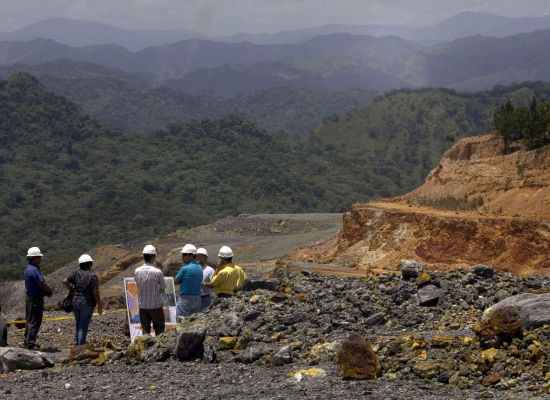
Twelfth worst in the Covalence ranking is Barrick, the Toronto-based gold-mining corporation. Allegations against the company include charges that it had a hand in the burning of at least
130 homes near its Porgera Mine in Papua New Guinea and that it manipulated land titles in
Australia and
Chile. The company was also blamed in a toxic spill in
Tanzania that left dangerous levels of arsenic in the area around its North Mara mine, and its attempts to mine the Pascua Lama region along the Argentina-Chile border were associated with a
56-70% shrinking of nearby glaciers. A team of the company's engineers and technicians in Los Cacaos, Dominican Republic is pictured.


