
Aaron Arsenal

JF-Expert Member
- Jul 24, 2014
- 24,498
- 28,724
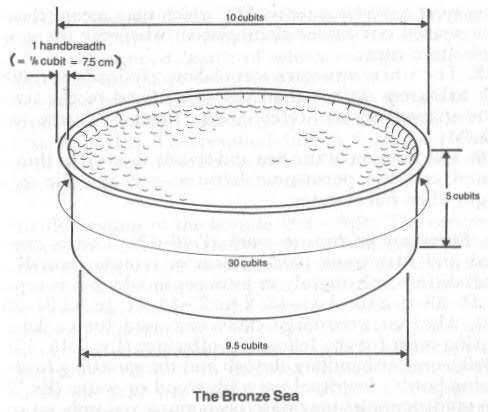
"And he [Hiram] made a molten sea, ten cubits from the one rim to the other it was round all about, and...a line of thirty cubits did compass it round about....And it was an hand breadth thick...." — First Kings, chapter 7, verses 23 and 26
There is a similar description in Second Chronicles 4, verses 2 through 5.
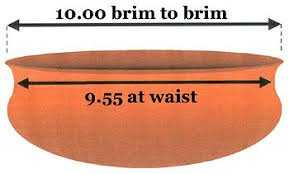
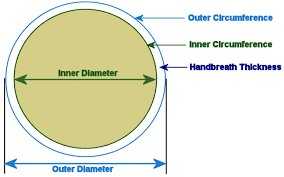
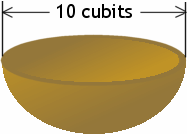
The bowl is said to have had a circumference of thirty cubits and a diameter of ten cubits. The diameter is said to be "from one rim to the other", so this would be the outer diameter; that is, the diameter of the outer mold used to make the bowl.
When we realize that this molten sea has a thickness associated with it, the 10 cubits from brim to brim becomes the outer diameter, while the 30-cubit measurement describes the inner circumference. Since the diameter is obtained by simply dividing the circumference by (pi), the inner diameter can be calculated as 9.549 cubits. Additionally, the thickness of the vessel is found by taking half of the difference between the inner and outer diameter. Using the inner diameter just calculated and the given outer diameter of 10 cubits, the thickness is 0.225 or approximately 4 inches.
Using eighteen inches for one cubit, we have the following:
outer diameter: 10 cubits, or 180 inches
outer radius: 5 cubits, or 90 inches
inner circumference: 30 cubits, or 540 inches
To find the "Jewish" or "Bible" value for pi, we need to have the inner radius. Once we have that value, we can plug it into the formula for the circumference and compare with the given circumference value of 540 inches.
Since the thickness of the bowl is given as one handsbreadth, then the inner radius must be:
90 – 4 = 86 inches
Let's do the calculations:
inner radius: 86 inches
inner circumference: 540 inches
The circumference formula is C = 2(pi)r, which gives us:
540 = 2(pi)(86)
540 = 172(pi)
Solving, we get pi = 540/172 = 135/43 = 3.1395348837..., or about 3.14.
There is a similar description in Second Chronicles 4, verses 2 through 5.
The bowl is said to have had a circumference of thirty cubits and a diameter of ten cubits. The diameter is said to be "from one rim to the other", so this would be the outer diameter; that is, the diameter of the outer mold used to make the bowl.
When we realize that this molten sea has a thickness associated with it, the 10 cubits from brim to brim becomes the outer diameter, while the 30-cubit measurement describes the inner circumference. Since the diameter is obtained by simply dividing the circumference by (pi), the inner diameter can be calculated as 9.549 cubits. Additionally, the thickness of the vessel is found by taking half of the difference between the inner and outer diameter. Using the inner diameter just calculated and the given outer diameter of 10 cubits, the thickness is 0.225 or approximately 4 inches.
Using eighteen inches for one cubit, we have the following:
outer diameter: 10 cubits, or 180 inches
outer radius: 5 cubits, or 90 inches
inner circumference: 30 cubits, or 540 inches
To find the "Jewish" or "Bible" value for pi, we need to have the inner radius. Once we have that value, we can plug it into the formula for the circumference and compare with the given circumference value of 540 inches.
Since the thickness of the bowl is given as one handsbreadth, then the inner radius must be:
90 – 4 = 86 inches
Let's do the calculations:
inner radius: 86 inches
inner circumference: 540 inches
The circumference formula is C = 2(pi)r, which gives us:
540 = 2(pi)(86)
540 = 172(pi)
Solving, we get pi = 540/172 = 135/43 = 3.1395348837..., or about 3.14.

