Ndege ya Malaysia A/line yapoteza mawasiliano

Ndege ya Malaysia A/line yapoteza mawasiliano

12:51AM
As we've already mentioned, ten planes will be involved in today's search for MH370.

The Royal Australian Air Force is sending three P3 Orions and the Malaysian Air Force will deploy two C-130 Hercules.

Japan and South Korea are each sending a single P3 Orion, the United States Navy has sent out a P8 Poseidon and China has dispatched an Ilyushin IL-76.

There is also one civil jet acting as a communications relay.

The first aircraft to depart for the search area, 1,850km west of Perth, is the Chinese Ilyushin IL-76.
 
12:16AM
The search for MH370 is being co-ordinated by the Australian Maritime Safety Authority.

In a statement this morning, it said: "The search activities for Malaysia Airlines flight MH370 will continue today, weather permitting, in an area about 1,850 kilometres west of Perth.

"Today’s search continues to focus on an area of about 319,000 square kilometres based on refined analysis by international air crash investigators.

"Ten planes are planned to be involved in today's search."

"Weather in the search area is forecast to worsen today with light showers and low cloud, though search operations are expected to continue."

Mkuu hivi hiyo black box ikiiisha signal kuna option tena ya kurecover some clues za kutrack mwenendo wa ndege?
 
7:40AM
news icon

A Chinese aircraft spotted three suspicious objects in a new search area for the missing Malaysia Airlines jet off Australia's west coast, the official Xinhua news agency said today.

The items are white, red and orange respectively.

The southern Indian Ocean is now the main focus of the search, where unidentified pieces of debris have been spotted by New Zealand and Australian Air Force Orions.
 

Attachments

  • 1396142625257.jpg
    1396142625257.jpg
    26.8 KB · Views: 101
Mkuu hivi hiyo black box ikiiisha signal kuna option tena ya kurecover some clues za kutrack mwenendo wa ndege?

The batteries powering the locator signal of the black boxes of the-missing passenger jet-will run out soon, and just two days before the American locator actually reaches the search site. In addition, even if searchers are able to miraculously pluck Malaysia Airlines flight 370's "black box" from the depths of the vast Indian Ocean, experts say it may not solve one of aviation's greatest mysteries.

Even if the black box is located, it may not provide all the answers as it records cockpit communication on a two-hour loop and then deletes all but the last two hours. Which means that if it kept recording until the crash, the black box would have erased cockpit communication during flight-path change.-


Even after the batteries for the pinger run out, the recorded data remains intact.... So there is hope of getting all data flight records, tusubirie majibu ya wataalamu wengine.

Thanks mate
 
Malaysia plane: Why black boxes can't always provide the answers

By Tom de Castella
BBC News Magazine

The voice recorder only captures the final two hours

Listening to the last moments of Air France flight 447, which crashed into the Atlantic in 2009, gives a chilling insight into the confusion that had overcome the pilots. Such a record of what went on in the cockpit would be a priceless tool for investigators trying to work out whether the Malaysia Airlines plane was the victim of foul play or a mechanical fault. But it's not that simple even if the black box is found. The cockpit voice recorder continually records over itself as the flight goes on. US firm Honeywell Aerospace says the black box on the missing airliner - which it provided - only retains two hours of recording. That's the length of time that regulations demand. The principle is in place because it is normally the last section of a flight that determines the cause of the crash. But in the case of the Malaysia Airlines 777 it might well be the case that the key events happened long before the actual crash. On the other hand, Steve Buzdygan, a former BA 777 pilot, says the data recorder would provide a wealth of useful information.

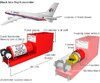
Why is a 'black box' orange?

1. The original flight recorders were painted black but the colour was changed to orange to make them easier to find by investigators
2. The flight data recorder records a stream of flight information
3. The cockpit voice recorder stores conversations and other noises made in the cockpit
4. The battery life is short

The black box sends out a ping - activated by immersion in water - that can be picked up by a microphone and a "signal analyser". There's another beacon - the emergency locator transmitter - which transmits a distress signal on impact. But these don't work in water. Both the voice recorder and the data recorder each have their own pinger. But there's a problem - the battery of the pinger on MH370 will only last for 30 days, says Steve Brecken, media director at Honeywell. Some pingers last for 90 days. The variation stems from the fact the rules changed after Air France flight 447. It took nearly two years to find its black box and new guidelines were issued that the ping should last for 90 days to give search teams longer to find it. Some planes have since been updated, but apparently not the MH370. Even after the batteries for the pinger run out, the recorded data remains intact.
 

Attachments

  • 1396144706549.jpg
    1396144706549.jpg
    38.8 KB · Views: 92
It is a small object to find (Black box)

The black box is bolted into the tail of the aircraft to avoid damage in a head-on crash. It is small - about the size of a shoe box, says Dr Guy Gratton of Brunel University's Flight Safety Lab. Contrary to the name, it is bright orange. But it's not easy to see it in the middle of the ocean. The search will aim to try to locate the wreckage before moving in to pinpoint the black box by picking up the ping. If the pinger has expired then other techniques - such as magnetic detection - are going to be necessary.
 
It doesn't float

The box is made out of aluminium and designed to withstand massive impact, fierce fire or high pressure. That means it's heavy - about 10kg for what is a small box - and will sink quickly. The Indian Ocean has very deep sections. The search area ranges between 1,150m (3,770ft) and 7,000m (23,000ft) deep, media reports suggest. So investigators will have to consider the prospect of it being out of reach of many sonar devices. "You have to ask if there's terrain in the way. The seabed could be as mountainous as the Alps," says David Barry, an expert on flight data monitoring at Cranfield University.
 

Attachments

  • 1396145172661.jpg
    1396145172661.jpg
    26.5 KB · Views: 78
The pinger's range is only a few miles

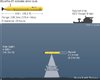
Honeywell, who made MH370's pinger, say the signal can typically only be picked up a mile away. David Mearns, director of Blue Water Recoveries, says this means aircraft really needs to be almost directly on top of the black boxes to hear the ping. There are also factors that may diminish the signal. Wreckage on the surface, or if the black boxes are submerged in mud or sediment on the seabed, he adds. But if the pinger is deep on the ocean floor navies have hydrophone technology that has a better chance of locating it than conventional detectors. The Air France black box was not found until after its ping had expired. It was eventually located by slow moving unmanned underwater vehicles. A modern submarine - such as one of the Royal Navy's hunter-killer models - could potentially at least hear a ping from many miles away, Gratton says. The US, China and Australia all have similar submarines, he says. "By now there will be a submarine down there. I'm certain the Chinese will have put something out there." The US has deployed a ship that will tow a special black box locator through the water. According to the Associated Press, "the Towed Pinger Locator, which is pulled behind a vessel at slow speeds, has highly sensitive listening capability so that if the wreck site is located, it can hear the black box pinger down to a depth of about 20,000ft (6,100m)". However, there is a further complication, says Barry. The black box may be giving off pings from the ocean floor. But if those pings hit a layer of warmer or colder water above, the signal might be refracted or reflected
 

Attachments

  • 1396145254573.jpg
    1396145254573.jpg
    42.3 KB · Views: 121
Where is being searched?

The search area has changed in scope many times. At its largest it covered 2.96 million sq miles (7.68 million sq km) - a total of 2.24 million square nautical miles. This was the equivalent of 11% of the Indian Ocean and 1.5% of the surface of the Earth. In these initial stages, planes, ships and satellites scoured two arcs, running north and south from Malaysia. But over time, as evidence began to suggest the plane had, in fact, headed south over the southern Indian Ocean, the search began to focus on an area south west of Perth, Australia. Then, on 28 March, new assessments of satellite imagery and data narrowed the search to an area of about 319,000 sq km - about 1,850km (1,150 miles) west of Perth. This is 1,100km (684 miles) north-east of the previous search zone.

The move was based on further analysis of radar data that showed the plane was going faster, thus using more fuel. The latest search area is outside the "roaring forties" bad weather zone, meaning conditions are likely to be better. A number of military aircraft are being tasked with scouring the area, with a civilian aircraft acting as a communications relay. Five ships from China and one from Australia are also relocating to the new zone. One Chinese patrol ship is already at the scene, the Australian Maritime Safety Authority (Amsa) said on Friday.

So far, not one piece of debris has been recovered from the plane.
 

Attachments

  • 1396146178362.jpg
    1396146178362.jpg
    43.6 KB · Views: 161
Who is taking part in the search?

A total of six countries are now assisting in the search and recovery operation - Australia, New Zealand, the US, Japan, China and South Korea.

The investigation is being led by the Malaysian authorities, who are also liaising with the FBI, Interpol and other international law enforcement agencies. The Australian Maritime Safety Authority is co-ordinating the search off the coast of Perth.

Members of China's Civil Aviation Administration and officials from the France's Office of Investigations and Analysis for the Safety of Civil Aviation have also joined the investigation.

The French are hoping to lend expertise from the two-year search for the flight recorders from the Air France Airbus A330 which crashed into the Atlantic Ocean in 2009.

British company Inmarsat along with the UK Air Accident Investigations Branch have also provided detailed satellite data analysis to aid the hunt.
 

Attachments

  • 1396146288393.jpg
    1396146288393.jpg
    40.6 KB · Views: 145
The ship will also carry a robotic mini-submarine, Bluefin-21, provided by the US Navy.

Bluefin 21, now in Perth, has side-scanning sonar and a "multi-beam echo sounder" which can examine underwater objects in detail and operate in depths of up to 4,500 metres (14,700 ft).

The depth of the water in the search area is estimated to be between 2,000m and 4,000m (6,560ft and 13,120ft).
 

Attachments

  • 1396146371004.jpg
    1396146371004.jpg
    21.9 KB · Views: 146
Aircraft from Australia, US, New Zealand, China, Japan and South Korea have also been sent to the region. These include a US Navy P-8 Poseidon and Australian, New Zealand, South Korean and Japanese P-3 Orion maritime surveillance planes. Two Chinese Ilyushin Il-76s have also been operating out of RAAF Pearce air base near Perth. The Indian Ocean search area is so remote that is takes an aircraft around four hours to fly there and four hours to return, leaving only about two hours of fuel to hunt for debris.

Explaination in numbers from the plane labelled numbers

1. The Lockheed Martin P-3 Orion is equipped with radar and infrared sensors as well as observation posts to help detect any debris on the surface of the ocean. It also has three cameras beneath the landing gear capable of zooming in for a closer look.

2. The four-engine turboprop plane is designed to fly low and slow to aid surveillance. Once it has reached the search location, one or two outer engines can be turned off to preserve fuel and extend the surveillance time.

3. The plane is also fitted with a magnetic anomaly detector (MAD) - used for detecting submarines underwater. The aircraft also has acoustic detectors, which are able to detect sound 1,000ft (304.8m) below the surface of the ocean.


A number of ships are also in the region.

HMAS Success, a naval oil tanker, is equipped with a crane which could be used to recover any possible wreckage. It is expected to arrive in the new search area on Saturday.

A number of Chinese vessels, including the ice-breaking Xue Long (Snow Dragon) research ship, are also heading to the new zone to assist in the search, while the UK's HMS Echo, a multi-role hydrographic survey ship, is on its way.
 

Attachments

  • 1396146557928.jpg
    1396146557928.jpg
    23.2 KB · Views: 165
Heightened security reported at hotel in Kuala Lumpur where families of Malaysia Airlines passengers attend briefing - @STForeignDesk
 
Sunday, March 30, 03:45 PM MYT +0800 Malaysia Airlines MH370 Incident - Media Statement 27 By Ahmad Jauhari Yahya, Group Chief Executive Officer

Malaysia Airlines wishes to clarify that it will be making arrangements to fly family members to Perth, only once it has been authoritatively confirmed that the physical wreckage found is that of MH370.

Arrangements will be made as soon as the relevant government agencies have provided clearances for Malaysia Airlines to bring family members to the site where aircraft wreckage will be kept.

A Family Assistance Centre (FAC) will be established in Perth. The FAC will become the focal point for all activities that have been planned for the families including briefings, religious and prayer services.

Malaysia Airlines is fully committed to supporting all efforts by the relevant foreign Governments who continue to search for and recover the aircraft, and it continues to cooperate with all authorities involved in the investigation.

Malaysia Airlines continues to provide welfare and support to the families of the passengers.
 
Australian Defense Minister David Johnston: Today there will be more than 100 people in the air, 1,000 sailors in area looking for MH370 debris - SBSNews
 
Last edited by a moderator:
Back
Top Bottom