Ndege ya Malaysia A/line yapoteza mawasiliano

Ndege ya Malaysia A/line yapoteza mawasiliano

countries involved in the
search and rescue operations
for Malaysia Airlines Flight
MH370 has increased from 14
to 26, said the Transport
Ministry.
In a press statement issued
yesterday, the ministry said
the countries were Malaysia,
Australia, Bangladesh, Brunei,
China, France, India,
Indonesia, Japan, Kazakhstan,
Kyrgyzstan, Laos, Myanmar,
New Zealand, Pakistan, the
Philippines, Russia, Singapore,
South Korea, Thailand,
Turkmenistan, the United Arab
Emirates, United Kingdom,
United States, Uzbekistan and
Vietnam.
The ministry also said the
Royal Malaysian Navy and the
Royal Malaysian Air Force
yesterday deployed their
assets to the southern
corridor – from Indonesia to
the southern part of the
Indian ocean – for the search
and rescue.
The statement also said that
the Foreign Ministry had sent
diplomatic notes to all
countries along the northern
corridor – from the border of
Kazakhstan and Turkmenistan
to northern Thailand – and the
southern corridor and to all
countries whose assistance
was requested.
The assistance included radar
and satellite information;
land, sea and aerial search
operations; search-and-rescue
action plans for relevant
authorities as well as details
of any information required
by Malaysia.
The statement also said that
three French officials from the
Bureau d’Enquêtes et
d’Analyses pour la sécurité de
l’aviation civile (BEA) had
arrived in Kuala Lumpur. The
officials would share their
expertise and knowledge
based on their experience in
searching for Air France Flight
447.
The ministry also said that on
March 8, the police had
started investigations into all
crew members on board
MH370, including the pilot and
co-pilot, as well as all ground
staff handling the aircraft.
On March 9, police officers
visited the homes of the pilot
and co-pilot
 
Tanzania lini nasi tutatoa msaada mbona sudan na congo kwenye ngumi tunaenda?!?!?!?!?
 
11:11AM
news icon

A pilot has said he believes the man at the controls of the missing Malaysia Airlines flight MH370 was a hero who was trying to save lives from a fire.

Chris Goodfellow has written an extensive blog post in which he said from his experience and the information we have that it is clear the pilot and co-pilot were "overcome by smoke and the plane just continued on the heading probably on George [autopilot]".He said that it is then the case that the plane would either run out of fuel or the fire would have destroyed it.He said the turn around indicated the pilot intended to go to the nearest airport."This pilot, as I say, was a hero struggling with an impossible situation trying to get that plane to Langkawi."No doubt in my mind. That's the reason for the turn and direct route. A hijack would not have made that deliberate left turn with a direct heading for Langkawi.

"It would probably have weaved around a bit until the hijackers decided on where they were taking it."
 
1:43PM
news icon

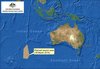
The Australian government has released images of the area that it is now searching.It appears quite small relatively speaking, but it will still take several weeks to scour and is roughly the same size as Spain and Portugal. John Young a general manager at Australia's Maritime Safety Agency said it was like "a needle in a haystack". The area is to the south west of Perth and covers approximately 230,000 square miles. Mr Young said: "The aircraft could have gone north or sound and if it went south, this is AMSA's best estimate of where we should look with the few resources we have at our disposal for such a search."
 

Attachments

  • 1395172563407.jpg
    1395172563407.jpg
    8 KB · Views: 178
  • 1395172684649.jpg
    1395172684649.jpg
    96.4 KB · Views: 180
Is there any hope of life from Mh370?


Sent from Mchina
 
Yeah, still a big hope of life with the fact that,,,,

10:24PM
A pilot called Ian Black has written an interesting article for Yahoo! News.

He suggests a couple of theories to explain some of the major mysteries of this disappearance.

If this was an organised attack, a second jet could have potentially 'swapped' air traffic codes with MH370 in mid-air, allowing it to travel on undetected.

On the fact that no one on the plane managed to make an emergency call, Black says the captain could have put on his oxygen mask then de-pressurised the cabin to knock all 227 passengers unconscious.

He could then re-pressurise it and fly onwards.

In conclusion, Mr Black says he believes the disappearance was not an accident and it likely crash landed on water somewhere.
 
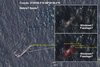
A satellite image provided by Tomnod, the online map site used by millions of netizens in the search for the missing Malaysia Airlines flight MH370, shows a passenger plane on a jungle. The image is searched by an applied science student from the Nan Kai University of Technology in Taiwan on March 18, 2014, according to Taiwan's China Times. The image, map number Map654342, has been sent to Tomnod to get location information. (EyePress/Tomnod) Photo via NewscomTomnod, an online satellite image website, has been invited millions of people around the world to scour their images in search of flight MH370.This image was found by a university student in Taiwan.It appears to show a plane underneath cloud over a jungle.
 

Attachments

  • 1395203296832.jpg
    1395203296832.jpg
    61.8 KB · Views: 160
Is there any hope of life from Mh370?


Sent from Mchina

PETALING JAYA (THE STAR/ASIA NEWS NETWORK):

A report by a United Nations-backed watchdog has given fresh hope that the missing Malaysia Airlines Flight MH370 could still be found intact while reports from a far-flung atoll in the Indian Ocean - Kudahuvadhoo - suggest it could be near there.

Austria-based Comprehensive Nuclear-Test-Ban Treaty Organi-sation (CTBTO), which has extremely sensitive sensors throughout the world, says it did not detect any explosion or crash - both on land or at sea - since the aircraft disappeared on March 8.

CTBTO executive secretary Lassina Zarbo said plane accidents could be detected with three of the four technologies used by the organisation's International Monitoring System. "Our data could potentially shed light on the whereabouts of flight MH370. We owe it to the anxious families waiting for news of their loved ones that this potential is used to its fullest," he said on the CTBTO website. While the system was put in place primarily to detect nuclear explosions, it can also detect the explosion of a large aircraft as well as its impact on the ground or on water.

CTBTO stations have detected some plane accidents in the past, including the crash of an aircraft at Narita airport in Japan in March 2009. If the CTBTO information is correct, it raises questions over where the plane is now. Investigators have not ruled out that the plane could have crashed in the Indian Ocean but they are also looking at possible sites where it could have landed.

In the southern corridor, several islands have been identified for scrutiny.

These include Male in the Maldives, the Diego Garcia United States air base, an airport in Sri Lanka - all of which have reportedly been downloaded into the aircraft simulator in the house of the plane's pilot Capt Zaharie Ahmad Shah. Others include the Christmas Islands and the Cocos Keeling Islands, also in the Indian Ocean.

Residents of the remote Maldives island of Kudahuvadhoo in Dhaal Atoll have reported seeing a "low flying plane" on the morning the plane disappeared. Diego Garcia is just south of the atoll. Several residents of Kudahuvadhoo told a local news portal that they saw a "low flying jumbo jet" at around 6.15am on March 8.They said that it was a white aircraft, with red stripes across it - which is what Malaysia Airlines planes typically look like.Eyewitnesses from the Kudahuvadhoo concurred that the aeroplane was travelling North to South-East, towards the southern tip of the Maldives - Addu.They also noted the incredibly loud noise that the flight made when it flew over the island.

"I've never seen a jet flying so low over our island before. We've seen seaplanes, but I'm sure that this was not one of those. I could even make out the doors on the plane clearly," said an eyewitness.Mohamed Zaheem, the Island Councillor of Kudahuvadhoo, told the portal that the residents of the island had spoken about the incident.The Times of UK also quoted the manager of the Blue Leaf Guesthouse on the atoll as seeing a large plane flying very low over the island.

Speaking from a fishing boat, he too said the plane had blue and white markings.

Satellite data suggests that the last "ping" was received from the flight somewhere close to the Maldives and Diego Garcia.There is also speculation that if the plane, that was last detected at 2.15am off Phuket, had headed north, it could have "hidden" itself near Singapore Airlines flight SQ68, also a Boeing 777-200, thus tricking ground radar controllers as it flew past Laos, Myanmar, China and India.

It could have then disengaged itself and landed in any of several airports in the area including in Turkmenistan, Kyrgystan, Nepal or, ominously, in Urumqi which is the capital of the Xinjiang Uighur Autonomous Region in China.The Uighurs are rebelling against China and, soon after the missing plane, there was a letter circulated which seemed to claim that it had indeed been seized by the Uighurs.

-
NEXT STORY: Maldives residents saw 'low-flying jumbo jet' on March 8: Report
 

Attachments

  • 1395204037760.jpg
    1395204037760.jpg
    65.6 KB · Views: 157
Family members holding banners physically removed from Malaysia news conference by security before it started - skyNewsBreak
 
Last edited by a moderator:
Eee mwenyezi mungu wanusuru abiria hawa waliopotea kwenye ndege ya malaysia
 
ublished: Wednesday March
19, 2014 MYT 12:00:00 AM
Updated: Wednesday March
19, 2014 MYT 10:06:47 AM
Missing MH370: Impossible
to hide plane with
electronic warfare tech,
says expert: It is
“impossible” for the MH370
aircraft to be hidden from
radar using electronic warfare
technology, said an
electromagnetics expert.
University of Toronto
researcher Dr George
Eleftheriades, an expert in
cloaking technology, explained
that the technology was still in
its infancy and thus not easily
available.
“This invisibility technology is
still in the laboratory stage
and not readily available.
Moreover, it would seem
impossible to fit the airplane
with such a cloak while in
flight.
“Therefore, I firmly believe
such a possibility is out of the
question in explaining the
disappearance of the plane,”
he said.
Speculations have been rife,
especially on various news
portals, about the possibility
that the missing aircraft could
have been “hidden” using
cutting-edge electronic
warfare technology that can
hide a plane from the radar.
Fuelling further speculation
was the fact that there were
20 experts from US-based
company Freescale
Semiconductor, which
manufactures hi-tech
weapons systems and aircraft
navigation, on the plane.
CNN reported in November
last year on a cloaking
technology for large objects
by Eleftheriades and Michael
Selvanayagam.
The researchers found a new
way to cloak an object using
tiny antennas and published a
paper on it in the journal
Physical Review X.
This method does not make
objects invisible to the human
eye but makes them
undetectable by radar.
While the researchers said the
technology only worked for
radio waves at the moment,
they said the same principles
could be applied to other
waves and potentially hide an
object from the human eye.
Another report by Fox News in
November last year stated
that China and the United
States were racing to develop
a new technology that can
make airplanes invisible not
only to radar but also to the
human eye
 
IN THE AGE of smartphones and social media, one question surrounding the disappearance of the Malaysian airliner is why none of the passengers tried to contact relatives.

Even the absence of phone calls or emails from those on board the Malaysia Airlines Boeing 777 could provide clues for investigators struggling to solve one of the biggest mysteries of modern aviation.

It may indicate that the plane was flying too high or was over water, or that the passengers were unconscious, possibly due to a change in cabin pressure.

Experts say the chances of the 239 people on board Flight 370 being able to use their mobile devices would have been better the closer they were to a mobile network on the ground.


A candlelight vigil for passengers on board the flight. (AP Photo/Anjum Naveed)

Many are sceptical that the passengers or crew would have been able to establish and maintain a call using mobile phones while travelling at speed, particularly at cruising altitude.

9/11

For mobile phones to be used, there must be a contact between the handset and the network — known as a “handshake”. This requires a strong enough signal from both a transmission tower and the phone.

“Theoretically, 23,000 feet (7,000 metres) and 45,000 feet are a cell range that terrestrial mobile network could work with,” said telecommunications consultant Koh Chee Koon, referring to unconfirmed reports of changes in the plane’s altitude after it lost radar

Relatives of the Chinese passengers on board the missing flight attend a daily briefing meeting with managers of Malaysia Airlines in Beijing today. (AP Photo/Alexander F Yuan)

But given the limited transmission power of a commercial mobile phone, as well as the barrier presented by the plane body, “for the mobile phone to connect to the mobile network with acceptable strength and quality would require some luck”, added Koh.

Experts note that in the case of the September 11 2001 attacks in the United States, the planes were flying at relatively low altitude over areas with mobile phone coverage.

In any case most of the calls on the flights are believed to have been made from seatback phones and not mobile devices.

Likelihood

Recently some airlines have introduced technology to enable passengers to use their phones in the air using a small base station on board, but Malaysia Airlines said this service was not available on Flight 370
 
WADAU NAFIKIRI HII MADA IHAMISHWE KWENYE JAMII INTREGENCE AS LONG AS MASWALI NI MENGI KWA KILA TAIFA NA TECHNOLOGY TUNAZO ZA MARADAR ,SATELITE ULIMWENGU MZIMA ZINAPIGAPICHA NA MITANDAO YA SIMU KILA KONA HEBU JIULIZE SWALI HILI HAPA NAWE

Naval and land-based military radars of nations close to where Malaysia Airlines MH370 disappeared are likely to have tracked the aircraft, says David Gleave, a former air crash investigator.


But sensitivites over revealing the extent of their tracking capabilities may mean governments are unwilling to disclose how much they know.


"The first thing we don't know in the public domain is what the military ground radar were seeing," says Mr Gleave, who now works as an aviation expert at Loughborough University.


"We have an area of relatively high tension politically, so we have Malaysia, Cambodia, Vietnam, Thailand, Indonesia, Burma, Singapore - could all have their radars working but we don't know what they've seen, and one reason for not saying what they've seen is that it would be to declare their military capability to the other people around them.


"However this aircraft should have appeared on several military radars for a considerable period of time."


He adds that the activities of naval ships in the area, which would also have the capability to track aircraft flying in their vicinity, are also unknown.

The last time the Boeing 777 made contact with air traffic controllers was around 1.30am Malaysian time on Saturday
 
US Navy in search of MH370
 

Attachments

  • 1395252888344.jpg
    1395252888344.jpg
    68.8 KB · Views: 118
  • 1395252999221.jpg
    1395252999221.jpg
    87 KB · Views: 115
Mawazo ya mdau mmoja kwenye forums za mbele yeye nje ya box la vyombo vya Kuala Luampa anafikiria haya kwenye hiyo forums wanaamin malesyia viongozi wao wa ndege ni wazembe kwani pamoja na kukosa mawasiliano walikaa kimya kusubiri kama itafika china,
Pili nchi jirani zinaogopa kusema rada zao za kijeshi ziliona nini kwani watajiexpose kiwango cha ulinzi
Tatu uongozi wa Malesyia wanasiri wanayoijua ndio maana walimrejesha zahar kutoka likizo kuja kuendesha ndege
Nne ile ping ya ndege kwenye setlite inalipiwa pamoja na hivyo huwa zinasoma sasa kama setlite zimeshindwa kuionyesha ilipo kuna siri kuu hapa duniani watu wanayo
:
The fire on board
scenario and versions of
it have been floating
about for many days.
Given that a 777 did
have a somewhat
mysterious fire among
electronics under the
cockpit floor some years
ago, there is at least
some precedent: even at
the time, the question
asked was: "What would
have been the outcome
if the fire occurred when
the plane was in flight?"
At present no one can
disprove the fire theory,
and it does offer some
plausible explanation for
what happened, if you
accept the possibility
that—
1. The fire began to
damage and disable
some key
communications
electronics very early in
its progress
(transponder; ACARS)
2. The pilots very quickly
turned the aircraft
towards safety (i.e. some
place with long runways,
preferably that they
knew)
3. Voice comms were
disabled before pilots
could get round to
declaring an emergency
4. The fire somehow
depressurised the plane
or the pilots deliberately
dumped the cabin in a
desperate attempt to
deny the fire oxygen
5. The fire was put out,
but only when both
pilots and people in the
cabin had fallen
unconscious: passenger
oxygen lasts only about
15 minutes; the pilots'
oxygen comes from
tanks in the equipment
bay and it's possible
either that they
exhausted this, or even
that the fire damaged
the bottles—indeed, one
scenario has the bottles
exploding, blowing a
hole in the plane,
thereby not only
depressurising the
aircraft but also denying
oxygen to the pilots
6. The plane, now a
ghost ship, simply
cruised on until fuel
exhaustion or upset
caused it to crash—even
with autopilot off, a 777
can simply zombie along
for ages if the pilots
don't touch the controls,
so it's plasuible that it
either ran out of gas and
crashed, or simply
drifted lower and lower
until it hit water
Having said all of which,
the theory fails if it
becomes clear that the
transponder was turned
off (actually to 'standby':
there isn't really an 'off')
long before the pilot said
"Goodnight" and/or if
ACARS was deliberately
shut down.
Interestingly enough,
every press conference
seems to leave in even
greater doubt when the
transponder went silent
and whether ACARS was
deliberately signed off.
My thinking, FWIW, is
that one of three
scenarios is correct,
depending on some tiny
facts (I don't believe
terrorism theories in this
case):
A. Pilot suicide—
possibly true if it clearly
established that aircraft
comms, especially
ACARS, was deliberately
shut off. A long flight
into the Indian Ocean
might be intended to
leave no proof of
suicide, perhaps to spare
the shame of suicide and
the shadow it would cast
over his family,
B. Fire and hypoxia—
highly plausible, but
disproven if it becomes
clear that ACARS was
deliberately logged off
C. Catastrophic
accident —in some ways
most plausible of all, but
can only be true if ACARS
was not deliberately
logged off and if the "sat
ping" data is wrong or
has been misinterpreted,
and radar ghosts were
subject of wishful
thinking. In this scenario
the aircraft is
overwhelmed by a major
failure at altitude, and
dives into shallow, highly
sedimented sea like a
bullet, leaving a cloud of
tiny debris,
unreocgnisable in these
cluttered waters as
aircraft wreckage.
It becomes ever clearer
that the precise details
of who did what aboard
the doomed aircraft
when and in what order,
are of critical
importance.
 
Kutokana na wachangiaji pamoja na mitandao mbalimbali sasa swali hili linajitokeza kwangu, je, kuna uwezekano ndege ikatua kiwanja fulani halafu taarifa ziache kusambaa ukichukulia kwamba habari hii inajulikana pande zote za Dunia kwa sasa.
 
Back
Top Bottom