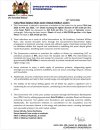
Energy and Petroleum Regulatory Authority (EPRA). Government Spokesperson Isaac Mwaura said the funds will be drawn from the Petroleum Development Levy (PDL) Fund to stabilize diesel and kerosene prices during the current pricing cycle.
Mwaura noted that the intervention is part of broader measures by President William Ruto’s administration to shield households and businesses from the impact of volatile international oil markets. He added that the government continues to maintain Value Added Tax (VAT) on petroleum products at 8 percent, instead of the standard 16 percent, a move that costs the Exchequer approximately KSh28 billion annually in forgone revenue.
The announcement came as EPRA released new fuel prices effective June 15 to July 14, 2026. Under the revised rates, the price of super petrol dropped by KSh0.22 per litre, while diesel fell by KSh10 per litre. Kerosene prices remained unchanged. In Nairobi, super petrol will retail at KSh214.03 per litre, diesel at KSh222.86, and kerosene at KSh191.38.
The government maintains that the subsidy programme and the Government-to-Government fuel import arrangement have helped ensure a steady fuel supply while minimizing the impact of global price fluctuations on Kenyan consumers.