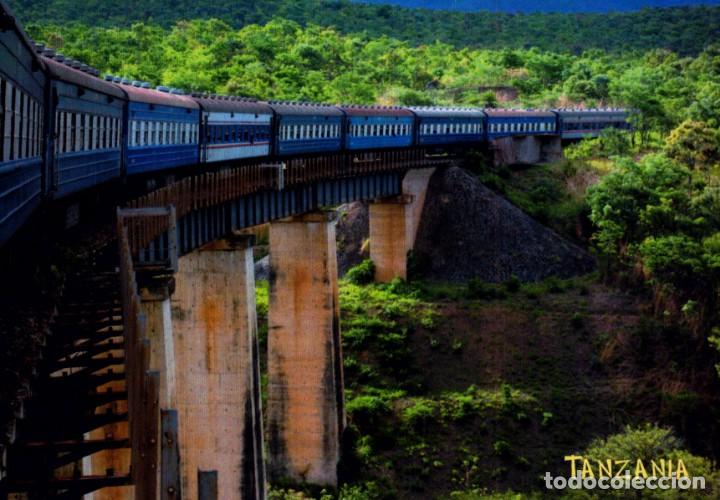
Laggard, hanging basket technology has been in Tanzania since 1970s (during black n white photos era) across Mpanga river! Check TAZARA a replica of ur bridges n viaducts across Thika River!
Some bridges with hanging basket technology across TAZARA
On January 10, China State Councilor and Foreign Minister Wang Yi said this!
None of what you have shown from Tazara are bridges built using hanging basket technology, but I'm not sure you will even undeerstand if I try to explain it to you. Hanging basket technology, the horizontal structure of the bridge is built on the spot, One team works from one side of the pillar and another team works from the other side, and they both meet at the middle, The horizontal structure ends up looking like and arch or a series of archs.
Unaona vile daraja limejengwa hapo hapo, nusu kutoka upande mmoja na nusu nyengine kutoka upande mwengine alafu wanakutana kati kati !!
The Chinese are using the hanging basket technique to tackle challenges.
www.constructionkenya.com
has been found to be the best option for the terrain when compared with other bridge construction techniques.
“In bridge construction, the hanging basket is a very important construction tool. The components include the hanging system, travelling system, bearing structure, anchor unit and operation platform,” Mr Liu said on Tuesday during a media tour of the project.
The hanging basket is basically a structure that is able to move along the top of the girder, anchored on the already completed pillar and the method is used to pour concrete symmetrically from two ends of a bridge to their respective middle span at the same time.
The Sh150 billion railway will go over cliffs and into four tunnels covering 7.756 kilometres tunneled through Ngong Hills.
The railway will have 27 bridges covering 17.3 kilometres, which is 14.4 per cent of total project length. Six per cent of the railway will comprise three tunnels spanning 7.14 kilometres.
None of what you have shown from Tazara are bridges built using hanging basket technology, but I'm not sure you will even undeerstand if I try to explain it to you. Hanging basket technology, the horizontal structure of the bridge is built on the spot, One team works from one side of the pillar and another team works from the other side, and they both meet at the middle, The horizontal structure ends up looking like and arch or a series of archs.
Unaona vile daraja limejengwa hapo hapo, nusu kutoka upande mmoja na nusu nyengine kutoka upande mwengine alafu wanakutana kati kati !! View attachment 1343207
The Chinese are using the hanging basket technique to tackle challenges.
www.constructionkenya.com
has been found to be the best option for the terrain when compared with other bridge construction techniques.
“In bridge construction, the hanging basket is a very important construction tool. The components include the hanging system, travelling system, bearing structure, anchor unit and operation platform,” Mr Liu said on Tuesday during a media tour of the project.
The hanging basket is basically a structure that is able to move along the top of the girder, anchored on the already completed pillar and the method is used to pour concrete symmetrically from two ends of a bridge to their respective middle span at the same time.
The Sh150 billion railway will go over cliffs and into four tunnels covering 7.756 kilometres tunneled through Ngong Hills.
The railway will have 27 bridges covering 17.3 kilometres, which is 14.4 per cent of total project length. Six per cent of the railway will comprise three tunnels spanning 7.14 kilometres.
Wang Yi: Mombasa-Nairobi Railway can be a new symbol of China-Africa friendship
2020/01/11
On January 10, State Councilor and Foreign Minister Wang Yi took the Mombasa-Nairobi standard gauge railway (SGR) passenger train during his stopover in Kenya to inspect the construction and operation of the cooperation project.
According to the SGR operation team, with a total distance of 472 kilometers, the SGR is the first standard gauge railway completed in Africa, which was designed using Chinese technology, standard, equipment and funding. The project created a total of 30,000 local jobs during construction. AfriStar, a locally registered company was set up to run the SGR, with 2,248, or nearly 80%, of its employees from Kenya. Four passenger trains run on a daily basis. Since its opening in May 2017, the SGR has carried 4 million passengers, with an average attendance rate of 95%. Sixteen freight trains run on an average daily basis, and nearly 6 million tons of cargo was transported in 2019, up 70% compared with 2018. According to the operation team, the SGR passes through Kenya's largest conservation park, Tsavo National Park. The SGR has become a charming sight on the African continent. It has not only addressed the urgent local transport needs and significantly reduced transport costs, but also met high standards of environmental requirements and effectively boosted the coastal tourism and economic development of Kenya, rapidly driving the growth of passenger demand. The trains are often packed and it's hard to get a seat.
Wang Yi exchanged views with the railway operation team and gave full recognition to the successful construction and operation of this project. Wang Yi said, this project provides a fresh example for Chinese enterprises that operate and develop overseas, and valuable experience for upgrading China's cooperation with other countries. The SGR has been a great success. It is warmly welcomed by the Kenyan people and well received by all sectors of society. It may be called the Tanzania-Zambia Railway of the new era and is becoming a new symbol of the friendship between China and Kenya and between China and Africa. As a good friend, good partner and good brother of Africa, China has always fully respected Africa and helped Africa build infrastructure and accelerate economic and social development in accordance with the needs of African countries, which has brought tangible benefits to African countries and people. This is also the fundamental reason why China-Africa cooperation has been welcomed by African countries.
Wang Yi said, the SGR is a benchmark for the mutually beneficial and win-win cooperation between China and Africa, and it is also the result of the joint efforts to develop cooperation under the "Belt and Road Initiative." These are powerful facts that render all accusations against China-Africa cooperation pale and feeble.
The Chinese state councilor put it very clear on what he meant by that!
" It may be called the Tanzania-Zambia Railway of the new era and is becoming a new symbol of the friendship between China and Kenya and between China and Africa. As a good friend, good partner and good brother of Africa"
So when he said the Kenya SGR is the Tanzania-Zambia Railway of the new era... He means as a symbol of friendship between China and Africa... He does NOT mean that Tazara is similar to Kenya SGR is terms of technical standards, engineering or design... Anyone with a basic understanding of English should be able to get that simple analogy!!!!
Tazara rail has a capacity of 5 million tonnes p.a, KenyaSGR has a capacity of 22 Million tonnes p.a!!!! usilinganishe mavi na mbolea!!!!
The Chinese state councilor put it very clear on what he meant by that!
" It may be called the Tanzania-Zambia Railway of the new era and is becoming a new symbol of the friendship between China and Kenya and between China and Africa. As a good friend, good partner and good brother of Africa"
So when he said the Kenya SGR is the Tanzania-Zambia Railway of the new era... He means as a symbol of friendship between China and Africa... He does NOT mean that Tazara is similar to Kenya SGR is terms of technical standards, engineering or design... Anyone with a basic understanding of English should be able to get that simple analogy!!!!
Tazara rail has a capacity of 5 million tonnes p.a, KenyaSGR has a capacity of 22 Million tonnes p.a!!!! usilinganishe mavi na mbolea!!!!
Tell ur master Chinese FM! BTW I don't think ur SGR can handle 22 mln tonnes per annum considering the fact u bought engines n wagons with axle load limited at 25 tonnes n none of ur engines can tag 100 wagons! Unless u get new locomotives n not these 2nd hand tuktuks we see!
You've completely lost it!
Projects like these are buit to serve a purpose. So HOW it was built would be the non issue here, unless the said technology saved money or time of what relevance is it? As a matter of fact, you shouldn't even mention it if the end product is the same.
You've completely lost it!
Projects like these are buit to serve a purpose. So HOW it was built would be the non issue here, unless the said technology saved money or time of what relevance is it? As a matter of fact, you shouldn't even mention it if the end product is the same.
ndo maana gharama zimegonga $5.3 bln kwa 592 km (728 km of total track length) of SGR Mombasa-Naivasha wakati sie ime-cost $3.1 bln 541 km (722 km of total track length) of electrified SGR Dar-Dodoma-Makutupora! Sababu ya vitu kama sijui hanging basket technology sijui mashine za kuchoronga tunnels! Upuuzi mtupu! $2.2 bln difference!
Kafrican plse stop disgracing urself prudence is needed on this!
Tell ur master Chinese FM! BTW I don't think ur SGR can handle 22 mln tonnes per annum considering the fact u bought engines n wagons with axle load limited at 25 tonnes n none of ur engines can tag 100 wagons! Unless u get new locomotives n not these 2nd hand tuktuks we see!
ndo maana gharama zimegonga $5.3 bln kwa 592 km (728 km of total track length) of SGR Mombasa-Naivasha wakati sie ime-cost $3.1 bln 541 km (722 km of total track length) of electrified SGR Dar-Dodoma-Makutupora! Sababu ya vitu kama sijui hanging basket technology sijui mashine za kuchoronga tunnels! Upuuzi mtupu! $2.2 bln difference!
Kafrican plse stop disgracing urself prudence is needed on this!
And Ethiopia rail which also has the same capacity as yours and is also electrified is 759KM long and was built at a cost of only $3.4 Billion.... Ambayo ni sawa tu na reli yenu ya TZ in terms of cost per km... Kawaulize wa Ethiopia wenyewe kama kati ya reli yao na ya Kenya gani ndo superior !!???? wacheni kudanganywa wadanganyika... Hivi unajua Nairobi ICD pekee iko na capacity ya 450,000 TEUs p.a wakati Dar port ya TZ inayoshughulikia mizigo ya zaidi ya nchi tano iko na capacity ya 650,000 TEUs .. Hebu tafakari hayo kwa mda.....
who built Ethiopia Railway n what design? If our SGR is poor the heavy rains that have been pouring n destroying banks of ur chinese roads n ur SGR embarkments would have destroyed our SGR! That figure for Dar port is way outdated Dar port handles way more than that may be u confused TICTS and the Dar port as a whole!
In 2015 Dar port handled 600,000 TEUs
AFRICATECH
JULY 10, 2015 / 11:00 AM / 5 YEARS AGO Tanzania's Dar es Salaam port to handle 25 pct more cargo in 2015: president
Fumbuka Ng'wanakilala
3 MIN READ
DODOMA, Tanzania (Reuters) - Cargo volumes at Dar es Salaam port are expected to rise as much as 25 percent this year, helped by expanded capacity and improved efficiency, Tanzanian president Jakaya Kikwete said in his last address to parliament before an election in October.
The main port in Tanzania's capital Dar es Salaam is seen in this aerial view file photo. REUTERS/Katrina Manson
The port, whose main rival is bigger but also congested Mombasa in Kenya, acts as a trade gateway for landlocked states such as Zambia, Rwanda, Malawi, Burundi and Uganda, as well as the eastern region of Democratic Republic of the Congo (DRC).
“In 2014 the port handled 14.4 tonnes of cargo ... We expect it to reach 18 million tonnes this year,” Kikwete said late on Thursday.
“The port currently operates 24 hours a day and the speed of unloading and loading cargo has significantly increased ... even those who previously stopped using the port have now returned.”
Tanzania said it wants to increase capacity to 28 million tonnes a year by 2020. The World Bank said last year that inefficiencies at Dar es Salaam cost Tanzania and its neighbours up to $2.6 billion a year.
Tanzania signed a $565 million deal last year with the World Bank and other development partners to expand the Dar es Salaam port, part of plans to boost the east African nation’s role as a regional trade hub.
Kikwete said plans to build two new berths would double the number of containers handled by the port each year to 1.2 million twenty-foot equivalent units, or TEUs, from the current 600,000 TEUs.
“We are currently in discussions with the DRC and Zambia for a single customs territory to speed up cargo clearance at the Dar es Salaam port,” he said.
Tanzania also plans to build a new, Chinese-backed $11 billion port at Bagamoyo to make it the region’s biggest gateway and an engine of Africa’s boom.
Like its neighbour Kenya, Tanzania wants to capitalise on a long coastline and to upgrade existing rickety railways and roads to serve growing economies in the heart of Africa.
Kikwete said the government would begin construction of a standard gauge railway line this year if it secured funding to link the Dar es Salaam port to regional economies. Transport contributes 15 percent of gross domestic product in he said.
Tanzania, east Africa’s second-biggest economy, said in March it plans to spend $14.2 billion to construct a new rail network in the next five years financed with commercial loans.
Gas finds in Tanzania and oil discoveries in Kenya and Uganda have turned east Africa into an exploration hotspot for oil firms, but transport infrastructure has suffered from decades of under-investment.
Reporting by Fumbuka Ng'wanakilala; Editing by George Obulutsa, Larry King
Find latest news from every corner of the globe at Reuters.com, your online source for breaking international news coverage.
af.reuters.com
Hutchison Ports’ Tanzania International Container Terminal Services has boosted efficiency. Credit: Hutchison Ports
INDUSTRY DATABASE
PORT OF DAR ES SALAAM Container volumes are rising and the Port of Dar es Salaam is investing, reports Felicity Landon
Records were broken again last year at Hutchison Ports’ Tanzania International Container Terminal Services (TICTS). The terminal in Dar es Salaam handled 592,000 teu, an increase of 18% on 2017.
The higher throughput can be attributed to operational improvements which increased efficiency at the port, infrastructure developments in Tanzania, and a rise in exports of copper and agricultural products, said a spokesman for TICTS.
Overall, the Port of Dar es Salaam handles up to 90% of Tanzania’s trade; it is considered the gateway not only to Tanzania, but also to eastern, central and southern Africa, serving the landlocked countries of Zambia, the DRC, Malawi, Rwanda, Burundi and Uganda.
A major advantage for TICTS is being the only specialised container terminal operator in Tanzania, said the spokesman.
Last year also featured a monthly record for TICTS — August’s throughput was 54,447 teu. Announcing this, chief executive Jared Zerbe said: “Landlocked countries have been driving growth for TICTS as a result of significant increases in global commodity prices and the Tanzanian government’s removal of VAT on ancillary services for transit cargo.”
The terminal’s modern equipment and standards of excellence helped it to handle the volume increase, said Mr Zerbe. However, he warned that space constraints represented an acute challenge. Transit containers could not be transferred outside the port for storage prior to clearance, and this was leading to very high or maximum yard density at peak times.
TICTS was working with the government to locate alternative storage areas for transit containers. It had been appealing to the government to allow some transit cargo to be sent outside the port to inland container depots, to find more space within the port, to allow TICTS to buy or rent more space nearby or to adjust downward the grace period for transit countries to expedite cargo clearance, said Mr Zerbe.
Space allocations
There have been some developments since then, said the spokesman. Tanzania Port Authority (TPA) has provided additional space within the port and at its inland container depot at Ubungo, where TICTS transfers overstayed cargo. TPA is also developing a dry port at Ruvu, which is aiming to provide additional storage for transit cargo.
And major port infrastructure upgrades are under way. The Dar es Salaam Maritime Gateway Project, funded by a World Bank loan of $345m, will enable the port to handle post-Panamax-plus vessels and is designed to double overall throughput capacity, reduce vessel waiting time and increase operational productivity.
The first phase includes deepening and widening the entrance channel and turning basin to 15.5 metres, strengthening Berths 1 to 7 and deepening them to 14.5 metres, and building a new ro-ro/multipurpose berth at Gerezani Creek.
There are also plans to improve the rail links and facilities at the port, and then strengthen and deepen Berths 8 to 11.
A World Bank report says: “Since approximately 90% of Tanzania’s international transactions transit through the Port of Dar es Salaam, and 35% of the total throughput of the port is intended for the landlocked countries of the interior, improving the efficiency of the maritime gateway is a key element in the regional transport network.”
The development work at the port has started with the ro-ro berth at Gerezani Creek and Berth no. 1, said the TICTS spokesman.
There are no particularly notable investments to report relating to the roads to the six countries being served, he said. “All the countries are linked with tarmac or all-weather roads which are currently in good condition,” he said. “TAZARA and TRC, which provide the rail network, have not undergone major changes, with the exception of the TRC project on SGR which will link with the local networks in its first phase.”
TICTS set up an office in Rwanda, and the activities there are now being jointly coordinated with TPA, which has also opened an office in Kigali. TICTS also co-ordinates with the port authority’s regional offices in Zambia, DRC, Burundi and Uganda.
TPA is also investing at the Port of Mtwara in the far south of the country, where a new general cargo berth is being built. The 300-metre quay, with 13 metres water depth, will increase the port’s capacity by the end of 2020, says TPA.
Hivi huu unafiki ulizaliwa nao?
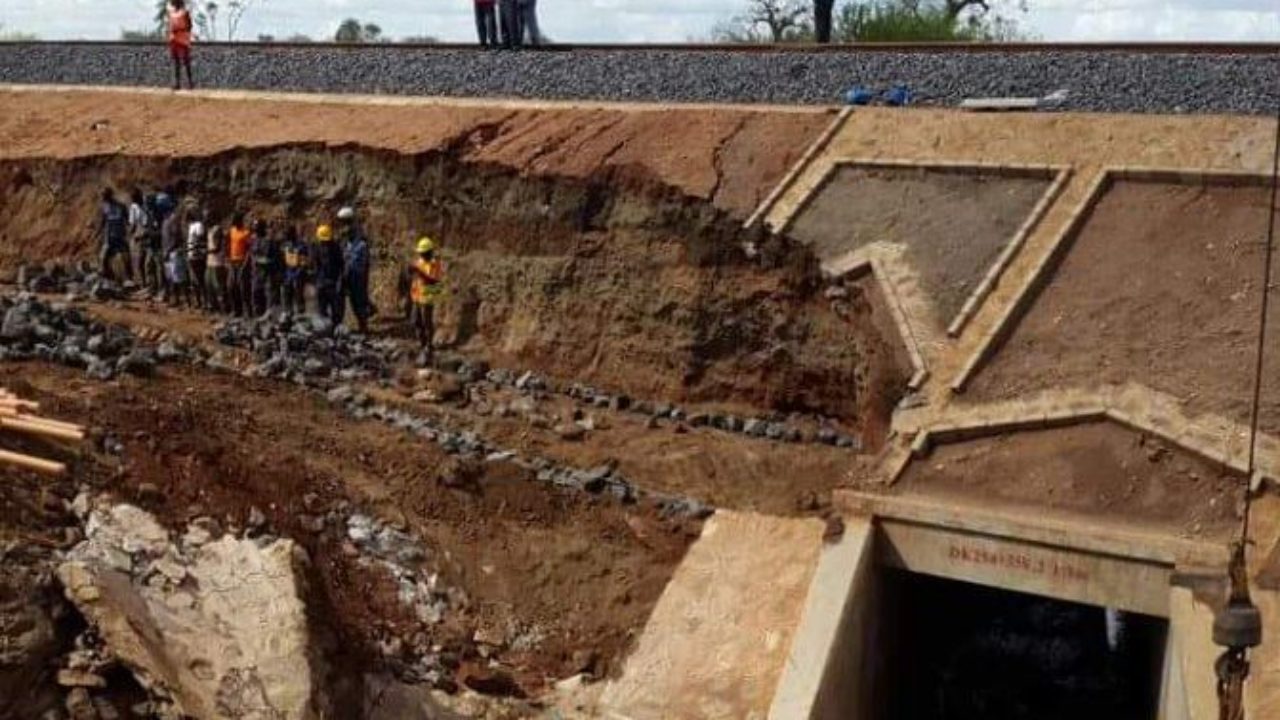
So It rained one day and washed a part of the embankment still under construction wewe mTanzania linakuuuuma Ila kinachotokea pale jangwani halikuumi, wakiona wingu la mvua tu, mabasi yanakimbizwa kupaki gerezani na kujazana hadi barabarani! Kukinyesha excavator zinatoa tope wiki nzima, a vicious cycle EVERYTIME it pours! Hujawai kuleta picha hata moja Lakini hili tukio lilotokea mara moja nchi nyingine ndo unali trend(isha)
Hivi huu unafiki ulizaliwa nao?
So It rained one day and washed a part of the embankment still under construction wewe mTanzania linakuuuuma Ila kinachotokea pale jangwani halikuumi, wakiona wingu la mvua tu, mabasi yanakimbizwa kupaki gerezani na kujazana hadi barabarani! Kukinyesha excavator zinatoa tope wiki nzima, a vicious cycle EVERYTIME it pours! Lakini hili tukio lilotokea mara moja nchi nyingine ndo unali trend(isha)
its clear it was still under construction. But thats neither here nor there, has that part collapsed again for the 2 years its operated or has it not rained ever since? Now how about the circus at jangwani? It has happened for close to 5years now and will continue for decades to come. Just because one has a different opinion doesn't change their nationality but you can choose what to believe
Unatakiwa kielewa kwamba kama mgr zote ziliweza kubeba heavy loads na bado ziko strong what about these new railways? Hakuna rail yakubeba dunia hapo so hakuna cha kusema oooh uzito mara nn hizo ni story tu za khanga rail zote zina uwezo hata mfanyaje tena mgr ndio big trust coz zimedumu long time hata matuta hayajawah bomoka
You've completely lost it!
Projects like these are buit to serve a purpose. So HOW it was built would be the non issue here, unless the said technology saved money or time of what relevance is it? As a matter of fact, you shouldn't even mention it if the end product is the same.
More:
•Reduction of the construction cycle
•Improvement in the construction conditions and environment
•Safety
•Adaptability during the different construction stages
JamiiForums uses cookies to help personalise content, tailor your experience and to keep you logged in if you register.
By continuing to use this site, you are consenting to our use of cookies.