
EINSTEIN112
JF-Expert Member
- Oct 26, 2018
- 21,708
- 35,719
Coal is re-emerging as a key source of energy for European countries racing to replace increasingly scarce natural gas as Moscow shuts off key pipeline flows.
Europe is caught in a worsening energy crisis as Russia uses its energy exports to retaliate against sanctions. So countries like Germany are turning to coal to secure energy supplies before winter hits.
Power generation using coal has shot up over 20% in France, Germany, Italy, Netherlands, Spain and the UK together since last year, Rystad Energy data shows. European countries have increased coal consumption this year.
"Coal is definitely making a comeback, with skyrocketing natural gas prices and drought," Ole Hvalbye, an analyst at Swedish bank SEB, told Insider. "Now it is all about surviving the winter."
Moscow's drumbeat of disruptions to flows has sent European natural gas prices up 300% this year, and to record highs in August.
That has prompted power companies in Austria, the Netherlands and Italy to eye the use of coal again. German utility giant Uniper has revived a mothballed coal-fueled plant until April 2023.
"Coal has been the cheaper option for power generation for most of 2022 and has also been given a boost by the tight supply situation for gas in Europe," Rystad Energy analyst Fabian Rønningen told Insider.
Given current prices, coal is expected to be the more competitive option for the next two-and-a-half years, he added.
Global coal prices hit their highest level since 2008 as the energy crisis worsened last week, and European coal prices alone have risen about 150% since the start of the year.
Hvalbye said Europe's loss of Russian natural gas volumes is cascading into global energy markets.
The pressure is on EU governments to secure energy supplies for the colder months, when households and businesses use more power.
"We see a very tough winter ahead. Q4-22 and Q1-23 will be difficult, and Europe will likely be in need of all the other alternatives they can get their hands on, heading into this storm," Hvalbye said.
Making the situation worse is the EU's ban on Russian coal imports, which took effect in August. The bloc gets almost half its coal from Russia, with the majority going to Germany and the Netherlands, according to Commerzbank.
Those countries will see no alternative but to turn to imports from the likes of the US, Australia and South Africa.
"We know it's quite slow to ramp up production, especially in countries like Australia or Indonesia," he said.
Extreme summer heatwaves in Europe have lowered levels in water reservoirs, causing a shortfall of hydropower, heightening coal's appeal.
Norway, a top supplier of electricity to Europe, plans to slash those exports to allow its hydropower reservoirs to refill. Seven European countries cut total hydroelectric production by over 18% this year, Rystad data shows.
===============
Mwambieni J. Makamba MCHUCHUMA sio mbali wasiwaze tu bei ya umeme na mafuta URUSI katupa fursa. Achangamke.
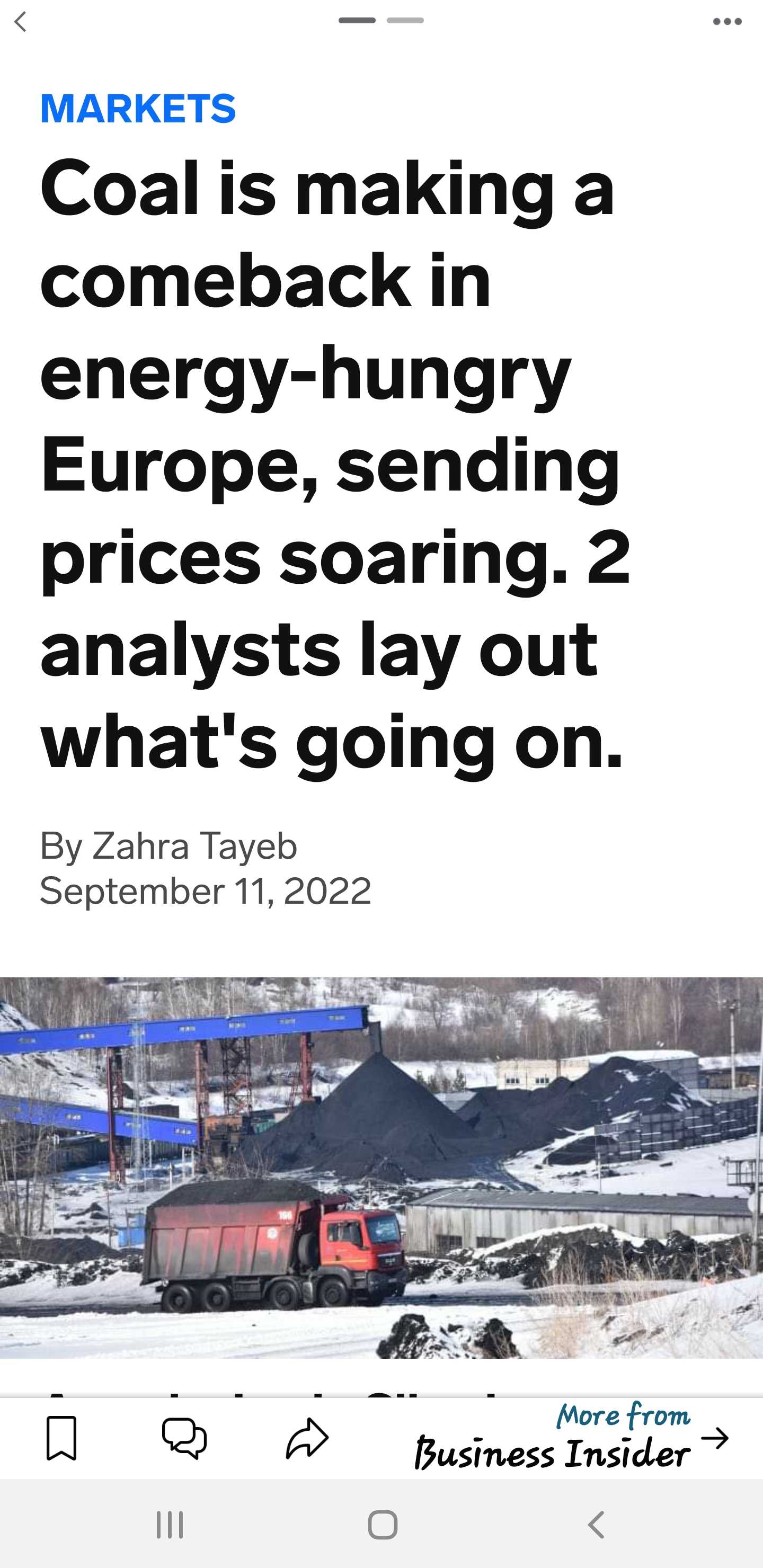
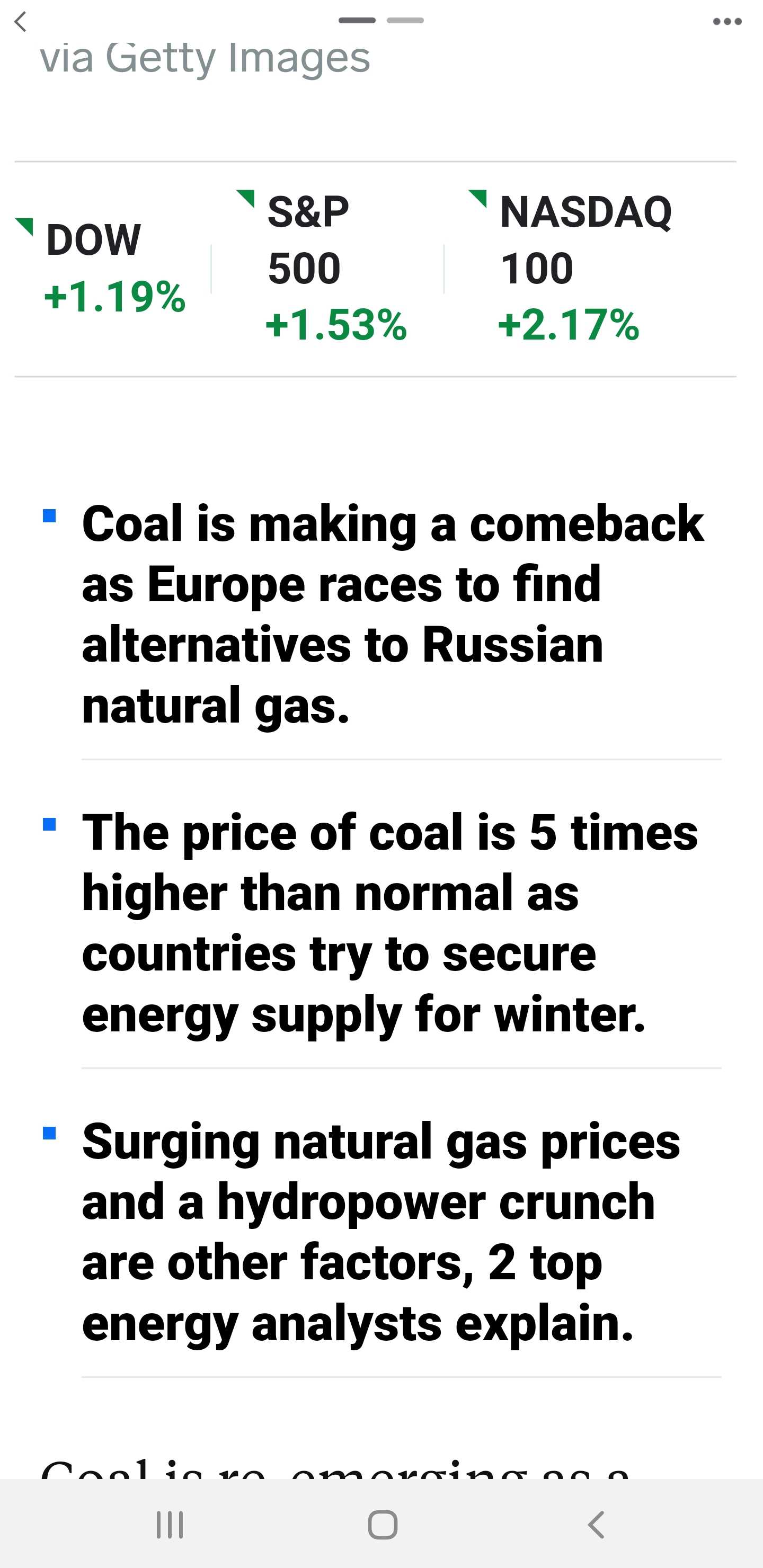
Europe is caught in a worsening energy crisis as Russia uses its energy exports to retaliate against sanctions. So countries like Germany are turning to coal to secure energy supplies before winter hits.
Power generation using coal has shot up over 20% in France, Germany, Italy, Netherlands, Spain and the UK together since last year, Rystad Energy data shows. European countries have increased coal consumption this year.
"Coal is definitely making a comeback, with skyrocketing natural gas prices and drought," Ole Hvalbye, an analyst at Swedish bank SEB, told Insider. "Now it is all about surviving the winter."
Moscow's drumbeat of disruptions to flows has sent European natural gas prices up 300% this year, and to record highs in August.
That has prompted power companies in Austria, the Netherlands and Italy to eye the use of coal again. German utility giant Uniper has revived a mothballed coal-fueled plant until April 2023.
"Coal has been the cheaper option for power generation for most of 2022 and has also been given a boost by the tight supply situation for gas in Europe," Rystad Energy analyst Fabian Rønningen told Insider.
Given current prices, coal is expected to be the more competitive option for the next two-and-a-half years, he added.
Global coal prices hit their highest level since 2008 as the energy crisis worsened last week, and European coal prices alone have risen about 150% since the start of the year.
Hvalbye said Europe's loss of Russian natural gas volumes is cascading into global energy markets.
The pressure is on EU governments to secure energy supplies for the colder months, when households and businesses use more power.
"We see a very tough winter ahead. Q4-22 and Q1-23 will be difficult, and Europe will likely be in need of all the other alternatives they can get their hands on, heading into this storm," Hvalbye said.
Making the situation worse is the EU's ban on Russian coal imports, which took effect in August. The bloc gets almost half its coal from Russia, with the majority going to Germany and the Netherlands, according to Commerzbank.
Those countries will see no alternative but to turn to imports from the likes of the US, Australia and South Africa.
"We know it's quite slow to ramp up production, especially in countries like Australia or Indonesia," he said.
Extreme summer heatwaves in Europe have lowered levels in water reservoirs, causing a shortfall of hydropower, heightening coal's appeal.
Norway, a top supplier of electricity to Europe, plans to slash those exports to allow its hydropower reservoirs to refill. Seven European countries cut total hydroelectric production by over 18% this year, Rystad data shows.
===============
Mwambieni J. Makamba MCHUCHUMA sio mbali wasiwaze tu bei ya umeme na mafuta URUSI katupa fursa. Achangamke.

