Around the world -- Photos
You are using an out of date browser. It may not display this or other websites correctly.
You should upgrade or use an alternative browser.
You should upgrade or use an alternative browser.
Around the world -- Photos
-
Thread starter
afrodenzi

- Start date


Dotworld
JF-Expert Member
- Aug 10, 2011
- 4,035
- 3,784

The scene aboard the battleship Missouri as the Japanese surrender documents were signed in Tokyo Bay, on September 2, 1945. Here, General Yoshijiro Umezu signs the Instrument of Surrender on behalf of the Armed Forces of Japan, Foreign Minister Mamoru Shigemitsu (behind him, in top hat) had earlier signed on behalf of the government. Both men were later tried and convicted of war crimes. Umezu died while in prison, Shigemitsu was paroled in 1950, and served in the Japanese government until his death in 1957.


Dotworld
JF-Expert Member
- Aug 10, 2011
- 4,035
- 3,784

An allied correspondent stands in the radioactive rubble in front of the shell of a building that once was an exhibition hall in Hiroshima, Japan, one month after the first atomic bomb ever used in warfare was dropped on the city by the U.S. The explosion took place almost directly above the dome.

Fixed Point
JF-Expert Member
- Sep 30, 2009
- 11,304
- 12,753
jamii hii ya watu huwa wanafanana hata kama si twins, sasa wakiwa twins ndo inakuwa balaa.afrodenzi Cutest and the most identical Twins of this Universe<center style="color: rgb(51, 51, 51); font-family: Georgia, serif; line-height: 20px; font-size: small; "><small style="font-family: Arial; "><small><big style="font-weight: bold; "><big>
</big></big></small></small>
</center><center style="color: rgb(51, 51, 51); font-family: Georgia, serif; line-height: 20px; font-size: small; ">
</center>


Thanx


Dotworld
JF-Expert Member
- Aug 10, 2011
- 4,035
- 3,784

A young cattle keeper from the Dinka Rek sub-tribe poses for a portrait in a remote cattle camp in Wunlit County, southern Sudan. He holds an AK-47 assault rifle, a common weapon among young cattle keeping males. This image was made at the border between southern Sudan's Lakes and Warrap states where cross-border cattle raiding is extremely common. Photo taken on April 21, 2011.

Dotworld
JF-Expert Member
- Aug 10, 2011
- 4,035
- 3,784
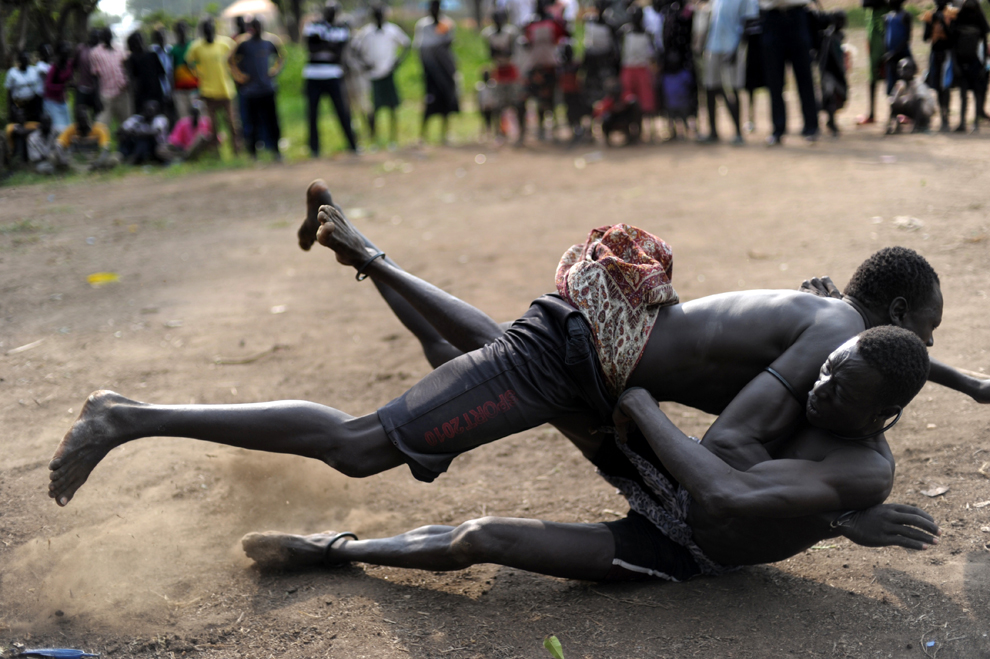
South Sudanese members of the Mundari ethnic group wrestle where the tribe brought cattle and sheep for sale in Juba on July 7, 2011, two days before South Sudan secedes. The Mundari are cattle keepers who live in the south and pride themselves in being good wrestlers
Similar Discussions
-
TRUE The statement in the photo is Partially true and so its misleading
- Started by OwadeKuya
- Replies: 0
-
Messi and Yamal will meet again in the 2026 World Cup final
- Started by Mawele
- Replies: 32
-
-

-
 Triplets Ghetto Kids Shine on Global Stage with FIFA World Cup 2026 Anthem “Dai Dai”
- Started by Eronda
- Replies: 0