
Da Dona
JF-Expert Member
- Dec 16, 2025
- 1,247
- 674
Thirty-three years ago, President Yoweri Museveni declared that he was not worried about losing an election, saying he would actually feel relieved and liberated if Ugandans chose not to re-elect him.
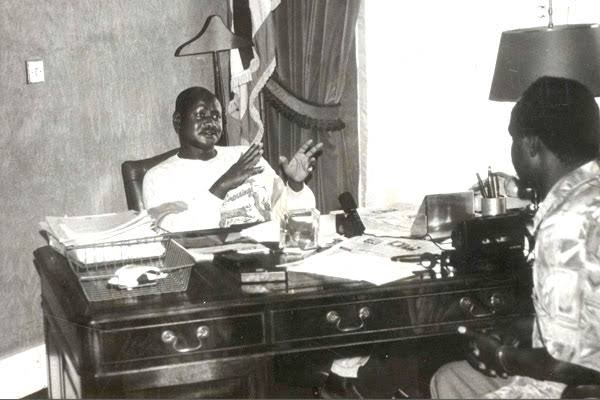
Museveni made the remarks during an exclusive interview with Wafula Oguttu, then Editor-in-Chief of Monitor Publications, at State House Entebbe on November 2, 1993. The interview was published in The Monitor on November 5, 1993.
•Museveni on losing elections
At the time, Museveni said he intended to contest in the first election following the promulgation of the 1995 Constitution. He explained that he wanted to complete several programmes aimed at stabilising the economy, improving Uganda's international image and expanding infrastructure before leaving office.
Among his priorities were ;
•Completing 12 major roads across the country
•Increasing electricity generation capacity to 400 megawatts
•Reducing dependence on wood fuel and tackling rural poverty.
However, he maintained that his continued stay in power depended on the people's decision.
Quote 1.
"But if the people of Uganda don't vote for me, I will be relieved, [laughter] I will be liberated," Museveni said.
Quote 2.
He added: "I don't care whether I retain power or not. I am not bothered one way or the other. The fact is that the people get a chance. Why should I say 'I am sure'. It is up to the people. If they want me to help them."
Museveni on his political future
Museveni further indicated that he did not intend to offer himself for another term after 1999.
He said he was not certain of winning the forthcoming election but considered giving Ugandans the opportunity to determine their leadership through the Constitution more important than his personal political future.
Quote 3
"Because by fighting we gave them the chance to take their destiny in their own hands. To me, that is more important than whether they vote for me or not," he said.
Other issues addressed
Beyond elections and political power, the interview covered corruption, regional representation in government appointments, land tenure and allegations of favouritism.
Museveni defended his administration against accusations of western Uganda dominating government positions, attributing the trend largely to the region's higher levels of education, particularly in Ankole and Kigezi.
He also discussed accountability in government, arguing that corruption investigations involving the military were easier to pursue than those involving civilian politicians.
More than three decades later, Museveni's remarks invite questions about his changing attitude towards political power. Having once said he would feel relieved if Ugandans voted him out, his government has since faced criticism over opposition arrests and detentions, restrictions on political activities, and attacks on journalists and press freedom. Human rights watch and other rights organisations have documented these concerns, particularly around the 2026 elections.
Does Museveni still hold the same view about leaving power if Ugandans choose a different leader?
Sources: Daily Monitor, Human rights watch.

