
Da Dona
JF-Expert Member
- Dec 16, 2025
- 1,151
- 650
Uganda’s Parliament has approved the national budget estimates for the 2026/27 financial year totaling Shs84.39 trillion, making it one of the biggest spending plans in the country’s history.
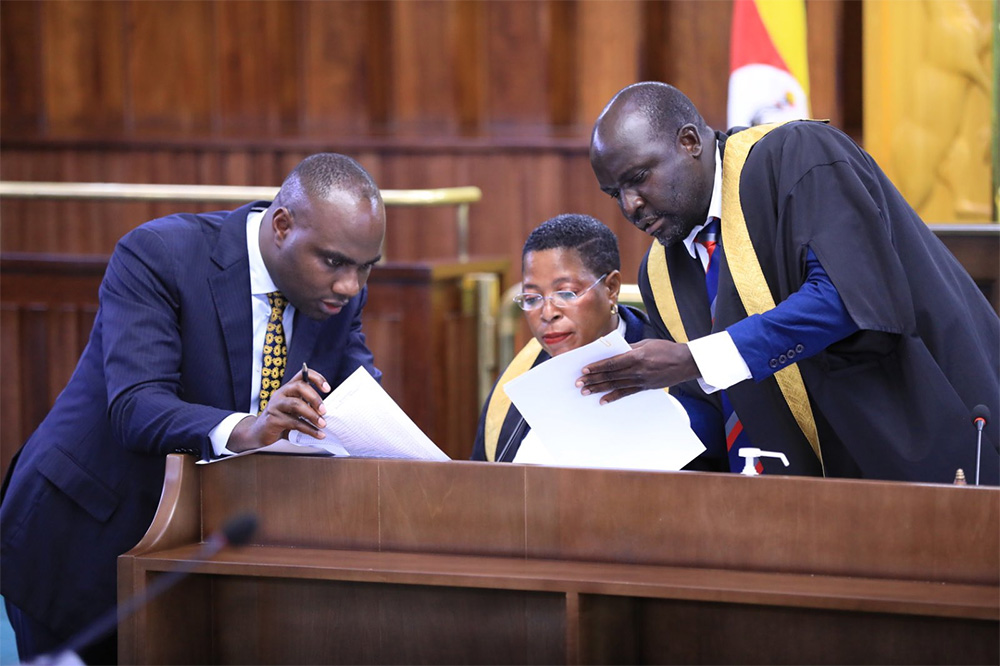 📸: New vision
The budget, passed on Friday, April 24, is the first major financial plan after the 2026 general elections and is expected to shape Uganda’s next five-year development agenda.
The approved expenditure represents an increase of nearly Shs11.9 trillion from the current 2025/26 financial year budget of Shs72.38 trillion.
Government says the budget is aimed at driving long-term economic growth and expanding Uganda’s economy to $500 billion by 2040.
Among the biggest highlights in the new budget is a Shs1.16 trillion allocation for wage enhancements and salary harmonisation for public workers.
The salary boost will benefit primary school teachers, secondary school arts teachers, instructors in business and technical institutions, scientists, and other public servants.
The move is expected to address long-standing concerns over salary disparities, especially among arts teachers and civil servants who have often complained about earning less than their counterparts in science-related fields.
State Minister for Finance (General Duties), Henry Musasizi, said the wage increase is part of a phased government strategy to improve worker motivation, retention, and service delivery.
Presenting the estimates to Parliament, Musasizi said the budget was prepared under the theme of “full monetisation of Uganda’s economy through commercial agriculture, industrialisation, expanding and broadening services, digital transformation and market access.”
He said the budget was developed after consultations with stakeholders and President Yoweri Museveni.
Musasizi told the House, chaired by Speaker of Parliament Anita Among, that the budget will be financed through a combination of domestic revenue, borrowing, and external support.
According to the estimates:
•Shs44.1 trillion will come from domestic revenue
•Shs11.9 trillion from domestic borrowing
•Shs11.2 trillion from project support
•Shs13.9 trillion from domestic refinancing
•Shs1.44 trillion from the Petroleum Fund
•Shs1.22 trillion from budget support
•Shs339 billion from local government revenue
Infrastructure remains one of the government’s top priorities in the new budget.
Government allocated Shs1.38 trillion in counterpart funding for flagship projects such as the Kampala–Jinja Expressway, the Standard Gauge Railway, the rehabilitation of the metre gauge railway, and electricity extension to industrial parks.
Another Shs918 billion has been earmarked for road maintenance and completion of national and district roads.
The Kampala Capital City Authority will receive Shs111 billion for roads, drainage, and urban clean-up.
In the health sector, Shs556.7 billion has been allocated to strengthen referral hospitals, specialised facilities, and essential medicine supplies.
Higher education institutions will receive Shs205 billion for infrastructure and research support.
The Human Capital Development programme has seen one of the sharpest increases, rising from Shs1.48 trillion to Shs3.56 trillion.
Funding for manufacturing has increased from Shs312 billion to Shs1.06 trillion, while Science, Technology and Innovation has been allocated Shs200 billion, including support for Kiira Motors and other locally developed products.
Digital Transformation funding has also risen to Shs513.9 billion.
However, the budget was passed amid strong criticism from opposition legislators.
Kira Municipality outgoing Member of Parliament, Ibrahim Ssemujju, rejected the estimates and accused government of prioritising debt, luxury spending, and politically connected projects.
Presenting the minority report, Ssemujju said the budget does not reflect the aspirations of Ugandans as outlined in the National Development Plan.
He noted that Shs33.6 trillion, nearly 40% of the budget, has been allocated to debt servicing.
Ssemujju argued that after debt obligations, wages, and classified expenditure, only a small portion remains for real development priorities.
He said the budget “needs real surgery” to make sense to the population.
Leader of Opposition Joel Ssenyonyi also criticised continued public funding for the Lubowa International Specialised Hospital project.
Ssenyonyi questioned why the government continues to invest heavily in Lubowa Hospital instead of strengthening already existing health centres and referral hospitals.
The approval of the Shs84.3 trillion budget now sets the stage for implementation of the government’s economic and development priorities in the 2026/27 financial year.
Source: New vision


