What are the health benefits of carrots?
Some people think of carrots as the ultimate health food, while generations of parents have told their children that eating carrots will help them see in the dark. Is this true? What other benefits may carrots have?
People probably first cultivated the carrot
thousands of years ago, in the area that is now Afghanistan. The original small, forked, purple or yellow root had a bitter, woody flavor and was quite different from the carrot that we know today.
Farmers grew purple, red, yellow, and white carrots long before the appearance of the sweet, crunchy, and aromatic orange variety that is now popular. Dutch growers may have developed this type in the 16th century.
In this article, learn more about the nutrients in carrots and their health benefits. We also look into tips for adding carrots to the diet and any precautions to take. And, of course, the age-old question: Do they really help you see in the dark?
Benefits
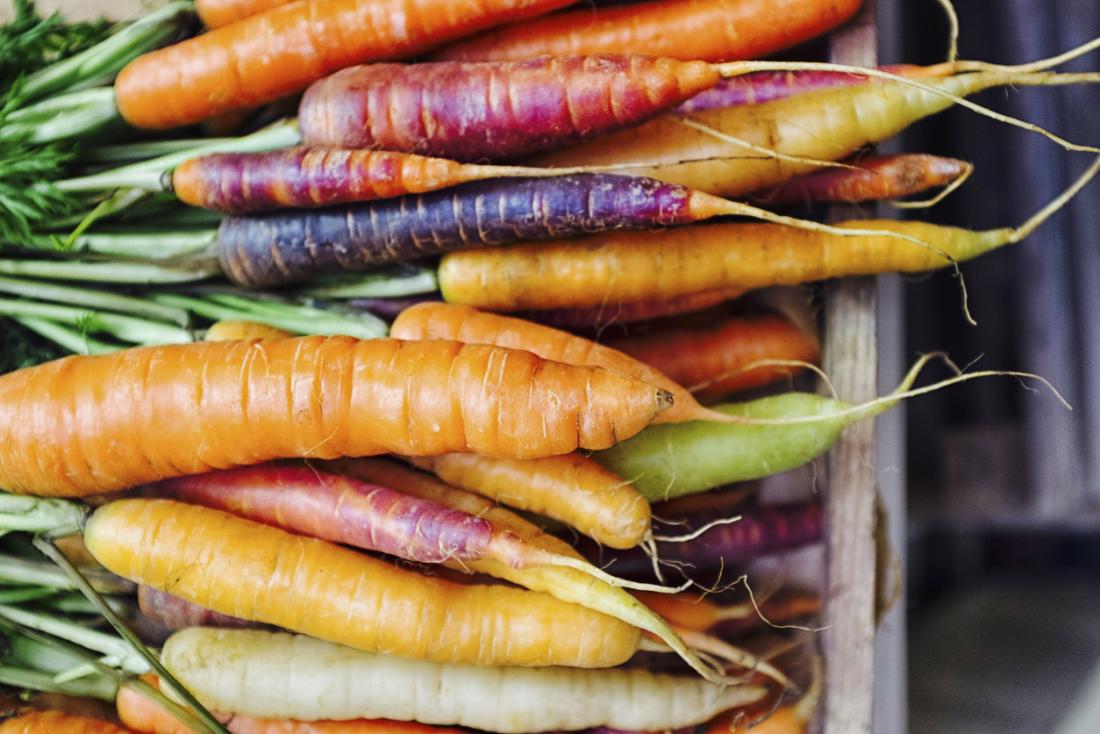
Share on PinterestCarrots contain vitamin A, antioxidants, and other nutrients.
Carrots are rich in
vitamins, minerals, and fiber. They are also a good source of
antioxidants.
Antioxidants are nutrients present in plant-based foods. They help the body remove free radicals, unstable molecules that can cause cell damage if too many accumulate in the body.
Free radicals result from natural processes and environmental pressures. The body
can eliminate many free radicals naturally, but dietary antioxidants can help, especially when the oxidant load is high.
Below are some ways in which carrots can support health.
Vision
Can carrots help you see in the dark? In a way, yes.
Carrots contain vitamin A, and a vitamin A deficiency may result in xerophthalmia, a progressive eye disease. Xerophthalmia can cause night blindness or difficulty seeing when levels of light are low.
According to the
Office of Dietary Supplements, a lack of vitamin A is one of the main preventable causes of blindness in children.
So, in a way, carrots can help you see in the dark.
However, most people’s vision is unlikely to improve from eating carrots, unless they have a vitamin A deficiency.
Carrots
also contain the antioxidants lutein and zeaxanthin, and the combination of the two may help prevent age-related
macular degeneration, a type of vision loss.
Learn about 10 foods that can help maintain eye health.
Cancer
Too many free radicals in the body may increase the risk of various types of
cancer, according to the
National Cancer Institute.
The antioxidant effects of dietary carotenoids — yellow, orange, and red organic pigments present in carrots and other vegetables — may reduce this risk. Lutein and zeaxanthin are two examples of these carotenoids.
One medium-sized raw carrot,
weighing 61 grams (g), contains 509 micrograms (mcg) RAE of vitamin A.
It also provides 5,050 mcg of
beta carotene and 2,120 mcg of alpha carotene[YB2] , two provitamin A antioxidants that the body can convert into more vitamin A, as needed.
According to the
2015–2020 Dietary Guidelines for Americans, female adults need to consume at least
700 mcg RAE of vitamin A each day, while male adults need at least 900 mcg RAE.
Prostate cancer: A 2015
review of studies suggested a link between a diet rich in carotenoids and a lower risk of
prostate cancer. However, confirming the association, then determining its cause, would require more research.
Leukemia: In 2011,
researchers found evidence that nutrients in carrot juice extract could kill
leukemia cells and slow or stop their progression.
Lung cancer: Also in 2011,
researchers concluded that drinking carrot juice may help prevent the type of damage that leads to
lung cancer in smokers.
Earlier, a 2008
meta-analysis indicated that participants with high intakes of various carotenoids had a 21% lower risk of lung cancer, after adjusting for smoking, than participants in control groups.
What is the link between cancer and diet?
Find out here.
Digestive health
Consuming more carotenoid-rich foods may lower the risk of
colon cancer, according to 2014
research that included data from 893 people.
The findings of a
study published the following year suggest that people who consume a high-fiber diet have a lower risk of
colorectal cancer than those who consume little fiber.
A medium carrot contains
1.7 g of fiber, or between 5% and 7.6% of a person’s
daily needs, depending on their age and sex. Meanwhile, 1 cup of chopped carrots provides 3.58 g of fiber.
High-fiber foods can promote gut health, but
which foods should we avoid?
Diabetes control
Carrots have a sweet flavor and contain natural sugars. What does this mean for people with
diabetes?
Carbohydrates make up
around 10% of a carrot, and nearly half of this is sugar. Another 30% of this carbohydrate content is fiber. A medium carrot provides 25
calories.
Overall, this makes a carrot a low-calorie, high-fiber food that is relatively low in sugar. For this reason, it scores low on the glycemic index (GI). This index can help people with diabetes understand which foods are likely to raise their blood sugar levels.
Boiled carrots have a GI score of
around 39. This means that they are unlikely to trigger a blood sugar spike and are safe for people with diabetes to eat.
Meanwhile, authors of a 2018
review concluded that consuming a high-fiber diet may help prevent the development of
type 2 diabetes. High-fiber foods may also help people with type 2 diabetes manage their blood sugar levels.
What is the 7-day diabetes diet plan?
Find out here.
Blood pressure and cardiovascular health
The fiber and
potassium in carrots may help manage
blood pressure.
The
American Heart Association (AHA) encourage people to add less salt, or sodium, to meals, while eating more foods that contain potassium, such as carrots. Potassium helps relax the blood vessels, reducing the risk of
high blood pressure and other cardiovascular issues.
One medium carrot
provides around 4% of a person’s
daily requirement of potassium.
Meanwhile, a 2017
review concluded that people with a high fiber intake are less likely to develop cardiovascular disease than people who eat little fiber. Eating plenty of fiber may also help reduce levels of low-density lipoprotein, or “bad,”
cholesterol in the blood.
Which foods may help reduce blood pressure?
Find out here.
Immune function and healing
Another antioxidant that carrots provide is vitamin C.
Vitamin C contributes to
collagen production. Collagen is a
key component of connective tissue and essential for wound healing and keeping the body healthy.
The vitamin is also present in immune cells, which help the body fight disease. A healthy immune system may prevent a range of diseases, including cancer, according to a 2017
study.
If a person is unwell, the immune system has to work harder, and this
may compromise vitamin C levels.
Some
experts believe that taking additional vitamin C may boost the immune system’s function when it is under
stress. Consuming vitamin C may, for example, slightly reduce the severity and duration of a cold.
Learn about 15 foods that can boost your immune system.
Bone health
Carrots contain vitamin K and small amounts of
calcium and phosphorus. All of these contribute to bone health and may help prevent
osteoporosis.
A balanced diet can help keep the bones healthy. Are there other natural ways to do this?
Find out here.
Nutrition
The table below shows the amount of each nutrient in a medium-sized, raw carrot that
weighs around 61 g.
It also shows how much of each nutrient an adult should consume each day, according to the
2015–2020 Dietary Guidelines for Americans. Needs vary, however, according to sex and age.
| Nutrients | Amount in 1 medium, raw carrot | Daily recommendation for adults |
| Energy (calories) | 25 | 1,600–3,200 |
| Carbohydrate (g) | 5.8 — including 2.9 g of sugar | 130 |
| Fiber (g) | 1.7 | 22.4–33.6 |
| Calcium (millgrams [mg]) | 20.1 | 1,000–1,300 |
| Phosphorus (mg) | 21.4 | 700–1,250 |
| Potassium (mg) | 195 | 4,700 |
| Vitamin C (mg) | 3.6 | 65–90 |
| Folate (mcg DFE) | 11.6 | 400 |
| Vitamin A (mcg RAE) | 509 | 700–900 |
| Beta carotene (mcg) | 5,050 | No data |
| Alpha carotene (mcg) | 2,120 | No data |
| Lutein & zeaxanthin (mcg) | 156 | No data |
| Vitamin E (mg) | 0.4 | 15 |
| Vitamin K (mcg) | 8.1 | 75–120 |
Carrots also contain various B vitamins and traces of iron and other minerals.
Learn about other antioxidant-rich foods.
Antioxidants and the color of carrots
The antioxidants alpha and beta carotene give carrots their
bright orange color. The body absorbs beta carotene through the intestines and converts it into vitamin A during digestion. This is why people consider carotenoids to be provitamins.
Farmer’s markets and some specialty stores offer carrots in a range of colors, including purple, yellow, and red. These varieties contain different compounds with antioxidant properties: Purple carrots contain anthocyanin, yellow carrots contain lutein, and red carrots are rich in lycopene.
What are antioxidants, and how do they work?
Find out here.
MEDICAL NEWS TODAY NEWSLETTER
Stay in the know. Get our free daily newsletter
Expect in-depth, science-backed toplines of our best stories every day. Tap in and keep your curiosity satisfied.
Enter your email
SIGN UP NOW
Your
privacy is important to us
Carrots in the diet
There are two seasons for carrots — the spring and fall — but they are usually available in supermarkets all year. People can buy them fresh, frozen, canned, pickled, or as juice.
It is best to store carrots in the refrigerator in a sealed plastic bag. Remove any greens from the tops before storing to prevent them from drawing moisture and nutrients from the roots.
Tips for preparing carrots
Carrots are a versatile vegetable. People can eat them raw, steamed, boiled, roasted, or as an ingredient in soups and stews.
First, peel and wash the carrots, then:
- Use shredded carrots in coleslaws, salads, or wraps.
- Add shredded carrots to baked goods, such as cakes and muffins.
- Have carrot sticks or baby carrots as a snack, maybe with a dip, such as hummus.
- Add carrots to juices and smoothies for a naturally sweet, mild flavor.
Boiling vegetables can reduce or eliminate some of the vitamin content. Raw or steamed carrots provide the most nutritional value.
Also, carotenoids and vitamin A may absorb better in the presence of fats. For this reason, people should eat carrots with a healthful source of fat, such as avocado, nuts, or seeds.
Risks
Overconsumption of vitamin A can be toxic. Also, it may cause a slight orange tint to the skin, though this not harmful to health.
An overdose of vitamin A is unlikely to happen because of diet alone, but it may result from supplement use.
Also,
some medications derive from vitamin A, such as isotretinoin (Accutane), a treatment for
acne, or acitretin (Soriatane), a treatment for
psoriasis. People who use these drugs should eat carrots in moderation to avoid an overdose of vitamin A.
Anyone who is starting a new medication should check with their doctor about any recommended dietary changes.
Some people are allergic to compounds in carrots. Anyone who develops
hives, swelling, and difficulty breathing after eating carrots needs urgent medical attention.
If the symptoms become severe, the person may experience
anaphylaxis, a potentially life threatening reaction that can develop quickly.
If a person knows that they are allergic to carrots, they should carefully check the ingredients of smoothies, vegetable soups, and a range of other products.
What is a carrot allergy, and how common is it?
Find out more.
Q:
Should I buy organic carrots, or are nonorganic carrots just as good?
A:
Carrots have thin skins and thus can absorb chemicals easily underground.
That said, carrots are not usually found on the
dirty dozen list of fruits and vegetables that are most susceptible to pesticide exposure.
Even if a food is not on the dirty dozen list, if you eat it daily or very often, I recommend choosing organic, when possible.
Pitia hapa
MziziMkavu


 , Fatigue