Who are The Alliance of Democratic Forces (ADF)

Who are The Alliance of Democratic Forces (ADF)

Kibanga Ampiga Mkoloni

JF-Expert Member
Joined
Aug 9, 2007
Posts
19,094
Reaction score
9,261
Source: The Allied Defense Force (ADF) back in the spotlight after an attack on FARDC and MONUSCO yesterday!

The Allied Defense Force (ADF) back in the spotlight after an attack on FARDC and MONUSCO yesterday!

monusco-december-2017.jpg


The Ugandan based militia, which has two groups ADF-NALU and ADF, one led by the now detained Jamir Mukulu and the other one led by Seka Bukulu. The biggest group is the last one, which has about 1,000 militants, while Mukulu is about 30 people. That meaning since the reports on the attack, it wasn’t the ADF under Mukulu attacking MONUSCO yesterday, but the militant group under Bukulu, since there we’re 72 militants killed, while 15 Tanzanian Peacekeepers was killed, 5 FARDC soldier and 43 wounded as well. Therefore, the killings yesterday was substantial and the biggest attack on MONUSCO since 2010.

This attack happens while the governments of Uganda and Democratic Republic of Congo are having meeting in Mbarara, discussing provisions against insecurity and across the borders. The continuation of the Operation Sokola 1 that has been on since 2014. Still, the problem of ADF and others in the region are there.

For those of you who has no knowledge of ADF. I will give some information about who they are and amount. Just briefly. Before what happen yesterday and also in Mbarara. As the discussions between GoU and GoDRC. Which will entail certain changes at the end of the day. Since the ADF has its origin in the Rwenzori mountains, before becoming a vital part of militias in and around North-Kivu.

Allied Defense Force origin:

“The Alliance of Democratic Forces (ADF) is made up of Ugandan opposition forces, supported by the Government of Sudan, which fought the Government of Uganda. According to the UN, most of its members are Islamists who want to establish Sharia law in Uganda” (…) “The ADF is led by a Muslim, Jamir Mukulu and operated in western Uganda. Historically it has used Democratic Republic of Congo (DRC) territory for its bases. However, the ADF was initially severely crippled by the establishment of Laurent Kabila’s Government in the DRC in May 1997 and by its subsequent provision to the UPDF of access to rebel bases in the DRC” (…) “By March 2016 attacks on civilians in the Beni region of the Democratic Republic of the Congo had killed at least 550 people over 18 months. Congolese officials placed the blame on the Allied Democratic Forces, characterized as a Ugandan Islamist movement, but a report from the Congo Research Group says it may not be that simple. Jason Stearns, lead author of the report, agreed that the ADF was partly responsible but said the group was not working alone. “The first conclusion [is] that the ADF is not really what people make it out to be,” he said. “It’s not this foreign Islamist force; it’s a force that is much more rooted in local society. And the second conclusion is that it’s not just the ADF but also others who are involved in the massacres.” (Global Security, 2016).

“ADF has a financial support network that includes local and international sources. In 2014, the Group documented that ADF received financing through international money transfers, the theft of Congolese army salaries and the delivery of funds to camps by recruits and ADF agents. The Group also received credible information that ADF derived funding from harvesting timber in its area of control” (UNSC, 2015).

“ADF-NALU comprises some 800-1,400 combatants, without including the women and children in its ranks. Based in the northwestern Rwenzori Mountain region, along the border with Uganda, the militia is a “tightly controlled organization”, subsisting on illegal logging and gold mining as well as a “network of car and motorcycle taxis operating between Butembo, Beni and Oicha”, and “money transfers from London, Kenya and Uganda, which are collected through Congolese intermediaries in Beni and Butembo”, according to a UN Group of Experts report. Butembo, Beni and Oicha are in North Kivu Province” (IRIN, 2014).

In December:

“Representatives from two countries will reflect on solutions to security issues between districts in South West Uganda and North Kivu Province. Among the Ugandan districts represented in these meetings, the same sources cite Rubirizi, Kisoro, Kanungu Rukingiri Bundibujo, Ntoroko and Kasese.

According to other security sources, for the past few days, there are already discussions and discussions between the FARDC and the Ugandan army to launch joint operations for the neutralization of Ugandan rebels of the ADF, active in the territory of Beni. In addition to members of the provincial government of North Kivu, some senior officers of the 34th military region, Operation Sokola 1 and the Congolese National Police represent the DRC at this bilateral meeting that will last four days” (Radio Okapi, 2017).

The Attack today:

“The Congolese army (FARDC) claims to have killed 72 Ugandan rebels of the ADF during an attack on a MONUSCO peacekeepers’ base on Thursday, 7 December 2017 in Semuliki in the Beni territory (North Kivu). Contrary to Monusco’s assessment of five Congolese soldiers killed in the attack, Operation Sokola 1 North’s spokesman, Captain Mak Hazukay, speaks of a death in the ranks of the army. “This is the position of the Monusco that was attacked, we came in reinforcements (…) 72 ADF elements were killed and 1 soldier found death during the attack”, said to ACTUALITE.CD, Captain Mak Hazukay, spokesman for Operation Sokola 1 North in Beni” (Actualite.cd, 2017).

So after yesterdays attack, we can wonder if the Ugandan People’s Defense Force (UPDF) and FARDC will go after ADF. Like they have done with Lords Resistance Army (LRA) in Operation Lightning Thunder, the Garamba Offensive. It sent the LRA packing and got them to leave the territory of the DRC. But they were able to leave, so they are causing havoc instead in the Central African Republic.

We can wonder if they are planning something similar now with the ADF in the Kivu Provinces. To get rid of the 1,000 militants, who are robbing the FARDC and trading timber. Since Operation Sokola 1 haven’t been sufficient to target the ADF.

We can also wonder, since the Mbarara Sessions occurred at about the same time. It was just as it needs funds for new mobilizing and such. That the strike against MONUSCO. Just appeared as the neighbors wants to address the problems of the ADF. Like the military movements will come as even the returning soldiers in the UPDF from Somalia as well. It is just like everything is fitting like a glove for all parties involved. UPDF have extra soldiers used to combat in Somalia, while the Kivu’s is under fire and the FARDC needs support from not only peacekeepers, but serious military personnel who can actually fight the militants. It is just a perfect scenario for the leadership in Kinshasa and Kampala. While the Kivus’ are suffering in insecurity. Peace.
 
Source: MONUSCO suffers the worst attack in its history

MONUSCO SUFFERS THE WORST ATTACK IN ITS HISTORY

CRG · DEC 10, 2017
3 2K 23
DQoVReRWsAEmpUp-750x563.jpg


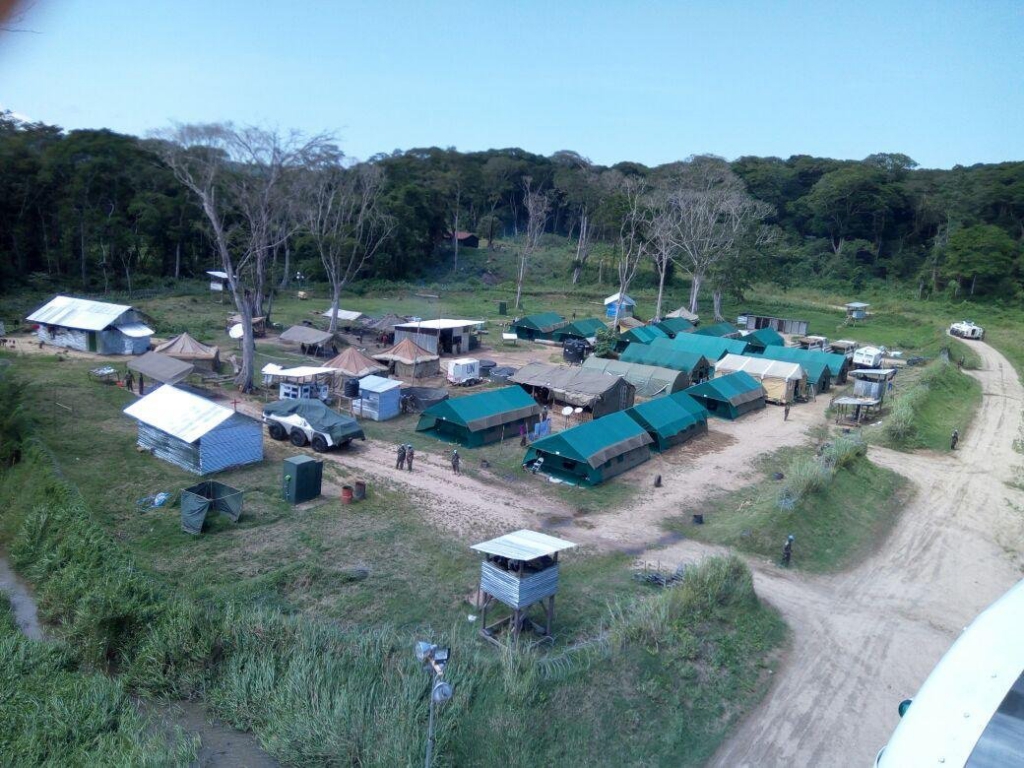
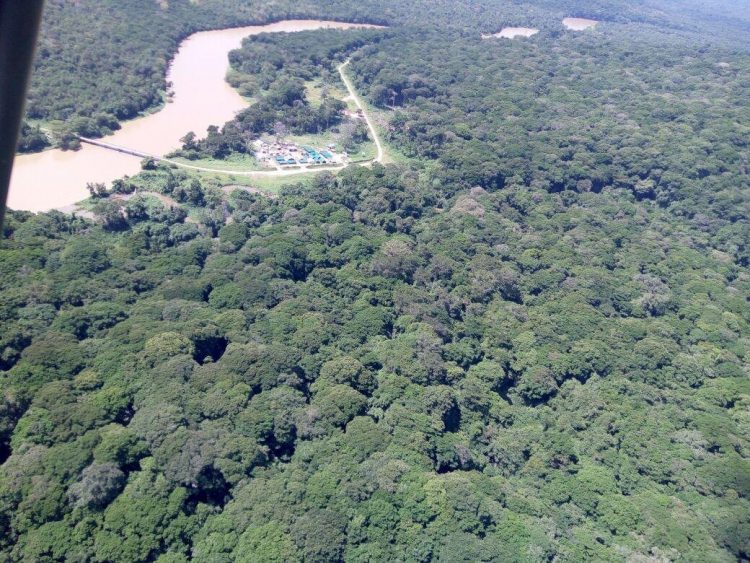
An aerial picture of the MONUSCO camp at the Semuliki river
On Thursday evening, a UN military base on the banks of the Semuliki river in northeastern Congo was attacked. According to initial news reports and conversations with Congolese army (FARDC) and MONUSCO officials, the attackers were wearing FARDC uniforms and attacked a small FARDC platoon next to the base before entering the compound. At around 5pm, the Tanzanians alerted the MONUSCO base in Beni that they were under attack from three different sides. Shortly afterwards, the communication lines were cut.

The UN’s response will be the matter of much scrutiny in coming days: Although the head of UN peacekeeping, Jean-Pierre Lacroix, says that they responded as soon as they were informed, reportedly the first reconnaissance flight did not leave until 7am the following morning––the Tanzanian peacekeepers were cut off for over 12 hours, left to fend for themselves. The FARDC also had a base around 15 km away; it is unclear whether they were informed of the attack.

In the morning, the tragic aftermath became clear: At least 15 dead, over fifty wounded––some in critical condition––and three peacekeepers missing. This was the worst attack on UN peacekeepers in recent history (I believe since the killing of 24 Pakistani peacekeepers in Mogadishu in 1993) and the deadliest ever on Congolese soil (nine Bangladeshi peacekeepers were killed in Ituri in 2005).

The attack was part of a battle for the control of the Mbau-Kamango road that goes through the Virunga park, crosses the Semuliki river, and leads to the Ugandan border at Nobili. On October 7, alleged ADF attacked traders on the road, killing 26. Two days later, on the same road, the ADF attacked the MONUSCO base in Mamundioma along the same road, killing two peacekeepers. After six days of fighting, the FARDC and MONUSCO took back control of the road on October 13. Our Kivu Security Tracker map shows ADF attacks and killings along this road in the past three months (the attack on the Tanzanian base took place where the road crosses the Semuliki river):


Attacks-Mbao-Kamango-Road-e1512903479510-1024x691.jpg


Here are the key questions, and some tentative answers, about the attack (see here and here for other analyses):

1. Who is responsible?

The UN has pointed the finger at the Allied Democratic Forces (ADF), an Islamist Ugandan rebellion that has been based in the eastern Congo since the early 1990s. The group has developed strong ties with local figures and armed groups, and, with the exception of some spectacular attacks and killing, for much of the twenty-some years it has been in the region, was not much more abusive than other armed groups in the vicinity. This changed when the group became the focus of attacks by the Congolese government and the UN, beginning in 2005. Large scale massacres against civilians then began following the launch of Operation Sokola I in 2014 and lasted until mid-2015. After a lull, other attacks took place in late 2016.

According to two extensive investigations by CRG, the ADF were involved in those massacres. But other, local dynamics are equally important. Former members of a local rebellion, the APC, which used to control this area between 1999-2003 and that still has a large base in the region, were also involved in those killings, as were militias of the Pakombe and Vuba communities, which have long felt marginalized by the majority Nande community. All of these groups––the ADF, the APC, and the local militia––have deep historical ties. In addition, we found that senior members of the FARDC were also involved in the latter stages of the massacres.

Another key feature of the attack was the overwhelming firepower that the attackers reportedly had. According to preliminary reports, they hit the camp with rocket-propelled grenades and heavy machine guns. This is part of a trend. One FARDC officer recently told me regarding fighting in October: “I have been fighting the ADF here since 2014. But something has happened. They suddenly got a lot stronger.”

The ADF were likely involved––our map of their area of operations shows how close they are to this road––and given their history in the region, it is possible that they worked with other armed groups.

Area-of-Ops-KST-Beni-1024x690.jpg


However––revealing how these incidents are perceived by Congolese––broader speculation has also bubbled up on Congolese social media and in the press. The director of local NGO, Jean-Paul Ngahangondi, cast doubt on the ADF’s responsibility, saying that it is a small group that never carried attacks like this. Some drew links to the meeting the same day between Congolese and Ugandan officials about border security, suggesting that the attack was part of new plan to justify joint Uganda-DRC operations against the ADF.Since the attack occurred, a civil society group seen as close to the FARDC has called for joint operations.

Others said it might be the Rwandan and Congolese armies.

Attaque vs Monusco: Une enquête balistik/criminalistik primaire peut vite renseigner sur assaillants de cette Ops milit savammt préparée et menée, qui n’a rien à voir avec ADF. La puissance de feu des assaillants+ troupes ciblées (Tanzanie) renvoient vers 1 «joint Ops» Rwanda-RDC

— Jean-Jacques Wondo (@JJPWondo) December 9, 2017


Meanwhile, Felix Tshisekedi, one of the most important opposition leaders, said that the purpose of the attack was to prompt the UN peacekeeping mission to leave.

Je dénonce et condamne cette attaque barbare sur les casques bleus, à l'est de la [HASHTAG]#RDCongo[/HASHTAG]. Elle est l'œuvre de ceux qui veulent obtenir le départ de la Monusco. Une enquête internationale est indispensable pour savoir qui se cachent réellement derrière ces Adf.

— Félix A.
Tshisekedi (@fatshi13) December 9, 2017


2. What is MONUSCO’s responsibility? The mission is in a difficult position. It has been criticized often, and over many years, of not being aggressive enough in protecting civilians. In response, it has recently adopted a “protection through projection” approach, deploying smaller groups of peacekeepers in critical areas instead of staying inside large bases, and building relations with local communities. This approach may be reviewed in the Beni area, where MONUSCO troops are increasingly being targeted.

But there are more concrete questions that will be asked. Why did the attack helicopters, which are equipped with night-vision equipment, take so long to get there? One MONUSCO official suggested that they cited bad weather––but bad weather for 12 hours? Was the base––shown on the picture below––too poorly defended in an area where an attack was predictable? Did the FARDC also not react quickly enough?

DQoVRZ-W0AI3d3n-1024x768.jpg


3. How important is this? The attack will have a huge impact on the UN deployments and strategy in the Congo and beyond. It may lead to a renewed offensive against the ADF––hopefully coupled with a better understanding of exactly who is behind the killings. It may lead to more joint operations between the Ugandan and Congolese armies, and it will definitely strengthen the Congolese government’s argument that the problem of Beni is one of Islamist terrorism.

It is also useful to put this in perspective. While this incident made international news––CNN, France24, and BBC TV covered it––Beni is only one of many theaters of violence in the Congo. There have been at least 528 killings of civilians in North and South Kivu in the past six months, 91 of which took place in Beni territory and 40-50 of which may be be attributed to the ADF, depending on how one counts. Around 13% of the displaced people in the Kivus are in Beni territory.

There is indeed something afoot in the eastern Congo––armed groups are mobilizing, and the country has seen more displacement this year than any other place in the world. There are many factors behind this, but it is also clear that armed groups are influenced by political turmoil in Kinshasa. They are political animals, sensing an upcoming rupture––elections or something else––and are positioning themselves. However the UN and the international community responds, it is important to keep that in mind.
 
But there are more concrete questions that will be asked. Why did the attack helicopters, which are equipped with night-vision equipment, take so long to get there? One MONUSCO official suggested that they cited bad weather––but bad weather for 12 hours?
 
But there are more concrete questions that will be asked. Why did the attack helicopters, which are equipped with night-vision equipment, take so long to get there? One MONUSCO official suggested that they cited bad weather––but bad weather for 12 hours?
Isije ikawa kama vita za madawa ya kukevya za Usa na latin america, akipeleka askari wake wanauwawa na mission inavyja mapema sana kwa maadui.
Kumbe ndani ya white house kulikuwa ba ma drug dealer wakubwa sana. Ikabidi us arudisha askari wake home ajipange upya.
 
RDC: l'attaque contre la Monusco «préparée et organisée», selon l'ONU - RFI

he precise circumstances of the deaths of fifteen Tanzanian peacekeepers killed in the attack on Monusco on Thursday (December 7th) in this area of Beni remain unclear. This is the worst attack against UN peacekeepers in recent history, according to António Guterres, secretary general of the organization. Three peacekeepers are missing and about fifty others have been wounded. It's an attack that has been clearly prepared and organized, "Jean-Pierre Lacroix, deputy secretary general in charge of peacekeeping operations at the United Nations, told RFI.

The UN has begun its investigation, including trying to question the survivors to understand who is responsible for this attack, now considered a war crime. It will have started around

For Jean-Paul Paluku Ngahangondi, the responsibility of the ADF must be verified: "whether it be the Mai-Mai or the alleged ADF ... they are small groups who have never dared to provoke the army and even less the helmets blues "
10-12-2017 - By Sonia Rolley

0:00

0:00
17:30 and would have extended several hours, without the headquarters of the Monusco can contact Tanzanian troops on the ground.

Who are the attackers?

"This is an attack that was clearly prepared and organized," Jean-Pierre Lacroix, deputy secretary general in charge of peacekeeping operations at the United Nations, told RFI. The Deputy Secretary-General of the UN says it was a heavily armed group and the attack was planned and coordinated. A UN source complements it: "These people have used everything from machete to rocket launcher, they almost shaved the camp." Jean-Pierre Lacroix says "presume" that it is the ADF, the Ugandan Islamist rebel group that has been raging for more than 20 years in the region, but can not confirm it.


How did the attackers get into the well protected camp?

The UN began interrogating the survivors on Saturday, but nothing filtered. What we do know is that in the half-hour that followed the attack, the Tanzanians became unreachable, their means of communication presumably destroyed. Have they been targeted from the start? Nobody seems to be able to say it and nobody knows what happened during the blackout out during which Monusco lost contact with his blue helmets, between 18:30 / 19:00 and the early morning of Friday.

Why no one came faster to help these blue helmets?

A UN source mentions a Congolese military post of some men, located 500 meters from the camp. The 5 FARDC victims would come from there. But from Congolese military sources, it is said that the FARDC did not intervene. Even confusion on the UN side since several sources say that the "UN force" was warned of the attack from the beginning, Thursday night. But the UN Deputy Secretary General speaks of an answer "as soon as the mission has been informed". But the reliefs, the famous attack helicopters, took off only on Friday morning, more than 12 hours after the cut of communications with the attacked camp.

The assessment of the attack

Side balance, still no news of the three Tanzanian blue helmets missing. The wounded were evacuated to Goma. And the record is still contradictory with regard to the deaths of the Armed Forces of the Democratic Republic of Congo (FARDC) who have intervened. The UN announces five Congolese soldiers killed in the attack on Thursday (December 7th). The spokesman for the army in Beni gives a different assessment, namely, a wounded soldier, a missing person and 72 attackers killed.

Jean-Pierre Lacroix waited in the DRC

Jean-Pierre Lacroix, deputy secretary general in charge of peacekeeping operations at the United Nations (guest of RFI this Sunday, December 10) is expected in the Democratic Republic of Congo mid-week, in Goma and probably in Kinshasa. In addition, Deputy Special Representative David Gressly was due to travel to Beni today, a move delayed due to bad weather.

The sweeps continue and reinforcements continue to arrive, according to the spokesman of the UN. In the past two months, we know that Congolese soldiers and peacekeepers have been regularly targeted. Moreover, the axis Mbau / Ugandan border, where is located the camp of the Monusco which was aimed, emptied again. " The road was closed to civilians while only a few months ago, FARDC and Monusco had managed to secure part of the area, " said the spokesman of the Congolese army in the region.
 
But there are more concrete questions that will be asked. Why did the attack helicopters, which are equipped with night-vision equipment, take so long to get there? One MONUSCO official suggested that they cited bad weather––but bad weather for 12 hours?


MKuu kila nikisoma na kufuatilia, na nikiongea na washikaji waliowahi kuwa huko CONGO, hii tumepigwa na watu wa ndani yani FARDC wanahusika moja kwa moja, na ukisoma wengine kuna uwezekano imefanyika kujustfie Uganda na Congo waanze vita vipya au Tz/UN wajitoe.
 
Isije ikawa kama vita za madawa ya kukevya za Usa na latin america, akipeleka askari wake wanauwawa na mission inavyja mapema sana kwa maadui.
Kumbe ndani ya white house kulikuwa ba ma drug dealer wakubwa sana. Ikabidi us arudisha askari wake home ajipange upya.

Hii tumechomwa,
kuna Article zina hoji hata vifo vya hao wakongo, kuna uwzekano hakuna aliyekufa na jamaa wana kambi jirani tu, lakini hawakujitokeza kusaidia.
 
The Best Defence Is No Offence: Why Cuts to UN Troops in Congo Could Be a Good Thing - United Nations University

MONUSCO’s “Force Intervention Brigade” (FIB) has been called the “first ever offensive combat force” in UN peacekeeping. With 3,000 troops, air reconnaissance, surveillance drones, attack helicopters, and the most robust mandate in UN history, the FIB should have been an exciting new chapter for peacekeeping. But after four years on the ground, it has become clear that offensive combat operations are a poor use of UN resources for three reasons: (1) they don’t really work; (2) they could well be harming civilians; and (3) they divert focus and resources away from more serious threats facing the Congolese people. Eliminating the very expensive FIB and using the savings to increase the UN’s ability to respond quickly and effectively to protect civilians would put resources where they are most needed — a good deal for Guterres and for Trump.
 
Why does the FIB fail to deliver? One reason is that MONUSCO and the Security Council have the wrong strategy, built on the misconception that there is a military solution for the militias of eastern Congo. For example, the FIB carries out aerial bombardment and delivers support to Congolese army ground manoeuvres against the ADF, an attempt to degrade the ADF’s capabilities and to drive a wedge between the group and its supposed support base in western Uganda. But, after more than 20 years of living in eastern DRC, the ADF is not a foreign Islamist group, it is part of the Congolese social fabric, an active participant in the illicit networks plundering the timber and mineral resources, and closely linkedwith parts of the Congolese military and political establishment. It can’t be separated from a base in Uganda because it has ample reservoirs of support within Congo, though characterising it as foreign and Islamic has a distinct utility for President Kabila and his allies.
 
Invité Afrique - Thierry Vircoulon: les ADF, une menace «extrêmement utile» pour la RDC et l’Ouganda

Thierry Vircoulon: ADF, an "extremely useful" threat for the DRC and Uganda

By Florence Morice
Broadcasting: Saturday 11 February 2017
thierry-vircoyulon_ifri_rdc-ouganda_ok_0.jpg


Thierry Vircoulon. https://www.ifri.org
In recent years, the fear of the establishment of a radical and violent Islam manifests itself in the Democratic Republic of Congo (DRC). Civil society and the authorities regularly raise this threat, linked in particular to the presence of an armed group from Uganda, called ADF and particularly active since 2014. However, there is no evidence that this is justified, according to Thierry Vircoulon, who co-signs with Jean Battory a study for the French Institute of International Relations (Ifri) entitled Radical Islam in the Democratic Republic of Congo. Between myth and manipulation Thierry Vircoulon, associate researcher at Ifri, a specialist in Central Africa, answers to Florence Morice.


When did this issue of radical Islam get involved in the security debate in the Congo?

Thierry Vircoulon: It's very recent actually. The official thesis, which is developed by the Congolese and Ugandan governments, presents the ADF as a movement that is part of the radical Islamist nebula and would be linked to the shebabs in Somalia. And this armed group, which is on the border of Uganda and Congo, has been operating there for about twenty years. But from 2014, he completely changed his behavior and began to massacre the villagers in the Beni area, in a recurring manner, and therefore presented himself as a kind of Islamist madness, a kind of tropical Islamism. lost in the jungle.

Which would be the consequence of a link with the shebabs. What is the reality of this link?

No links were found with the Shebabs. We found links with Islamist movements in East Africa. Jamil Mukulu, who was the leader of the ADF, was arrested in 2015 in Tanzania. And it is clear that he circulated in Islamist circles in Tanzania and Kenya. But with Somalia, no link was found. And when we look a little bit at the behavior of the ADF, we realize that it is a group that is completely atypical compared to the other jihadist groups we know in Africa, be it shebabs, Boko Haram or Aqmi (al Qaeda in the Islamic Maghreb). It is a group that does absolutely no propaganda and communication on the net, does not try to convert people, does not display the Salafist conception of Islam. The strategy of the ADF is not an expansionist strategy, as for example the strategy of Boko Haram, who from northeastern Nigeria has tried to expand on other countries in the area. On the contrary, they are in a logic of retreat and sanctuarization, that is to say, they prohibit a certain territory, therefore a border area, to any village presence and other. They killed people just for the sake of example, saying "here we must not go back to our territory". So they, instead of trying to expand, they close on themselves and fold. They killed people just for the sake of example, saying "here we must not go back to our territory". So they, instead of trying to expand, they close on themselves and fold. They killed people just for the sake of example, saying "here we must not go back to our territory". So they, instead of trying to expand, they close on themselves and fold.

But then, where does this suspicion of expansionism or the desire to impose radical Islam come from in this part of the Congo?

Historically, there was an Islamist component, it was a group of Muslims who were fighting against the power of Yoweri Museveni (Ugandan president, ed), who lost and who fled to eastern Congo. And some of them in any case are Muslim. We have videos where we see women with veils and so on. But the fact that there are Muslims does not mean that there is a salafist agenda.

On the other hand, the discourse that has developed around this risk, you say, leads to a stigmatization of the Muslim population?


These repeated killings are obviously extremely traumatic for the population of North Kivu. And as the ADF are a mystery, both the Congolese army and Monusco fail to prevent them from taking action or stopping them, there is a lot of fantasy around that. And these fantasies obviously give rise to self-defense reactions. So we have seen armed groups emerging in North Kivu who take Christian religious denominations, such as The Carmelite Body of Christ (entrenched at Mount Kinsevere, called "Mount Carmel" in Butembo), which manifested itself at the end of the year 2016, in the Butembo and Beni areas precisely by saying "we will fight against the ADF because the government and the United Nations do not do it". We see this Islamophobia begin to produce armed groups,

Is one of the forms of this Islamophobia also this discourse that develops on the alleged proselytism of a Pakistan contingent of the United Nations Mission in Congo, Monusco, which is present in this area?

Absolutely. That's part of it too. It must be realized that the Pakistan contingent of Monusco has been based in South Kivu for more than ten years now. One of the consequences of this installation was the multiplication of mosques in the Bukavu area and this is interpreted by the population as a Muslim proselytism and beyond that, because obviously we assimilate a little everything, the development of a radical Islam. However, the development of a radical Islam is not at all demonstrated.

So today who feeds this fantasy and for what purpose?

What fuels this fantasy is essentially the governments, Congolese and Ugandan, for which I think, the ADF are an extremely useful threat. For the Ugandan government, which has been fighting them for twenty years, it has become a kind of natural enemy. But what we note is that it has been several years since the ADF were not able to conduct an operation on Ugandan territory. And then for the Congolese government, which is very unpopular, it is a way of presenting a foreign security threat because the Congolese government always insists that the ADF come from Uganda, that they are foreigners and so on. Whereas, when you are an armed group settled in a country for twenty years, you have become deeply rooted in the country.
 
Congo protests against UN peacekeepers
Protesters in eastern Congo accuse UN peacekeepers of failing to do enough to protect them from lethal attacks by rebels. Some Congolese are now arming themselves and joining militia groups out of desperation.


Hundreds of people staged a demonstration in Beni, eastern Democratic Republic of Congo (DRC) on Wednesday (22.10.2014) against the presence of the UN stabilization force, MONUSCO, in the country. Witnesses say the protesters set fire to tires outside the UN base in Beni, calling on the international troops to leave. The UN peacekeepers fired shots in the air to disperse the crowd.

The protests were triggered by the deaths of two youths, who died when they ambushed a patrol - together with other youths - of UN blue helmets and Congolese troops on the evening of the previous day. Civil society groups say the youths, armed with machetes, spears and stones, had tried to lynch the soldiers and were hit by bullets in the ensuing clash.

"MONUSCO is supposed to keep the peace," one protester told Deutsche Welle. "Why are they turning their guns on the people when we only want peace. We demand that MONUSCO leave Beni immediately," he said.

The mandate of the UN stabilization mission includes protecting the population from attacks by the numerous rebel groups in the country. Uganda's ADF rebel group still operates in the east of the DRC despite attempts to disarm it which were launched at the beginning of the year. In recent weeks, ADF rebels have killed around 80 people and local residents are seething with anger at what they perceive as the absence of proper protection.


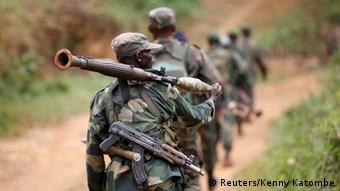
Members of the Congolese armed forces on patrol as part of joint operations with MONUSCO against ADF rebels

Peacekeepers vow to keep up struggle against ADF

MONUSCO spokesman Charles Bambara told DW's French for Africa service that the UN mission had started a probe into the deaths of the two youths."We will await the outcome of the investigation before we confirm any details," he said.

In the meantime calm appears to have returned to Beni. Bambara, however, denied all knowledge of a demonstration on Wednesday. MONUSCO nonetheless is trying to gain public approval of its work in the town. "The battle against ADF will continue. We are on your side and are here to solve problem of the ADF attacks," said Jean Baillaud, the UN force's deputy commander in Beni. He stressed that they wanted to work with all actors in the cause of peace."We will not cease until we achieve tangible results," he said.

But MONUSCO is losing the confidence of the population and repeated calls for calm have little impact. Local residents are afraid of the ADF, which still has an estimated 400 fighters.

Rebels, armed with axes and machetes, killed more than 20 people in the village of Eringeti as recently as last Friday. A survivor of the raid told the news agency AFP that the rebels had warned the villagers that "they should not send their soldiers after them if they wanted to be left in peace." Many Beni residents have already fled.

Citizens' militia as a last option

Others are buying weapons. Market traders say there is a big demand for machetes. Local residents want to protect themselves from the rebels and are setting up militias. Some told DW that "as long as there is no security here, we will look after things ourselves." It was better, they said, to face up to the prospect of death rather than being caught unawares.


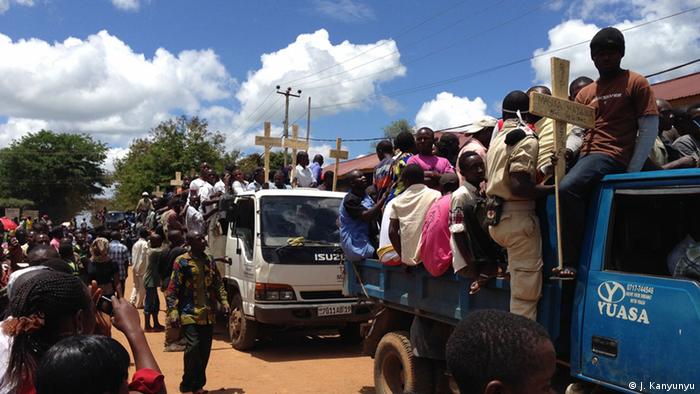
A funeral cortege in Beni for the victim of an ADF rebel attack

On Tuesday, the mayor of Beni, Nyonyi Bwanakawa, appealed to concerned residents in a radio broadcast to join the army or the police rather than taking the law into their own hands. "If one of these young people were to be killed under unfortunate circumstances, how could we possibly try and explain that away," he said.

MONUSCO's rules of engagement were changed last year. With extra troops and a more robust mandate, it was determined to defeat "all negative forces" in the DRC, beginning with the M23 rebel group which had taken control of swathes of North Kivu.

After M23 was routed, the blue helmets turned their attention to the ADF. But analysts have their doubts about MONUSCO's strategy. "It is clear that you can't neutralize an armed group just by bombarding it," Thierry Vircoulon, director of the International Crisis Group's central Africa project, told DW on Monday (20.10.2014). MONUSCO and the Congolese armed forces had so far only succeeded in fragmenting the ADF. They were now responding with retaliatory attacks.
 
Understanding Eastern Congo's ADF-NALU Rebels - The Enough Project

Understanding Eastern Congo’s ADF-NALU Rebels

Posted by Timo Mueller on January 29, 2014
AP725131203518.jpg


On January 17, the Congolese military began conducting military operations in northeastern Beni territory, in North Kivu province, against one of its oldest and least understood armed rebel groups: the Allied Democratic Forces – National Army for the Liberation of Uganda, or ADF-NALU. Formed in 1995 to resist Ugandan President Yoweri Museveni and to establish an Islamic state in Uganda, its leader is now Jamil Mukulu, who faces international sanctions. The ADF-NALU is based in the hills between eastern Congo and Uganda and has successfully infiltrated local economic and security networks. With an estimated force of 1200 to 1500 fighters, the ADF-NALU is resilient, highly organized, and increasingly active in conducting attacks that directly threaten civilians and peace efforts in eastern Congo.

The Congolese army had first announced its intent to lead counter-ADF-NALU “Sokola” operations in late December, but operations had been delayed following the assassination of a key Congolese military leader, Col. Mamadou Ndala, who was instrumental in the defeat of the M23 rebel group. The Congolese army is positioned to command counter-ADF-NALU operations while MONUSCO, the United Nations peacekeeping mission in Congo, provides logistical and tactical support. As of the writing of this post, neither major fighting nor casualties have been reported, but the rebels are said to be fleeing north toward Orientale province.

In 2013, the ADF-NALU had become increasingly active, sharply expanding kidnapping campaigns, attacking public schools, U.N. peacekeepers and large towns. On December 9, the group was reportedly redeploying in anticipation of the Congolese army’s operations. A week later, the U.N. discovered 21 civilians, including women and children, had been slaughtered in a suspected ADF-NALU attack. On December 25, ADF-NALU rebels attacked the town of Kamango, northeast of Beni, leaving more than 50 people dead.

As ADF-NALU rebels move north and potentially increase their activities, and as counter-ADF-NALU military operations take shape, we review several resources with insights on the motives, interests, regional ties, and history of the ADF-NALU.

On January 28, the U.N. Group of Experts released its report for 2013 (an earlier leak is here), finding that the ADF-NALU had grown in strength and led increasingly brazen attacks on local people, humanitarian workers, and U.N. peacekeepers. Foreign Arabic speakers of unknown origin conducted military training with the group, which also expanded its territorial range and has dispersed fighters to smaller bases in anticipation of U.N. operations. An ADF-NALU attack on Kamango in July and displaced some 66,000 people into Uganda enabling, rebels to use the cleared area for military operations. The attack was the largest of several on medical facilities that resulted in the looting of medical supplies, suggesting the group anticipates an upsurge in armed clashes.

On January 27, Integrated Regional Information Networks, or IRIN, published a new briefing on ADF-NALU, providing additional figures from civil society groups on ADF-NALU abductions and recruitment in 2013. The IRIN briefing also assessed rumored ADF-NALU connections to Islamic groups and citizens of neighboring countries, including Tanzania and Somalia, as well as the group’s intelligence capabilities, military skill, and ability to cross borders and blend with state and non-state actors.

An African Defense Review interview with freelance journalist Caroline Hellyer, and Congolese journalist Ley Uwera’s interview with scholar and book author Jason Stearns, both in January 2014, reviewed military operations against the ADF-NALU and assessed the group’s strength and tactical capabilities. In December 2013, Christoph Vogel of the University of Zurich published a comprehensive map, showing the locations of ADF-NALU in eastern Congo as of October 2013, though operations in January 2014 have since caused these positions to shift. [To compare the approximate areas controlled by ADF-NALU over time, consult older maps from International Crisis Group (p. 15) and Oxfam (p. 26).] In December 2013, Stephanie Wolters of the Institute for Security Studies commented on the ADF-NALU for Good Governance Africa in an article that provides a political history of the group and reviews its connections to former leaders of Congo, Sudan, and Uganda.

In late November 2013, Reuters published excerpts of an internal study on ADF-NALU by MONUSCO that argued for military intervention against the group. The report noted a “sharp expansion in the number of kidnappings,” and an “intense” military training program that had created a force that “has never hesitated to fire on MONUSCO.” In mid-October 2013, IRIN News reported on the ADF-NALU’s alleged links with Islamic militants and discussions about options for ADF-NALU amnesty. Earlier, in August, Fidel Bafilemba and I published an overview, analyzing the group’s origins, interests, strengths, and both amicable and hostile interactions with other armed groups, and spheres of influence.

A 2012 International Crisis Group report, and scholarship by Kristof Titeca and Koen Vlassenroot and Lindsay Scorgie have provided excellent historical context and discussion of the influences of Islam, socio-economic factors, and regional and transnational border dynamics on the ADF-NALU. Scorgie discussed her research in an Al Jazeera article, elaborating further on ADF-NALU's alleged relationships to Al-Shabaab, its socio-economic integration in the region, and the limited effectiveness of earlier military operations against the group.
 
RD CONGO: qui attaqué la Monusco? | ledjely.com

DR CONGO: who attacked Monusco?

By ledjely.com on December 11, 2017
Semuliki.jpg

In terms of decay and decrepitude, Joseph Kabila's Democratic Republic of Congo (DRC) is breaking all records. In the grip of a political crisis resulting from the refusal of the head of state to leave power, the country sinks further inexorably into insecurity. For a good part of the year, it was mainly about massacres in Kasai. And it is then that no light has yet been shed on the horrors perpetrated in this region that similarly unheard-of violence is reported from the Beni region in the east of the country. And this time, the attackers did not attack the innocent populations. The UN Mission in Monusco was explicitly targeted. Result ? Fifteen Tanzanian peacekeepers perished there, three others are reported missing, not to mention the fifty wounded. This makes it the worst tragedy that UN personnel have faced in recent years. Hence the urgent need to know who is responsible. A titanic challenge, given the vagueness surrounding this attack and the contradictory signs that are beginning to emerge.

ADF?

Naturally, it is towards the Ugandan rebellion of the ADF that the first suspicions are directed. Of Islamist obedience and author of numerous attacks recorded in the region, the band to Jamil Mukulu is the defendant by default. However, many observers refuse to believe that mere rebels have dared to attack UN peacekeepers and kill so many Tanzanian contingents. Moreover, why would the ADF also attack UN soldiers for free? Some even think that the Ugandan rebellion has neither the firepower nor the level of organization of the enemy to which the contingent of MONUSCO has had to do.

Rwanda and Uganda ...

Certainly, there is no proof yet. But in the minds, one refuses to believe that the attack is exclusively the work of a rebellion. And two other tracks emerge. First of all, there is Uganda and Rwanda. The actions of these two neighbors in the eastern part of the DRC are well known. Taking advantage of the decay of the central government in Kinshasa and the security vacuum in the region, the two countries have always created or encouraged in the area disturbances that facilitate the looting and the lucrative traffic Congolese resources (diamond, gold, coltan, copper, cobalt, etc.). Thus, many Congolese remain convinced that it is their country that fuels the economic prosperity of which Rwanda is so proud today. Although a certain international community, very aware of this situation, would let it go.

The FARDC track

The other track is oriented towards Congolese loyal troops, the FARDC. Contrary to what one might think, the Congolese troops, too, are not necessarily favorable to the restoration of order and tranquility in the region. Notoriously hostile to the blue helmets of the Monusco, Congolese soldiers may have perpetrated to the left the massacre last Thursday. Especially at the local level, investigations have often revealed contacts between soldiers of the Congolese army and armed groups they are supposed to fight. It must be said that in a context of total destitution, the government soldiers come to the conclusion that it is better for them to sympathize with the local traffickers. But in the case of the attack on UN soldiers,

Thus, the question of the identity of the perpetrators of the attack on Beni remains intact. Of course, it is possible that it was rebels who perpetrated it. But we must beware of hasty conclusions ... This is the posture adopted by the United Nations.

Boubacar Sanso Barry

CC: Saint Ivuga
 
ADF-NALU militia in DRC


ADF-NALU militia in DRC


Courtesy of UPDF


KINSHASA, 27 January 2014


On 16 January, the Democratic Republic of Congo’s (DRC) army (FARDC) launched an operation in the eastern Kivu region of Beni to neutralize the Islamic Alliance of Democratic Forces (ADF-NALU) militia, whose prominence has been growing amid fears of its links with global terrorist movements. The FARDC offensive, dubbed ‘Sokola’, meaning to “clean out” in the Lingala language, follows the successful November routing out of the M23militia after a joint UN-FARDC exercise.

“The ADF is not strong like M23. They don’t enjoy foreign support like M23 did. We are going to defeat them. They must heed the directive by President Kabila for them to disarm and participate in DDR [disarmament, demobilization and reintegration]. Otherwise, if they don’t, they are going to face the consequences,” Lambert Mende, the DRC government spokesperson, told IRIN.

In this briefing, IRIN offers insight into the ADF-NALU, examines the threat they pose and highlights analysts’ thoughts on how tackle them.

Who are the ADF-NALU?

ADF-NALU comprises some 800-1,400 combatants, without including the women and children in its ranks. Based in the northwestern Rwenzori Mountain region, along the border with Uganda, the militia is a “tightly controlled organization”, subsisting on illegal logging and gold mining as well as a “network of car and motorcycle taxis operating between Butembo, Beni and Oicha”, and “money transfers from London, Kenya and Uganda, which are collected through Congolese intermediaries in Beni and Butembo”, according to a UN Group of Experts report. Butembo, Beni and Oicha are in North Kivu Province.

The group arrived from Uganda in 1995. Attempts at neutralizing ADF-NALU in 2005 and in 2010 were unsuccessful. “This Congolese-Ugandan armed group has shown remarkable resilience attributable to its geostrategic position, its successful integration into the cross-border economy and corruption in the security forces,” explained the International Crisis Group (ICG) in a 2012 report.

ADF-NALU has several training camps in eastern DRC and equipment such as mortars, machine guns and rocket-propelled grenades, according to the UN experts report. The militia has been boosting its numbers through recruitment and kidnappings. Between July 2010 and November 2013, Beni’s civil society registered 660 abductions by ADF-NALU, 382 of which occurred in 2013 alone. Recently, MONUSCO helicopters on a reconnaissance mission were shot at by the militia, civil society alleged.

What threat does ADF-NALU pose?

Besides its growing military strength, ADF-NALU is seen as a potentially destabilizing force in the larger Great Lakes sub-region due to its suspected radical Islamist links. The Ugandan government has long claimed that the group has connections to Al-Qaeda and the Somali militant group Al-Shabab.


Photo: Courtesy of UPDF
ADF-NALU has equipment such as mortars, machine guns and rocket-propelled grenades
In an Al Jazeera opinion piece, journalist Caroline Hellyer notes that while “the majority of Muslims in Congo and Uganda are not politicized… the ADF-NALU leadership who are located in the UK, Congo, Kenya and Sudan are adherents of a particularly radicalized Tablighi Islamic ideology that caused them to clash with other Tablighis in Kampala.” Indeed, the militia has cells beyond Uganda and DRC, and previous attempts at amnesty and disarmament talks have stalled due to an inability to get their various leaderships together, adds the blog Digitaldjeli, which is hosted by Hellyer.

The militia draws its membership from countries such as Uganda, Tanzania and Somalia, according to a senior officer with the UN Mission in the DRC (MONUSCO), who cited the insecurity in Somalia and the late 2013 terror attack in Kenya. “We cannot afford to let them grow without risking destabilizing the region,” warned the officer.

ADF-NALU’s leader Jamil Mukulu, a Christian convert to Islam, has been targeted by UN sanctions since 2011.

"Too many militaries, especially the FARDC, will come in, handle fighting, declare their victory and go home. At this point the rebels move back in again... and the villagers are punished as a whole"
Indeed, ADF-NALU is a hybrid group, not only due to its members’ mixed origins but also because they are the product of about 20 years of cross-border living, operating as guerrillas and often blurring the lines between the criminal, the rebel, the citizen, the soldier and the state, adds Digitaldjeli.

The militia is also on the move. In December 2013, a lot of east-to-west movement was witnessed, with ADF-NALU dependants - women and children - moving with guards and hiding among the local population, said Teddy Kataliko, a civil society leader in Beni. Militia movements towards Ituri, Orientale Province’s capital, were also recorded.

ADF-NALU could also resort to asymmetrical attacks, ambushing soft targets, as they have good intelligence within the population, “and they know where and when to find this or that person”, said the MONUSCO officer.

In July 2013, ADF-NALU engaged in a looting campaign in the area of Kamango, a town in North Kivu close to the Ugandan border, stealing from the general hospital, health centres and pharmacies to boost supplies in preparation for attacks, noted Kataliko. Moreover, while thousands of rebels, from various groups, in eastern DRC surrendered after M23’s defeat, almost none from ADF-NALU did, according to the UN.

Did ADF-NALU assassinate Col Mamadou Ndala ?

On 2 January, Col Mamadou Ndala, a popular and well-respected officer who led FARDC’s successful offensive against the M23 rebellion and went on to take charge of the operation against ADF-NALU, was killed in an ambush on the road between Boikene and Mavivi in North Kivu province.

“With the death of Mamadou [Ndala], the hunt against armed groups is threatened, and with it, peace in eastern DRC,” said Fidel Bafilemba, a researcher with the Enough Project.


Making sense of the DRC declarations on M23

DRC Government spokesman Lambert Mende at first blamed ADF-NALU for the killing, which was carried out using a rocket propelled grenade. He later announced that several army officers had been arrested in connection with the killing, among them the army commander in Beni, Lt Titu Bizuru.

In a detailed analysis of the ambush published in Jeune Afrique, military analyst Laurent Touchard said the evidence was inconclusive.

“Even if the theory of an internal settling of scores within FARDC appears most likely, the possibility that ADF-NALU, or M23 dissidents were involved should not be totally discounted. They are not mutually exclusive: is the hypothesis of rebels somehow manipulated and helped by senior figures in FARDC totally absurd?”


Photo: Courtesy of UPDF
ADF-NALU’s leader Jamil Mukulu, a Christian convert to Islam, has been targeted by UN sanctions since 2011
“That is where the only certainty in this affair lies: those who killed Mamadou Ndala benefited from accomplices within the security forces,” he added.

Mamadou was posthumously promoted to general.

How should ADF-NALU be tackled?

According to the ICG, “before considering any further military action against the ADF -NALU, it would be wise to separate fiction from fact and instead pursue a course of weakening its socio-economic base while at the same time offering a demobilization and reintegration programme to its combatants.”

Journalist Darren Olivier concurs, noting in Hellyer’s Al Jazeera piece that the group’s strong community and foreign connections, warlord backing, and alliances with other militias in the region mean a clear counterinsurgency strategy will be vital: "The question is how do you get this population on your side.”

ADF-NALU collaborates with various local armed groups and is especially well integrated within the Muslim population.

Islam’s role in peace building in the DRC must be recognized, adds the Digitaldjeli blog. “Indeed, only since the assassination of Colonel Mamadou have many people become aware that Congo’s national hero was a Muslim. This is another reason why he was the perfect man for the job of tackling the ADF-NALU and why his death is a massive blow to the wider community of Beni, particularly the large Muslim community.”

With ADF-NALU accused of enticing young people with gifts such as new bicycles and cash in an impoverished region whose residents feel neglected by Kinshasa, the sustained presence of the state in the group’s strongholds is necessary, say analysts. “Too many militaries, especially the FARDC, will come in, handle fighting, declare their victory and go home. At this point the rebels move back in again... and the villagers are punished as a whole," noted Olivier.

According to Josaphat Musamba Bussy, a Bukavu-based researcher, any military strategy must combine both air and ground forces using specialized commandos. But initially, added Bussy, FARDC should identify ADF-NALU’s Congolese networks, and infiltrate and stop them with the help of local and Ugandan intelligence services.


What has been the progress so far?

FARDC claims to have dislodged ADF-NALU from several locations. According to a MONUSCO officer, the army had successfully taken over the Mwalika camp, where an important ADF-NALU training site is located. MONUSCO is supporting the army logistically and with intelligence.

“The operation against ADF-NALU is going on very well. They are escaping their headquarters [in Mamundioma] near Beni. They are moving to Orientale Province [in the northeast]. We are organized, moving forward and ready to stop them,” said Mende, the DRC government spokesperson.

But there are fears of civilian casualties. Commenting on the fate of ADF-NALU collaborators, a FARDC army major stated, “Those who are with them are considered enemies.”

“We are providing and sharing intelligence information with our Congolese counterparts for the demise of ADF-NALU,” Gen Edward Katumba Wamala, Uganda’s Chief of Defence Forces, told IRIN. “We have deployed troops in our borders to ensure no ADF-NALU escapees enter or cross into our country. Our personnel will capture the fleeing rebels.”

The Ugandan government says that it is ready for dialogue. “We have always had our doors open. We have never seen the ADF-NALU. If they want to talk to us, we are always here,” Crispus Kiyonga, Uganda’s Minister for Defence, told IRIN. In July 2013, Kiyonga told Uganda’s parliament that the government agrees, “in principle”, to initiate talks with ADF-NALU if the group so wishes.

hb-so/aw/rz
 
Is the Force Intervention Brigade neutral? - ISS Africa


Whether the FIB in the eastern DRC is neutral is a growing question. But it can and must demonstrate its impartiality.
27 NOV 2014 / BY PETER FABRICIUS

27-11-2014-FIB-Content.jpg

To say violence is endemic in eastern Democratic Republic of Congo (DRC) would be a cliché. It is a graveyard not only of hundreds of thousands, probably millions, of people, mostly civilians, killed in the violence which has plagued the region since the Rwanda genocide of 1994 overflowed that neighbouring country’s border. It also appears to be a graveyard of hope.

A year ago hope seemed to be reviving. The Force Intervention Brigade (FIB) component of the UN peacekeeping mission MONUSCO provided the Congolese government army (FARDC) with enough firepower to defeat the Rwanda-backed M23 rebels and drive them out of the territory. The South African National Defence Force (SANDF) battalion in the FIB, with its Rooivalk attack helicopters, played a vital role in that rare military success for the UN in the DRC.

After the M23 captured the North Kivu provincial capital of Goma in November 2012 – while MONUSCO troops stood by – the UN Security Council in March 2013 passed Resolution 2098, establishing the FIB as the first UN-led overtly offensive force. Though administratively part of MONUSCO, it was given its own unique mandate to take the initiative and ‘neutralise’ the M23 and two other foreign armed groups terrorising this area: the FDLR and the Allied Democratic Forces (ADF).

The cynical interpretation is that the FDLR is only trying to forestall military attack by the FIB and FARDC
Quote-Mark2.png

With the FARDC, the FIB began operations against the M23 in August 2013 and defeated it by November. The next target was supposed to have been the FDLR – the French acronym for the Democratic Forces for the Liberation of Rwanda, originally established by ethnic Hutus who fled Rwanda after participating in the genocide of the Tutsi population.

The FDLR have been present in eastern DRC for the last 20 years, and provided the Rwandan government with a reason – or pretext – for invading eastern DRC several times, and so has been one of the most destabilising factors in the area.

Earlier this year, faced with the threat of concerted military action against it, the FDLR announced plans to voluntarily disarm. But by May, the deadline for that process came and went, with only a handful of surrenders. In July the member states of the Southern African Development Community (SADC) and the International Conference for the Great Lakes Region (ICGLR) gave the FDLR another six months to implement its agreement to surrender, or face military action. This has placed MONUSCO in a difficult position.

The FDLR has been largely dragging its feet. Some of its less-able bodied fighters have participated in the UN-led disarmament, demobilisation, repatriation and rehabilitation for foreign fighters and returned to Rwanda. This week about 90 of those fighters moved, as agreed, from a transit camp in the east to a more substantial camp in Kisangani much further to the west in the province Orientale. This appeared to be a largely ceremonial gesture to demonstrate the extraction of the FDLR fighters from the war zone.

Quote-Mark3.png
There is a sense that the FIB thinks that its mission is now accomplished
The cynical but widespread interpretation of the FDLR’s motives is that they are only trying to forestall military attack by the FIB and FARDC. Most of their fighters and weapons remain at large but this small gesture may be taken by the UN and DRC as a sign of sufficient progress.

Meanwhile other killers have been busy. Over the last two months about 200 civilians, including women and children, have been killed in Beni territory, north of Goma in North Kivu province. The ADF, an armed group originating in Uganda, has been blamed, though it is not quite clear if all the attacks, including reported beheadings, mutilations and rape, can be attributed to them. Like the M23 and the FDLR, the ADF are on the list of foreign armed groups targeted by the FIB. Joint operations were planned for early 2014. Surprisingly the FARDC then launched a unilateral operation – Operation Sukola – against the ADF in January this year, claiming victory just a few months ago.

In recent weeks an angry local population has attacked MONUSCO bases in the area for failing to come to its defence. This week MONUSCO military spokesperson Colonel Felix-Prosper Basse strongly denied that MONUSCO had failed the people of Beni, insisting that, ‘We are putting all our efforts together in order to neutralise these people.’ He recalled that when the ADF attacked the FARDC position at Kamango on 25 December 2013, MONUSCO intervened with an attack helicopter to drive the ADF out of Kamango.

The overriding impression one gains from talking to non-government people in the region is that the FIB has not done very much for nearly a year.

This is unfortunately reinforcing the suspicion that the FIB was largely created at the instigation of SADC to help its fellow-SADC member state, DRC, defeat the M23, which was backed by its enemy Rwanda. There is a sense that the FIB thinks that its mission is now accomplished.

The overriding impression here is that the FIB has not done very much for nearly a year
Quote-Mark2.png

Basse denied that MONUSCO and the FIB were reluctant to go after the FDLR, insisting they would do so it if failed to give up by the 2 January deadline. But whether the FIB itself is impartial and neutral is the growing question. Ironically, the concerns about the FIB’s current relative dormancy come at a time when the legality and impartiality of its aggressive mandate are being questioned.

The International Peace Institute (IPI) has just published a report which argues that by giving the FIB a uniquely-offensive mandate, the UN Security Council inadvertently made not just the FIB but MONUSCO as a whole, a party to the armed conflict. ‘As the UN is now a party, all military members of MONUSCO will have lost the protections afforded to them under international law … and therefore no longer enjoy legal protection from attacks.’

This could discourage countries from contributing troops to MONUSCO. The authors of the IPI report also worry that the FIB could undercut the existing mandates of MONUSCO and other UN missions to protect civilians. They argue that MONUSCO already had a robust mandate to protect civilians before the FIB was created and suggest that it was more the lack of political will and capacity than the weakness of its mandate, that had prevented MONUSCO acting more aggressively.

Presumably this is a reference to the widespread belief that several countries which have contributed large contingents to MONUSCO have given their soldiers standing orders not to endanger themselves.

The IPI report also contends that in a situation where Congolese government forces ‘are responsible and largely unaccountable for serious violations of human rights and international humanitarian law, the [Force] Intervention Brigade’s offensive mandate to “neutralize” the non-state armed groups and its relative silence on the FARDC stretches the concept of impartiality.’

As a key actor – perhaps the key actor – in the FIB, South Africa bears a special responsibility to remedy these faults. The FIB’s mandate is now a fait accompli and it is perhaps understandable why SADC insisted on it, given MONUSCO’s weakness. But it is still possible for the FIB to prove its impartiality by going after the FDLR as aggressively as it pursued the M23.

South Africa, incidentally, could also use some of its leverage through the FIB to discourage Congolese President Joseph Kabila from changing the constitution so he can stand for a third term in 2016, as he is widely suspected to be contemplating.

The Peace, Security and Cooperation Framework agreement signed by the DRC and other countries in the region in March 2013 also imposed many conditions on the Congolese government, notably that it should re-establish its authority in eastern DRC and take further measures to entrench democracy in the country. Kabila clinging to power would not serve that end.

Peter Fabricius, Foreign Editor, Independent Newspapers, South Africa
 
Daah. Mkuu umeandika kiingereza
Raha ya kusoma makala kwa kiingereza uwe na hela mfukoni. vinginevyo naona kichwa kinauma tu
 
RDC: l'attaque contre la Monusco «préparée et organisée», selon l'ONU - RFI

he precise circumstances of the deaths of fifteen Tanzanian peacekeepers killed in the attack on Monusco on Thursday (December 7th) in this area of Beni remain unclear. This is the worst attack against UN peacekeepers in recent history, according to António Guterres, secretary general of the organization. Three peacekeepers are missing and about fifty others have been wounded. It's an attack that has been clearly prepared and organized, "Jean-Pierre Lacroix, deputy secretary general in charge of peacekeeping operations at the United Nations, told RFI.

The UN has begun its investigation, including trying to question the survivors to understand who is responsible for this attack, now considered a war crime. It will have started around

For Jean-Paul Paluku Ngahangondi, the responsibility of the ADF must be verified: "whether it be the Mai-Mai or the alleged ADF ... they are small groups who have never dared to provoke the army and even less the helmets blues "
10-12-2017 - By Sonia Rolley

0:00

0:00
17:30 and would have extended several hours, without the headquarters of the Monusco can contact Tanzanian troops on the ground.

Who are the attackers?

"This is an attack that was clearly prepared and organized," Jean-Pierre Lacroix, deputy secretary general in charge of peacekeeping operations at the United Nations, told RFI. The Deputy Secretary-General of the UN says it was a heavily armed group and the attack was planned and coordinated. A UN source complements it: "These people have used everything from machete to rocket launcher, they almost shaved the camp." Jean-Pierre Lacroix says "presume" that it is the ADF, the Ugandan Islamist rebel group that has been raging for more than 20 years in the region, but can not confirm it.


How did the attackers get into the well protected camp?

The UN began interrogating the survivors on Saturday, but nothing filtered. What we do know is that in the half-hour that followed the attack, the Tanzanians became unreachable, their means of communication presumably destroyed. Have they been targeted from the start? Nobody seems to be able to say it and nobody knows what happened during the blackout out during which Monusco lost contact with his blue helmets, between 18:30 / 19:00 and the early morning of Friday.

Why no one came faster to help these blue helmets?

A UN source mentions a Congolese military post of some men, located 500 meters from the camp. The 5 FARDC victims would come from there. But from Congolese military sources, it is said that the FARDC did not intervene. Even confusion on the UN side since several sources say that the "UN force" was warned of the attack from the beginning, Thursday night. But the UN Deputy Secretary General speaks of an answer "as soon as the mission has been informed". But the reliefs, the famous attack helicopters, took off only on Friday morning, more than 12 hours after the cut of communications with the attacked camp.

The assessment of the attack

Side balance, still no news of the three Tanzanian blue helmets missing. The wounded were evacuated to Goma. And the record is still contradictory with regard to the deaths of the Armed Forces of the Democratic Republic of Congo (FARDC) who have intervened. The UN announces five Congolese soldiers killed in the attack on Thursday (December 7th). The spokesman for the army in Beni gives a different assessment, namely, a wounded soldier, a missing person and 72 attackers killed.

Jean-Pierre Lacroix waited in the DRC

Jean-Pierre Lacroix, deputy secretary general in charge of peacekeeping operations at the United Nations (guest of RFI this Sunday, December 10) is expected in the Democratic Republic of Congo mid-week, in Goma and probably in Kinshasa. In addition, Deputy Special Representative David Gressly was due to travel to Beni today, a move delayed due to bad weather.

The sweeps continue and reinforcements continue to arrive, according to the spokesman of the UN. In the past two months, we know that Congolese soldiers and peacekeepers have been regularly targeted. Moreover, the axis Mbau / Ugandan border, where is located the camp of the Monusco which was aimed, emptied again. " The road was closed to civilians while only a few months ago, FARDC and Monusco had managed to secure part of the area, " said the spokesman of the Congolese army in the region.
Hangera sana kwa kazi nzuri uliyofanya ya kuuhabarisha umma wa Watanzania juu ya scenarios za mashambulizi ya wanajeshi wetu huko DRC.
 
Back
Top Bottom