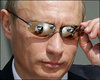
Putin wins Time readers’ poll for most influential people

Putin wins Time readers’ poll for most influential people

Extraterrestrial

JF-Expert Member
Joined
Aug 23, 2013
Posts
413
Reaction score
265
Putin wins Time readers’ poll for most influential people

World April 14, 6:35 UTC+3
The Russian leader garnered 6.95% of the votes. The Time editors’ choice for the 100 most influential people in the world will be unveiled on April 16. It may differ from the readers’ opinion.


ImageUploadedByJamiiForums1429041236.135390.jpg
Russian President Vladimir Putin

NEW YORK, April 14. /TASS/. Russian President Vladimir Putin has been named the winner of US magazine Time 100 readers’ poll for this year’s most influential people.
The Russian leader garnered 6.95% of the votes. The Dalai Lama earned 1.7% of the votes, followed by Pope Francis (1.5%) and US President Barack Obama (1.4%).
Chinese President Xi Jinping, Syrian President Bashar Assad and German Chancellor Angela Merkel have not entered the top 20, getting just 0.9% of the votes.
US former First Lady and ex-Secretary of State Hillary Clinton, who announced her presidential bid on Sunday, received 0.8% of the votes. Ukrainian President Pyotr Poroshenko won 0.7% of the votes.
The South Korean girl-group 2NE1known as CL comes second in the ranking with 6.9% of the votes. Pop star Lady Gaga is number three with 2.6% of the votes.
The Time editors’ choice for the 100 most influential people in the world, spanning politics, entertainment, business, technology, science, religion and other fields will be unveiled on April 16. It may differ from the readers’ opinion.

According to Time magazine, more than 57% of the votes were cast in the United States, 5.54% in Canada and another 4.55% in the United Kingdom.

Time magazine began publishing its weekly issues in 1923. The ranking of the 100 Most Influential People in the World has been published since 1999.

In November 2014, the Russian leader for the second time in a row topped the annual ranking of the most influential people in the world published by another US magazine, Forbes.

HUYO NDIYO BEAR MWENYEWE PUTIN.

Forbes' list of world's most powerful people 2014
World November 06, 11:05 UTC+3

Top 10 of world's most powerful people according to Forbes Nov 2014.

1. Russian President Vladimir Putin. Forbes magazine named Russian President Vladimir Putin the world's most powerful person for the second year in a row. Forbes notes that the choice is based on accession of Crimea to Russia and also Russian-Chinese $70 billion contract on the construction of gas pipeline .

2)Forbes magazine named Russian President Vladimir Putin the world's most powerful person for the second year in a row. "For the second year running, our votes went with the Russian president as the world’s most powerful person, followed by US President Barack Obama and Chinese leader Xi Jinping," Forbes said on its website. The top five remained the same as in 2013, with Pope Francis and German Chancellor Angela Merkel at No. 4 and No. 5. Top 10 of world's most powerful people according to Forbes in photo gallery by TASS.
 
Why Russia's President Is 'Putin the Great' in China - THE WALL STREET JOURNAL

Like Xi Jinping, Vladimir Putin Is Seen as a Strong Leader Who Isn't Afraid to Confront the West

P1-BR472_CPUTIN_P_20141001172643.jpg
ENLARGE
Books about Vladimir Putin far outsell those on other foreign leaders, according to the staff at Beijing's Wangfujing bookstore. JEREMY PAGE/THE WALL STREET JOURNAL

BEIJING-In the recommended-reading section of Beijing's Wangfujing bookstore, staff members have no doubt which foreign leader customers are most interested in: President Vladimir Putin, or "Putin the Great" as some Chinese call him.

Books on Mr. Putin have been flying off shelves since the crisis in Ukraine began, far outselling those on other world leaders, sales staff say. One book, "Putin Biography: He is Born for Russia," made the list of top 10 nonfiction best sellers at the Beijing News newspaper in September.

China's fascination with Mr. Putin is more than literary, marking a shift in the post-Cold War order and in Chinese politics. After decades of mutual suspicion-and one short border conflict-Beijing and Moscow are drawing closer as they simultaneously challenge the U.S.-led security architecture that has prevailed since the Soviet collapse, diplomats and analysts say.

The former rivals for leadership of the Communist world also increasingly share a brand of anti-Western nationalism that could color President Xi Jinping's view of the pro-democracy protests in Hong Kong. Beijing accuses Western governments of stirring unrest there, much as Mr. Putin blamed the West for the pro-democracy protests in Kiev that began late last year.

Russia has begun portraying the Hong Kong protests, too, as U.S.-inspired. Russian state-controlled television channels this week claimed that Hong Kong protest leaders had received American training.

The Pew Research Center says China is one of the few countries where popular support for Russia has risen since Moscow's confrontation with the West over Ukraine-rising to 66% in July from 47% a year earlier.
A poll by In Touch Today, an online news service run by China's Tencent Holdings Ltd., put Mr. Putin's approval rating at 92% after Russia annexed Crimea in March.

"Putin's personality is impressive-as a man, as a leader. Chinese people find that attractive. He defends Russia's interests," says Zhao Huasheng, an expert on China-Russia relations at Shanghai's Fudan University. "Russia and China can learn a lot from each other."

It is partly realpolitik. Russia needs China's market and capital, especially as Western sanctions over Ukraine bite, the analysts say, while Beijing sees Moscow as a source of diplomatic support and vital energy resources.

The countries concluded a long-awaited deal in May for Russia to supply $400 billion of gas to China over 30 years. They have forged agreements to build a railway bridge over their common border and an ice-free port in Russia's far east. They have also unveiled plans to set up ground stations on each other's land for their satellite global-positioning navigation systems.

Also driving the realignment is rapport between Mr. Putin and Mr. Xi, whose leadership increasingly resembles his Russian counterpart's charismatic nationalist authoritarianism.

"Putin and Xi Jinping are quite similar," says Yu Bin, an expert on China-Russia relations at Wittenberg University in Ohio. The leaders are from the same generation-they are both 61-and both want to re-establish their countries as world powers and challenge Western dominance following periods of perceived national humiliation.

BN-EU285_0930cp_P_20140930164214.jpg

Xi Jinping, left, and Vladimir Putin increasingly share a similar brand of anti-Western nationalism. Above, the two leaders are seen together in Shanghai in May.ZUMAPRESS.COM


Mr. Xi came to power two years ago succeeding Hu Jintao, whom party insiders saw as an uncharismatic leader unable to inspire popular support or defend China's national interests. "I think China, after 10 years of Hu Jintao, started to look for a strong leader," says Mr. Yu. "In that context, the Chinese leadership does look to Putin. There's a parallel experience."

Mr. Xi has since made his relationship with Mr. Putin a priority. He chose Russia for his first foreign visit as Chinese president and was one of the few world leaders to attend the Sochi Winter Olympics. Mr. Xi has met Mr. Putin nine times since taking office, most recently at a Central Asian security forum in Tajikistan last month.

"I have the impression we always treat each other as friends, with full and open hearts," Mr. Xi told Mr. Putin in Moscow last year, according to an official Kremlin transcript. "We are similar in character."

He told Russian students later that China and Russia were both going through "an important period of national rejuvenation" and had "the best great-power relationship" in the world.

Mr. Xi has established himself as a political strongman by outlining a "China Dream" of national rejuvenation, by overseeing a sustained anticorruption campaign and by using China's military muscle to enforce territorial claims around its coast.

He has also tightened controls on the media and political dissent and has launched a campaign against Western ideological influence, such as through foreign-funded NGOs.

Some Chinese and Western scholars see parallels in Mr. Putin's early onslaught against Russia's oligarchs, his appeals for national revival, his crackdown on independent news media and his willingness to use military force to defend Russia's interests around its borders. Mr. Putin has also overseen a gradual rehabilitation of Joseph Stalin. Mr. Xi praises the achievements of Chairman Mao Zedong.

Both men play on their countries' wartime pasts. Mr. Xi has introduced three war-related national holidays, including a "Martyrs' Day," marked for the first time Tuesday. Mr. Putin just opened a new World War I memorial. They plan to hold joint celebrations next year for the 70th anniversary of the end of World War II.

Both men, scholars say, rely heavily on state-controlled media to tap into a popular admiration for strong leaders that is widespread in Russia and China, former empires that for most of their histories have been ruled by autocrats.

Zheng Wenyang, the 30-year-old author of "He is Born for Russia," says the biography, which came out in 2012, has sold far more copies than his earlier works on Barack Obama,Margaret Thatcher andNelson Mandela.

He says Mr. Putin's popularity, while inflated by glowing reports in Chinese state media, feeds off a deeply held conviction in Chinese society: "If a leader is weak and allows himself to be bullied, then people won't respect him."

Russia's pushback against Western-leaning governments in Georgia in 2008 and more recently Ukraine has been popular in China. Some say Beijing should draw lessons from those experiences as it jostles for control over waters in the East and South China seas with the U.S., Japan, Philippines and Vietnam.

"Putin is a bold and decisive leader of a great power, who's good at achieving victory in a dangerous situation," said Maj. Gen. Wang Haiyun, a former military attaché to Moscow, in an interview with the Chinese website of the Global Times newspaper.

"These features are worthy of our praise and learning. Russia has been a great world power for hundreds of years and a superpower in the bi-polar order: It's much more skilled than us at playing great power games."

In the crisis over Ukraine-a supplier of corn and armaments to China-Beijing has stayed on the sidelines, calling repeatedly for a political solution and withholding support for Western sanctions against Russia.

Some Chinese experts argue that China risks damaging its relationships with the U.S. and the European Union, still its biggest trading partners. Moscow's and Beijing's interests aren't always aligned.

Older Chinese fondly recall Soviet support for China in the 1950s but also remember the bitter ideological split in 1960 and border conflict in 1969. Though the two sides formed a new strategic partnership in 1996, only recently did they find common ground beyond supporting one another in the United Nations Security Council.

New tensions could arise over China's expanding influence in Central Asian lands that once were part of the Soviet Union, and over Russian arms sales to India and Vietnam, neighbors of China that have boundary disputes with it.

Still, some analysts say that by staying out of the way in Ukraine, Beijing has ensured that Moscow will remain neutral over China's flaring territorial disputes in Asia. And for the moment, both sides have an interest in playing up the merits of their governance models.

Liu Xiaohu, the 28-year-old author of another biography, "Putin's Iron Fist," which came out this year, says many young Chinese feel frustrated by what they see as their government's failure to respond to past foreign provocations, such as the U.S. bombing of the Chinese Embassy in Belgrade in 1999.

"It's not that Chinese people instinctively want or need a strong leader: It's that the country needs one at this period of time," he says.

Write to Jeremy Page at jeremy.page@wsj.com

cc: Extraterrestrial


source:

THE WALL STREET JOURNAL

Why Russia's President Is 'Putin the Great' in China - WSJ


Back
Top Bottom