Mahakama kuu Tanzania yaitupilia mbali kesi inayohoji uhalali wa tume ya Jaji Chande ya matukio ya Oktoba 29, 2025

Mahakama kuu Tanzania yaitupilia mbali kesi inayohoji uhalali wa tume ya Jaji Chande ya matukio ya Oktoba 29, 2025

Bagamoyo

Platinum Member
Joined
Jan 14, 2010
Posts
29,865
Reaction score
34,022
13 March 2026
MAHAKAMA KUU TANZANIA YATUPILIA MBALI KESI DHIDI YA TUME YA JAJI CHANDE YA KUCHUNGUZA KILICHOPELEKEA MAANDAMANO NA MAUAJI YA OKTOBA / NOVEMBER 2026

Kesi Nambari 30210 / 2025 dhidi ya Tume ya Rais ya Uchunguzi kuhusu Matukio ya Oktoba 29

Rosemary Mwakitwange and 2 Others vs Attorney General &..


View: https://m.youtube.com/watch?v=xRvr97wwVzo
Kesi hiyo, iliyowasilishwa na waleta maombi Rosemary Mwakitwange pamoja na mawakili Deogratias Mahinyila na Edward Heche, inapinga Mwanasheria Mkuu (AG), wanachama wanane wa Tume ya Uchunguzi inayoongozwa na Jaji Mkuu wa zamani Othman Chande, pamoja na Chama cha Wanasheria Tanganyika (TLS), ambacho kimejumuishwa katika kesi hiyo.

Waombaji waliiomba Mahakama itengue uteuzi wa tume hiyo, wakidai kwamba iliundwa kinyume cha sheria, haina uhuru wa kutosha, ina mapungufu ya kiutaratibu, na inashindwa kuzingatia kanuni za utawala wa sheria.

Pia wanadai kwamba TLS imeshindwa kutimiza jukumu lake kama chombo cha kulinda maslahi ya mawakili na kuzingatia kanuni za ha

N.B
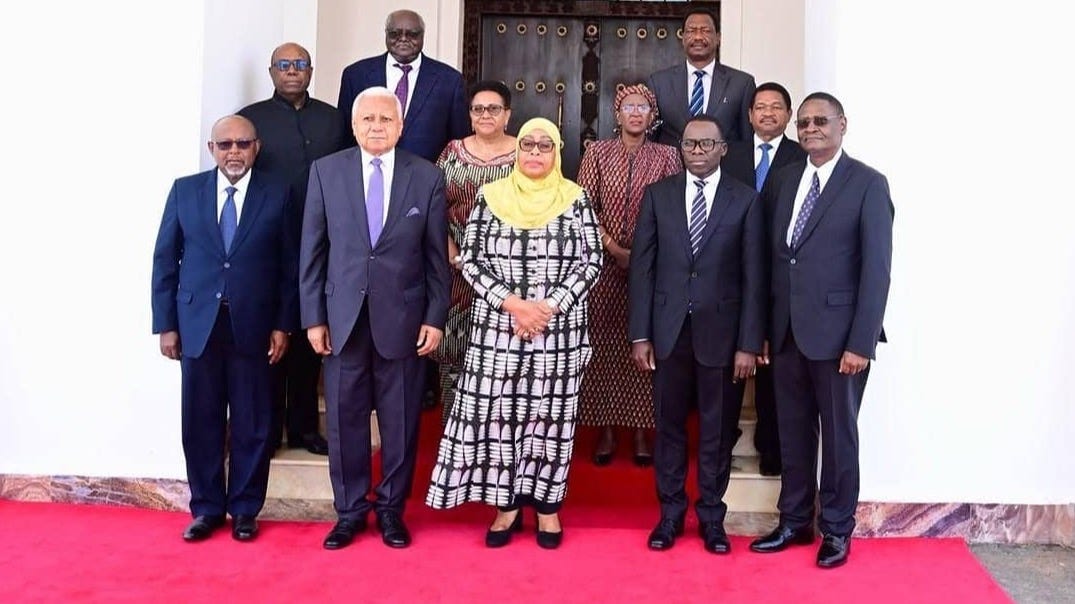
Tume ya Uchunguzi almaarufu Tume ya Jaji mstaafu Chande ya kuchunguza uvunjifu wa amani iliyoundwa na Samia Suluhu Hassan na kutangazwa Novemba 18, 2025 ikiwa chini ya mwenyekiti jaji mkuu mstaafu Mohamed Othman Chande

Wajumbe wanaofanya kazi na Jaji mstaafu Chande ni pamoja na Profesa Ibrahim Hamis Juma jaji mkuu mstaafu wa Mahakama ya Tanzania, Balozi Ombeni Yohana Sefue mwanadiplomasia na Katibu Mkuu Kiongozi mstaafu na Balozi Radhia Msuya mwanadiplomasia na Balozi Mstaafu.

Wengine ni Balozi Luteni Generali Paul Meela wanadiplomasia na Balozi mstaafu, Mkuu wa Jeshi la Polisi mstaafu IGP Said Ally Mwema, Balozi David Kapya wanadiplomasia na Balozi mstaafu na Mhe. Dkt. Stergomena Lawrence Tax waziri wa ulinzi wakati wa machafuko yakitokea.


IN HIGH COURT OF THE UNITED REPUBLIC OF TANZANIA
DAR ES SALAAM SUB REGISTRY
AT DAR ES SALAAM
MISC. CIVIL CAUSE NO. 30210 OF 2025
___________________
IN THE MATTER OF AN APPLICATION FOR LEAVE TO APPLY FOR
ORDERS OF CERTIORARI AND PROHIBITION AND IN THE MATTER OF THE LAW REFORM (FATAL ACCIDENTS AND MISCELLANEOUS PROVISIONS) ACT, [САР. 310 R.E. 2023] AND

IN THE MATTER OF THE LAW REFORM (FATAL ACCIDENTS AND
MISCELLANEOUS PROVISIONS) (JUDICIAL REVIEW PROCEDURE
AND FEES) RULES GN. NO. 324 OF 2014

AND IN THE MATTER OF THE COMMISSIONS OF INQUIRY ACT CАР 32 OF THE LAWS OF TANZANIA

AND
IN THE MATTER OF CHALLENGING THE DECISION OF THE PRESIDENT OF THE UNITED REPUBLIC OF TANZANIA TO ESTABLISH A COMMISSION OF INQUIRY TO PROBE INTO INCIDENTS OF DURING AND POST ELECTION VIOLENCE OF 29 ОСТОBER 2025
BETWEEN

ROSEMARY MWAKITWANGE..............1ST APPLICANT

EDWARD HECHЕ ........2ND APPLICANT

DEOGRATIUS MAHINYILA..................3RD APPLICANT

Page 1

VERSUS

ATTORNEY GENERAL ...............................1ST RESPONDENT

МОНАMED CHANDE OTHMAN ............................2ND RESPONDENT

IBRAHIM HAMIS JUMA..............................3RD RESPONDENT

OMBENI YOHANA SEFUE..............................4TH RESPONDENT

RADHIA MSUYA ........................................5TH RESPONDENT

PAUL MEELA ...........................................6TH RESPONDENT

SAID ALLY MWEMA ......................................7TH RESPONDENT

BALOZI DAVID KAPYA......................8TH RESPONDENT

STERGOMENA LAWRENCE TAX .......................9TH RESPONDENT

TANGANYIKA LAW SOCIETY ................................10TH RESPONDENT
 
13 March 2026
MAHAKAMA KUU TANZANIA JAMHURI 'TUME YA JAJI CHANDE IKIKINGIWA KIFUA'


View: https://m.youtube.com/watch?v=xRvr97wwVzo

Tume hiyo ya kuchunguza uvunjifu wa amani iliyoundwa na Samia Suluhu Hassan na kutangazwa Novemba 18, 2025 ikiwa chini ya mwenyekiti jaji mkuu mstaafu Mohamed Othman Chande

Wajumbe wanaofanya kazi na Jaji mstaafu Chande ni pamoja na Profesa Ibrahim Hamis Juma jaji mkuu mstaafu wa Mahakama ya Tanzania, Balozi Ombeni Yohana Sefue mwanadiplomasia na Katibu Mkuu Kiongozi mstaafu na Balozi Radhia Msuya mwanadiplomasia na Balozi Mstaafu.

Wengine ni Balozi Luteni Generali Paul Meela wanadiplomasia na Balozi mstaafu, Mkuu wa Jeshi la Polisi mstaafu IGP Said Ally Mwema, Balozi David Kapya wanadiplomasia na Balozi mstaafu na Mhe. Dkt. Stergomena Lawrence Tax waziri wa ulinzi wakati wa machafuko yakitokea.

TOKA MAKTABA :
06 January 2026

Tanzania Trust on Trial: Why the Chande Commission Faces a Deepening Crisis of Credibility​

View attachment 3557545
By Adonis Byemelwa

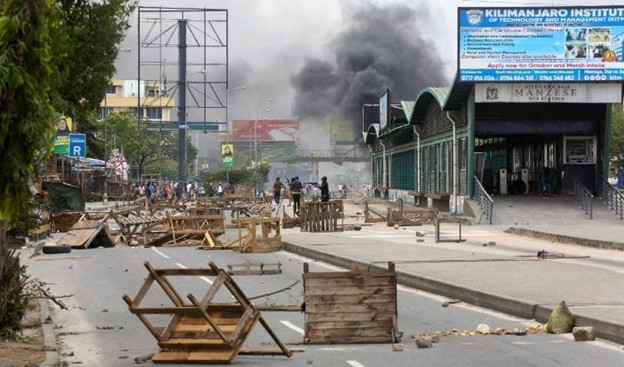
The legal challenge brought by human rights activists against the Chande Commission was never going to be a quiet procedural dispute. It arrived in a country already bruised by the violence of 29 October 2025 and weary of official processes that promise clarity but often deliver carefully worded ambiguity.

When the High Court declined to halt the commission’s work, the ruling did more than clear a legal path for the inquiry. It reopened an older wound about trust, who holds it, who has lost it, and who is being asked, once again, to suspend disbelief.

In the days that followed, public reaction spilt far beyond court corridors, on social media, lawyers, journalists, students, and ordinary voters picked apart the decision line by line, not as legal technicians but as citizens reading it through lived experience.

The most common question was blunt: if the legality and independence of a commission are under active challenge, why allow it to continue as though nothing were at stake?

To many, the refusal to grant even a temporary injunction felt less like judicial restraint and more like indifference to how justice is perceived in politically charged cases.

That perception matters. Tanzania’s recent history is littered with inquiries that began with solemn promises and ended with reports quietly shelved. Families who lost relatives in past confrontations remember press conferences, not prosecutions.

Journalists recall commissions that listened politely and then dissolved into silence. Against that backdrop, Rosemary Mwakitwange’s decision to go to court resonated because it spoke to a familiar fear: that by the time a challenge is heard, the story will already have been written.

Mwakitwange’s critique was precise rather than rhetorical. She questioned the legal basis of the commission, its terms of reference, and the composition of its membership.

Her central argument was simple: an inquiry cannot credibly examine alleged State violence when several of its members have professional histories intertwined with the very institutions under scrutiny.

Conflicts of interest, she argued, do not require proof of bad faith; they arise from proximity, loyalty, and institutional memory. When the court declined to pause the commission’s work, activists warned that the challenge risked becoming academic, overtaken by events before a judge could examine its substance.

Outside the courtroom, the ruling fed a broader scepticism about judicial independence. Commentators were careful not to accuse individual judges of misconduct, but they questioned whether the courts, as institutions, are equipped to resist executive gravity in moments like this.

The tone online was less conspiratorial than resigned. People spoke of patterns rather than plots, noting how sensitive cases tend to move quickly past questions of power and linger instead on technicalities.

It was in this atmosphere that Godbless Lema’s anger cut through. The former Arusha Urban MP did not bother with legal nuance. For him, the commission symbolised a familiar choreography: violence, outrage, inquiry, closure without consequence.

“You cannot investigate yourself and call it justice,” he said. “This is a commission whose conclusion is already known. Victims are being invited to participate in their own erasure.”

His words circulated widely not because they were novel, but because they echoed what many were already saying in quieter tones.

Legal voices added weight to the critique. Peter Madeleka, a respected advocate, avoided political theatrics and focused instead on institutional design.

He pointed out that credible inquiries elsewhere often hinge on visible distance from power: independent appointments, transparent selection criteria, and, crucially, participation by those who mistrust the State.

“Independence is not a declaration,” he remarked. “It is a structure. When structure fails, confidence collapses.” His concern was not merely who sat on the commission, but who did not, civil society figures, international jurists, or experts with no prior ties to the security apparatus.

Those concerns intensified after remarks attributed to President Samia Suluhu Hassan, urging the commission to rigorously question opposition leaders accused of inciting unrest. Language matters in moments like this.

tanz-2.jpg

To critics, the call to “grill” opposition figures sounded less like a neutral search for facts and more like a signal of where responsibility should lie. Government allies then framed the opposition’s refusal to cooperate with the commission as evidence of guilt, rather than as a protest against a process they considered compromised.’

Chadema and ACT-Wazalendo have consistently denied allegations that they incited violence or encouraged mobs during the vote.

They point instead to blocked polling stations, arrests of party agents, disrupted tallying, and a digital shutdown that cut citizens off from information at the most critical moment.

For their supporters, the unrest was not manufactured chaos but the predictable result of a political process perceived as closed and coercive.

The government, for its part, has mounted a robust defence. Senior officials argue that experience within State institutions is precisely what qualifies commission members to understand complex security situations.

They reject the idea that past service equals present bias, warning that dismissing seasoned public servants’ risks weakening the State itself.

Religious leaders, particularly prominent Muslim sheikhs, have reinforced this message, urging the public to step back from heated debate and allow the commission to work.

Their calls for calm are rooted in genuine concern about further instability, but they have also drawn criticism for appearing to prioritise order over accountability.

Meanwhile, Prime Minister Mwigulu Nchemba has taken the government’s narrative directly to the public. Travelling across the country, he has spoken with striking certainty about the causes of the October violence.

Again and again, the Prime Minister has insisted that the unrest was engineered by foreign actors who funnelled vast sums of money into Tanzania to destabilise the State.

At various points, he has tied these claims to global competition over critical minerals, suggesting that the country’s natural resources made it a strategic target for external manipulation.

The issue is not that such scenarios are implausible. It is that they have been presented as settled conclusions rather than propositions requiring proof.

No detailed evidence has been placed in the public domain. No independent analysts, economists, or security experts have been invited to scrutinise or test the claims. Instead, assertions have hardened into narrative.

This has led critics to ask a pointed question: if senior government figures already know who is responsible, what, precisely, remains for the commission to investigate? Supporters of the government respond that matters of national security cannot be openly disclosed. Nevertheless, the absence of verifiable information has only widened public suspicion, not diminished it.

Lost in this exchange are the voices of those most directly affected. In quiet conversations, families speak of relatives who never returned home, of injuries treated discreetly to avoid attention, of fear that lingered long after the streets fell silent.

Traders recall days of shuttered businesses and empty markets. Students remember scrambling for information as mobile networks went dark, cut off from both news and reassurance.

These lived experiences resist simple explanation. They do not fit neatly into narratives of foreign plots or opposition provocation. They are fragmented, deeply personal, and unresolved.

That is why the commission’s credibility matters so profoundly. The polish of its final report does not judge an inquiry, but by whether those who suffered recognise their reality within it.

Without opposition participation, without visible independence, and without a judiciary willing to interrogate the process itself, the Chande Commission risks producing a document that is administratively complete yet morally thin.

The State has every right to maintain order and investigate violence. The question is whether it is prepared to submit itself to the same level of scrutiny it demands of others. History suggests that societies heal not when inquiries affirm official certainty, but when they are brave enough to unsettle it.

0

Walipoteza muda kufungua kesi kwenye mahakama hizi
 
Saiz kila habari ninayosoma inayohusu mahakama utaskia "imetupilia mbali" huku kutupilia mbali ndo kufanyaje hasa?
Wataalamu wa mahakama mnisaidie hapa
 
TOKA MAKTABA :
06 January 2026

Tanzania Trust on Trial: Why the Chande Commission Faces a Deepening Crisis of Credibility​

1773416235184.jpeg

By Adonis Byemelwa

The legal challenge brought by human rights activists against the Chande Commission was never going to be a quiet procedural dispute. It arrived in a country already bruised by the violence of 29 October 2025 and weary of official processes that promise clarity but often deliver carefully worded ambiguity.

When the High Court declined to halt the commission’s work, the ruling did more than clear a legal path for the inquiry. It reopened an older wound about trust, who holds it, who has lost it, and who is being asked, once again, to suspend disbelief.

In the days that followed, public reaction spilt far beyond court corridors, on social media, lawyers, journalists, students, and ordinary voters picked apart the decision line by line, not as legal technicians but as citizens reading it through lived experience.

The most common question was blunt: if the legality and independence of a commission are under active challenge, why allow it to continue as though nothing were at stake?

To many, the refusal to grant even a temporary injunction felt less like judicial restraint and more like indifference to how justice is perceived in politically charged cases.

That perception matters. Tanzania’s recent history is littered with inquiries that began with solemn promises and ended with reports quietly shelved. Families who lost relatives in past confrontations remember press conferences, not prosecutions.

Journalists recall commissions that listened politely and then dissolved into silence. Against that backdrop, Rosemary Mwakitwange’s decision to go to court resonated because it spoke to a familiar fear: that by the time a challenge is heard, the story will already have been written.

Mwakitwange’s critique was precise rather than rhetorical. She questioned the legal basis of the commission, its terms of reference, and the composition of its membership.

Her central argument was simple: an inquiry cannot credibly examine alleged State violence when several of its members have professional histories intertwined with the very institutions under scrutiny.

Conflicts of interest, she argued, do not require proof of bad faith; they arise from proximity, loyalty, and institutional memory. When the court declined to pause the commission’s work, activists warned that the challenge risked becoming academic, overtaken by events before a judge could examine its substance.

Outside the courtroom, the ruling fed a broader scepticism about judicial independence. Commentators were careful not to accuse individual judges of misconduct, but they questioned whether the courts, as institutions, are equipped to resist executive gravity in moments like this.

The tone online was less conspiratorial than resigned. People spoke of patterns rather than plots, noting how sensitive cases tend to move quickly past questions of power and linger instead on technicalities.

It was in this atmosphere that Godbless Lema’s anger cut through. The former Arusha Urban MP did not bother with legal nuance. For him, the commission symbolised a familiar choreography: violence, outrage, inquiry, closure without consequence.

“You cannot investigate yourself and call it justice,” he said. “This is a commission whose conclusion is already known. Victims are being invited to participate in their own erasure.”

His words circulated widely not because they were novel, but because they echoed what many were already saying in quieter tones.

Legal voices added weight to the critique. Peter Madeleka, a respected advocate, avoided political theatrics and focused instead on institutional design.

He pointed out that credible inquiries elsewhere often hinge on visible distance from power: independent appointments, transparent selection criteria, and, crucially, participation by those who mistrust the State.

“Independence is not a declaration,” he remarked. “It is a structure. When structure fails, confidence collapses.” His concern was not merely who sat on the commission, but who did not, civil society figures, international jurists, or experts with no prior ties to the security apparatus.

Those concerns intensified after remarks attributed to President Samia Suluhu Hassan, urging the commission to rigorously question opposition leaders accused of inciting unrest. Language matters in moments like this.

tanz-2.jpg

To critics, the call to “grill” opposition figures sounded less like a neutral search for facts and more like a signal of where responsibility should lie. Government allies then framed the opposition’s refusal to cooperate with the commission as evidence of guilt, rather than as a protest against a process they considered compromised.’

Chadema and ACT-Wazalendo have consistently denied allegations that they incited violence or encouraged mobs during the vote.

They point instead to blocked polling stations, arrests of party agents, disrupted tallying, and a digital shutdown that cut citizens off from information at the most critical moment.

For their supporters, the unrest was not manufactured chaos but the predictable result of a political process perceived as closed and coercive.

The government, for its part, has mounted a robust defence. Senior officials argue that experience within State institutions is precisely what qualifies commission members to understand complex security situations.

They reject the idea that past service equals present bias, warning that dismissing seasoned public servants’ risks weakening the State itself.

Religious leaders, particularly prominent Muslim sheikhs, have reinforced this message, urging the public to step back from heated debate and allow the commission to work.

Their calls for calm are rooted in genuine concern about further instability, but they have also drawn criticism for appearing to prioritise order over accountability.

Meanwhile, Prime Minister Mwigulu Nchemba has taken the government’s narrative directly to the public. Travelling across the country, he has spoken with striking certainty about the causes of the October violence.

Again and again, the Prime Minister has insisted that the unrest was engineered by foreign actors who funnelled vast sums of money into Tanzania to destabilise the State.

At various points, he has tied these claims to global competition over critical minerals, suggesting that the country’s natural resources made it a strategic target for external manipulation.

The issue is not that such scenarios are implausible. It is that they have been presented as settled conclusions rather than propositions requiring proof.

No detailed evidence has been placed in the public domain. No independent analysts, economists, or security experts have been invited to scrutinise or test the claims. Instead, assertions have hardened into narrative.

This has led critics to ask a pointed question: if senior government figures already know who is responsible, what, precisely, remains for the commission to investigate? Supporters of the government respond that matters of national security cannot be openly disclosed. Nevertheless, the absence of verifiable information has only widened public suspicion, not diminished it.

Lost in this exchange are the voices of those most directly affected. In quiet conversations, families speak of relatives who never returned home, of injuries treated discreetly to avoid attention, of fear that lingered long after the streets fell silent.

Traders recall days of shuttered businesses and empty markets. Students remember scrambling for information as mobile networks went dark, cut off from both news and reassurance.

These lived experiences resist simple explanation. They do not fit neatly into narratives of foreign plots or opposition provocation. They are fragmented, deeply personal, and unresolved.

That is why the commission’s credibility matters so profoundly. The polish of its final report does not judge an inquiry, but by whether those who suffered recognise their reality within it.

Without opposition participation, without visible independence, and without a judiciary willing to interrogate the process itself, the Chande Commission risks producing a document that is administratively complete yet morally thin.

The State has every right to maintain order and investigate violence. The question is whether it is prepared to submit itself to the same level of scrutiny it demands of others. History suggests that societies heal not when inquiries affirm official certainty, but when they are brave enough to unsettle it.

0
 
TOKA MAKTABA:

UK to UN: Samia's Own Commission Cannot Investigate Samia​

Evarist Chahali
March 05, 2026


President Samia Suluhu Hassan, together with Chief Secretary Ambassador Dr. Moses Kusiluka and Justice Mohamed Chande Othman, Chair of the Independent Commission of Inquiry into the violence during and after the 29 October 2025 General Election, pose for a group photo with commission members at State House, Chamwino, on 20 November 2025 [Photo: MAELEZO]

Tanzania’s post-election violence is now a formal matter before the UN Human Rights Council, with the United Kingdom citing evidence of extra-judicial killings and concealment of bodies following October 2025 elections. Tanzania’s government has rejected these allegations as selective and politically motivated, countering that October 29 events constituted organised terrorism — not state-sponsored atrocities.

Table of Contents


  1. What Did the UK Say at the UN Human Rights Council Session 61 ?
  2. Does the UK Statement Invalidate the Othman Commission ?
  3. How Did Tanzania Respond at the UNHRC 61 ?
  4. What Is the Status of the Othman Commission of Inquiry ?
  5. Why Does This Matter Strategically ? An Intelligence Assessment
  6. Key Actors: Quick Reference
  7. What Happens Next ?
  8. Strategic Outlook

What Did the UK Say at the UN Human Rights Council Session 61 ?​

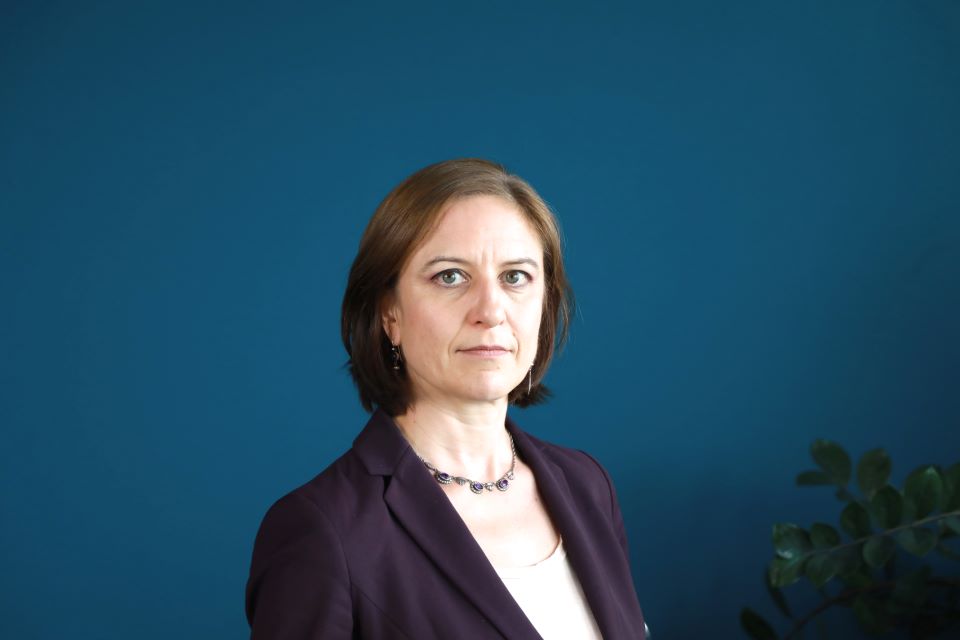
At the UNHRC 61 Item 2 General Debate, UK Human Rights Ambassador Eleanor Sanders delivered a targeted statement on Tanzania, describing the post-election period as marked by “shocking violence,” including evidence of extra-judicial killings and the deliberate concealment of dead bodies.

Sanders called for an independent, transparent, and inclusive investigation to ensure:

  • Accountability for alleged state-sanctioned violence
  • Protection of fundamental freedoms enshrined in Tanzania’s constitution
  • The constitutional rights of all Tanzanian citizens, regardless of political affiliation
The UK statement was not an isolated intervention. It was delivered alongside statements from Belgium, Switzerland, Sweden, Ireland, Norway, the European Union, and civil society actors Human Rights Watch and Amnesty International — constituting a coordinated multilateral pressure campaign at the Council’s most scrutinised session of 2026.

Does the UK Statement Invalidate the Othman Commission​

 
Geneva, UN HRC

Mawasilisho wa Uingereza mjini Geneva yalikuwa haya hapa chini kuhusu Tanzania :

UK Human Rights Council 61 : UK Statement for the Item 2 General Debate​

UK Statement for the Item 2 General Debate. Delivered by the UK's Human Rights Ambassador, Eleanor Sanders.
Published2 March 2026

Location:GenevaDelivered on:2 March 2026 (Transcript of the speech, exactly as it was delivered)
Eleanor Sanders

Mr President,

We are grateful for the High Commissioner’s update.

The humanitarian situation in Gaza remains of serious concern. We urge Israel to allow and facilitate rapid and unimpeded passage of humanitarian aid in line with international law. We call on all parties to implement the 20-point peace plan and respect the ceasefire. In the West Bank, rising violence and settlement activity risk instability and undermines prospects for peace.

Tanzania saw shocking violence following its elections in October, including evidence of extra-judicial killings and concealment of dead bodies. There must be an independent, transparent and inclusive investigation of these events to ensure accountability and that the fundamental freedoms and constitutional rights of all Tanzanians are protected.

We appreciate your efforts to engage China, including on the findings of his Office’s Xinjiang Assessment from 2022. But we are concerned by continued evidence of China’s transition from using re-education camps to using prisons and labour transfer schemes. We call on China to address reports of forced labour, and restrictions on religious and cultural freedoms; China must release all arbitrarily detained individuals.

Finally, we support unequivocally Ukraine’s sovereignty, independence and territorial integrity. We continue to support the work of UN mechanisms and their reporting - those responsible for violations and abuses of human rights must be held accountable.

Thank you.
Published 2 March 2026
 
Machafuko pekee ndio itatupatia mabadiliko ya kweli. Mfumo wa sheria na vyombo vya dola vyote vimeshanajisika kwa kujiunga na majizi na wauaji. Hapo ndio kweli watu wapoteze muda kusubiri tume ya kupika ripoti ije na jipya?
 
Bahati nzuri watanzania kwa sasa wanajitambua na hilo genge la makada wa CCM linalojiita tume limepuuzwa.
 
13vMarch 2026

MWAKITWANGE, HECHE AND MANYILA NOT HAPPY WITH THE COURT JUDGEMENT / REASONS FOR THEIR CASE BEING DISMISSED ARE NOT STRONG / PLANNING TO LODGE AN APPEAL ...


View: https://m.youtube.com/watch?v=Y_3zCWplfIk

Rosemary Mwakitwange and 2 Others vs Attorney General &.. MISC. CIVIL CAUSE NO. 30210 OF 2025
IN THE MATTER OF CHALLENGING THE DECISION OF THE PRESIDENT OF THE UNITED REPUBLIC OF TANZANIA TO ESTABLISH A COMMISSION OF INQUIRY TO PROBE INTO INCIDENTS OF DURING AND POST ELECTION VIOLENCE OF 29 ОСТОBER 2025
BETWEEN

ROSEMARY MWAKITWANGE..............1ST APPLICANT

EDWARD HECHЕ ........2ND APPLICANT

DEOGRATIUS MAHINYILA..................3RD APPLICANT

Page 1

VERSUS

ATTORNEY GENERAL ...............................1ST RESPONDENT

МОНАMED CHANDE OTHMAN ............................2ND RESPONDENT

IBRAHIM HAMIS JUMA..............................3RD RESPONDENT

OMBENI YOHANA SEFUE..............................4TH RESPONDENT

RADHIA MSUYA ........................................5TH RESPONDENT

PAUL MEELA ...........................................6TH RESPONDENT

SAID ALLY MWEMA ......................................7TH RESPONDENT

BALOZI DAVID KAPYA......................8TH RESPONDENT

STERGOMENA LAWRENCE TAX .......................9TH RESPONDENT

TANGANYIKA LAW SOCIETY ................................10TH RESPONDENT
 
Back
Top Bottom