Ab-Titchaz
JF-Expert Member
- Jan 30, 2008
- 14,630
- 4,267
Kenyan Jews dream of going ‘home' to Jerusalem

By Amos Kareithi
Life is full of interesting twists. How else can one explain the existence of Kenyan ‘Jews' who have never set foot in Israel?
The existence of people proclaiming such titles, coming more than 110 years after an attempt to create an exclusive Jews' state in Kenya's Rift Valley, almost sounds like fantasy. It could have been feasible had a proposal, made long before Kenya came into being, to establish a Jewish state in Uasin Gishu succeeded.
The proposal, made in 1903, had gained currency after the then colonial secretary Joseph Chamberlain consented to an appeal by the Zionist movement's leader, Dr Theodore Herzl. At the time, the Jews were persecuted in parts of Eastern Europe and some Jewish leaders hoped that the displaced Jews could find a permanent home in Kenya.
Final verdict
However, a lot of water has passed under the bridge since the rejection of the proposal by 600 delegates during the Sixth Zionist Congress in Brussels from August 23, 1903. Dr Herzl had to accept the verdict of the Jews who thought that settling them in Kenya at the time compromised their claim to Jerusalem as the holy and promised land.
This was not the last Kenya heard of Jews in their country. At the height of World War II, the Jewish question featured at a time of intense struggle for independence in Palestine. Then, Palestine, just like Kenya, was under the British colonialists whose rulers detested and criminalised any attempts to liberate the locals.
Escape routes
Prof Yehuda Lapidot, in an article Deportation to Africa dated February 1, 1944 and archived by the Jewish Virtual Library, explains the circumstances under which his countrymen came to Kenya. He describes how more than 400 people accused of carrying out terrorist activities against Britain were deported from Palestine on October 19, 1944.
They were first exiled in Sambel Camp in Eritrea where in just over three months some of the prisoners designed a route to escape. The enraged British jailers retaliated by transferring the remaining exiles to the unaccommodating deserts in Sudan but later returned them to Sambel Camp.
However, Lapidot recounts that another 54 inmates escaped, forcing the authorities to reconsider the location of the camp.
It was against this background that in March 1947, all the remaining inmates were moved from the Eritrean camp into a jail specifically designed to hold soldiers in Gilgil.
Apparently, at the time, the Jewish community in Africa had a wide network as it took a short time for six inmates to flee by crawling through an 80-metre tunnel.
With the assistance of their accomplices from South Africa, the prisoners escaped on March 29, 1948 and were smuggled in a car to Nakuru, then to Uganda where they used passports bought in South Africa to travel to Congo and later to Brussels.
The Jews' years of captivity in Kenya ended on July 12, 1948, when the last batch of 262 prisoners was freed and taken back to the Middle East in time to mark the birth of the state of Israel.
But these heroics have nothing to do with the emergence of the indigenous black Jews in Kenya, whose origin is as intriguing and has been traced to a discarded publication in a theological college.
Captivating contents
This strange twist occurred 12 years after the last of the Israelites were freed from Gilgil, just as Kenya was preparing to get independence after waging war against the British.
In 1960, a watchman, Edward Macharia, who was at the time working at Limuru Theological College, chanced on an old magazine. Out of curiosity, Macharia who hailed from Laikipia District, near Nyahururu, started leafing through the discarded magazine, Israel Watchman, and was captivated by its contents.
In fact, he was so fascinated by the religious ideologies proclaimed in the magazine, which taught about observing the Sabbath, the traditional Jewish way, that he sought more answers from the publishers in South Africa.
Martin Khisa Makhoha, who has extensively researched on the subject, explains that Macharia was directed to The Mount Zion Reporter, which was published by A N Dugger from Jerusalem.
Makokha, writes in his book, Andrew Nugget Dugger, the Church of God, 7th Day, that "he (Macharia) developed correspondence with A N Dugger... and many brethren believed this new faith and needed baptism..."
Dugger confirms this viewpoint in the book, A History of True Religion, published in 1972 in Jerusalem, which was co-authored with C O Dodd. While detailing how the church had been expanding, Dugger and Dodd say Jerusalem World Headquarters received requests from Kenya. "Two years ago, Elder A M Shoemaker was sent in answer to a call from Kenya, Africa. In about two months' labour, there he baptised 284 converts and ordained 16 men who received baptism of the Holy Spirit."
According to Makhoha, Shoemaker's visit began on August 6, 1970, and ended on October 15, 1970, when he left for Israel.
This explains how Macharia's curiosity brought about the birth of the Messianic Jewish Community, which has its headquarters in Mailo Inya, near Nyahururu town.
The community worships in synagogues, says three prayers a day interspersed with Bible lessons, songs and recitation of the Ten Commandments, and affirms their adherence to Judaism.
Humble beginnings
The leader of the Messianic Jews, Stephen Mbatia, estimates that this could be the only Jewish community comprising of indigenous Africans on the whole continent.
Mbatia says the Jewish community was started in 1962 after a group of 20 people started receiving instructions on how to practice Judaism by mail from Jerusalem.
"We started on our own after reading about this mode of worship from an old newsletter. Later, we wrote to the publishers of the newsletter, who directed us to Jerusalem where we were introduced to A N Dugger," Mbatia says.
After offering guidance through correspondence, Jerusalem finally sent a rabbi, A M Shoemaker, who found about 40 believers.
"At the time, we were based in Ol-Jororok in Nyandarua. Shoemaker converted us and made us Jews. I cannot give you the details of the ceremony involved as you are not a member," Mbatia explains.
Since then, the community has grown and can no longer fit in the original synagogue in Mailo Inya, which could seat 50 people.
"We have since named the original synagogue A M Dugger in honour of the first Jew who taught us the way to the truth. We constructed another synagogue but even this is insufficient because our numbers keep growing," Mbatia says.
During the last Passover feast, some 3,000 people from all over the country were in attendance.
The group has bought a two-acre piece of land next to the synagogue, where they hope to construct a bigger house of worship. Mbatia says that there are about 40 synagogues with 1,000 adults under his watch, according to the last census conducted during the Passover festival.
Close bond
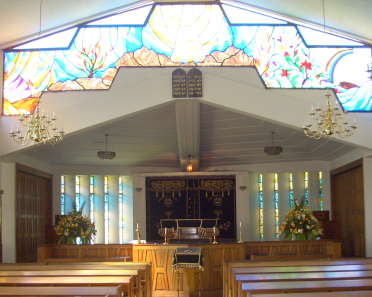
Although most members have never been to Israel and have no blood relations there, they have a special place for Jerusalem in their hearts. Their synagogue resembles an Israeli office, with predominantly blue and white colours, the Star of David and the menorah as well as a prominently displayed Israeli flag.
During a visit to the main synagogue, we found more than 200 worshippers. Among them were two Israeli ex-soldiers, Gilad Avigdor and Tal Burak, who appeared tongue-tied as they listened to a group of more than 50 children singing hymns in Hebrew during the Sabbath.
"We heard about the Nyahururu Jewish community from a friend in Zambia, where we had gone to see the Victoria Falls. When we visited Kenya, we decided to look for the community," explains Avigdor.
The two men said they could not believe their ears when they heard their national anthem sang by the Kenyan children.
The Jewish community headquarters in Mailo Inya has been an inevitable port of call for Israelis visiting Kenya informally. And members of the Messianic Jewish community yearn to reciprocate. Their desire is captured by a poster in the synagogue which reads:
"If I forget thee oh Jerusalem, let the right hand forget her cunning. If I do not remember thee, let my tongue cleave to the roof of my mouth, if I prefer not Jerusalem above my chief joy."
Standard Digital News - Kenya : Kenyan Jews dream of going ?home? to Jerusalem
By Amos Kareithi
Life is full of interesting twists. How else can one explain the existence of Kenyan ‘Jews' who have never set foot in Israel?
The existence of people proclaiming such titles, coming more than 110 years after an attempt to create an exclusive Jews' state in Kenya's Rift Valley, almost sounds like fantasy. It could have been feasible had a proposal, made long before Kenya came into being, to establish a Jewish state in Uasin Gishu succeeded.
The proposal, made in 1903, had gained currency after the then colonial secretary Joseph Chamberlain consented to an appeal by the Zionist movement's leader, Dr Theodore Herzl. At the time, the Jews were persecuted in parts of Eastern Europe and some Jewish leaders hoped that the displaced Jews could find a permanent home in Kenya.
Final verdict
However, a lot of water has passed under the bridge since the rejection of the proposal by 600 delegates during the Sixth Zionist Congress in Brussels from August 23, 1903. Dr Herzl had to accept the verdict of the Jews who thought that settling them in Kenya at the time compromised their claim to Jerusalem as the holy and promised land.
This was not the last Kenya heard of Jews in their country. At the height of World War II, the Jewish question featured at a time of intense struggle for independence in Palestine. Then, Palestine, just like Kenya, was under the British colonialists whose rulers detested and criminalised any attempts to liberate the locals.
Escape routes
Prof Yehuda Lapidot, in an article Deportation to Africa dated February 1, 1944 and archived by the Jewish Virtual Library, explains the circumstances under which his countrymen came to Kenya. He describes how more than 400 people accused of carrying out terrorist activities against Britain were deported from Palestine on October 19, 1944.
They were first exiled in Sambel Camp in Eritrea where in just over three months some of the prisoners designed a route to escape. The enraged British jailers retaliated by transferring the remaining exiles to the unaccommodating deserts in Sudan but later returned them to Sambel Camp.
However, Lapidot recounts that another 54 inmates escaped, forcing the authorities to reconsider the location of the camp.
It was against this background that in March 1947, all the remaining inmates were moved from the Eritrean camp into a jail specifically designed to hold soldiers in Gilgil.
Apparently, at the time, the Jewish community in Africa had a wide network as it took a short time for six inmates to flee by crawling through an 80-metre tunnel.
With the assistance of their accomplices from South Africa, the prisoners escaped on March 29, 1948 and were smuggled in a car to Nakuru, then to Uganda where they used passports bought in South Africa to travel to Congo and later to Brussels.
The Jews' years of captivity in Kenya ended on July 12, 1948, when the last batch of 262 prisoners was freed and taken back to the Middle East in time to mark the birth of the state of Israel.
But these heroics have nothing to do with the emergence of the indigenous black Jews in Kenya, whose origin is as intriguing and has been traced to a discarded publication in a theological college.
Captivating contents
This strange twist occurred 12 years after the last of the Israelites were freed from Gilgil, just as Kenya was preparing to get independence after waging war against the British.
In 1960, a watchman, Edward Macharia, who was at the time working at Limuru Theological College, chanced on an old magazine. Out of curiosity, Macharia who hailed from Laikipia District, near Nyahururu, started leafing through the discarded magazine, Israel Watchman, and was captivated by its contents.
In fact, he was so fascinated by the religious ideologies proclaimed in the magazine, which taught about observing the Sabbath, the traditional Jewish way, that he sought more answers from the publishers in South Africa.
Martin Khisa Makhoha, who has extensively researched on the subject, explains that Macharia was directed to The Mount Zion Reporter, which was published by A N Dugger from Jerusalem.
Makokha, writes in his book, Andrew Nugget Dugger, the Church of God, 7th Day, that "he (Macharia) developed correspondence with A N Dugger... and many brethren believed this new faith and needed baptism..."
Dugger confirms this viewpoint in the book, A History of True Religion, published in 1972 in Jerusalem, which was co-authored with C O Dodd. While detailing how the church had been expanding, Dugger and Dodd say Jerusalem World Headquarters received requests from Kenya. "Two years ago, Elder A M Shoemaker was sent in answer to a call from Kenya, Africa. In about two months' labour, there he baptised 284 converts and ordained 16 men who received baptism of the Holy Spirit."
According to Makhoha, Shoemaker's visit began on August 6, 1970, and ended on October 15, 1970, when he left for Israel.
This explains how Macharia's curiosity brought about the birth of the Messianic Jewish Community, which has its headquarters in Mailo Inya, near Nyahururu town.
The community worships in synagogues, says three prayers a day interspersed with Bible lessons, songs and recitation of the Ten Commandments, and affirms their adherence to Judaism.
Humble beginnings
The leader of the Messianic Jews, Stephen Mbatia, estimates that this could be the only Jewish community comprising of indigenous Africans on the whole continent.
Mbatia says the Jewish community was started in 1962 after a group of 20 people started receiving instructions on how to practice Judaism by mail from Jerusalem.
"We started on our own after reading about this mode of worship from an old newsletter. Later, we wrote to the publishers of the newsletter, who directed us to Jerusalem where we were introduced to A N Dugger," Mbatia says.
After offering guidance through correspondence, Jerusalem finally sent a rabbi, A M Shoemaker, who found about 40 believers.
"At the time, we were based in Ol-Jororok in Nyandarua. Shoemaker converted us and made us Jews. I cannot give you the details of the ceremony involved as you are not a member," Mbatia explains.
Since then, the community has grown and can no longer fit in the original synagogue in Mailo Inya, which could seat 50 people.
"We have since named the original synagogue A M Dugger in honour of the first Jew who taught us the way to the truth. We constructed another synagogue but even this is insufficient because our numbers keep growing," Mbatia says.
During the last Passover feast, some 3,000 people from all over the country were in attendance.
The group has bought a two-acre piece of land next to the synagogue, where they hope to construct a bigger house of worship. Mbatia says that there are about 40 synagogues with 1,000 adults under his watch, according to the last census conducted during the Passover festival.
Close bond
Although most members have never been to Israel and have no blood relations there, they have a special place for Jerusalem in their hearts. Their synagogue resembles an Israeli office, with predominantly blue and white colours, the Star of David and the menorah as well as a prominently displayed Israeli flag.
During a visit to the main synagogue, we found more than 200 worshippers. Among them were two Israeli ex-soldiers, Gilad Avigdor and Tal Burak, who appeared tongue-tied as they listened to a group of more than 50 children singing hymns in Hebrew during the Sabbath.
"We heard about the Nyahururu Jewish community from a friend in Zambia, where we had gone to see the Victoria Falls. When we visited Kenya, we decided to look for the community," explains Avigdor.
The two men said they could not believe their ears when they heard their national anthem sang by the Kenyan children.
The Jewish community headquarters in Mailo Inya has been an inevitable port of call for Israelis visiting Kenya informally. And members of the Messianic Jewish community yearn to reciprocate. Their desire is captured by a poster in the synagogue which reads:
"If I forget thee oh Jerusalem, let the right hand forget her cunning. If I do not remember thee, let my tongue cleave to the roof of my mouth, if I prefer not Jerusalem above my chief joy."
Standard Digital News - Kenya : Kenyan Jews dream of going ?home? to Jerusalem