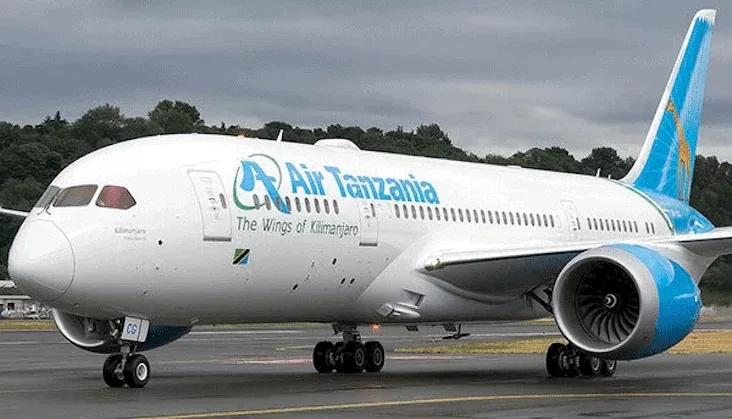
Air Tanzania plans eight new aircraft as Tanzania expands aviation by 2030
Posted on 5 March 2026By
Chiraag Davechand
Tanzania is doubling down on aviation with an ambitious plan to expand the fleet of its national airline, Air Tanzania, over the next few years.
Source: The Africa Report
According to
travelnews.africa, the government has confirmed plans to acquire
eight additional aircraft by 2030, a move designed to strengthen the airline’s position across East Africa and support the country’s booming tourism sector. For travellers heading to iconic destinations such as the
Serengeti, Mount Kilimanjaro, and Zanzibar, the expansion could mean better connections and easier access in the years ahead.
The investment signals that Tanzania is serious about turning its national carrier into a stronger regional player.
A major boost for Tanzania’s aviation ambitions
The fleet expansion forms part of a broader strategy to improve Tanzania’s aviation capabilities while keeping pace with growing travel demand.
Authorities have indicated that the programme is closely tied to ongoing upgrades at major airports around the country. The goal is to ensure that improved aircraft capacity is matched by stronger infrastructure on the ground.
Key gateways such as
Julius Nyerere International Airport in Dar es Salaam,
Kilimanjaro International Airport, and
Abeid Amani Karume International Airport in Zanzibar are all undergoing improvements to help handle increasing passenger traffic.
Together, these developments are designed to create an aviation network capable of supporting the steady rise in tourist arrivals and business travel expected over the coming years.
A national carrier on the rise
Air Tanzania’s transformation has been closely watched across the African aviation industry.
After years of struggling financially, the airline has undergone significant revitalisation with government backing. One milestone that drew global attention was its adoption of the
Boeing 737-9 MAX, making it the first African airline to introduce the aircraft into service.
The carrier has also expanded its cargo operations with a
Boeing 767-300F freighter, allowing it to transport goods as well as passengers and diversify revenue streams.
These steps have helped reposition Air Tanzania as a modern airline focused on efficiency, improved passenger comfort, and stronger regional competitiveness.
Why this matters for travellers
For travellers and the wider tourism industry, better airline connectivity can make a major difference.
When airlines add aircraft, they gain the ability to launch new routes, increase flight frequencies, and improve scheduling options. For tour operators, safari companies, and travel planners across East Africa, this often translates into easier itinerary planning and more flexible travel options for visitors.
Tanzania’s appeal as a destination is already well established. From witnessing the
Great Migration in the Serengeti to climbing Africa’s highest mountain or relaxing on the beaches of Zanzibar, the country consistently ranks among the continent’s most sought-after travel experiences.
Stronger air links could make those experiences even more accessible.
The bigger picture for African aviation
Tanzania’s investment reflects a wider shift happening across the continent.
Several African governments are increasingly recognising that
strong aviation networks are essential for economic growth, especially in tourism-driven economies. Countries with limited air connectivity often struggle to attract international travellers, even when they have world-class attractions.
By strengthening its national airline while simultaneously upgrading airport infrastructure, Tanzania is attempting to avoid that problem.
The estimated
201 million US dollar investment behind the fleet expansion highlights just how seriously the country views aviation as part of its long-term development strategy.
A runway toward 2030
For now, the plan to add eight aircraft marks one of the most significant fleet expansion programmes currently underway among East African airlines.
If the rollout unfolds as planned, travellers across the region could see improved routes, more reliable schedules, and a stronger airline presence connecting Tanzania with the rest of the continent and beyond.
For safari lovers, beach seekers, and adventure travellers, that could mean one simple thing: getting to Tanzania’s spectacular landscapes may soon become a lot easier.
Source: travelnews.africa
Follow us on social media for more travel news, inspiration, and guides. You can also tag us to be featured.
TikTok | Instagram | Facebook | Twitter
Tanzania plans to add eight new aircraft to Air Tanzania by 2030, boosting tourism access and strengthening the country’s aviation network.

www.getaway.co.za




 press.brusselsairlines.com

